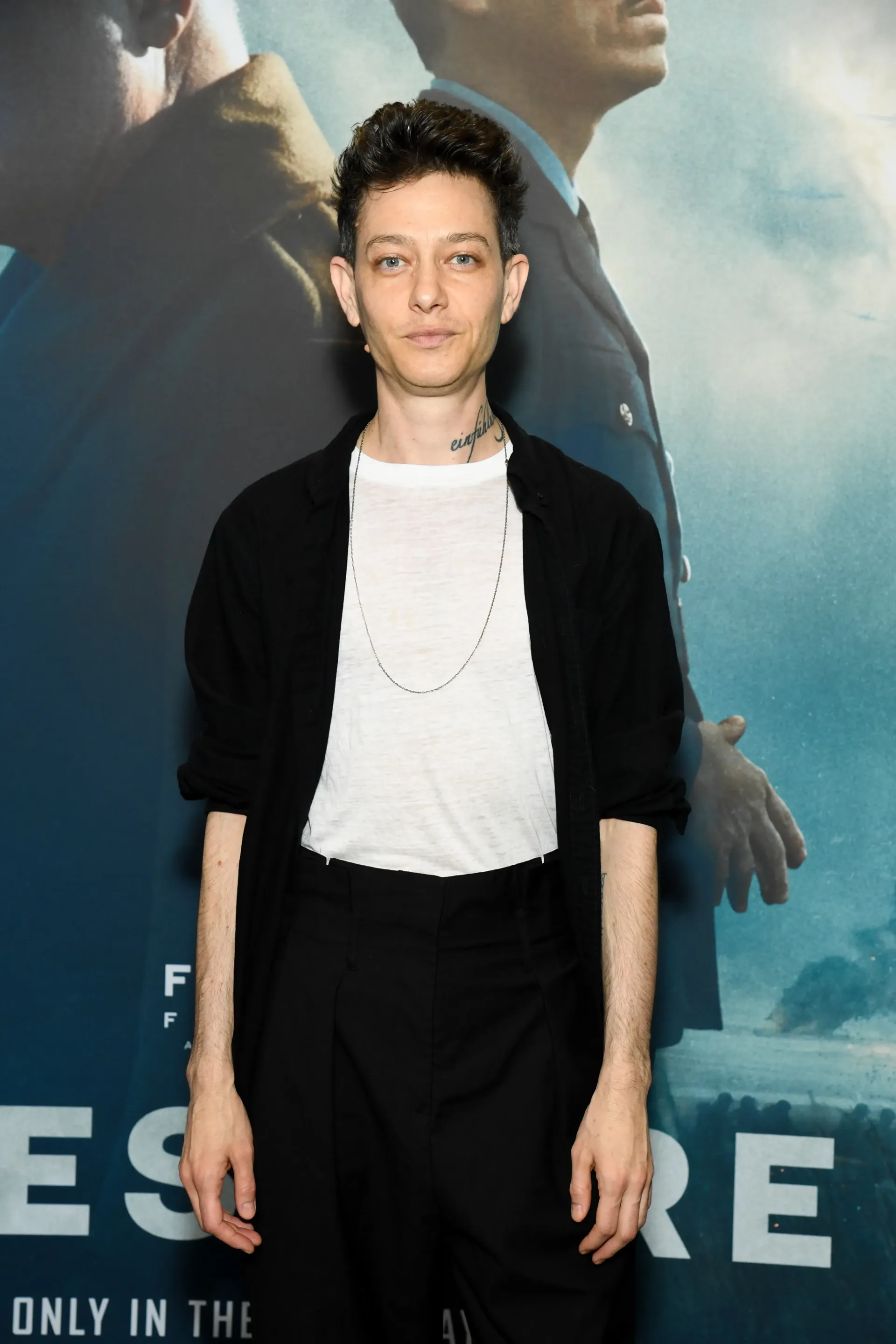
Asia Kate Dillon says they are seeking service work after a little more than a decade of relying on acting as their full-time income. The performer, known for playing Taylor Mason on Billions and Brandy Epps on Orange Is the New Black, shared that acting work has “all but diminished” and said the situation is especially familiar among trans, nonbinary and gender-nonconforming colleagues.
Dillon’s public message is direct about both the immediate need and the work they are pursuing: part-time shifts at night and on weekends in food service or customer service. Rather than presenting that pivot as a departure from their identity or experience, Dillon described it as a return to work they know well—and work they say they genuinely enjoy.
A return to a familiar kind of work
Dillon began working in food service at 15, taking a weekend job at Ithaca Bakery in 2000. Their morning responsibilities included sorting bagels, stocking refrigerated drinks, maintaining a coffee station, cleaning and restocking a restroom, addressing spills, moving dish bins and greeting customers.
Those details matter because Dillon’s post is not simply an open-ended request for employment. It outlines practical experience in a busy customer-facing setting. They later worked across food and general service roles, including dishwasher, food runner and floor manager, while continuing to pursue acting jobs.
That overlap continued until fall 2015, when Dillon says acting income finally became sufficient for full-time work. They then spent the next 11 years working exclusively in theater, film and television. Now, Dillon says, they need to reenter service work.
“I love customer service. I love creating welcoming environments for people to relax in and connect with each other,” Dillon wrote.
The statement also shows a clear-eyed awareness of what reentry can entail. Dillon identified modern point-of-sale systems—usually shortened to POS systems, the digital tools businesses use for transactions and order management—as an area where they may need to catch up. They added that they are a quick learner, framing the transition as a practical skills update rather than an obstacle that overrides years of relevant experience.
From guest roles to two defining TV parts
Dillon’s résumé includes early single-episode appearances in Younger, Opus for All and Master of None. They went on to appear in 19 episodes of Orange Is the New Black as Brandy Epps.
Related coverage includes Asia Kate Dillon Seeks Service Work as Acting Opportunities Diminish.
In 2017, Dillon joined Billions as Taylor Mason, playing the character over six seasons and 71 episodes. Taylor was a major role in a high-profile serialized drama, which makes Dillon’s message a pointed reminder that recognizable credits and sustained television work do not necessarily mean a performer has a continuous pipeline of jobs afterward.
Dillon also appeared in John Wick: Chapter 3 – Parabellum and The Outside Story, and had a role in Gen: Lock. Their more recent credits include starring in the 2025 film Outerlands. The credits establish a career that spans television, film and voice work, alongside Dillon’s own description of an 11-year stretch centered entirely on theater, film and TV.
That is why the wording of the post lands differently from a simple career change. Dillon is not saying they have lost interest in performing, nor are they portraying service work as beneath an actor’s professional standing. They are describing diminished acting opportunities and a need for income, while making the case that they bring useful experience and enthusiasm to another line of work.
Visibility did not erase the employment question
Dillon publicly came out as nonbinary in late 2026 and has been identified as the first gender-nonbinary performer to play a nonbinary character on a major television show. Their role as Taylor Mason consequently carried meaning beyond the mechanics of casting: the character and performer made a form of representation visible in a major TV drama.
But Dillon’s post draws a distinction worth keeping in view. Visibility, acclaim and a historically important role do not automatically translate into stable future employment. Dillon specifically said that many performer colleagues are experiencing a downturn in opportunities, particularly trans, nonbinary and gender-nonconforming performers. That is Dillon’s account of their circumstances and those of peers, not a numerical assessment of the entire acting profession. Still, it gives their request a wider context: the post is personal, but it is not framed as an isolated experience.
The message is also unusually concrete about availability. Dillon says they can work part-time, nights and weekends. That kind of specificity turns a broad appeal into something a prospective employer can act on. It also avoids the performance of mystique often attached to celebrity-adjacent careers. Dillon names the practical details: the shifts they can take, the work they have done and the system they expect to learn.
Dillon’s long-running argument for inclusive recognition
The employment update follows Dillon’s earlier advocacy around gendered awards categories. In 2020, they called for the SAG Awards—now called the Actor Awards—to remove gender-specific acting categories. Dillon argued that separating performers by assigned sex or gender identity was irrelevant to judging an acting performance and discriminatory.
That position helps explain why Dillon’s current statement should not be reduced to a celebrity anecdote. Their career has included work in front of the camera and public engagement with how entertainment institutions classify performers. The question is not only whether a nonbinary actor can land a prominent role, but whether the systems around casting, recognition and sustained employment create room for performers to keep working.
There is no claim in Dillon’s message that awards-category reform alone would solve the employment problem they describe. The two issues are different. Representation concerns who gets to be seen in roles and stories; employment continuity concerns whether performers can consistently find paid work across a career. Dillon’s experience, as they describe it, illustrates why one kind of progress does not guarantee the other.
The broader entertainment business is also full of different forms of creative labor, from acting and writing to music and production, where the terms of work and payment remain central concerns. A recent dispute over music royalty administration shows how those business questions can remain consequential well beyond the stage or screen: ISM’s lawsuit involving royalty payees and audit rights centers on a different field, but it similarly puts the financial mechanics behind creative work in focus.
What Dillon’s post actually asks for
The most grounded reading of Dillon’s statement is also the simplest. They are seeking work in an area where they have substantial prior experience. They say they enjoy making spaces welcoming, working with food and drink, and collaborating with a team. They acknowledge that new workplace technology may require a brief adjustment. And they say they are available for the shifts many service employers need covered.
- Desired work: food service and general customer-service roles.
- Prior experience: dishwasher, food runner, floor manager and front-of-house responsibilities.
- Schedule: part-time, nights and weekends.
- Reason for the search: Dillon says acting work has substantially diminished.
- Career context: Dillon says they supported themselves exclusively through theater, film and TV from fall 2015 for 11 years.
It is tempting to treat a performer’s name recognition as proof of permanent security. Dillon’s post rejects that assumption without self-pity. It gives a full account of experience in both service and performance, makes a clear request, and insists on the dignity of work that helps people eat, gather and feel welcome.
For audiences who know Dillon from Billions, Orange Is the New Black or their film work, the news is a sobering update from a performer with substantial credits. For employers, Dillon has laid out a more immediate proposition: an experienced customer-service worker, ready to learn the current tools and available for part-time evening and weekend shifts.