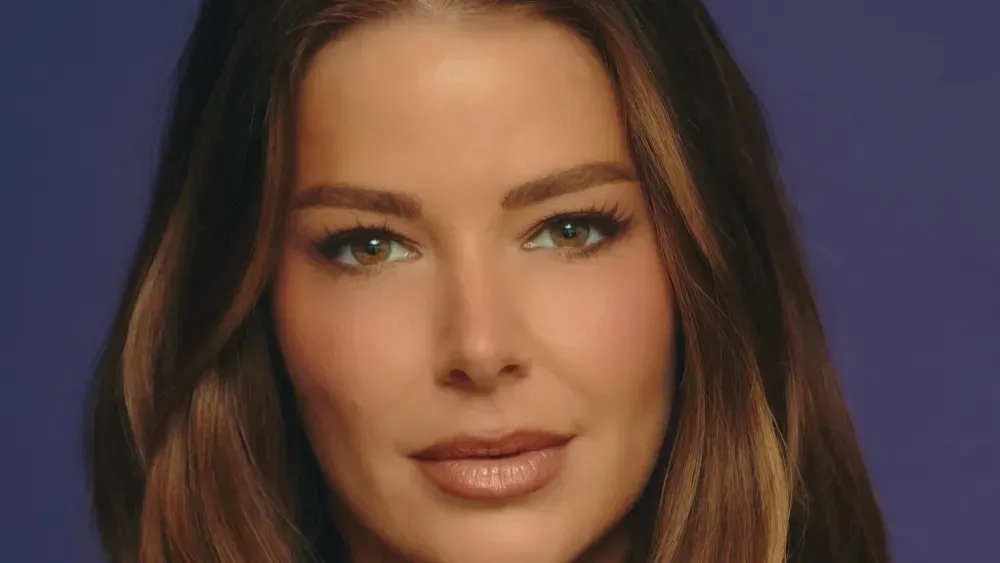
Ariana Madix is heading from unscripted television into a distinctly more cosmic form of social warfare. The Vanderpump Rules alum is attached to star in and executive produce Future Housewives, a drama in development at Peacock. The project is the first scripted production connected to Madix’s recently launched Over Fences banner.
The setup is intentionally meta without being a literal extension of Madix’s reality-TV work. Future Housewives takes place in New Beverly Hills, a lavish asteroid colony where affluent socialites contend with beauty technology, brutal personal rivalries and scandals that cross planets. An idealistic newcomer enters their insulated circle, forcing the residents to confront how disconnected they have become as their society changes around them.
That combination makes the series sound like a satirical speculative-fiction drama: a story using a futuristic setting to examine recognizable social behavior in the present. Rather than simply moving familiar reality-TV archetypes into space, the stated premise puts the machinery of glamour itself under a microscope. The socialites’ beauty regimens are described as bioengineered, while the setting’s asteroid-colony status implies that wealth and exclusivity have become literally removed from everyday life.
A reality-TV premise retooled for science fiction
The title gives away the central joke, but the logline points toward something broader than an ordinary franchise parody. The project’s world is built around status performance: image maintenance, elite relationships, private feuds and highly visible scandal. Those are staples of unscripted ensemble television, yet the colony setting creates room to ask what those habits look like when technology can alter beauty and the wealthy can live beyond Earth.
In that sense, “satire” is an important description. Satire uses exaggeration, irony or absurdity to critique people, institutions or social norms. Here, an asteroid settlement called New Beverly Hills is a deliberately heightened image of privilege. “Bioengineered beauty regimens” similarly takes the pressure to preserve a public image to an extreme that only science fiction can comfortably stage.
But the series is also characterized as heartfelt, a distinction that matters. A purely mocking take could treat its socialites and its newcomer as simple targets. The premise instead suggests an emotional story about people whose values and sense of identity are being challenged. The newcomer’s arrival is not only a catalyst for interpersonal mess; it is the event that exposes the distance between the colony’s old assumptions and an evolving society.
That is a useful dramatic engine. The glamorous residents have a system to protect, while the outsider has the potential to disrupt it. The supplied description does not identify Madix’s character or specify the show’s episode count, format, release window or additional cast. Since the project remains in development, those details—and whether it ultimately receives a series order—have not been established.
Brandon Braga brings deep space-fiction credentials
Future Housewives is written by Brandon Braga, whose credits include writing for Star Trek: The Next Generation and Star Trek: Voyager. He also co-created Star Trek: Enterprise. That background is notable because the new show’s science-fiction elements are not just ornamental: its premise depends on the idea of an off-world society with its own aesthetics, pressures and class boundaries.
Science fiction is often used as a framework for reframing current anxieties. A far-off colony can make familiar dynamics look newly strange, whether the subject is wealth, public identity, social conformity or technology’s role in shaping self-image. Braga’s prior work in a long-running space-fiction universe indicates experience with storytelling set beyond Earth, while Future Housewives gives that sensibility a satirical, status-obsessed twist.
The creative team also includes Seth MacFarlane, who executive produces through Fuzzy Door alongside Erica Huggins. Fuzzy Door’s Jaron Lanier is a co-executive producer. Rachel Hargreaves-Heald and Emily Kochman are overseeing, and Universal Global Television is the studio.
Executive producers generally help guide a project at a high level, with responsibilities that can include creative development and production oversight. The exact division of those responsibilities on Future Housewives has not been detailed. What is clear is that Madix will have a producing role in addition to appearing on screen, an important step beyond a guest acting spot or a hosting assignment.
Madix’s expanding scripted-TV path
Madix became prominent through her 11-year run on Bravo’s Vanderpump Rules and now hosts Love Island USA for Peacock. Her new project therefore keeps her connected to the platform while moving her into a scripted series designed around themes that knowingly echo the culture of reality television.
Her acting résumé has also grown across stage and screen. Madix made her acting debut as Roxie Hart in Chicago on Broadway. She currently plays Connie Francis in Just in Time, and has had screen guest roles in NBC’s St. Denis Medical and ABC’s Will Trent. Those credits do not reveal the tone or scale of her role in Future Housewives, but they give the project a clear place in a broader transition toward scripted work.
There is a larger programming context as well. Peacock has hosted Madix as the presenter of Love Island USA, and Future Housewives would build on that relationship with a more ambitious fictional concept. The streamer is also part of an active TV landscape where recognizable performers frequently move among live-action comedy, animation, hosting and genre work; Peacock’s upcoming animation slate includes the announced Ted animated series, another example of established screen entertainment being reconfigured for a new format.
What the premise could explore
The specific phrase “a society evolving beyond superficiality” gives Future Housewives a potential thematic direction. The show’s wealthy characters appear to live in a culture invested in surfaces: engineered appearance, social rank, spectacle and rivalry. The question implied by the logline is whether their environment is beginning to outgrow those priorities—and whether they are capable of changing with it.
That creates several tensions without requiring the series to abandon its heightened premise:
- Technology versus identity: If beauty is bioengineered, physical appearance may become less a matter of personal presentation and more a form of access, competition or social control.
- Isolation versus accountability: Living on a wealthy asteroid colony places the group at a symbolic and practical distance from others, making the outsider’s perspective especially disruptive.
- Performance versus sincerity: Rivalries and scandals can provide the spectacle, while the “heartfelt” element could come from characters discovering what remains when status no longer settles every question.
- Familiar form versus unfamiliar setting: The show can use the recognizable rhythms of an ensemble social drama while treating its futuristic environment as more than a backdrop.
These are interpretations of the announced premise, not confirmed plot points. The available information does not disclose character names, story arcs or a pilot storyline. Still, the concept’s clearest opportunity is its collision of two genres that rarely share the same space: the intimate, socially competitive energy associated with reality television and the world-building possibilities of science fiction.
For Madix, the project represents a particularly tailored next move. It acknowledges the public persona that made her widely known without asking her to replay it exactly. For Braga and the producing team, it presents a chance to make space opera smaller, sharper and more socially focused: less about commanding starships than surviving a dinner party when everyone can afford a better face and no one can escape the group chat.
At this stage, Future Housewives is a development project, not a confirmed series on Peacock’s schedule. Its central idea, however, is unusually clear: send the luxury-drama playbook into orbit, then see whether its stars can recognize themselves once the glitter stops being the point.