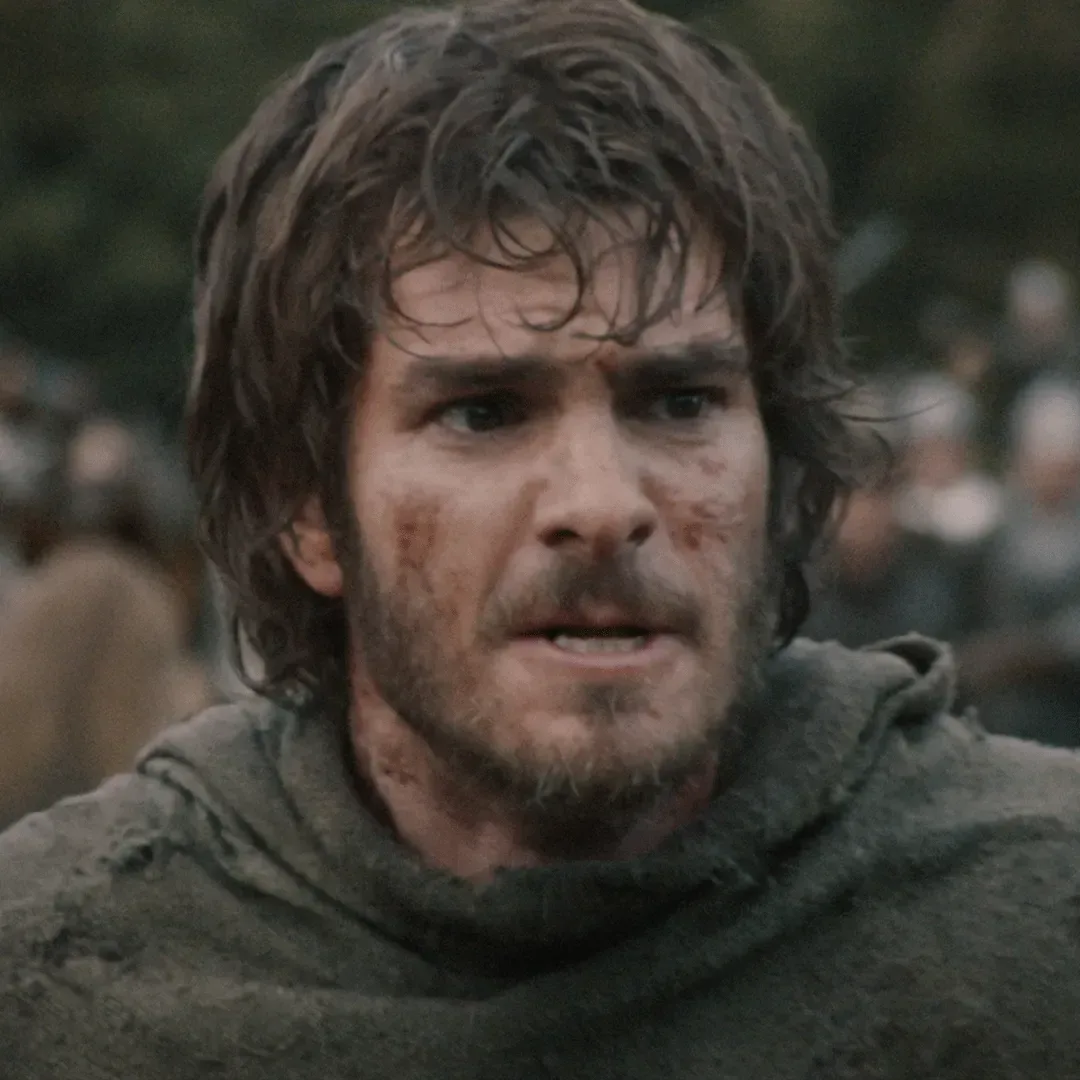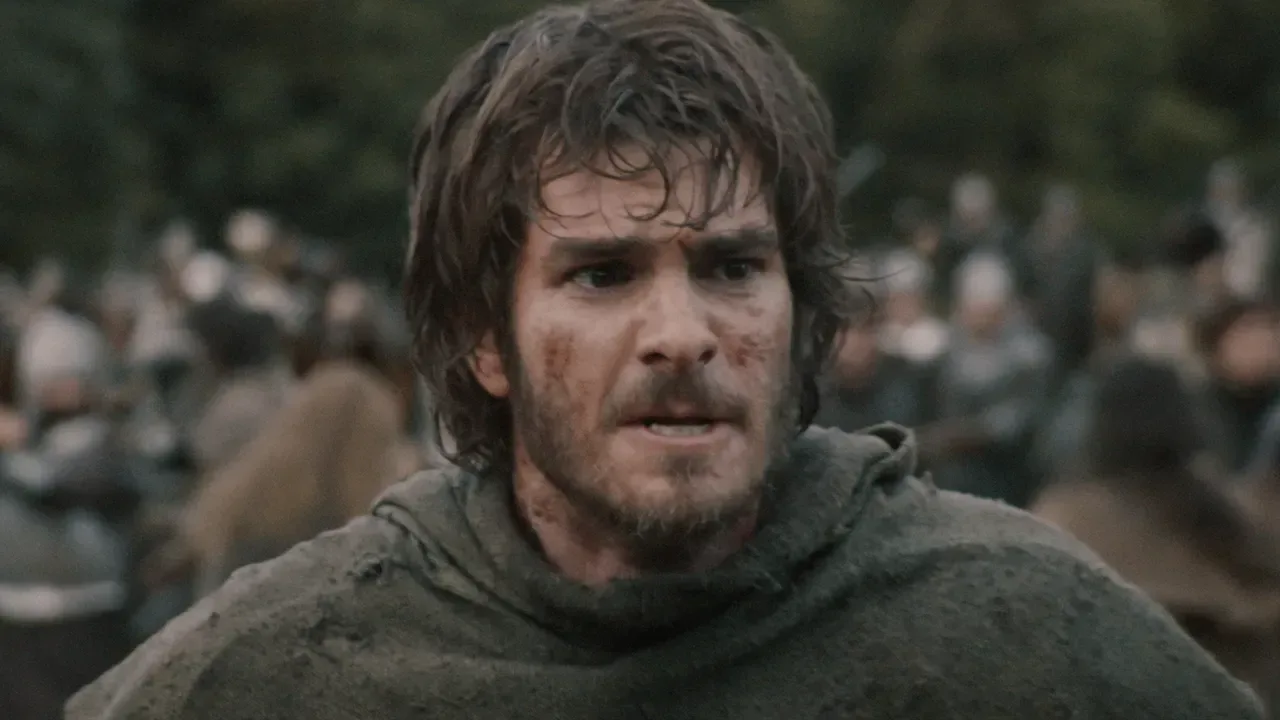
Andrew Garfield is framing The Uprising as more than a period drama with mud, monarchs and a suitably alarming amount of medieval social tension. Speaking alongside director Paul Greengrass ahead of the film’s launch this week, Garfield said he hopes the story’s anger and solidarity register with a modern audience—and that its wealthiest viewers come away especially unsettled.
The film draws on England’s Peasants’ Revolt of 1381, an uprising driven in part by King Richard II’s harsh taxation of the poorest people in society. Garfield plays Ploughman, a farmer who becomes a leader in the rebellion. Although the setting is roughly 700 years removed from the present, the actor and Greengrass see the story as carrying immediate relevance.
Garfield said he wants the film to be “galvanizing,” with viewers recognizing aspects of their own struggles in people separated from them by centuries. He also made his intended response from billionaires unusually plain: he hopes they are “scared s***less” by it.
That is a bracing way to sell a historical drama, and it fits a project whose promotional language promises that “there will be no peace until we are healed.” Garfield’s comments suggest that, in his reading, the movie’s message is not simply that inequality can produce revolt. It is also that everyone caught up in a deeply unequal society, including those with immense power, needs to confront the damage being done.
A 1381 story aimed at a 2026 audience
The Peasants’ Revolt is not a neat, comforting historical fable. It was a moment of popular resistance shaped by hardship, taxation and the brutal imbalance between rulers and those expected to fund the system. A film centered on a farmer leading a rebellion naturally puts the people bearing that pressure at the front of the frame rather than treating them as background scenery for a royal court.
Garfield’s Ploughman gives The Uprising a deliberately grounded focal point. The character is a farmer, not a prince, wizard, billionaire space tourist, or the sort of chosen hero who discovers a prophecy after tripping over an unusually shiny sword. That choice matters because the movie’s central conflict is rooted in ordinary people reacting to conditions imposed from above.
Some of the marketing has positioned the film as an origin story connected to Robin Hood. That association makes intuitive sense: Robin Hood has long served as a folk symbol of resistance to exploitative authority and of wealth moving, at least in legend, from the powerful toward people with less. But The Uprising is specifically situated in the revolt of 1381, and its stated political urgency appears to be part of the point rather than a decorative flourish around the historical setting.
Garfield’s comments do not identify any particular billionaire. Still, the broader target is clear: concentrations of enormous wealth and influence in the present day. His additional observation that billionaires may be “the most soul sick” pushes his argument beyond simple villain labeling. He included them in the need for healing, even as he described the film as a warning they should find frightening.
Why the Fortnite connection is notable
For gaming audiences, one of the most intriguing details is that The Uprising is also a game within Fortnite. That gives a medieval political drama a pathway into one of the world’s largest game ecosystems, where the audience is used to encountering entertainment crossovers in formats that range from character appearances to playable themed experiences.
The available details establish that a Fortnite game exists, but they do not spell out its mechanics, objectives, modes, or the extent of Garfield’s and Greengrass’ involvement. It would be premature to assume it is a conventional action adaptation, a narrative experience, a combat map, or something else entirely. The meaningful fact for now is the unusual meeting of a film about a fourteenth-century revolt and a contemporary game platform built around shared digital spaces.
That pairing also changes how a story like this can travel. A traditional historical release can ask viewers to sit with a difficult subject for a feature-length running time. A game connection can potentially invite audiences to approach the setting through participation and exploration, though the exact form of that invitation remains unspecified. In a media environment where franchises are often built to jump between screens, The Uprising is taking its rebellion from cinema into Fortnite’s enormous cultural arena.
It is not difficult to see why the Robin Hood comparison has been useful in marketing. Gaming has a long familiarity with outlaw heroes, anti-authoritarian quests and stories about resisting systems designed to keep power in a few hands. The underlying historical material, however, is more severe than a simple rob-from-the-rich fantasy. The revolt at the center of this film grew out of real conditions that made life untenable for the people at the bottom.
Garfield’s modern target: wealth, work and technological upheaval
The actor’s remarks arrive amid continuing arguments about the power held by major technology figures and corporations. The race to lead in artificial intelligence has intensified concern about job displacement, the social consequences of rapid automation and the possibility that economic disruption could create further instability. Those concerns do not make a direct replay of 1381 inevitable, and the past rarely returns in identical costume, but they help explain why a story about taxation, desperation and collective anger can feel current.
Garfield did not lay out a policy platform in his comments. He spoke instead about emotional recognition: an “awakening” in which people see their own pressures reflected in the lives of characters from a distant era. That is a more expansive goal than merely using history as an excuse for speeches with swords nearby. The premise is that old stories can sharpen the way audiences look at present-day systems.
Greengrass’ involvement is relevant here as well. In discussing the film, he and Garfield emphasized its contemporary resonance despite the historical distance. The approach appears to invite viewers to consider the social conditions behind rebellion, rather than filing the revolt away as an isolated event with an old date attached.
Garfield has lately remained visible in pop-culture conversation through his Spider-Man history, even while discussing very different material. He recently said he had not yet congratulated former Spider-Man co-star Tom Holland on the success of Spider-Man: Brand New Day and The Odyssey, because he had not seen either film. For more on the framing around Holland’s recent Spider-Man outing, read Spider-Man: Brand New Day’s record run and Peter Parker’s loneliness.
A cautionary tale, not a time capsule
The Uprising is being presented as a cautionary tale, but Garfield’s wording gives that phrase a wider meaning than “beware the pitchforks.” He wants an audience response that is both collective and personal: solidarity from people who recognize hardship, and discomfort from people whose wealth or authority insulates them from it. The request that billionaire viewers feel fear is direct, while his insistence that they too may need healing adds a less expected dimension.
There is a practical tension in turning any revolt into mainstream entertainment, especially when promotional campaigns link it to a world-famous game. Revolt can become a cool aesthetic very quickly: torches, cloaks, banners and dramatic mud with none of the uncomfortable questions about why people reach a breaking point. Garfield’s comments signal that he does not want the film’s politics sanded down into medieval cosplay.
Whether audiences engage with it as historical drama, Robin Hood-adjacent legend, a warning about inequality or a Fortnite curiosity, the project is clearly asking for more than passive admiration of the costumes. Its focus is on a revolt born from crushing pressure, and its star is explicitly challenging modern power to look at that history without feeling safely detached from it.