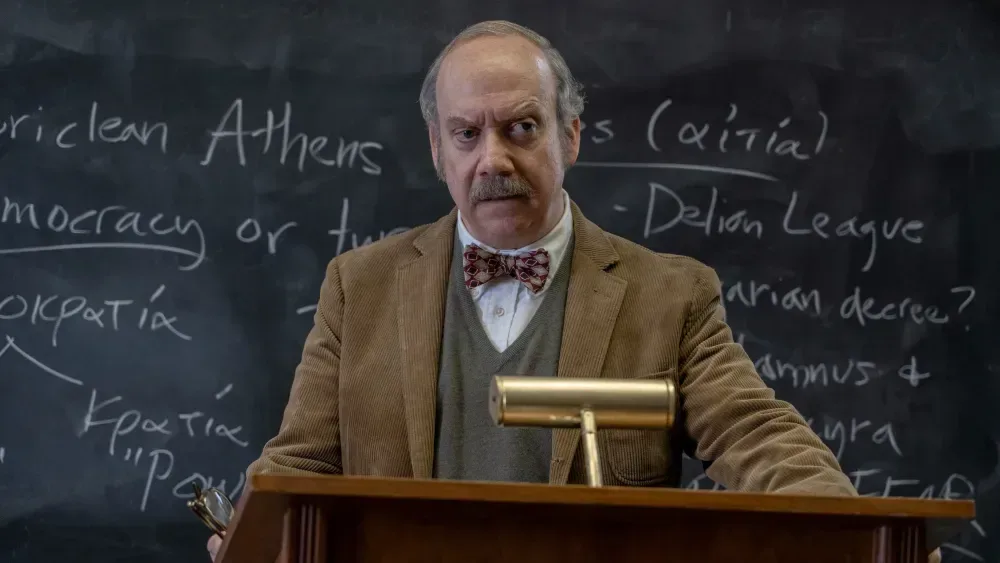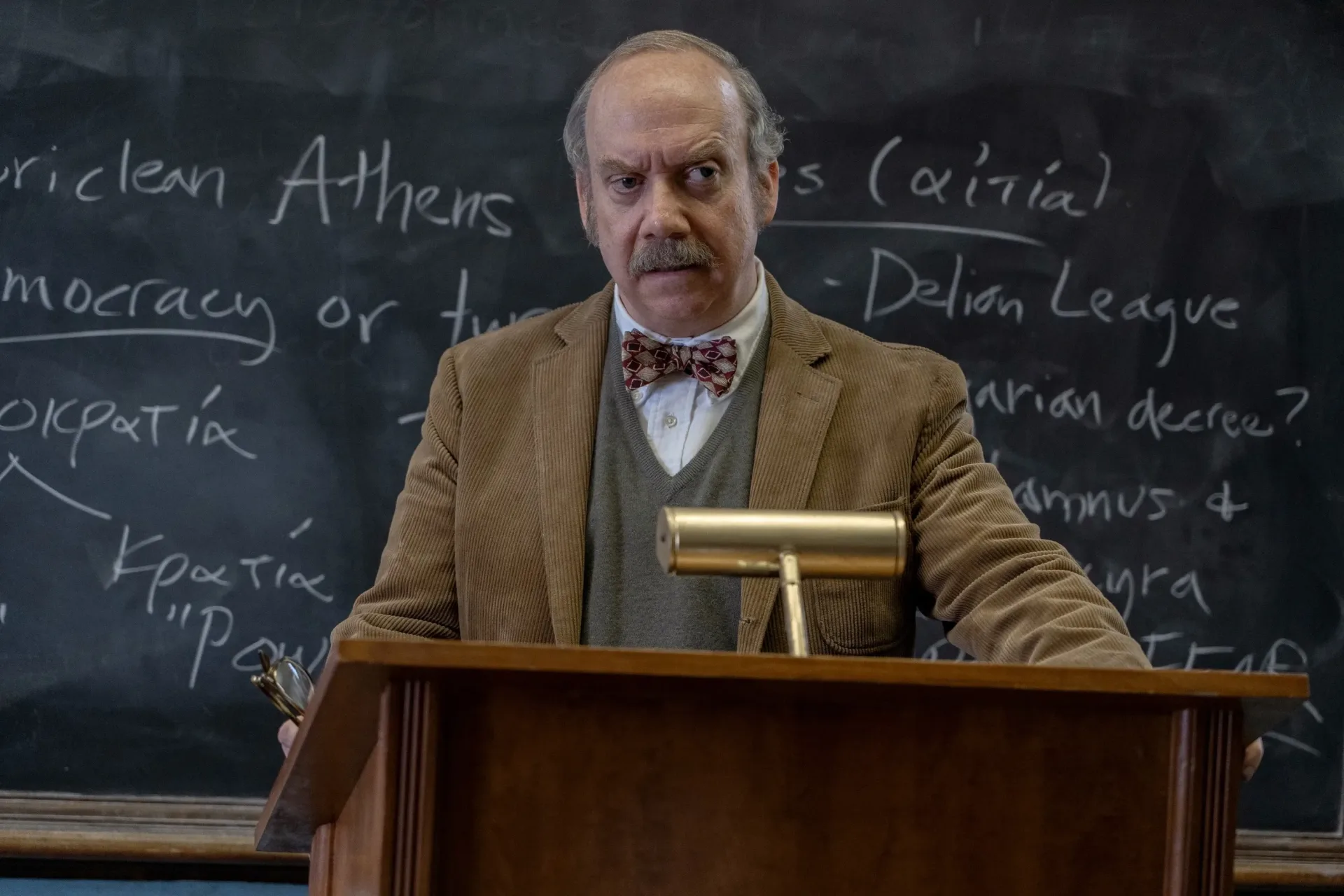
Alexander Payne, The Holdovers screenwriter David Hemingson, producer Mark Johnson, Miramax, Focus Features and other corporate entities have been named in a copyright lawsuit brought by screenwriter Simon Stephenson. The complaint alleges that the finished film drew on Stephenson’s unproduced screenplay, Frisco.
The case is an allegation, not a finding that copyright infringement occurred. Its central dispute is whether the overlap claimed by Stephenson rises beyond broad storytelling resemblance and into protected expression: the particular arrangement of plot events, character dynamics and narrative structure that make up a screenplay.
What Stephenson alleges
Stephenson’s complaint describes Frisco as the story of a discouraged doctor at a children’s hospital who must look after a highly intelligent teenage patient. The two form a bond during a trip to San Francisco. The account outlined in the filing culminates with the doctor leaving his job and beginning a cross-country journey.
The lawsuit says there are 46 “matched incidents” between Frisco and The Holdovers. It argues that the shared material was not coincidental and that the structure and incidents in Stephenson’s screenplay were transferred into the later film while surface-level elements were altered.
The complaint characterizes a screenplay as a film’s blueprint and alleges that Frisco served that role for The Holdovers.
That language gets to the heart of the claim. A screenplay is more than a premise on a page: it ordinarily sets out characters, scenes, sequencing, conflicts and the progression of a story. Stephenson’s suit contends that those more specific creative components, rather than a general idea alone, found their way into the film.
Why access is a major part of the dispute
Stephenson says he wrote Frisco in 2012 and 2013, drawing from his background as a pediatrician. The screenplay later placed third on the Black List, an industry list centered on well-regarded unproduced scripts. Stephenson’s credited work includes Paddington 2, Luca and The Electrical Life of Louis Wain.
The complaint alleges that Stephenson’s agents tried to interest Payne in the project, and that Payne read Frisco in 2013 and again in 2019. The filing says Payne declined to make the film. It further attributes a message to Payne’s producing partner that said Payne liked the script but was not interested in producing or directing it.
That claimed history matters because it is the alleged connection between the earlier screenplay and the people behind the later movie. The suit says that material from Frisco entered drafts of The Holdovers through Payne’s input to Hemingson.
Access, in this context, means an allegation that someone involved in a later work had an opportunity to encounter an earlier one. It does not, on its own, establish copying. The dispute described by the complaint turns on both asserted access and the alleged pattern of similarities between the two scripts.
Payne has previously denied the accusation
Stephenson took his concerns to the Writers Guild of America in 2024. He was advised that the union could not adjudicate the matter and was referred to a lawyer. A union being unable to decide the issue is not a resolution of the underlying allegation; it means the dispute moved outside that process.
Payne later rejected the allegation publicly at the Sarajevo Film Festival, calling it “the stupidest thing in the world.” The lawsuit now formally places the competing positions before the courts, with Stephenson alleging extensive borrowing and Payne having forcefully denied the accusation.
Hemingson, Johnson, Miramax and Focus Features are among the additional defendants identified in the complaint. Including the film’s writer, producer and corporate entities reflects the suit’s broad contention that the alleged use of Frisco was connected to the development and production of The Holdovers, not solely to one individual.
Ideas versus expression: the distinction behind a screenplay claim
Stories frequently share familiar building blocks: unhappy professionals, unlikely friendships, difficult adolescents, journeys and personal reinvention. The existence of such elements alone does not answer the question raised in Stephenson’s complaint.
The allegation here is more specific. Stephenson does not merely contend that the film and his script share an emotional register or broad premise. He says that numerous incidents and the structure connecting them match, and that the later project changed cosmetic details while retaining the underlying blueprint.
“Surface cosmetic details” is important phrasing in that argument. It signals Stephenson’s position that changing setting, occupation, names or other obvious features would not defeat a claim if the protected creative architecture—the particular progression of scenes and relationships—was substantially carried over. The defendants’ position, as reflected by Payne’s denial, is plainly at odds with that characterization.
For viewers, the practical takeaway is restraint. A lawsuit can lay out a detailed comparison and use emphatic language, but the pleading is still one side’s account. The eventual legal questions, if the case proceeds, will concern what material was actually available to whom, which similarities are being alleged, and whether those similarities are legally meaningful rather than ordinary common ground between two character-driven stories.
Why the alleged timeline will draw attention
The claimed 2013 and 2019 readings create two points of alleged access years apart. The lawsuit presents them as part of a continuing chain connecting Frisco to the people who later worked on The Holdovers. It also frames the earlier pass as evidence that Payne was familiar with the screenplay even though he was not initially interested in directing or producing it.
Stephenson’s prior professional credits and the Black List placement give the complaint context for how an unproduced screenplay could circulate within the film business. But neither a prominent writing résumé nor a strong industry ranking, by themselves, decides whether the later film copied protected material. The suit’s specific allegation remains that elements of Frisco reached The Holdovers through development feedback attributed to Payne.
The case also arrives amid continued interest in movie storytelling and screenwriting credit, a conversation that extends beyond any one film. For another current film-world story, see coverage of early reactions to The Hunger Games: Sunrise on the Reaping.
What is known—and what remains unresolved
- Stephenson alleges that The Holdovers used protected material from his unproduced screenplay Frisco.
- The complaint identifies 46 purportedly matching plot incidents.
- Stephenson says Payne read Frisco in 2013 and 2019 after his agents pitched the project.
- Payne has publicly denied the accusation.
- The defendants named include Payne, Hemingson, Johnson, Miramax, Focus Features and other corporate entities.
- No outcome on the merits is established by the filing itself.
For now, the complaint offers a defined version of the alleged overlap: a relationship between an older, unhappy caretaker figure and an unusually bright teen, a pivotal trip, and a personal break from an unfulfilling life, alongside what Stephenson says is a much larger set of corresponding incidents. The defendants will have the opportunity to answer those claims. Until then, the suit remains an unresolved copyright dispute, not proof of wrongdoing.