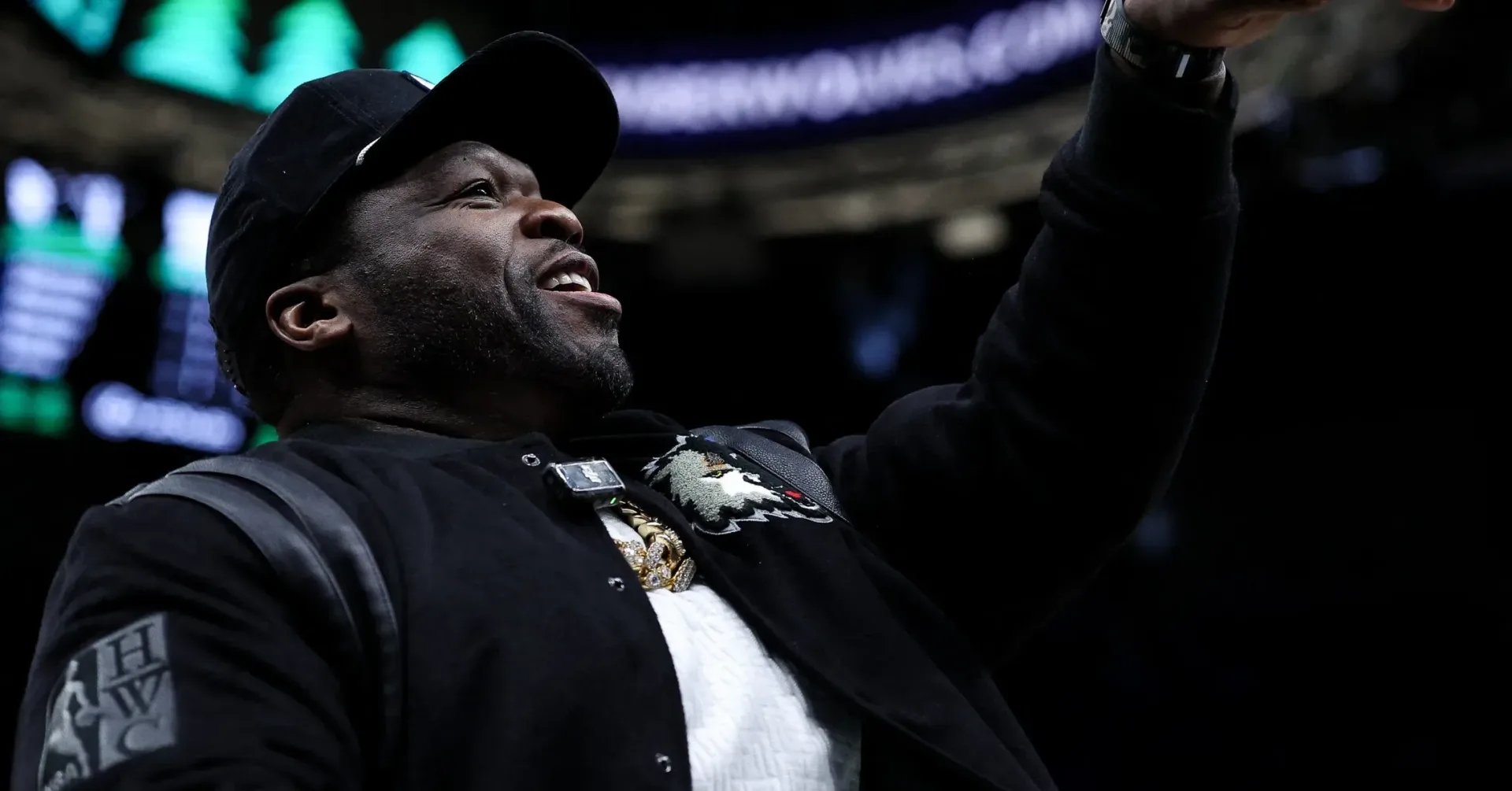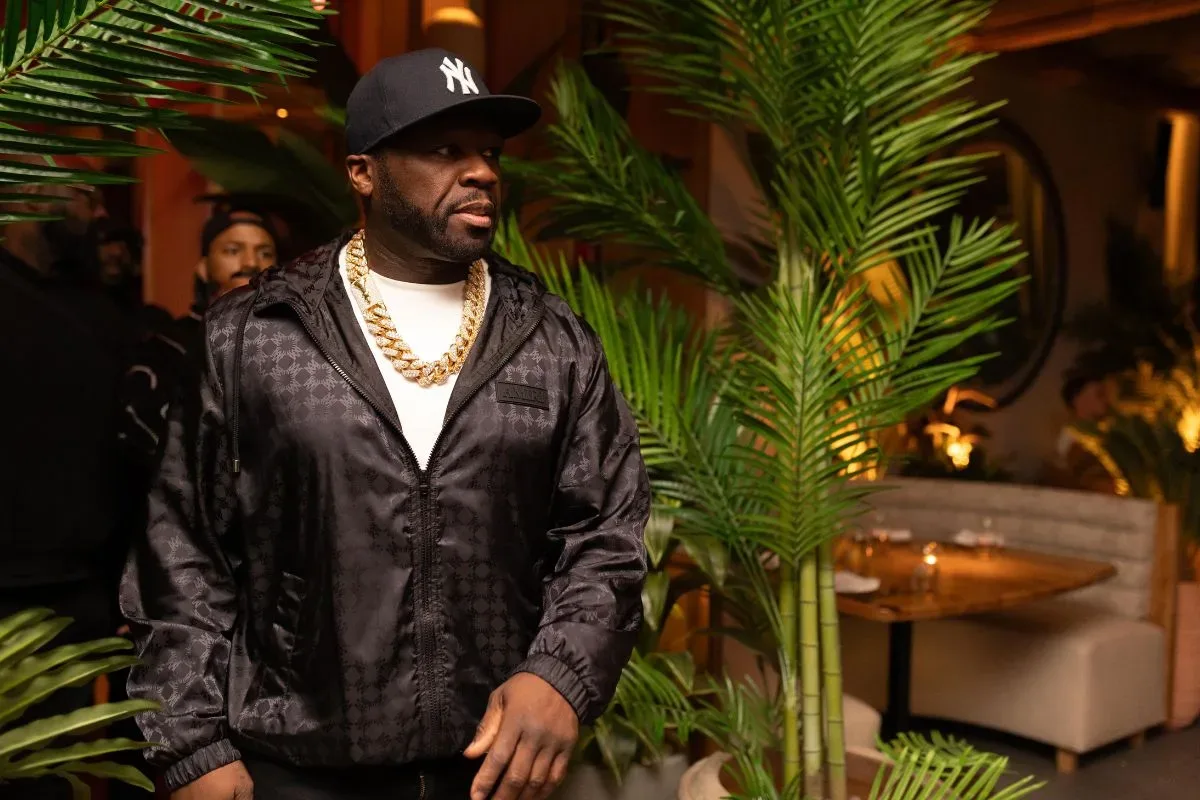
50 Cent has revived one of the most durable jokes in his long-running feud with Rick Ross, responding online to reports that Ross’ son, William Roberts III, told police he was assaulted in Daytona Beach.
The reported incident is serious: William told police that a man allegedly threatened him, hit him in the head with a gun and said, “I don’t care who your daddy is, I’ll kill you right here.” Police documented slight swelling on the right side of William’s head. He reportedly said he did not need medical treatment.
But 50 Cent’s post did not address the suspect or the alleged violence directly. Instead, he directed his mockery at Ross, joking that William should have called his father rather than police. The punchline was built around an old and extensively documented point of friction between the two rappers: Ross worked as a correctional officer before his rap career.
That distinction matters in understanding the post. This was not a new accusation or a new revelation about Ross. It was a callback to a feud that has repeatedly used his former job as material, now attached to a police matter involving Ross’ son.
What police say was reported in Daytona Beach
The alleged attack occurred on October 11 in Daytona Beach. William told police he had been speaking with a woman on a sidewalk when a man arrived in a vehicle, aimed a gun at him and made the reported threat. William said he was then struck in the head with the gun.
Investigators noted the apparent swelling but found no city-camera footage of the encounter. That absence does not resolve what occurred; it means that the reported camera check did not produce video corroboration of the incident. William later identified a suspect through a photo lineup.
Police arrested a suspect on charges of aggravated assault and aggravated battery with a deadly weapon. Those are allegations reflected in criminal charges, not a finding of guilt. The supplied reporting does not establish a motive, a relationship between the suspect and William, or the eventual outcome of the case.
That context is important because celebrity-related stories can easily shift attention from the reported victim and the legal process to the public figures around them. In this instance, 50 Cent’s social-media response has reignited an old rap rivalry, but it does not change the underlying claims police were asked to investigate.
Why the prison-guard reference has lasted so long
Ross’ history as a correctional officer has been public for years. He held the job for roughly a year and a half before becoming established in rap. After an image from that period circulated, Ross disputed its authenticity. State employment records published in 2008 later confirmed that he had worked as a correctional officer.
For 50 Cent, that biography became a particularly useful piece of feud ammunition because it clashed with the larger-than-life image associated with Ross’ music. Rap rivalries frequently turn on perceived inconsistencies, and “Officer Ricky” was 50 Cent’s deliberately reductive label for that contrast.
The exchange escalated in 2009. Ross targeted 50 Cent on “Mafia Music,” and 50 Cent responded with “Officer Ricky (Go Head, Try Me).” He also used a run of “Officer Ricky” cartoons to keep the gag visible beyond a single diss record.
In other words, the latest post works as an inside reference for people familiar with more than a decade of their back-and-forth. Its structure is simple: 50 Cent treats Ross’ former role in law enforcement as grounds for asking why police involvement would be necessary. The joke depends on a connection between a former correctional officer and the idea of calling law enforcement, even though those roles are not the same thing.
Correctional officer versus police officer
A correctional officer works in a correctional setting, such as a jail or prison, where responsibilities can include maintaining safety, supervising incarcerated people and enforcing facility rules. A police officer generally investigates crimes, responds to calls and makes arrests in the community. The roles can both be described broadly as law-enforcement-related, but they are distinct jobs with different powers and duties.
That distinction is not the point of 50 Cent’s jab; the imprecision is part of the joke. Still, it is useful context when the post is framed around the fact that an arrest was made. Ross’ past employment does not imply he had any role in this investigation, and the available information gives no indication that he did.
A familiar feud collides with a real criminal allegation
Long-running celebrity feuds often build their own vocabulary. A name, a track title or a visual bit becomes shorthand that can be deployed years later with no explanation for longtime followers. “Officer Ricky” is one of those references. Its continued use shows how a well-known rivalry can preserve old material long after the original diss songs and cartoons appeared.
Yet the setting here creates a sharper divide between entertainment and the underlying events. The post may be understood as a continuation of a personal and artistic rivalry, while the Daytona Beach case concerns a report of threatened gun violence and an assault allegation. The available account says police pursued the matter, conducted a photo lineup and made an arrest; it also says surveillance-camera checks did not uncover footage of the reported attack.
Those facts leave room for the criminal process to develop. A photo-lineup identification is an investigative step, not by itself a court determination. Similarly, an arrest and charges begin a legal case; they do not decide it. The allegation should therefore be described with care, particularly when the public discussion is dominated by a famous parent and a famous adversary.
50 Cent’s response illustrates the unusual durability of rap-beef commentary in the social-media era. An old joke can be retrieved instantly and delivered to an audience that already knows the history. The speed of that cycle can make a decades-old point of contention feel current again, even when the original subject is unrelated to the reported event.
Ross and 50 Cent have both long been associated with a style of public sparring in which songs, online posts and visual jokes reinforce each other. The “Officer Ricky” reference is not merely an insult in isolation; it is an established recurring device from that history. For readers encountering it now, the key context is that the phrase points to confirmed past employment, while 50 Cent’s current post is commentary rather than a factual update on the alleged assault.
What is known, and what remains unaddressed
- Known from the supplied reporting: William Roberts III said he was threatened and struck with a gun on October 11 in Daytona Beach.
- Known from the supplied reporting: Police observed slight swelling, and William reportedly declined medical care.
- Known from the supplied reporting: He identified a suspect in a photo lineup, while city-camera checks did not yield video of the attack.
- Known from the supplied reporting: A suspect was arrested on aggravated-assault and aggravated-battery-with-a-deadly-weapon charges.
- Context for the online response: 50 Cent’s joke refers to Ross’ former correctional-officer job and echoes their “Officer Ricky” feud material from 2009.
- Not established here: The suspect’s motive, the final legal disposition of the charges, or any involvement by Ross in the investigation.
The episode is a reminder that familiar celebrity feuds can generate a second story alongside the first one. The alleged assault report concerns what happened to William Roberts III and what investigators can substantiate. 50 Cent’s post concerns a much older conflict with Rick Ross, using a reference that has become part of the pair’s public history.
For more music-industry coverage, see our report on Lil Baby’s newly revealed tracklist.