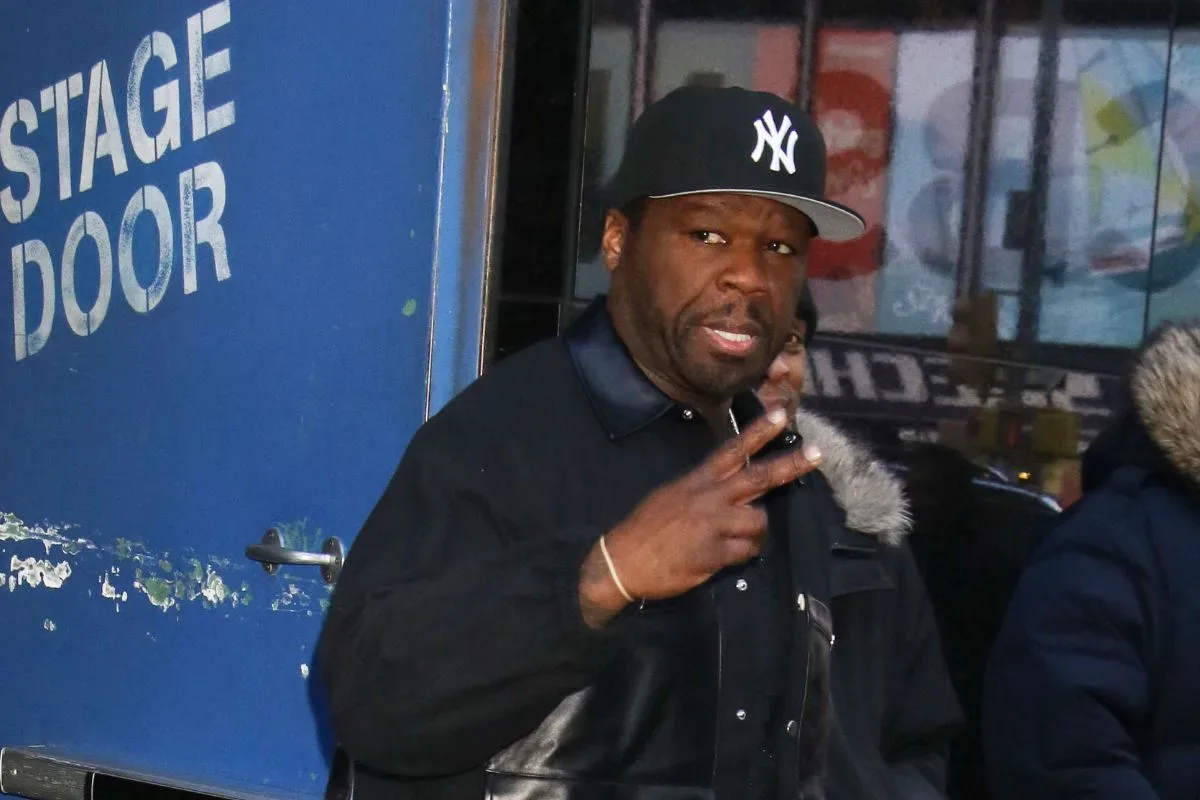
50 Cent appeared via Zoom in a court hearing tied to his legal dispute with Tia Kemp, a case centered on online remarks involving his son, Sire, and material concerning Sire’s mother, Daphne Joy. The hearing did not settle whether a permanent injunction will be issued, but it clarified that the dispute remains active and is expected back in court on December 7.
The rapper, whose legal name is Curtis Jackson, has sued Kemp and is seeking an injunction that would bar her from speaking about Sire. In the brief remote appearance, Jackson told the judge that he might not have continued pursuing the matter had Kemp responded differently to an existing order. Instead, he said, her response caused the situation to continue “in the wrong direction.” The judge indicated the choice to continue lies with Jackson and that the issue would be revisited within 30 to 45 days.
The immediate complication is procedural: Kemp did not attend this hearing, and she reportedly has not been served with the injunction paperwork. Jackson’s attorneys contend that she is avoiding service. Until service is completed, the court’s ability to determine whether a permanent injunction is appropriate appears limited.
What the case is about
The conflict grew out of social-media exchanges. Jackson had mocked Kemp and Rick Ross’ son after the latter was reportedly assaulted at gunpoint in Florida. Kemp then made comments about Sire, including language about him being on the spectrum and calling him “slow.” She also shared a sexually explicit photograph of Daphne Joy, Sire’s mother.
Those are the events described as the basis for Jackson’s legal action. They are important because the requested court order is not simply about a broad celebrity feud or a general demand that criticism stop. The request, as described, is targeted at discussion of his child. That distinction is likely to remain central as the court considers what relief is being sought and whether any long-term restriction can be put in place.
Jackson was previously granted a temporary restraining order against Kemp last month. A temporary restraining order, often shortened to TRO, is generally an interim measure: it can preserve the status quo while a dispute moves through the early stages of court. It is different from a permanent injunction, which would be a longer-lasting order and ordinarily requires the court to make a fuller determination after the affected party has been properly brought into the proceeding.
Why service is the key issue before the next hearing
Service means formally delivering legal papers to the person named in a case in a manner recognized by the court. It is a fundamental part of the process because it gives that person formal notice of the claims and a chance to respond. The hearing’s lack of resolution should therefore not be read as a decision on the underlying allegations or on the merits of Jackson’s requested injunction.
Rather, the reported service issue puts the case at an early but consequential stage. Kemp’s absence meant there was little the court could do at this particular hearing. Jackson’s attorneys argue she is avoiding being served, but that is their position in the dispute, not a conclusion described as having been reached by the court.
Related coverage includes 50 Cent Appears by Zoom as Tia Kemp Injunction Dispute Moves Toward December Hearing.
Practically, the next phase hinges on whether service is completed and whether Kemp appears or otherwise responds. If that happens, the court would have a clearer path to hear both sides on the requested restrictions. If it does not, the procedural question itself may continue to consume attention before the court can fully address the request for a permanent injunction.
Temporary restraining order versus permanent injunction
Legal terms can make a public dispute look more resolved than it actually is, so it is useful to separate the two remedies mentioned here.
- Temporary restraining order: a short-term order already reported in this case. It is designed to provide immediate, temporary protection while the legal process continues.
- Injunction: a court order directing someone to do, or refrain from doing, something. Jackson is seeking an order that would prevent Kemp from talking about Sire.
- Permanent injunction: despite the name, this does not mean the order is automatically granted forever without further process. It refers to a more lasting remedy than a temporary order and is the unresolved issue in this dispute.
The facts provided do not establish what a final order would say, if one is issued at all. Nor do they establish how a court would define the scope of any speech restriction. What is clear is that Jackson’s request is focused on Sire, while the case also involves allegedly shared explicit material involving Daphne Joy.
Online activity continues to be part of the public dispute
The matter has not remained confined to court filings and hearings. Kemp has continued online trolling after the suit was filed. Jackson also said he had Kemp’s Instagram account suspended from using Live. That claim concerns the account’s live-streaming function; it should not be confused with a court order or treated as proof that the legal case has been decided.
That distinction matters because platform enforcement and court action are separate systems. A social-media platform can limit account features under its own rules, while a court evaluates the specific claims and requests presented in a legal proceeding. One does not automatically decide the other.
For observers, it is also worth distinguishing public posts, statements made by lawyers, and judicial rulings. Online exchanges can drive attention and shape the tone around a feud, but the next meaningful legal development will be whether service is completed and what happens when the matter returns to court.
Jackson’s Zoom appearance adds a direct courtroom moment
Jackson’s remote appearance was brief, but it supplied a direct indication of why he says he is continuing. His remarks framed the case as a response to conduct that he believes escalated after the temporary order, rather than as an attempt to keep an older exchange alive indefinitely.
“Honestly, if she didn’t respond the way she responded to the order, then I wouldn’t even continue to pursue it. But she just went off, and it continued to go in the wrong direction,” Jackson told the judge.
The judge reportedly told him that pursuing the matter was his decision, then set the expectation that the issue would be revisited in roughly 30 to 45 days. The December 7 hearing provides the next scheduled checkpoint, though the available account does not say what specific filings or decisions may occur before then.
This is also not the first time the broader dispute has raised questions about how a history of online provocation can intersect with formal legal claims. Earlier coverage examined the pressure that the case puts on the public dynamics surrounding Jackson’s own trolling record. The current hearing, however, is narrower: it concerned his ongoing request for an order limiting Kemp’s commentary about Sire and the unresolved issue of notice to Kemp.
What to watch on December 7
The next hearing is not a guaranteed final ruling. Based on the current posture, the most immediate questions are straightforward:
- Whether Kemp has been formally served with the relevant papers.
- Whether she appears or files a response through the legal process.
- Whether the court can then evaluate Jackson’s request for a permanent injunction.
- Whether the previously reported temporary restraining order remains the operative short-term protection while those questions are addressed.
There are still significant unknowns. No final outcome on a permanent injunction has been described, and the account of the hearing does not provide a final ruling on the allegations behind the lawsuit. For now, the case remains a live legal dispute in which process matters as much as the attention-grabbing social-media conflict that preceded it.
The December 7 date is therefore best understood as the next opportunity for the dispute to move beyond its present procedural impasse. Until then, the strongest confirmed development is limited but meaningful: Jackson appeared remotely, reiterated why he is pursuing the case, and the court left the larger injunction question for a later hearing.