Xiaomi’s 18 Pro and 18 Pro Max are built around an increasingly familiar smartphone idea: put a small screen on the back, then find enough reasons for people to use it. The company’s new twist is an attempt to let owners create their own lightweight rear-screen software with generative AI. Describe a simple interactive function, and the phone is meant to turn that prompt into a mini app for the compact display.
That is a more interesting use of a secondary display than simply mirroring notifications. It also identifies the awkward problem that these unusual screen shapes create for app makers. A 2.7- or 2.9-inch panel is not an obvious target for a developer deciding where to spend time. Xiaomi’s answer is not to demand a full app ecosystem for the back of the phone, but to offer small, single-purpose widgets that can be made from natural-language instructions.
The potential is easy to see: a personal score tracker, an uncomplicated quiz, a touch-responsive visual, a travel reference card, or another glanceable utility that makes sense without unlocking the handset. But the early evidence also puts useful boundaries around the pitch. Generated apps can be slow to make, may not follow prompts precisely, and appear to struggle when a basic concept is expanded into something with substantially more content. This is a promising direction for the rear display, not proof that every owner can suddenly become a dependable app designer.
A rear screen with a more specific job
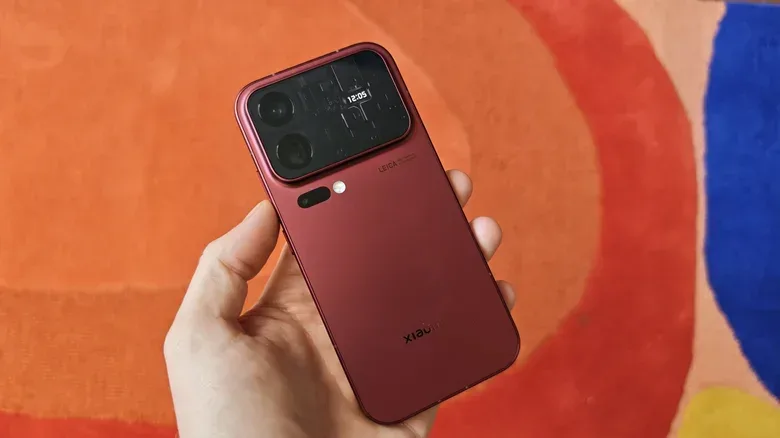
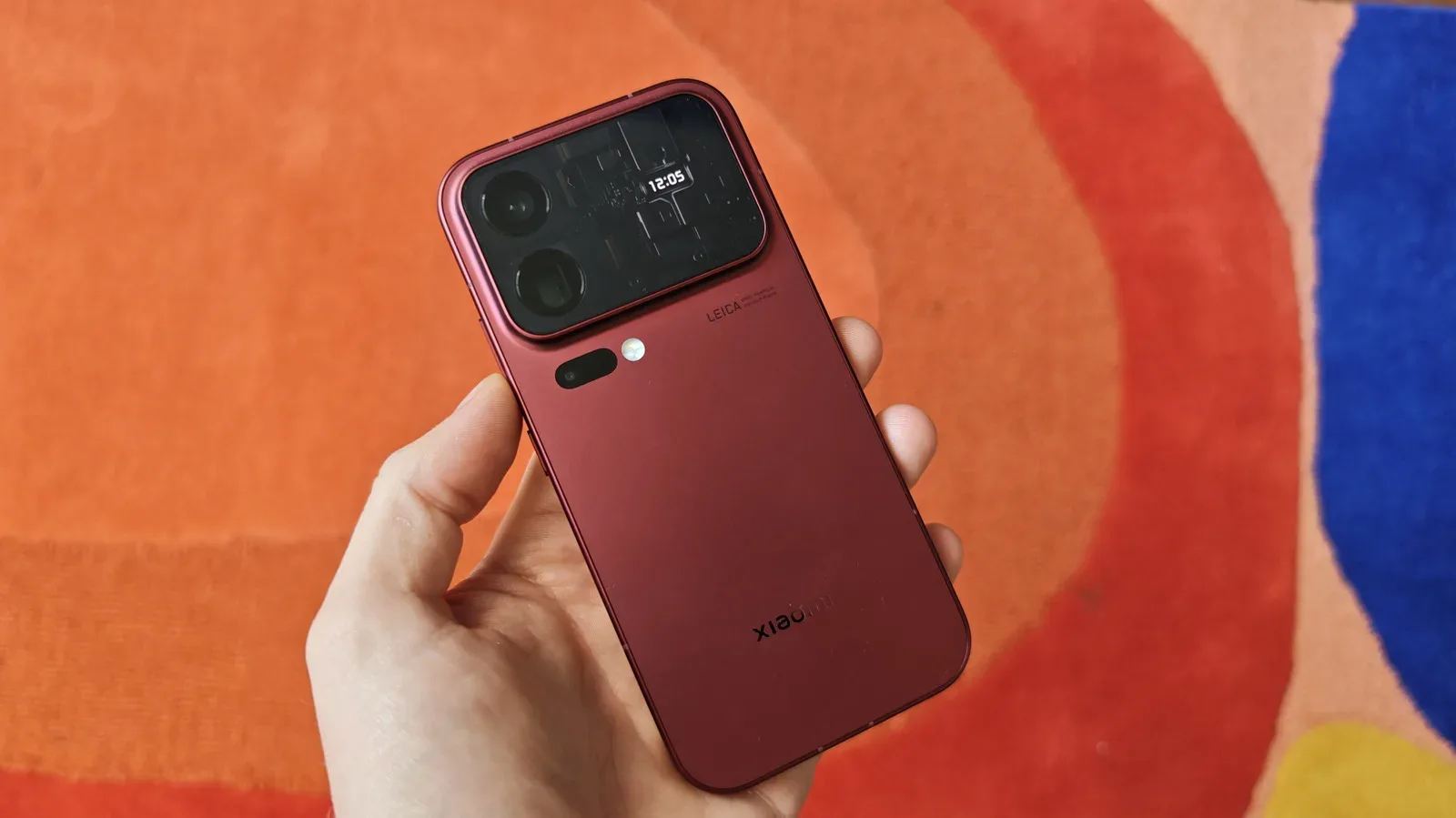
The Xiaomi 18 Pro has a 6.40-inch main display and a 2.7-inch rear display. The larger 18 Pro Max moves to a 6.9-inch primary panel and a 2.9-inch Back Display. Xiaomi says the small screen uses the same display technology as the front, with up to 4,000 nits of peak brightness and a refresh rate of up to 120Hz. The rear screen and camera arrangement sit beneath one piece of Corning Gorilla Glass Victus, a design choice that helps unite a visually busy section of hardware.
On a spec sheet, high brightness and refresh-rate figures can look like a promise that the rear panel will behave exactly like a miniature flagship phone screen. In practice, these are best read as ceilings rather than modes owners should expect constantly. A rear display handling a boarding pass, a music control, or a quick camera preview does not necessarily need to sit at its maximum refresh rate. The practical appeal is visibility and immediacy: information that can be checked without turning the phone around and opening the full interface.
The Back Display has conventional roles alongside its AI experiment. It can show notifications and information such as calls, maps, and weather. Xiaomi also includes a pin-to-back feature for placing text or images there for quick access. A boarding pass and QR code are obvious fits, though the same feature could just as easily keep a photo of a family member or pet visible.
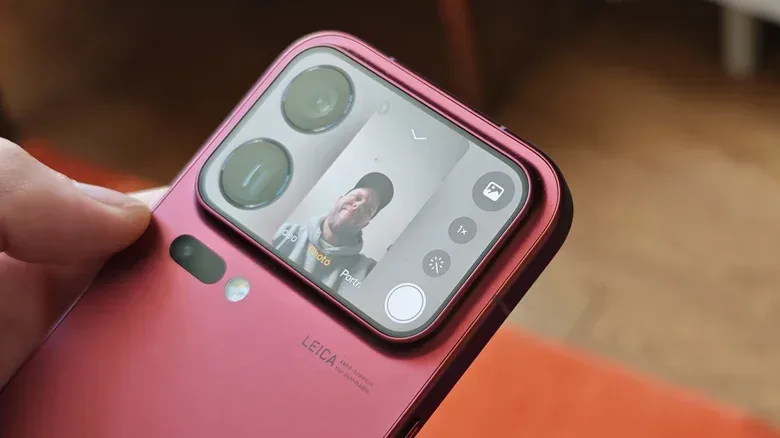
It can also act as a viewfinder while using the main rear cameras for a selfie or group picture. The interface is intentionally reduced compared with the full camera app, which makes sense on a small panel but means many modes and controls remain on the main display. One automatic behavior is particularly practical: when the viewfinder detects three or more people, it switches to the ultra-wide camera. That is a narrow but sensible shortcut for fitting a group into frame.
Xiaomi also lists Spotify, YouTube Music, and Google Maps as supported apps for the Back Display, an important distinction from a screen that merely duplicates basic system cards. Support from recognizable apps gives the panel genuine everyday utility. At the same time, the list underlines the ecosystem challenge: its value will depend in part on whether additional developers decide the small, unusual canvas is worth supporting.
Related coverage includes Xiaomi 18 Pro Phones Turn Their Rear Display Into an AI Mini-App Canvas.
What “vibe-coded” means here
“Vibe coding” is a loose term for asking generative AI to produce software from a plain-language description rather than writing every part of the code manually. In the Xiaomi 18 Pro series, the ambition is deliberately modest. These are not intended to be dense, full-scale smartphone applications. They are simple interactive widgets or mini apps designed around one job and a tiny display.
That limitation is a strength as much as a constraint. A rear screen is better suited to a timer, tap game, quick quiz, compact control panel, or visual novelty than an inbox, spreadsheet, or complex game. By keeping the target small, Xiaomi is trying to make AI generation useful in a place where traditional app development has little incentive to go.
The creation process includes a control to “polish” a person’s initial idea before generation. That is a meaningful addition. Generative systems are sensitive to how a request is expressed, and a refinement step can help turn an informal thought into something more structured. It does not eliminate the possibility of misunderstandings, but it acknowledges that the quality of the instruction can shape the quality of the result.
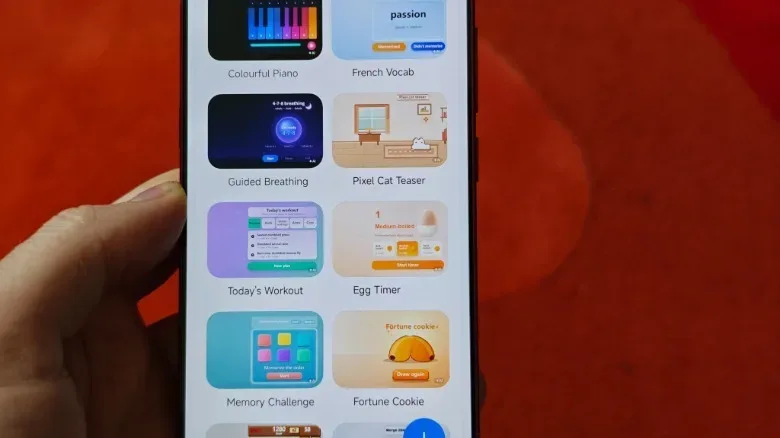
Xiaomi says more than 50 preset apps will be available at launch. Presets matter because they give the rear display a baseline purpose even for people who have no interest in prompting an AI. They can also demonstrate the level of complexity the platform is meant to handle. The useful question is not whether the phone can create an elaborate app from scratch; it is whether its provided and generated mini apps save a few taps or make the back panel enjoyable enough to check regularly.
Early examples show both the appeal and the friction
The reported experiments are revealing. One proposed app was a faux wallpaper that would produce cracks and glitches when touched. Repeated requests not to include a visible crack counter did not remove that unwanted element. In other words, the system could build toward the general premise while failing on a very specific creative instruction.
A flag-guessing quiz further exposed the limits of expansion. It initially leaned too heavily on a small group of familiar countries. Asking for 100 more flags made the system struggle to generate a new version, despite the request seeming like a relatively straightforward extension of the same idea. Those examples do not make the feature useless. They do suggest that people should approach it as a tool for constrained concepts, with an expectation of iteration and occasional stubbornness.
Generation and refinement are also described as sluggish, and the feature requires an internet connection. Xiaomi has not made clear whether the mini apps are generated on the device. That uncertainty matters because it limits what can be inferred about speed, privacy, and offline reliability. A feature dependent on connectivity is less dependable during travel, in poor-signal locations, or whenever a person wants to experiment without sending a prompt through an online service.
There are AI Group Photo wallpapers too, which combine two subjects into a group image, including composite portraits involving celebrities or fictional characters. That is more of a novelty feature than a productivity tool, but it reinforces the main idea: Xiaomi wants the rear screen to be personal and expressive, not only functional.
Privacy features aim beyond the second screen
While the Back Display receives the most attention, Xiaomi’s Privacy Display feature may have the clearer day-to-day purpose. It can be assigned to specific apps, including banking, photos, and dating apps, and its coverage extends to notifications, floating windows, and split-screen versions of those applications.
The phone also offers gaze detection, using the front camera to recognize when someone may be looking at the display. The alert can be an on-screen notice or a subtler vibration. This is best understood as a shoulder-surfing deterrent rather than a guarantee that sensitive information cannot be seen. It can warn the owner, but it cannot physically block someone nearby from glancing at a screen. Still, the option to apply protection selectively is practical: users may not want an altered display experience all the time, but may want added discretion around specific categories of information.
Two Pro models, and a meaningful camera divide
The 18 Pro Max is the more powerful model on paper. It uses Qualcomm’s Snapdragon 8 Elite Extreme Gen 6 and offers up to 16GB of RAM, while the 18 Pro has a Snapdragon 8 Elite Gen 6 with 12GB of RAM. Battery capacity also favors the Max: 7,050mAh with up to 100W charging, compared with 6,000mAh and up to 90W charging for the standard Pro.
Both phones place photography high on the priority list, with dual 200-megapixel cameras and Leica Summilux lenses. Their periscope telephoto cameras have an f/2.4 lens, optical image stabilization, 3.2x optical zoom, and up to 12.8x in-sensor cropped zoom. A 50MP ultrawide completes the arrangement.
The principal camera differs in a way that could matter more than the model names suggest. The 18 Pro Max receives a 200MP Light Fusion 960L primary sensor with LOFIC technology, while the 18 Pro uses a 200MP Light Fusion 960 without LOFIC. LOFIC is intended to improve dynamic range, helping preserve bright highlights while supporting low-light performance. Optical image stabilization is present on both main cameras, and both use an f/1.67 lens.
Early impressions of the standard 18 Pro indicate crisp daylight and macro landscape images, but less reliable results with moving subjects and low-light scenes. That leaves the Pro Max’s exclusive sensor technology as an important unresolved point rather than a settled victory. The existing 17 Ultra, with its 1-inch sensor, remains Xiaomi’s stronger photography-focused model for now.
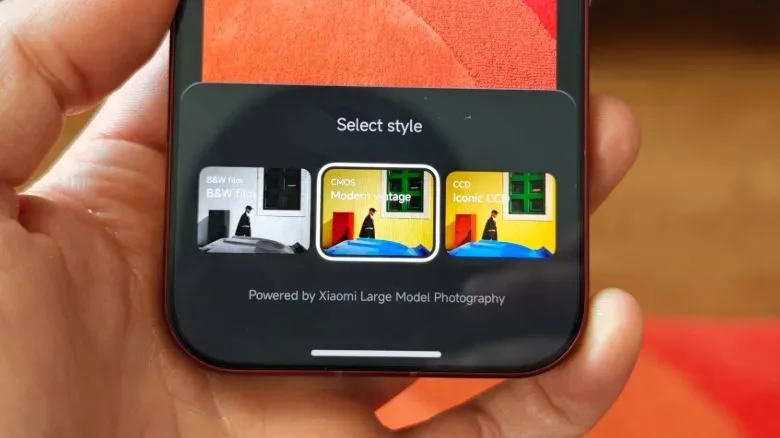
Xiaomi’s camera software still offers some personality. Leica Essential Moments applies one of three Leica-inspired color styles and includes simulated 35mm and 75mm lens options. The Pro mode adds focus peaking and exposure highlights. Focus peaking is a visual aid that marks areas considered in focus, while exposure highlights help identify parts of the image at risk of clipping into overly bright detail. Users can also alter filter parameters such as noise grain and hue.
Pricing, availability, and who the feature is for
The Xiaomi 18 Pro costs £1,199 in the UK, while the 18 Pro Max is £1,400. Both are priced above the Xiaomi 17 Ultra. The Pro series is expanding to the UK and other parts of Western Europe, but it is not coming to the US. Buyers can choose Black, White, Cosmic Blue, or Velvet Red, with the latter previously used on Xiaomi’s foldable line.
These are premium prices, so the rear-screen AI feature cannot carry the decision alone. The stronger case is a bundle: large displays, substantial batteries, high-end chips, a camera system with serious specifications, and an additional panel that can serve as viewfinder, status screen, music controller, map surface, reference card, and personal widget space.
For someone who mainly wants the best possible Xiaomi camera, the 17 Ultra remains the more relevant comparison. For someone intrigued by a phone that can turn a spare piece of hardware into a small custom tool, the 18 Pro line is more distinctive. Its most convincing use of generative AI is not pretending that a 2.7-inch display can replace normal apps. It is admitting that the screen needs little utilities, then trying to make creating those utilities less technical.
The result is imaginative, if still uneven. Xiaomi has identified a credible way to make a rear display feel less like an expensive notification window. Whether it becomes a lasting habit will come down to the reliability of its generated mini apps, the quality of its preset selection, and the willingness of supported services to keep the tiny screen useful. For another recent look at a compact premium device, see our coverage of the iPad mini A17 Pro deal.