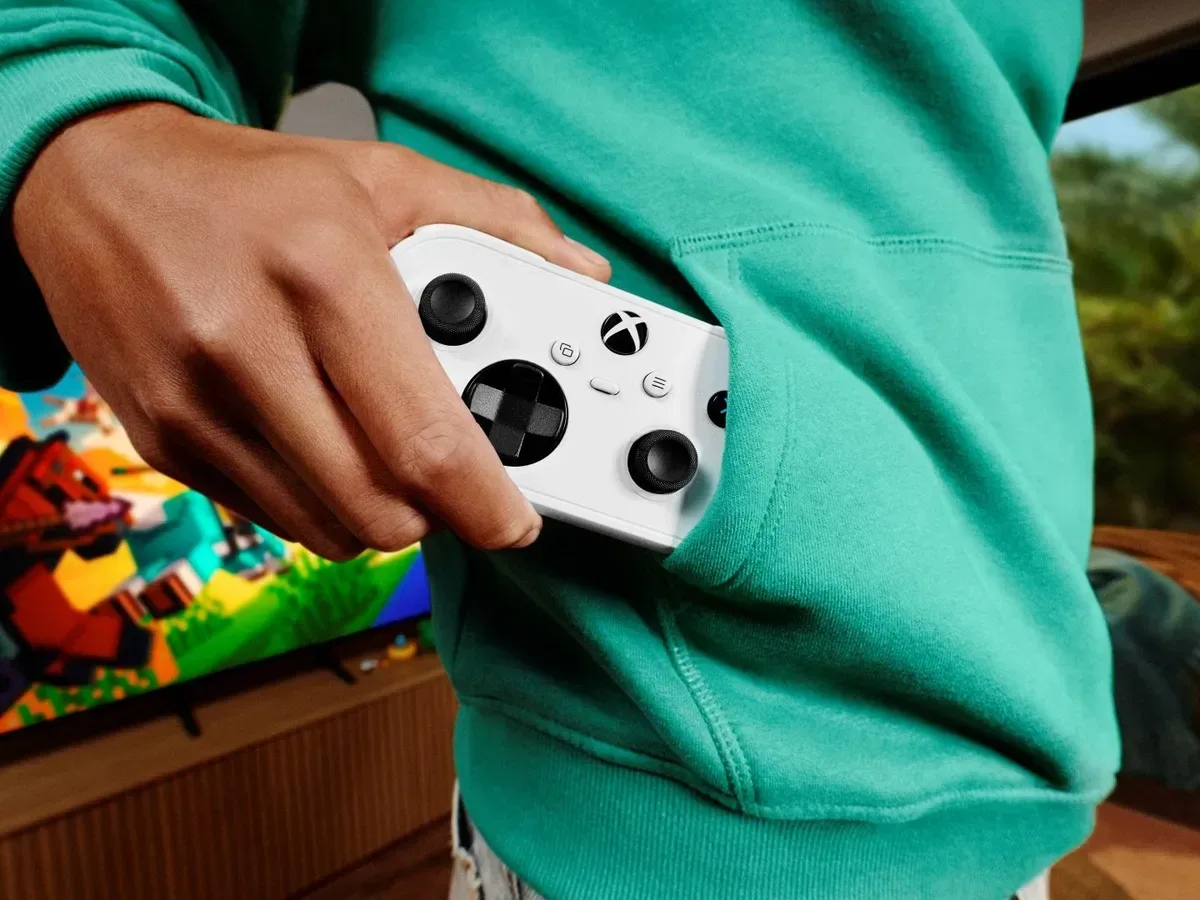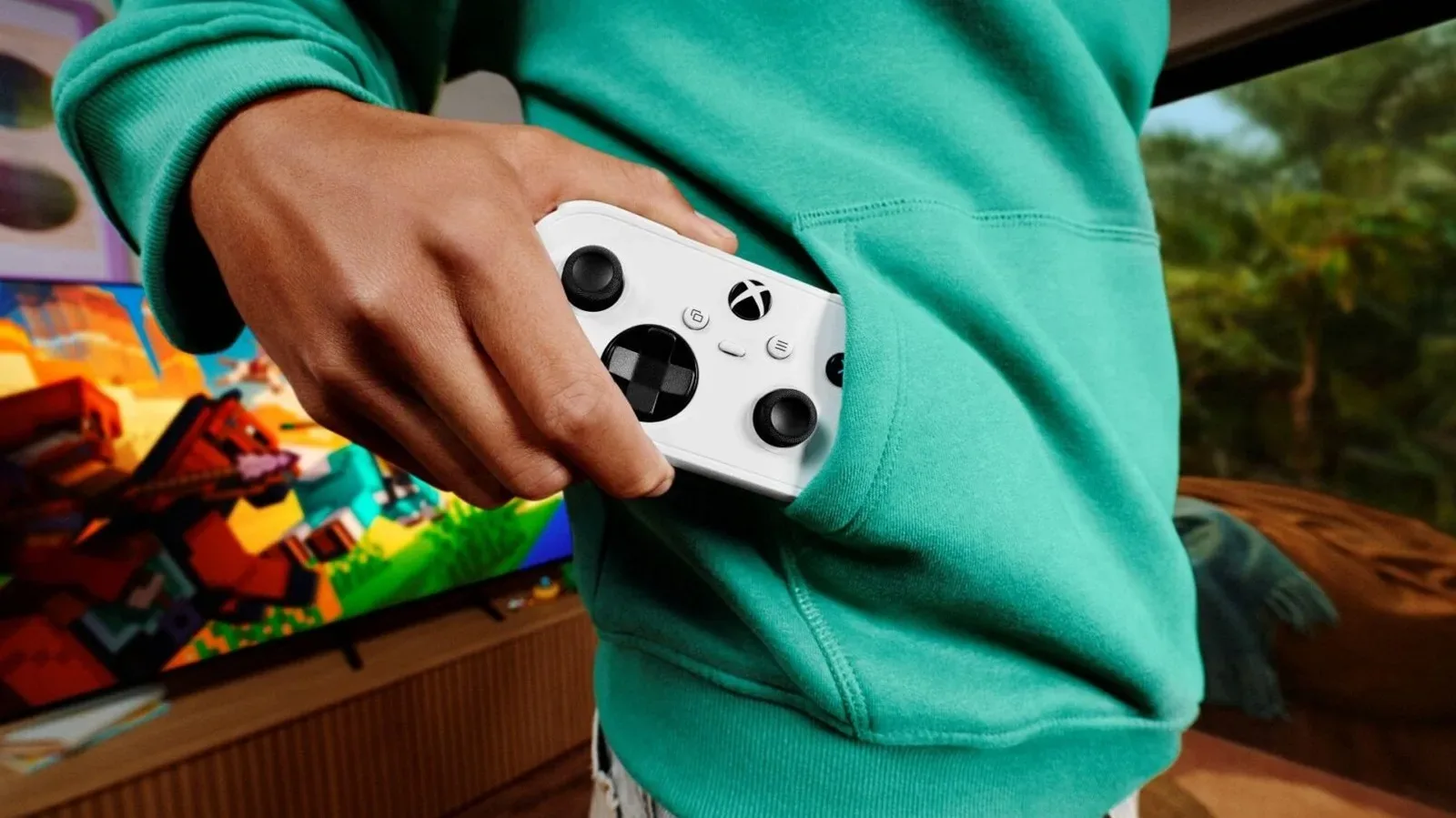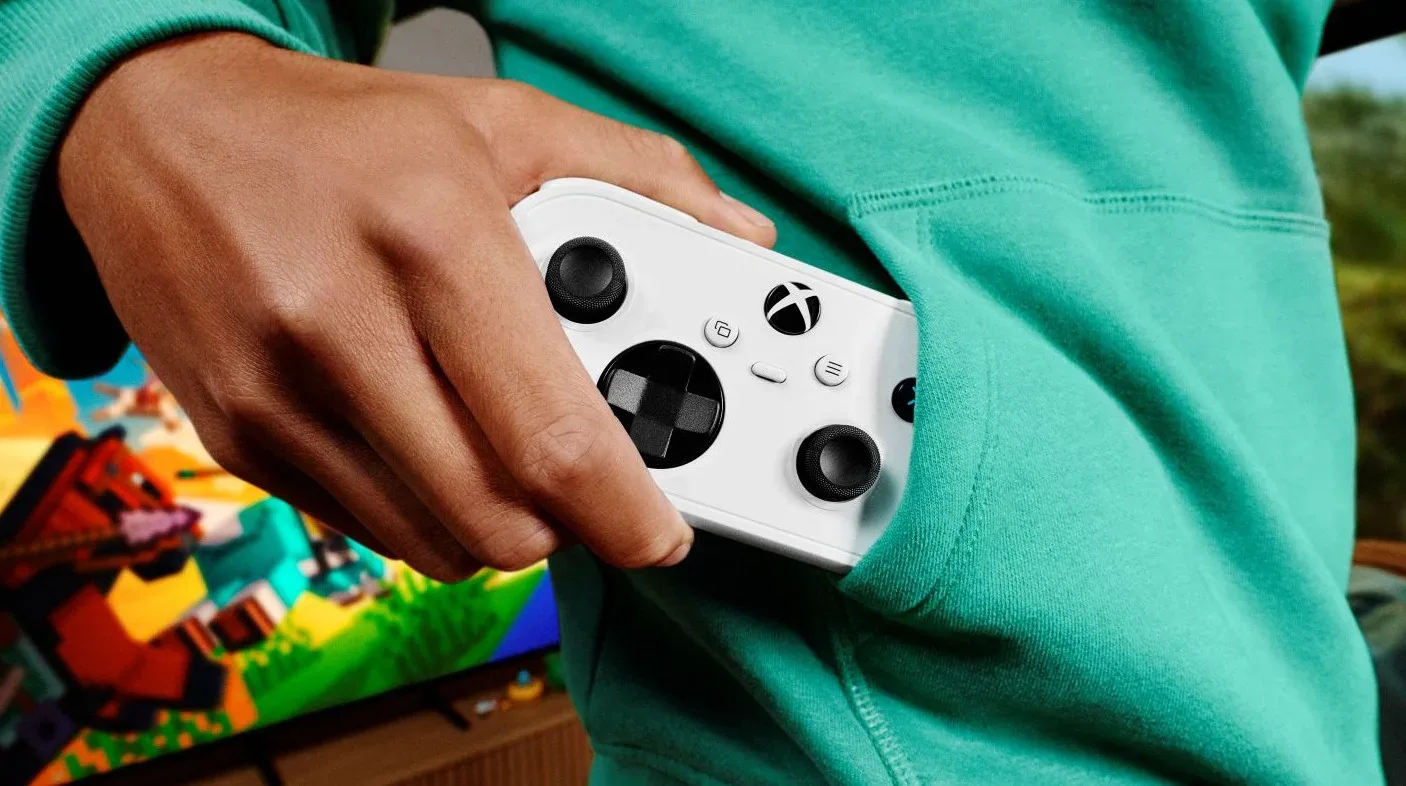
Xbox is preparing a smaller answer to a problem that has long been treated as an afterthought: not every player wants, needs, or can comfortably hold a full-size gamepad. The Xbox Nano controller is set to arrive in early November for $50, presenting a compact alternative that retains the standard 18 gameplay inputs while cutting down the physical footprint substantially.
At just over five inches long and 3.5 ounces, the Nano is Xbox’s smallest controller to date. The company positions it for younger players, people with smaller hands, and anyone looking for a portable controller for play away from a conventional console setup. Those are distinct audiences, but they share a practical concern: controller size is not simply cosmetic. It affects reach, grip, fatigue and whether the device can conveniently travel in the first place.
The other headline feature is not visible from across the room. Rather than relying on AA batteries, the Nano includes a built-in rechargeable battery. That decision makes the diminutive controller more straightforward for households and travel use, though it also means players will need to charge it rather than swap in fresh cells when power runs low.
For an overview of the stated console, TV and Bluetooth ambitions around the device, see this look at the Xbox Nano controller’s pocket-size pitch.
A small controller without a reduced input count
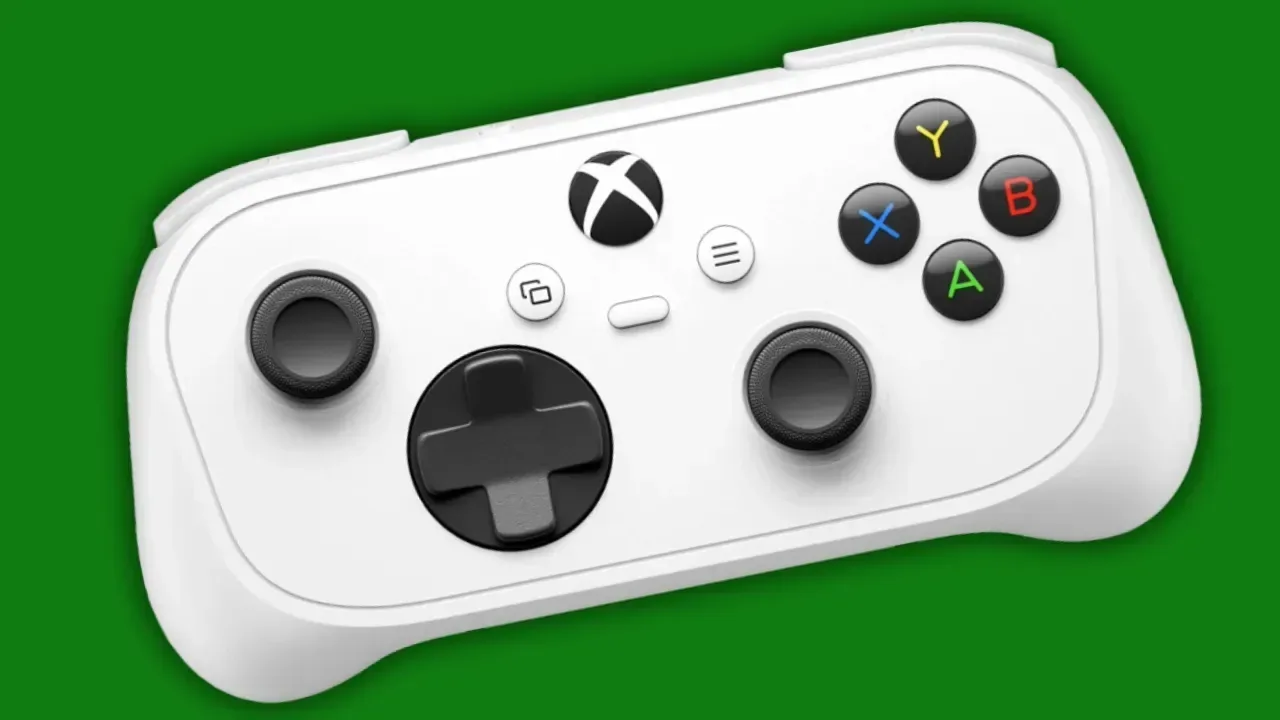
The Nano’s central proposition is unusually simple: a physically reduced controller that does not remove the expected gameplay controls. Xbox says it carries all 18 standard inputs. In plain terms, an input is any button, trigger, stick direction or other control a game can read. Keeping the established input set matters because a smaller pad with fewer controls would be useful only for a narrow range of games.
That does not automatically mean every control will feel identical to one on a standard controller. Physical spacing, trigger travel, stick position and the overall grip shape influence comfort and precision. The available information establishes the number of inputs, not how each one feels in extended sessions. Players considering the Nano should therefore treat its compact dimensions as its defining trade-off rather than assume it is a full-size controller in miniature with no ergonomic differences.
Still, preserving the complete input layout is important for flexibility. It suggests the Nano is meant to be a general-purpose option instead of a limited controller for simple games or media navigation. A player can choose a smaller pad because it fits their hands or their bag, rather than because a game demands fewer buttons.
Who the Nano seems built for
The most obvious group is younger players. A controller that is physically easier to hold may reduce the awkward stretching and shifting that can come with a larger pad. That is especially relevant in games that ask players to use sticks, face buttons, shoulder controls and triggers in quick succession.
Related coverage includes Xbox Nano Controller Announced With Compact Design, Rechargeable Battery, and $50 Price.
Xbox also specifically points to players with smaller hands. This is a worthwhile distinction from an all-purpose claim that smaller always equals more comfortable. Hand size and grip preference vary widely; some people may value the shorter reach to buttons, while others may still prefer a larger controller’s handles and spacing. The Nano adds another option rather than creating a universal replacement.
Portability is the third pillar. At 3.5 ounces, the controller is extremely light by the standards implied by Xbox’s own comparison with modern smartphones. A light controller can make sense for a player who streams games to a PC or TV, moves between rooms, or wants a dedicated pad for a compact travel kit. Less weight also means less bulk to carry alongside a phone, laptop, charging cable or headset.
It is notable that the design is being associated with play on PCs and TVs as well as games such as Minecraft Dungeons 2. That framing reinforces the Nano as an accessory for the broader Xbox ecosystem rather than solely a living-room-console controller.
Rechargeable battery is a bigger design choice than it sounds
Xbox controllers have commonly used replaceable AA batteries, an approach with a clear convenience: depleted batteries can be exchanged immediately if spares are available. The Nano goes another direction with its built-in rechargeable battery.
A built-in battery is sealed within the controller and replenished through charging rather than being replaced by the player during normal use. For families, that can mean one fewer battery type to keep stocked. For portable use, it can simplify packing. And for players who already charge several devices regularly, the Nano’s approach may be more familiar than managing disposable cells or separate rechargeables.
There is a practical limitation as well. A rechargeable controller needs advance planning. If it has not been charged, a quick AA swap is not an option. The supplied details do not specify battery life, charging time, cable arrangements, or whether the battery can be serviced, so those are important unanswered questions for anyone deciding between the Nano and other Xbox controller options.
The change is also significant because it helps explain the product’s identity. The Nano is not merely a smaller shell around a standard controller concept. Its rechargeable design makes it feel tailored for grab-and-go use, even if players will need to establish a charging routine.
Price, color and what remains unclear
At $50, the Xbox Nano costs $15 less than the regular-sized Xbox controller referenced in the announcement. That lower price, paired with the compact format, makes it easier to view the Nano as a supplementary controller for a household, a child-focused option, or a lightweight device for a particular setup rather than a luxury specialty accessory.
It appears to launch in white only. Xbox controllers are often associated with colorful variants, so the restricted initial palette may disappoint players who want a controller that is as visually distinctive as it is physically different. White is neutral and practical, but it does not showcase the personality possible in the wider controller lineup.
There is also no stated special technology for reducing cloud-gaming latency. Latency is the delay between pressing a button and seeing the resulting action appear on screen. It can be influenced by a controller connection, display processing and, in streamed gaming, network conditions. A compact controller can be convenient for cloud streaming, but its size alone does not solve those delays.
The Nano resembles a previously leaked cloud-focused controller that was reportedly canceled, but resemblance should not be confused with confirmation that the devices have the same purpose or features. What is clear is that Xbox is presenting the Nano as a compact, standard-input controller with portability in mind—not as a dedicated solution to streaming responsiveness.
A limited Game Pass promotion accompanies certain purchases
For a limited time, Xbox is also bundling the Nano controller and two months of Game Pass Ultimate for new members who purchase a new Samsung TV or Oculus headset. This is a narrowly defined promotion rather than a general statement that every Nano purchase includes a subscription. The new-member requirement and qualifying hardware purchase are important details for prospective buyers.
Game Pass Ultimate is the subscription tier named in the promotion. The offer complements the controller’s positioning around TV and streamed play, but the available information does not establish additional terms, regional availability, redemption deadlines, or how the Nano itself is packaged within the promotion. Shoppers should verify the specific offer conditions before treating it as part of the controller’s standard $50 purchase.
The practical appeal is choice
The Nano’s strongest idea is not that every Xbox player should downsize. It is that physical fit deserves the same attention as button mapping or wireless convenience. A full control set in a five-inch, 3.5-ounce device could be meaningful for a child, for an adult with smaller hands, or for someone who simply wants a less cumbersome controller near a PC or television.
The controller’s details support that focused role: 18 standard inputs, built-in recharging, a $50 price, white styling and an early-November launch window. Questions about charging performance, long-session comfort and exact feature behavior remain, but the core proposition is clear. Xbox is making room for a controller defined by smaller dimensions without asking players to accept fewer controls in exchange.