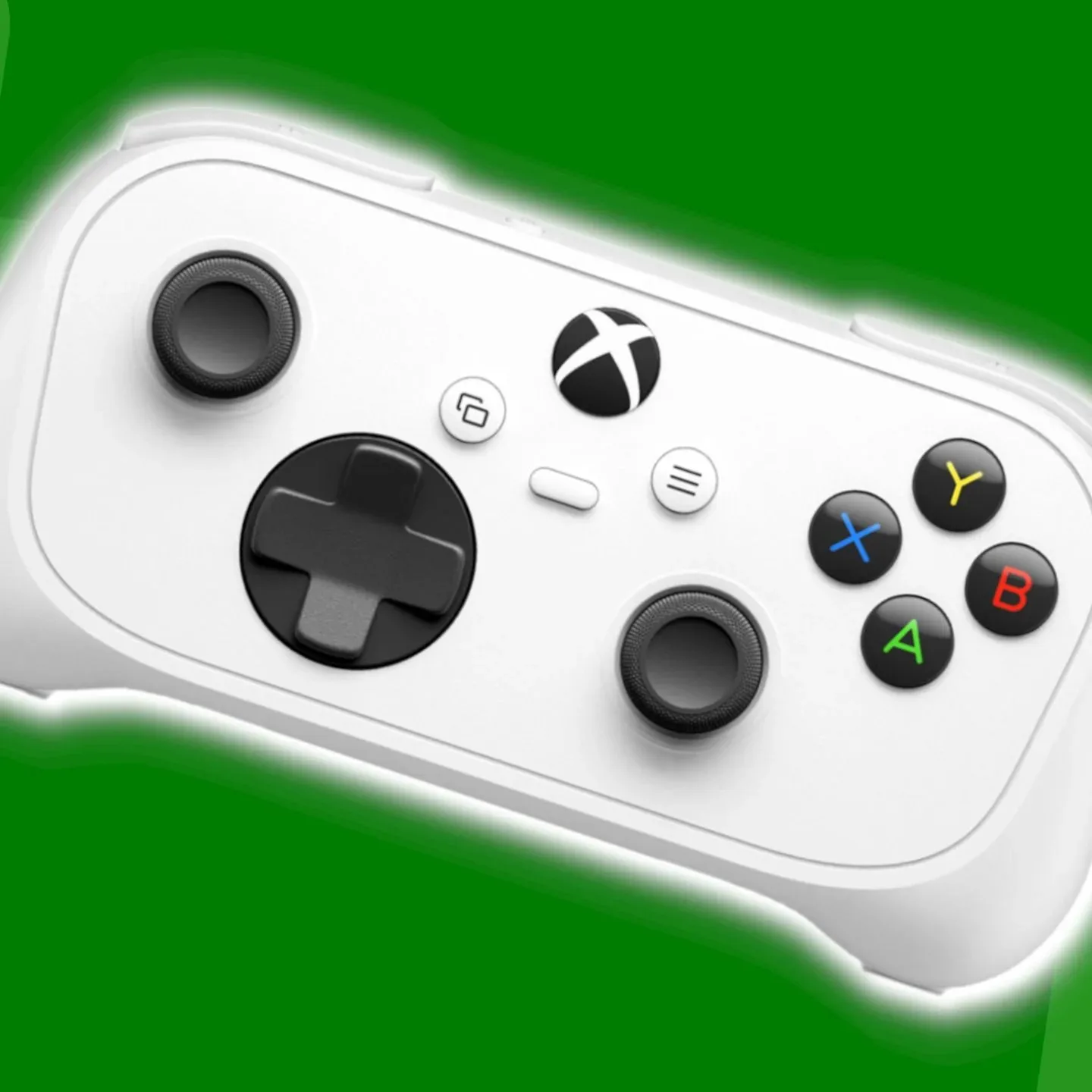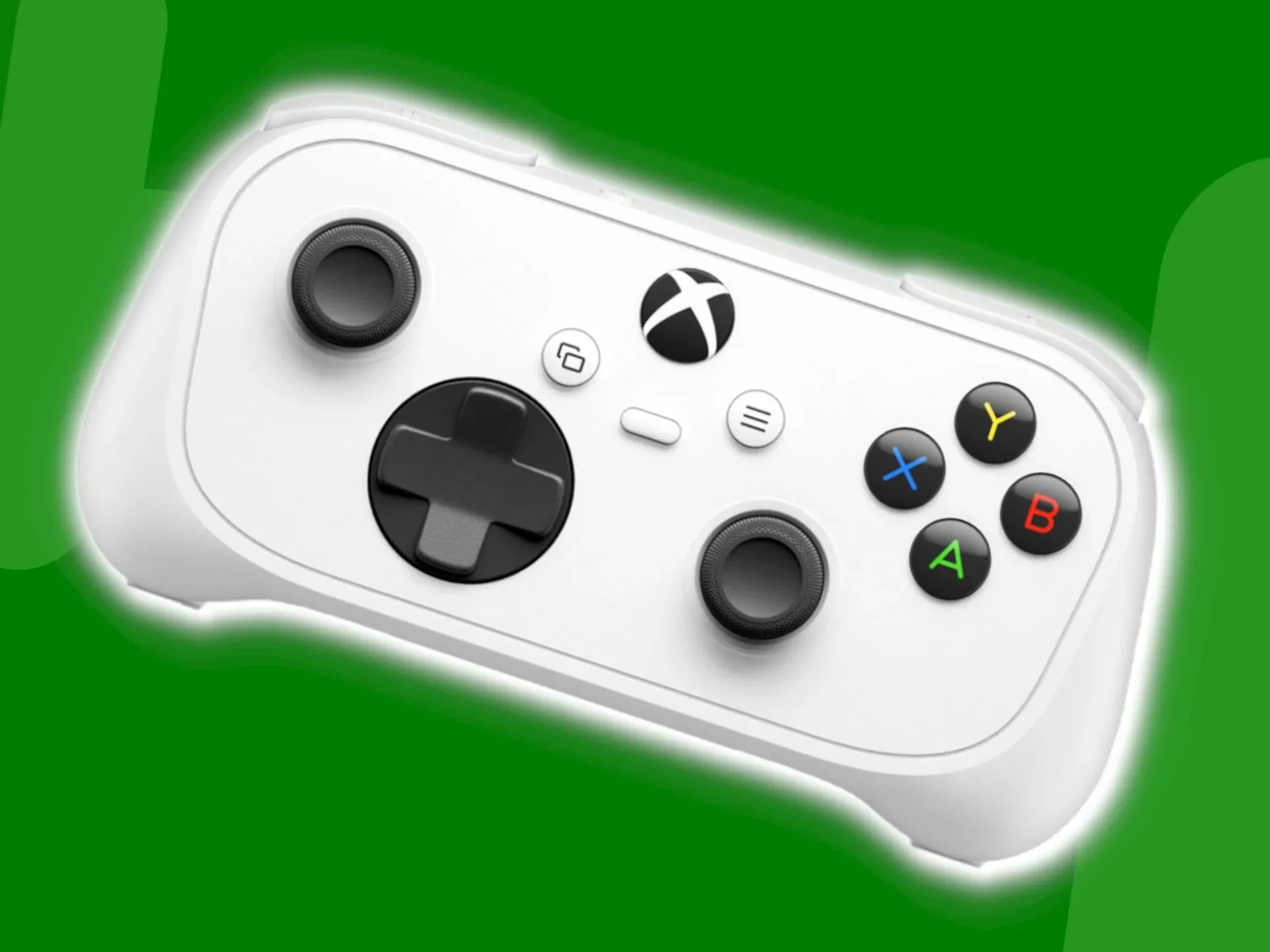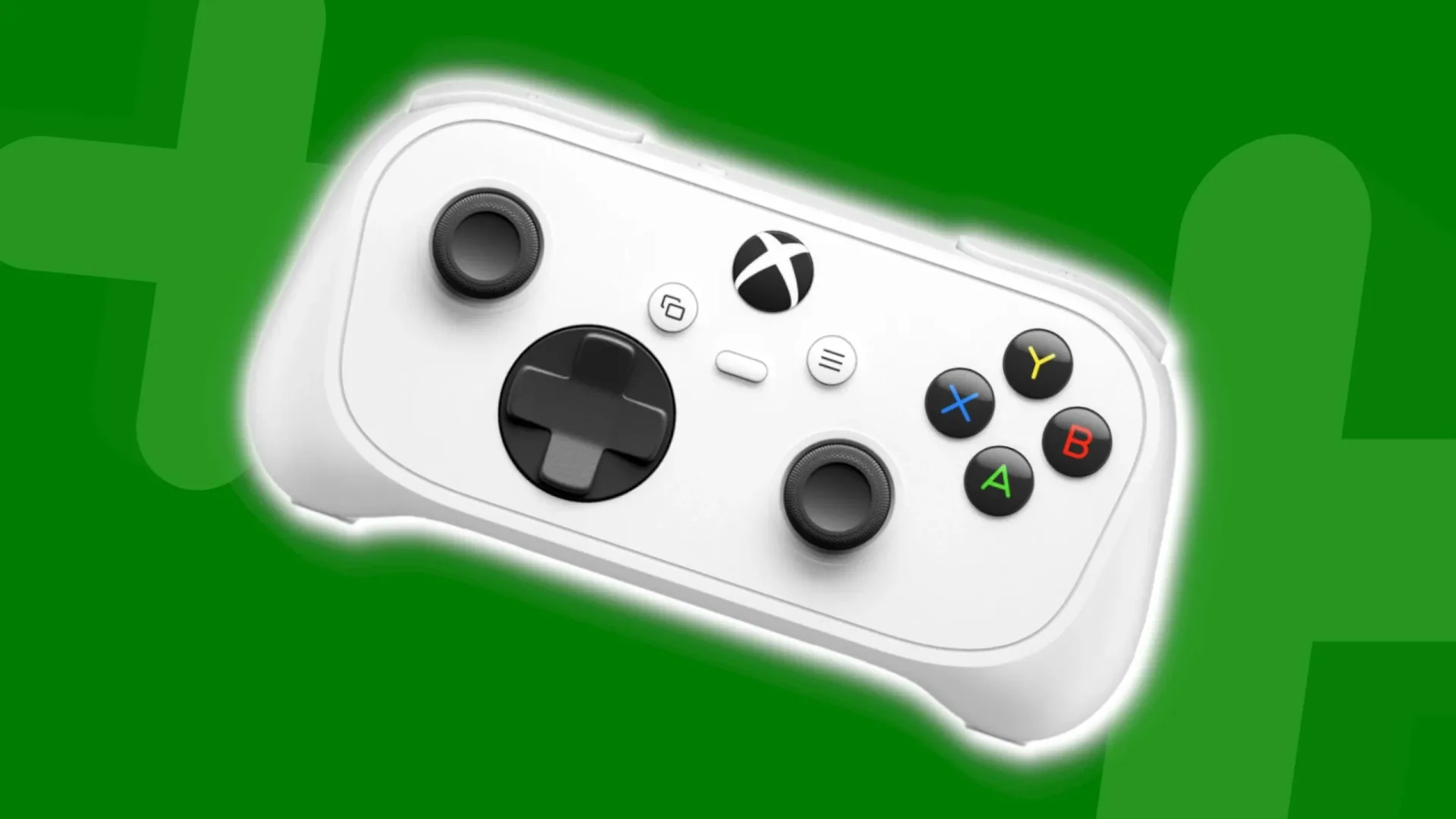
Xbox has introduced the Xbox Nano Controller, a compact wireless controller that takes the broad idea of the standard Xbox Wireless Controller and compresses it into a much smaller, almost grip-free shape. It is not being positioned as a performance-focused “pro” pad with extra controls or high-end competitive features. Instead, it is a portability play: a controller intended to take up little room, weigh very little, and fit more naturally into Xbox’s wider ambitions across televisions, virtual reality bundles and mobile-minded play.
Pre-orders are open through Microsoft at $49.99 in the US and £44.99 in the UK. The stated dimensions are just over five inches long, while the controller weighs 3.5 ounces. Those numbers make the Nano notably different in purpose from a full-size living-room controller. The pitch is not that it replaces the controller beside the console; it is that it is the controller a player can reasonably stash in a bag without making room for a pair of full handles.
A familiar layout, condensed into the middle
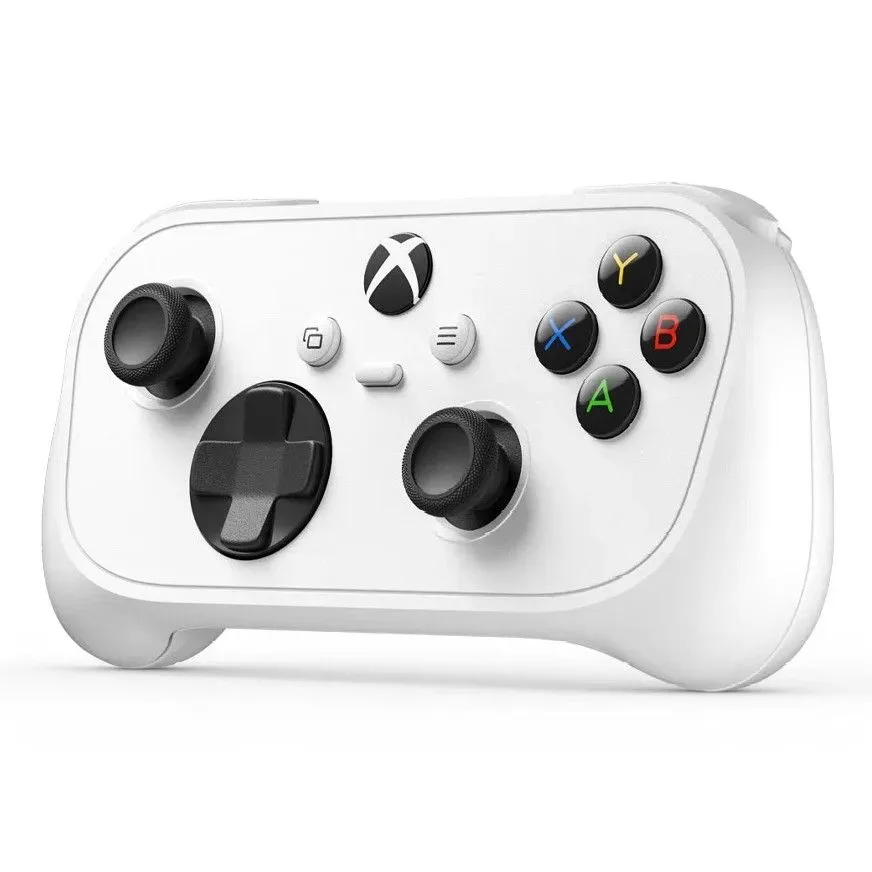
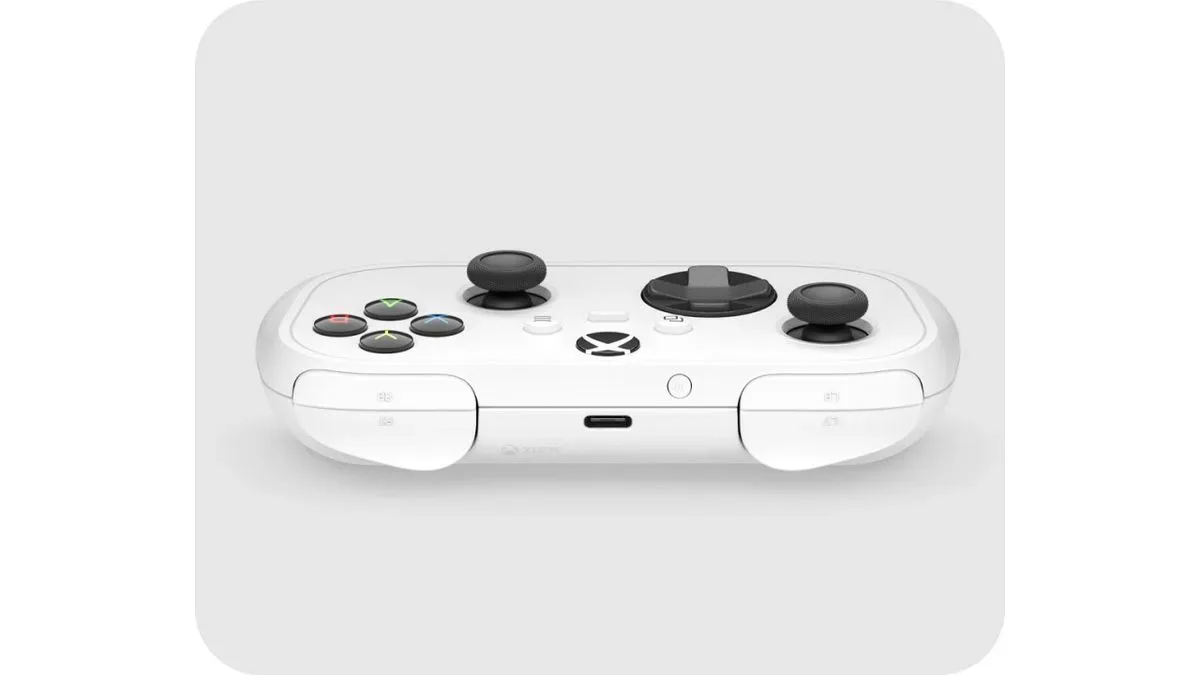
From the supplied product details and press imagery, the Nano Controller concentrates its controls into a horizontal body. It has two thumbsticks and a large, floating-looking directional pad, or d-pad, which is the cross-shaped control generally used for menu navigation, 2D movement and directional inputs. The usual hand grips have been reduced almost completely, leaving only small lower grip nubs.
That design decision is the entire point of the product, but it also defines the trade-off. Conventional controller grips exist to give each hand an anchor point and spread the device’s weight across the palms. Remove most of them and the controller becomes easier to carry, but the player has less physical surface to hold. Whether that is comfortable will depend heavily on hand size, game genre and how long somebody plays at a time. The available information does not establish long-session comfort, so that question will need to be answered after the controller reaches players.
For more context, explore Disney and Katseye Launch Mickey & Minnie Apparel Collection Alongside Wild Hearts Documentary.
Xbox is explicitly presenting the Nano as an option for children as well as people playing away from a fixed console setup. A lighter, shorter controller may be easier for smaller hands to manage than a traditional full-size pad. At the same time, “small enough for kids” and “comfortable for every adult” are not automatically the same proposition. Compact hardware often succeeds because it serves a specific use case, not because it is universally more ergonomic.
Wireless convenience is the premium argument
The Nano Controller’s principal advantage appears to be official Xbox wireless connectivity in a compact device. That matters because a controller is more than an arrangement of buttons: connection behavior, setup friction and reliability can be as important as its size. Players who want an uncomplicated wireless link to the Xbox they already use may see more value in a first-party option than in a cheaper compact alternative.
“First-party” here means made by the platform holder rather than by an independent accessory company. It does not inherently mean a product is better for every buyer. It does mean the Nano is built around Xbox’s own ecosystem and its familiar controller conventions. For people who already prefer the Xbox control layout, that familiarity could be its strongest selling point.
Related coverage includes Xbox Nano Controller Revealed as a Compact Wireless Pad for Travel, Kids and Cloud Play.
There is an important distinction between a controller being portable and a controller being a value leader. The Nano is clearly designed for the former. It is not the least expensive route to a small wireless pad. Compact controllers have become a crowded category, and Microsoft is entering at a price that asks buyers to place a value on its own hardware, wireless integration and the prospect of a more substantial d-pad and body than the smallest low-cost alternatives.
The $50 compact-controller problem
The Nano arrives in a market where GameSir, CRKD and 8BitDo already offer travel-oriented controllers at $50 or less. CRKD’s Atom Plus is listed at $29.99, with a cited Amazon sale price of $24.99. 8BitDo’s Lite 2 is listed at $34.99, while the company’s SN30 range occupies a similar compact-controller space. Those figures matter because the Nano’s $49.99 price is not merely a few dollars above an undefined entry level; it sits close to double the sale price cited for the Atom Plus.
Price alone does not settle the comparison. A tiny controller can differ in stick layout, d-pad design, grip shape and wireless behavior, all of which affect which games feel natural on it. The Atom Plus uses symmetrical thumbsticks, for example, whereas the Xbox Nano is built around the Xbox-style arrangement. Neither layout is objectively correct. What matters is whether the user is already acclimated to it and whether the games they intend to play make frequent use of sticks, the d-pad or both.
The Nano’s larger-looking d-pad and fuller lower body may also be meaningful practical differences, though press images cannot prove comfort or input quality. Buyers should resist treating photos as a substitute for hands-on evidence. Product images can show placement and proportions; they cannot establish how a d-pad pivots, how sticks feel at their edges, or whether a minimal-grip body becomes tiring.
Still, the basic buying equation is clear. A player who simply needs the cheapest possible small controller has several lower-priced choices. A player who wants a very compact pad that stays close to the familiar Xbox controller concept may find the Nano easier to justify. That makes it a specialized convenience purchase rather than an obvious default recommendation for every Xbox owner.
Why compact controllers matter now
The timing reflects a broader shift in where games are played. Gaming handhelds and mobile ports have increased the appeal of controllers that can travel alongside a screen rather than remain under a television. A portable pad is useful not because it makes a game portable by itself, but because it removes some of the input compromise that can come with touch controls or an awkward on-screen layout.
Xbox’s plans suggest it sees the Nano as part of that screen-agnostic approach. The company is set to work with Samsung on a television bundle later in the year, and intends to bring the Nano Controller to Meta Quest bundles during the holiday season. Neither plan changes what the controller physically is, but both indicate that Xbox is placing it in packages beyond the traditional console-plus-controller arrangement.
That positioning is more interesting than the controller’s novelty value. A small official gamepad makes sense wherever a player has access to an Xbox-compatible experience but does not want to carry a full-size controller. A television bundle emphasizes living-room access without necessarily centering the console. A Meta Quest bundle points toward another kind of screen entirely. The Nano is therefore best understood as a piece of ecosystem hardware: a simple input device intended to make Xbox play feel more available in more places.
This also explains why it does not need to be a “pro” controller. A pro pad normally earns its higher status through specialized additions aimed at demanding or competitive play. The Nano’s innovation is the opposite: it subtracts bulk. Its success will hinge on whether that reduction preserves enough of the standard Xbox controller’s feel to remain pleasant and dependable.
Who should consider it—and who should wait
The clearest audience is an existing Xbox player who values straightforward wireless use and wants a controller that takes almost no space in a travel bag. Parents shopping for a smaller controller for a child may also see the appeal in the 3.5-ounce weight and short body. It may be particularly attractive to someone who finds a compact third-party controller tempting but would rather stay within the Xbox hardware family.
Conversely, value-focused shoppers should compare the $49.99 / £44.99 asking price carefully against compact options from CRKD and 8BitDo. The Nano may offer a different—and perhaps more familiar—experience, but it is not entering the segment with a low-price advantage. Shoppers who expect to use it for long sessions should also wait for broader feedback about ergonomics. The missing grips are fundamental to the design, not a minor visual flourish.
- Consider the Nano if compact size, official Xbox hardware and easy wireless Xbox use are your priorities.
- Compare alternatives first if your main goal is spending as little as possible on a travel controller.
- Wait for practical impressions if hand comfort, d-pad feel or extended play matters more than having the smallest pad immediately.
- Think about your screen setup before buying: the Nano’s case is strongest when it will genuinely travel between the places where you play.
A small controller with a deliberately narrow job
The Xbox Nano Controller does not appear to be attempting to dethrone the standard Xbox Wireless Controller, and it does not need to. Its job is narrower: offer a light, abbreviated version of that familiar control philosophy for players who prioritize portability. The compact-controller market gives buyers cheaper alternatives, which means Microsoft will have to earn the premium through fit, usability and friction-free integration rather than through its logo alone.
The Samsung and Meta Quest bundle plans reinforce the larger strategy. Xbox is treating the controller as a way to put recognizable inputs beside more kinds of screens. For players, the important question is pleasantly ordinary: will a tiny controller be used often enough to justify its price? If the answer is yes, the Nano’s small footprint may be its most persuasive feature. If not, the established lower-cost compact options make the decision considerably tougher.
Shop the products
Check current price, model and availability at the retailer.