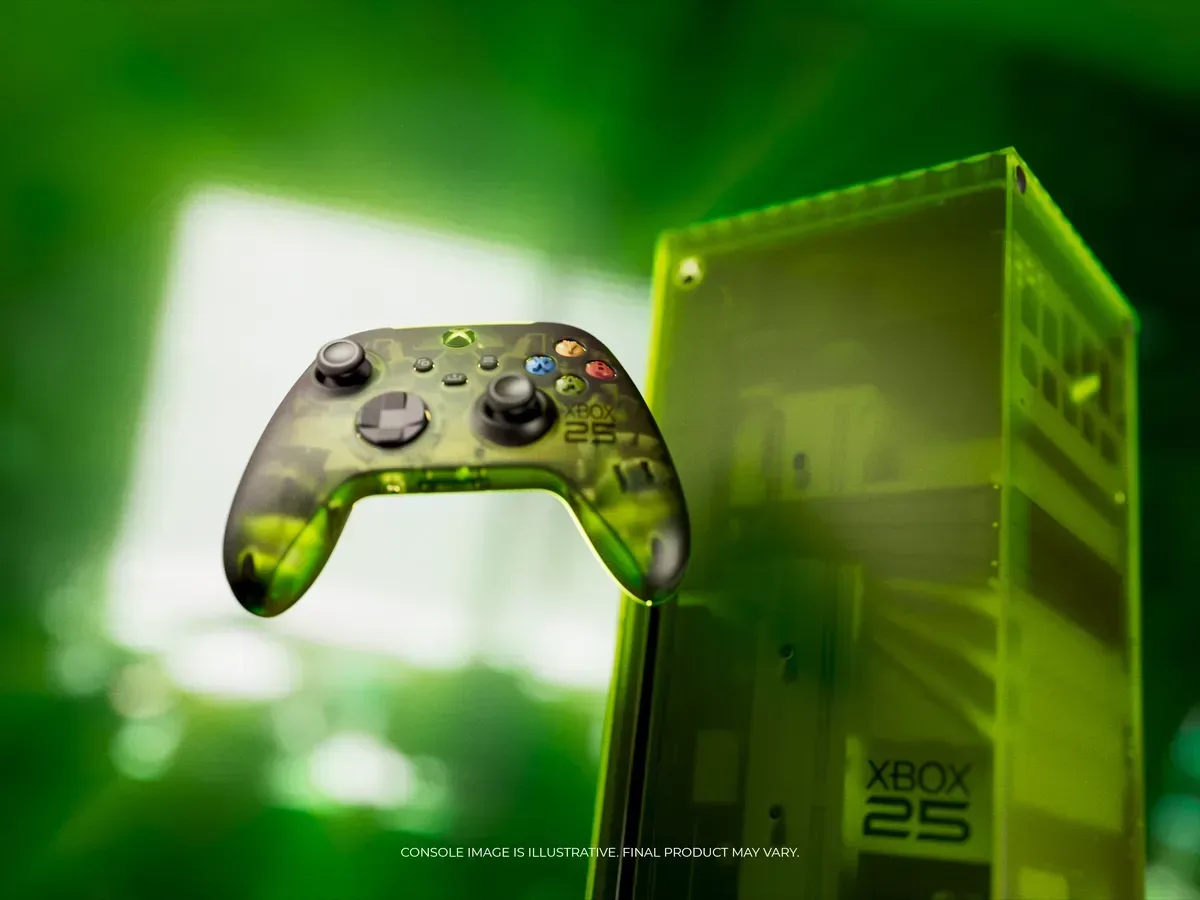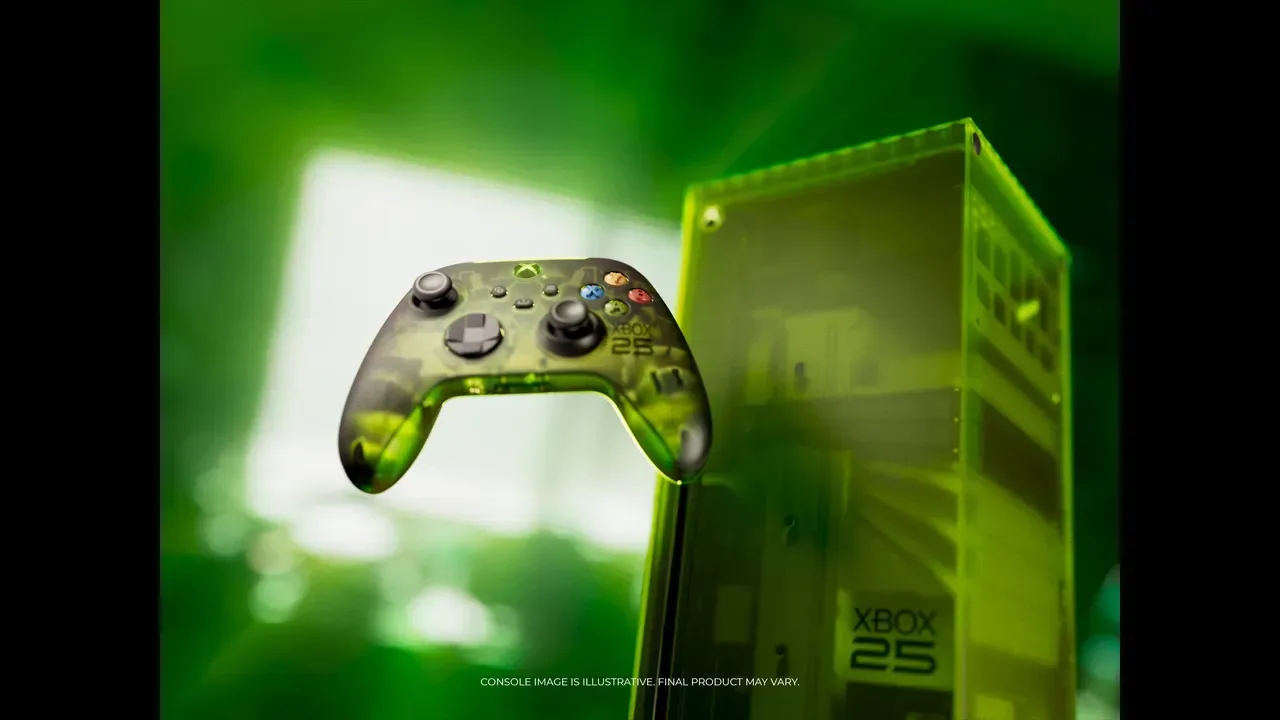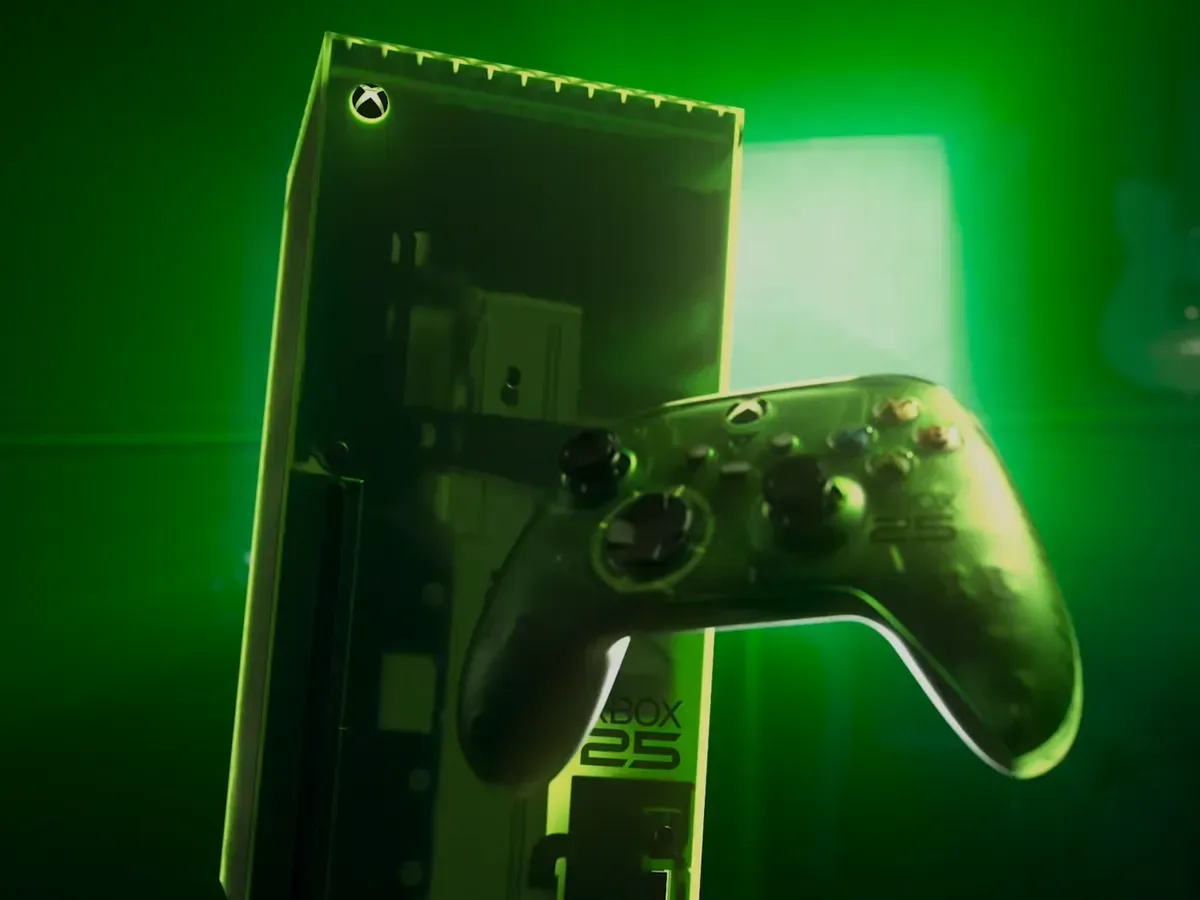
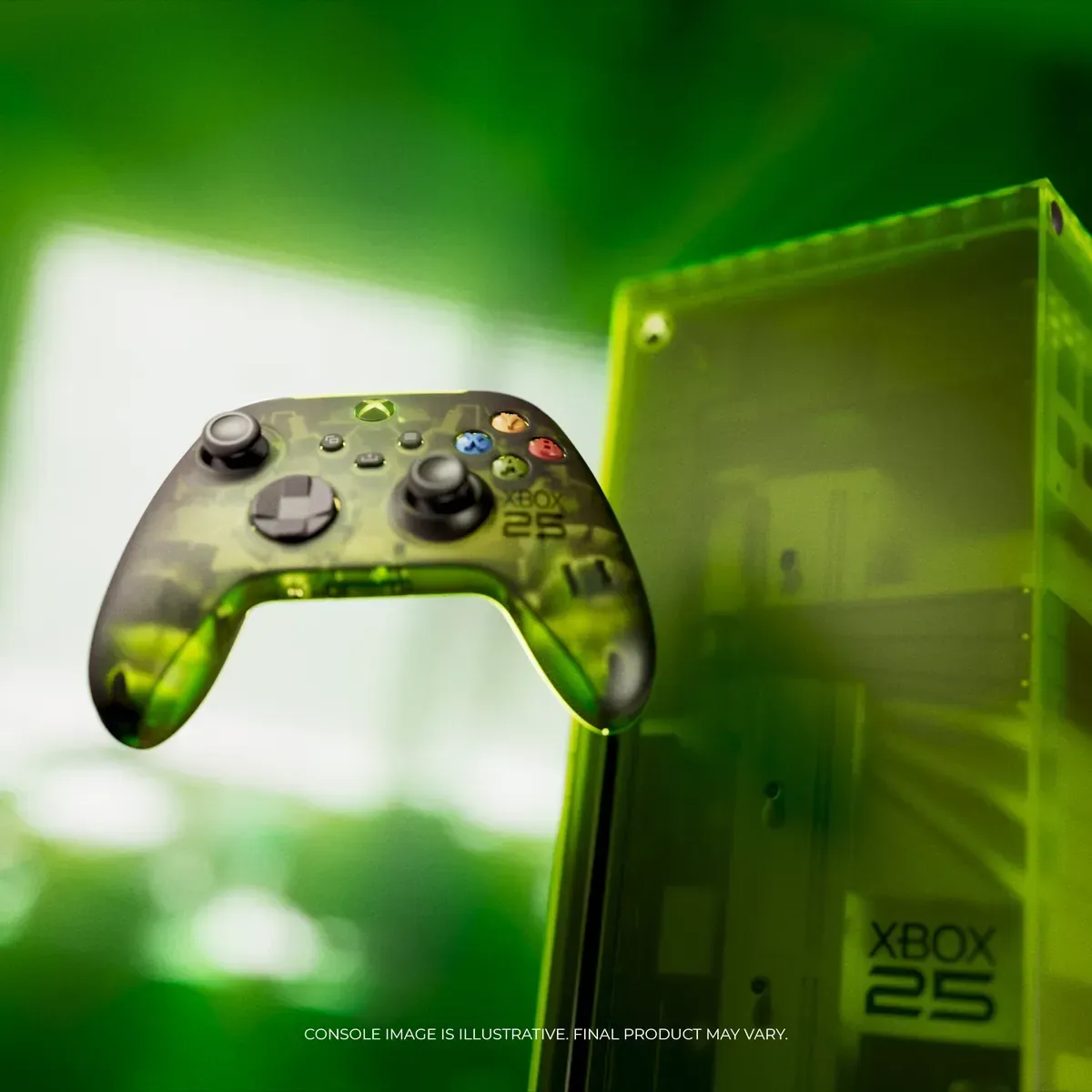
Microsoft’s translucent-green Xbox Series X 25th Anniversary console has started reaching buyers, but some owners are reporting a frustrating arrival condition: damaged retail packaging. The hardware itself is not identified as damaged in the available reports. The issue is the cardboard presentation box—still a meaningful part of the product for people who paid for a scarce commemorative edition.
Only 25,000 X25 consoles were produced, making condition more consequential than it would be for a standard retail Series X. A torn, crushed, or punctured box does not change how a console plays, but it can change the experience of owning a limited run intended to mark Xbox’s 25th year. For collectors, the original packaging is part of the edition’s completeness and presentation, rather than disposable transit material.
What buyers are reporting
One buyer, Matt Fizell, shared photos showing a substantial tear in the box after delivery. He said the order came from the Microsoft Store and that the shipping carton did not appear to include packing peanuts or other protective fill. Separate posts on X and Facebook, plus a Reddit discussion with multiple participants, describe similar shipping-damage concerns.
That does not establish that every shipment has a problem, nor does it reveal where in the delivery chain individual damage occurred. It does indicate that the complaint is broader than a single isolated delivery. At the time these reports emerged, Microsoft had not publicly responded to a request for comment.
There is an important distinction between the shipping carton and the retail box inside it. The shipping carton is meant to absorb the hazards of transit. The retail box is the branded packaging that holds and presents the console. If an order is sent with too much unused space, inadequate cushioning, or insufficient separation between the retail box and the shipping carton, movement and impacts can threaten that retail packaging even when the console remains functional.
Why the box matters for a limited console
It is easy to dismiss damaged cardboard as cosmetic, particularly when the expensive electronics inside still work. That viewpoint makes sense for a routinely stocked console bought strictly to be used. It is less satisfying for an edition sold on scarcity, anniversary branding, and a distinctive translucent-green design.
Packaging condition can matter to collectors for several practical reasons:
- Completeness: The correct retail box and inserts are part of what buyers commonly expect with a limited edition.
- Display: Some owners keep commemorative hardware boxed, or retain the packaging for a more complete shelf display.
- Future transfer: If the owner later gives, sells, or trades the console, visible damage may matter to the next person even if the system functions perfectly.
- Expectation: A premium-priced collectible product arrives with a higher expectation of careful handling than a mass-market replacement accessory.
None of those points means a damaged box automatically makes a console worthless. It means the packaging has value to a portion of the audience, especially when replacements may be difficult to obtain after a rapid sellout.
Related coverage includes Limited Xbox Series X Anniversary Consoles Reportedly Arrive in Damaged Packaging.
A sellout makes replacement questions more complicated
The X25 console reportedly sold out in seconds despite its $899 retail price. Its matching translucent-green controller was also sold separately, providing a lower-cost way to own part of the anniversary design, but it too appeared to be sold out at the time of the reports.
That scarcity is the awkward part of a packaging-damage complaint. With a regularly available product, a customer may reasonably expect a straightforward exchange for another identical unit. A sold-out run of 25,000 creates a practical constraint: an identical replacement might not be readily available. The available information does not establish what remedy, if any, Microsoft is offering affected buyers, so owners should avoid assuming a replacement console, partial refund, or other outcome until they receive a response through the appropriate support channel.
It is also worth separating a retail sellout from a judgment about the condition of a specific delivered item. A console can be sold out while an affected buyer still has a legitimate concern about the state in which their purchase arrived. Conversely, a limited run does not by itself prove every packaging blemish warrants the same resolution. Clear documentation is useful precisely because it records the condition of a particular delivery.
What affected owners can document
For anyone receiving a limited console with shipping damage, the most useful first move is to preserve an accurate record before throwing anything away or altering the packaging. That is not an instruction to keep a broken shipping box forever; it is a practical way to retain evidence while asking a retailer or manufacturer what options exist.
- Photograph the unopened shipping carton. Capture all sides, labels, punctures, compression, and tape condition where possible.
- Photograph the retail box before removing the console. Take close images of tears, dents, crushed corners, scuffs, and any breach that could have exposed the contents.
- Keep the order details handy. The order number, delivery date, and product information help connect the photographs to the purchase.
- Check the console carefully. A damaged box does not necessarily mean damaged hardware, but exterior condition should not be treated as proof that everything inside is fine.
- Describe the issue precisely. “Retail box torn on arrival” is more useful than a general complaint, particularly when the console itself appears intact.
Owners may also want to retain the original packing materials until they know whether a return or inspection is required. This is especially sensible with a limited edition, where disposing of branded packaging too quickly can remove part of the item’s collectible presentation regardless of how a support case proceeds.
Condition is not just an aftermarket concern
Discussion of box condition can sometimes drift immediately into resale value. That is too narrow here. Many people who bought the X25 console may have no intention of selling it. They can still reasonably care about receiving an anniversary product in presentable condition, especially when its limited production and unusual colorway were central to the purchase.
The complaint is fundamentally about delivery quality and expectations. Buyers paid for a specific limited product, not merely the internal hardware. The console’s protective plastic packaging may be more important to the safety of the machine, but the outer box remains part of the retail object customers were sent.
For people who missed the anniversary hardware, Microsoft has also outlined seasonal software promotions in its Xbox Black Friday sale plans. Those discounts do not replace the X25 console or controller, but they are a reminder that the broader Xbox anniversary period includes more than this sold-out hardware release.
What remains unknown
Several details should not be filled in with speculation. It is not known how many X25 shipments were affected, whether a specific fulfillment method was responsible, whether all reported cases originated from the same distribution process, or whether Microsoft will issue a public statement. It is likewise not established that the lack of protective fill described in one order applied to every delivery.
What is clear is narrower: multiple buyers have publicly raised concerns about damaged packaging, and the concern carries extra weight because the translucent-green X25 is a 25,000-unit anniversary edition that sold through quickly. For buyers who value the set as both a working console and a commemorative object, the cardboard box is not the whole product—but it is not nothing, either.