Microsoft’s Xbox business turns 25 in 2026, giving the green machine a rare moment to stop, look back and ask a difficult question: how did we get from a hulking black box and the Duke controller to a console family split between a disc-equipped performance model and a smaller digital system?
The short answer is that Xbox has changed its hardware strategy several times without abandoning a few central ideas. Online console play became a core part of its identity early through Xbox Live. Achievements and Gamerscore turned optional goals into a system-wide record of play. Later hardware revisions increasingly focused on storage, display resolution, physical media and the choice between lower entry cost and maximum graphical output.
What follows is a chronological guide to the major Xbox generations and named hardware revisions identified in this history. It is not a list of every retail package or SKU; the Xbox 360, in particular, had additional configurations beyond the core hardware milestones below. For a different angle on how old platforms can remain part of an active gaming conversation, see our coverage of a new Commodore 64 release.
November 15, 2001: Original Xbox
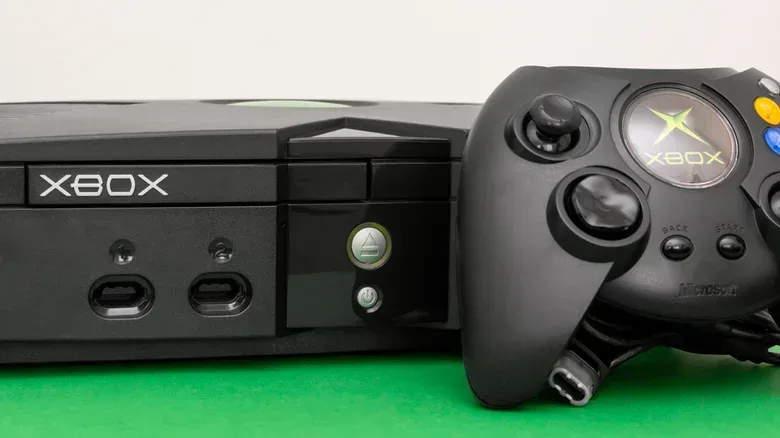
The first Xbox arrived in the United States on November 15, 2001, priced at $300. It entered a crowded period for home consoles: Sony’s PlayStation 2 and Nintendo’s GameCube reached the U.S. market within a 13-month span around it. The PlayStation 2 ultimately dominated the generation commercially, but Microsoft established an identity that was considerably more than a first attempt at joining the hardware business.
The foundational Xbox idea was connected play. Xbox Live launched in late 2002, setting a high bar for online console gaming. For $50 annually and an internet connection, subscribers could play titles including Halo: Combat Evolved with friends or other players online. Halo’s importance was twofold: it was a prominent exclusive series and a practical reason for users to see the value of a connected console service.
The early uptake illustrates why Xbox Live mattered. It exceeded 300,000 subscribers within four months, and by mid-2005 it had reached two million subscribers. Those numbers do not make the original Xbox the top-selling machine of its era, but they demonstrate that its approach to online service had found an audience. In practical terms, Xbox was helping make a paid, centralized online account and multiplayer network feel like part of the standard console proposition rather than a peripheral experiment.
The original system is also the starting point for Xbox’s lasting visual language: black hardware accented by green. That connection has been made explicit in 2026 through a translucent green Xbox Series X created for the original console’s 25th anniversary.
November 22, 2005: Xbox 360
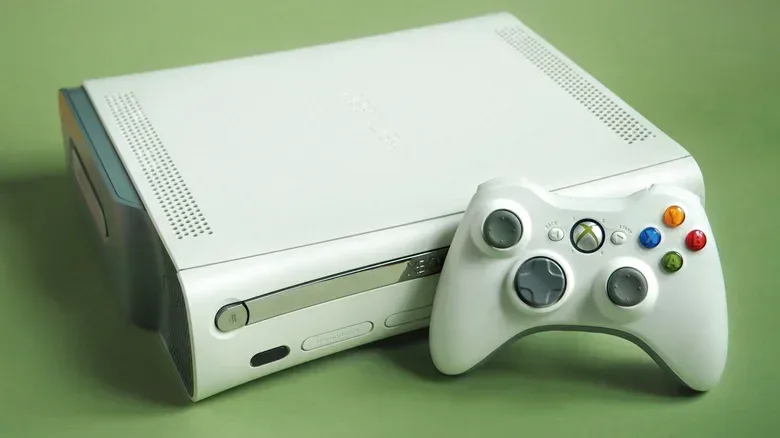
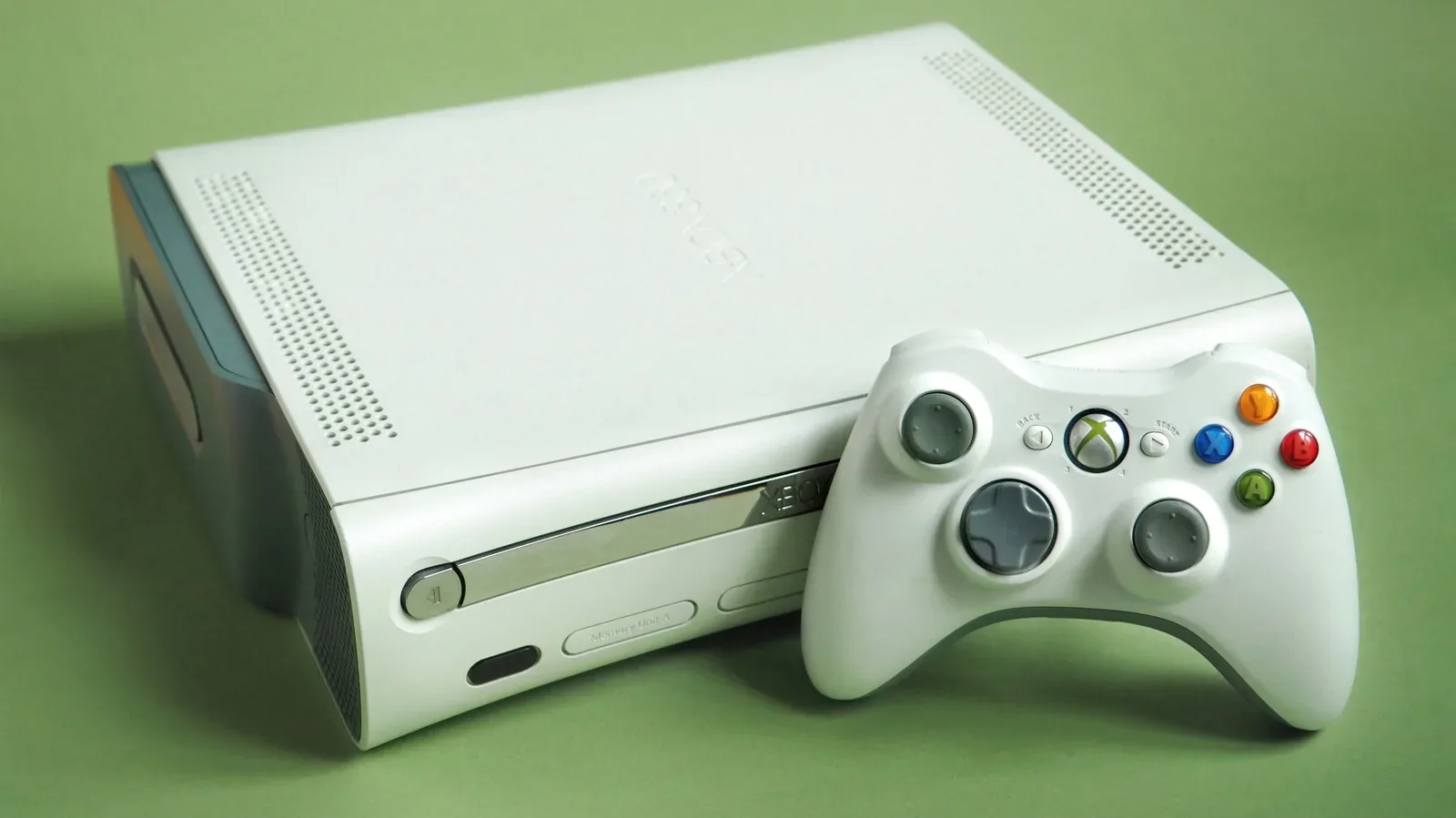
The Xbox 360 launched on November 22, 2005, and it was offered in two notably different configurations. The $400 Premium package included a wireless controller and a detachable 20GB hard drive containing preloaded extras. The $300 Core system used a wired controller and did not include a hard drive. Owners of the latter had to purchase storage separately or rely on a memory card for saved games.
That split is useful context for understanding how much console expectations were changing. Storage was no longer merely an accessory for a small amount of save data. It was becoming a meaningful part of a console’s day-to-day use, and the Premium/Core divide made that fact unusually visible at retail.
2007: Xbox 360 Elite
In 2007, Xbox added the Xbox 360 Elite. Its matte-black finish was the obvious cosmetic change, while its 120GB hard drive was the clearer practical upgrade. The Elite also introduced an HDMI port. HDMI, or High-Definition Multimedia Interface, carries digital video and audio through one cable; its inclusion was significant for players connecting their consoles to newer high-definition displays.
The Elite illustrates an approach that would recur later: extend a generation with a more feature-complete version rather than immediately move to an entirely new platform. Storage capacity and display connectivity were becoming selling points in their own right.
2010: Xbox 360 Slim
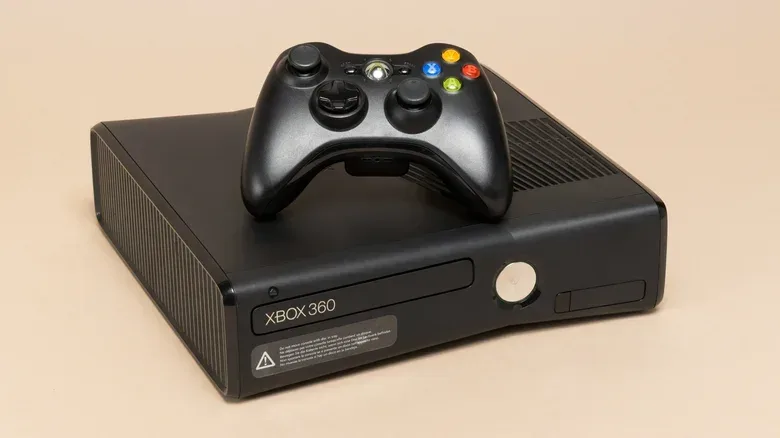
The Xbox 360 Slim arrived in 2010 with a new cooling system and storage options reaching 320GB. Its technical role was especially important because it addressed the overheating problem associated with earlier 360 hardware, an issue widely linked with the Red Ring of Death. The name refers to the console’s red ring-shaped error indicator, which became an unwelcome symbol of hardware failure for owners of affected systems.
The Slim therefore represented more than a shape change. It was an attempt to improve reliability through revised cooling while also expanding storage. That dual purpose—correcting a weakness while modernizing the design—makes it one of the generation’s most consequential revisions.
June 2013: Xbox 360 E
The Xbox 360 E arrived in June 2013, only months before the next generation began. It provided a sleeker outward design as Microsoft closed out the 360 era. By that point, the Xbox 360 had already become Microsoft’s best-selling console, reaching at least 84 million units sold despite the Red Ring legacy.
The 360’s influence was not confined to sales. It brought achievements and Gamerscore into the Xbox ecosystem. An achievement is a platform-recognized objective tied to a game, while Gamerscore is the cumulative numerical total associated with those achievements. Together, they gave players a cross-game way to document progress and, often, a reason to return for tasks that were not essential to reaching a game’s ending.
The generation was also home to major Xbox exclusives including Halo 3, Fable II, Gears of War and Forza Motorsport 2. There is discussion of those games potentially coming to PC, but that remains a possibility rather than a confirmed release plan in the material available here.
Xbox also entered the motion-control space in 2010 with Kinect. Unlike a setup that tracked a handheld remote through a sensor bar, Kinect used a camera to track the player’s whole body. It initially remained optional, a choice that would become particularly relevant during the Xbox One launch.
November 22, 2013: Xbox One
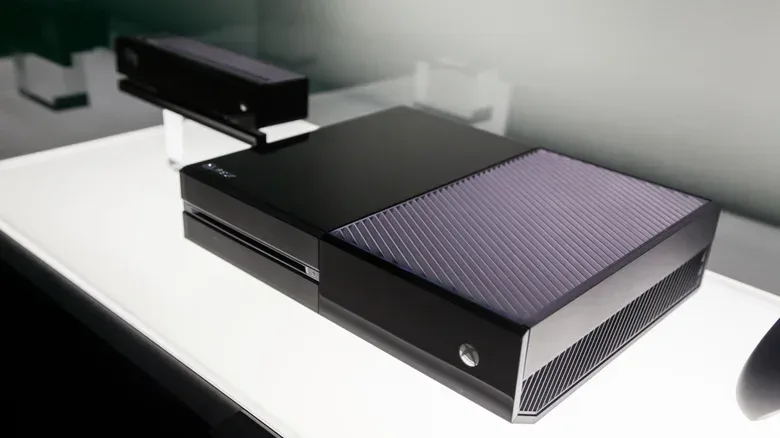
The Xbox One released on November 22, 2013, after a launch plan that changed significantly before the console reached stores. Microsoft had initially intended to sell the $499 system bundled with Kinect 2.0 and require users to keep the motion camera connected. Before launch, the company reversed course and said Kinect would not be required. In 2014, it dropped the Xbox One price to $400 and ended the bundle.
This reversal is a useful reminder that a console’s eventual identity is shaped by market response as well as engineering. Kinect had been optional on Xbox 360; making it central to Xbox One’s original proposition created resistance, and the revised policy put the focus back on the console itself.
The original Xbox One included a 500GB hard drive, a revised controller with new thumbsticks and impulse triggers, and a built-in Blu-ray player. The Blu-ray inclusion addressed a capability Xbox lacked in the previous generation relative to the PlayStation 3. For consumers with physical movie libraries, it also made the device more straightforwardly useful as a living-room media player.
2016: Xbox One S
The Xbox One S launched in 2016 for $399. It removed the dedicated Kinect port, a concrete sign that the accessory was no longer central to the platform. More importantly for the hardware line, it was 40 percent smaller than the original Xbox One and added 4K Blu-ray playback, 4K streaming and 1080p upscaling.
Upscaling is not the same as rendering a game at native 4K. In this case, 1080p imagery can be processed for output to a higher-resolution display. The result can help a system work cleanly with a 4K television, but it does not mean every pixel was originally rendered at the 4K resolution. That distinction became even more important with the next revision.
2017: Xbox One X
The $499 Xbox One X arrived in 2017 as Microsoft’s first console capable of native 4K gameplay, with HDR support. Native 4K means a game is rendered at 4K resolution rather than simply being upscaled for a 4K screen. HDR, short for high dynamic range, is a display feature intended to represent a wider range between dark and bright image areas when the game and display support it.
Microsoft supported the machine with Xbox One X Enhanced versions of many games, which could offer higher resolutions and frame rates. Yet the word “enhanced” did not impose identical results on every title. Native 4K support varied game by game, an important caveat for anyone treating the console label as a guarantee of a uniform visual outcome.
November 10, 2020: Xbox Series X and Xbox Series S
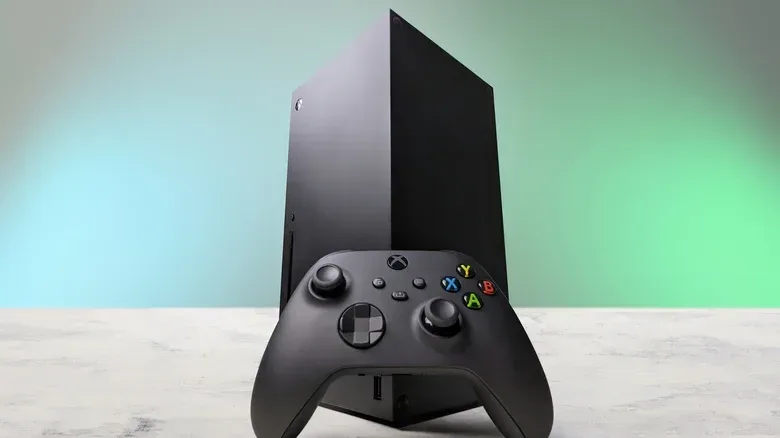
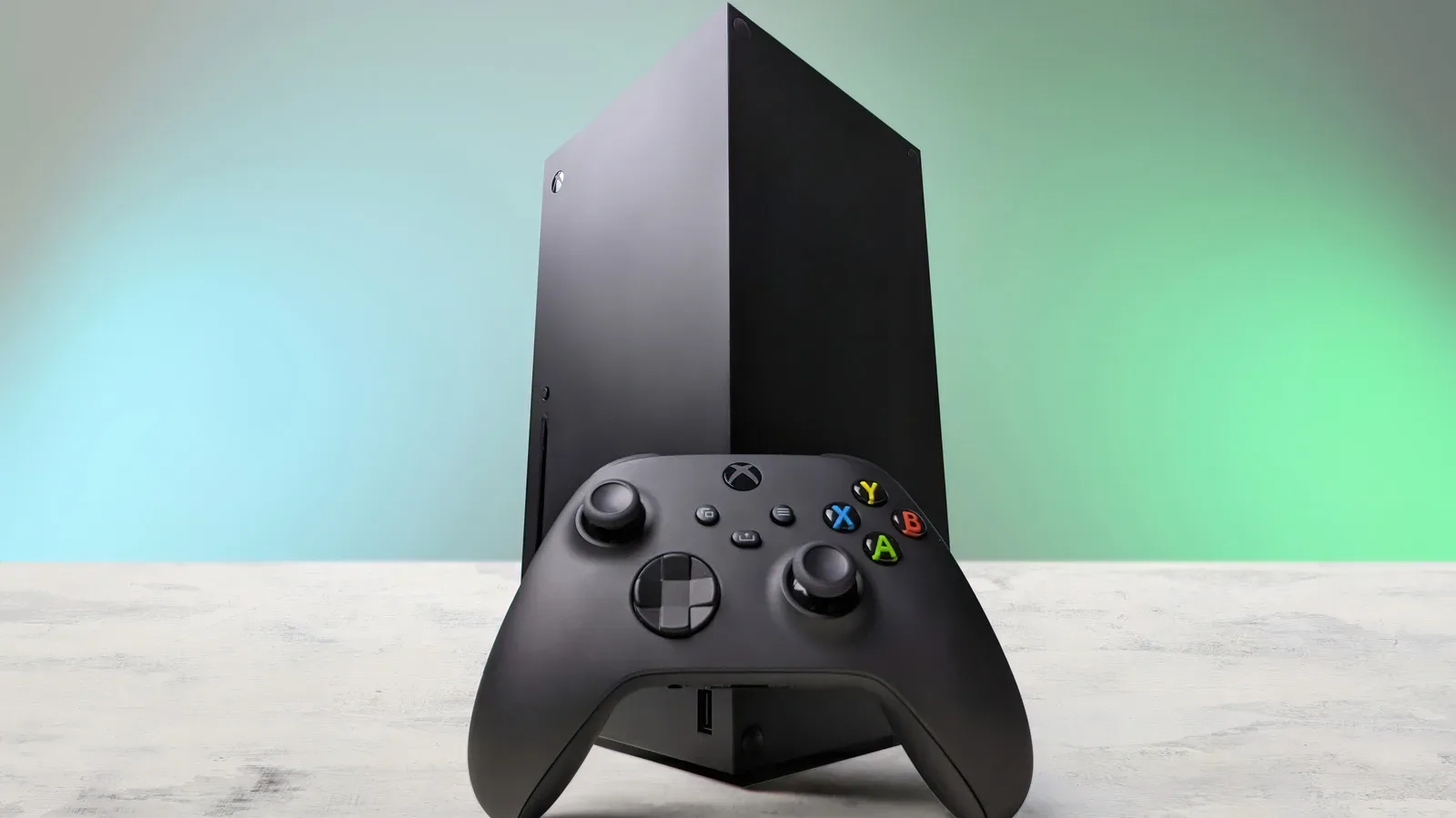
The Xbox Series X and Xbox Series S began the current Xbox generation on November 10, 2020. The Series X had been unveiled in 2019 and launched at $500. Microsoft positioned it as its fastest and most powerful console to date, promising low latency, native 4K gaming up to 120 frames per second, and eventual 8K support.
Latency refers to delay between an action and a system response. Lower latency is desirable because it can make controls feel more immediate. Frames per second, commonly abbreviated FPS, measures how many individual images are displayed in one second; higher frame rates can produce smoother motion when a game and display support them. The Series X specification set a high ceiling, but the precise output remains dependent on the individual game and its modes.
The $300 Series S was revealed in 2020, just two months before launch. It took a sharply different route. The compact system has no disc drive, making it a digital-only console. That design is particularly suited to people who use Xbox Game Pass or do not intend to buy physical copies.
Resolution is the stated key difference between Series S and Series X. Series S tops out at 1440p and can upscale games, rather than offering true 4K gaming capability. That is not merely a specification-sheet footnote: it frames the Series S as a lower-cost access point aimed at a different display and purchasing profile, while the Series X is built for users prioritizing native 4K output and, in its disc version, physical media.
Where the current hardware stands
Prices have changed substantially since the 2020 launch. The 512GB Xbox Series S now starts at $500. The 1TB digital Xbox Series X is listed at $750, while the disc-drive Series X is $800. Those figures make the original launch framing of the Series S as a $300 alternative especially striking.
The green anniversary Series X completes a neat visual loop, but the more meaningful through-line is strategic. The original Xbox stressed online infrastructure. Xbox 360 paired that connected identity with achievements, expanded storage and a huge installed base. Xbox One’s revisions charted a move from a bundled camera proposition toward 4K media and native 4K gaming. Series X and Series S then formalized a two-model choice between high-end performance and a digital, lower-resolution route.
Details of the next Xbox remain unsettled. Until that picture becomes clearer, this four-generation timeline shows a brand repeatedly adjusting the hardware while keeping service, connected play and multiple ways to enter the ecosystem at the center of the conversation.