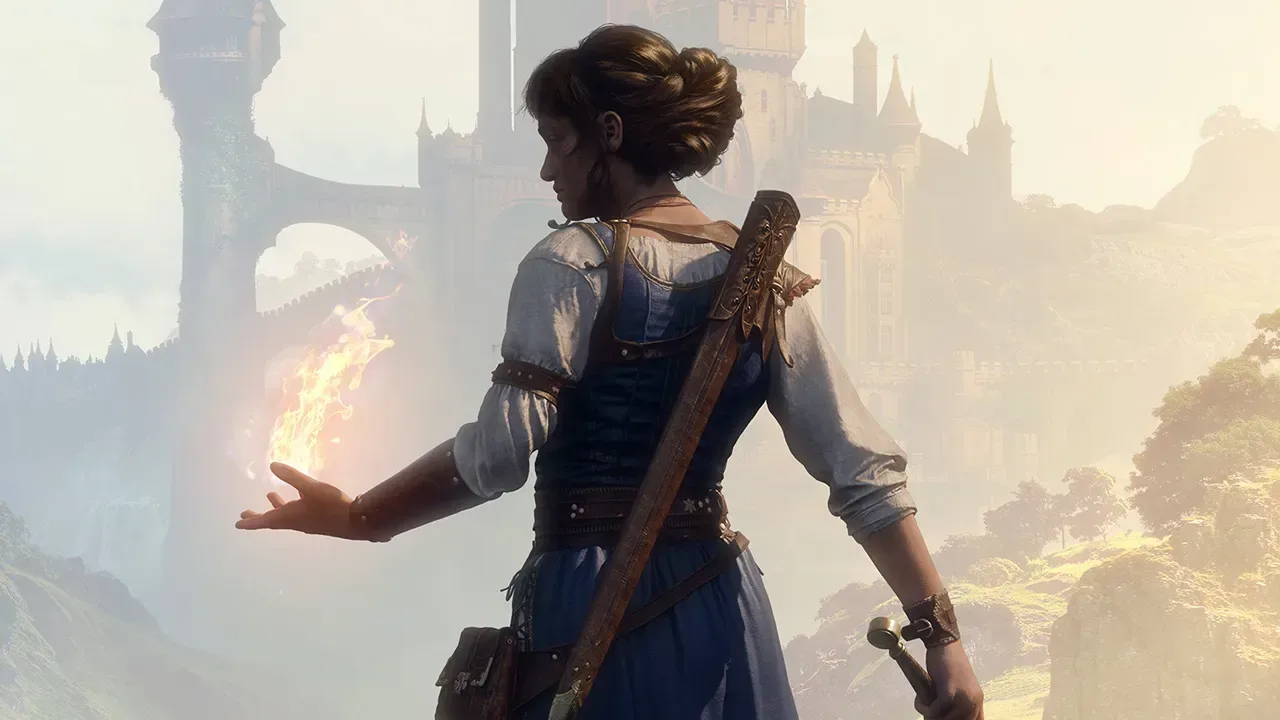
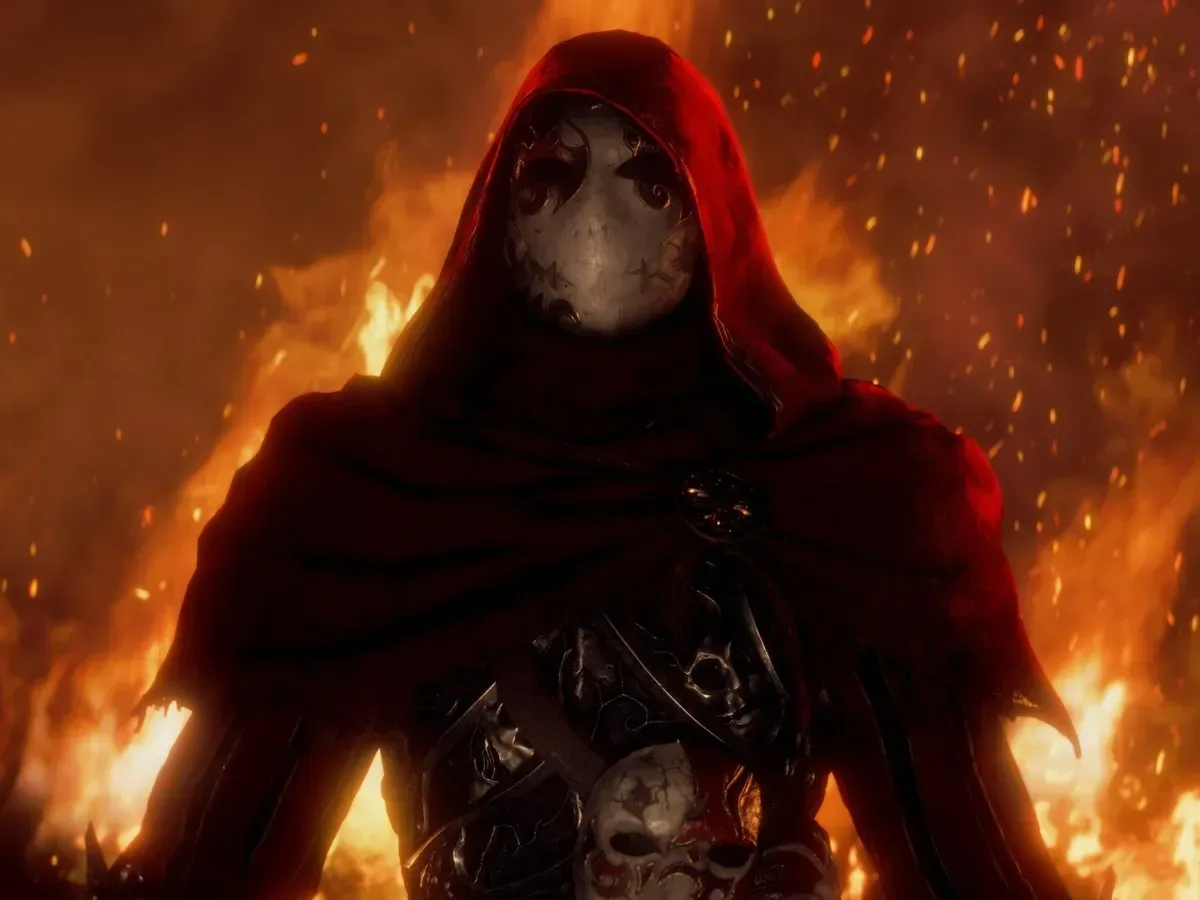
Fable’s long-awaited return is being shaped by a simple, uncomfortable reality: an open-world action RPG made to the expectations of the original trilogy alone would not necessarily satisfy an audience that has spent the past decade playing far larger and more elaborate games.
Playground Games co-founder and Fable general manager Ralph Fulton has explained that the team had to look beyond earlier Fable entries as technology advanced and player expectations changed. He specifically pointed to The Witcher 3 and the later role-playing direction of Assassin’s Creed as major reference points in the genre’s shifting standards.
That does not mean the new Fable is being positioned as a copy of either franchise. Rather, it explains a central pressure on the project: reviving a recognizable series while building an open-world action RPG for a market that now expects a much broader range of activities, systems, and exploration than it did when Fable began.
A reboot built in a changed genre
Work on the project reportedly began in 2016. By the time it reaches its February 23, 2027 launch date, it will have been in development for roughly a decade. Fulton described an environment in which the standards for the genre kept moving during that time.
In his assessment, The Witcher 3 became a defining benchmark for open-world action RPGs after its 2015 release. Later, Assassin’s Creed Origins, Odyssey, and Valhalla shifted that series toward what Fulton called a quasi-RPG model. The consequence for Fable was not just technical catch-up. It was a design problem: the team needed to decide what a modern Fable should offer, rather than merely reproduce the template associated with the earlier games.
“All of these games continue to reset player expectations,” Fulton said, arguing that looking only to the original Fable trilogy would leave the team short of what a contemporary audience and marketplace expect.
Open-world action RPG is a broad label, but it is useful here. It generally describes a game built around action-focused play in a traversable world, with role-playing elements that can include character growth, choices, quests, equipment, or progression. Fable has long occupied territory near that category. The challenge is that the scale and perceived depth of such games have changed substantially since the original trilogy.
For Playground, the work also represents a major departure in development experience. The studio built a new team alongside its established Forza Horizon work to take on Fable, moving from a highly successful racing franchise into a large role-playing game. Fulton’s point is not that the studio was starting from zero, but that it was tackling a genre in which it had not previously shipped a game.
Related coverage includes Fable's Long Road: How Modern Open-World RPGs Changed Playground Games' Reboot.
More scope was not automatically the answer
One of the more revealing details is that Fable’s scope reportedly came down from an initially “enormous” ambition. That is not inherently a sign of compromise. In a project of this size, deciding what not to build can be as important as adding features.
There is a meaningful distinction between scope and substance. Scope is the overall amount of content, systems, geography, or production work a game attempts. Substance is whether those elements support a coherent experience. An open world can offer many objectives and diversions, but a larger checklist is not automatically a stronger role-playing game. The stated scaling-back suggests Playground has spent part of its long development defining a more manageable version of Fable rather than pursuing every possible feature implied by the genre’s biggest modern examples.
The currently stated playtime gives a clearer outline of that version. Playground has said the main quest should take about 20 hours, with another 15 to 20 hours available through side content and open-world exploration. Taken together, that indicates a possible 35-to-40-hour experience for players who explore beyond the core path, though individual completion times will naturally vary.
Those numbers would make the reboot the longest Fable in the series on the available estimates. The original 2004 Fable is listed at approximately 12 and a half hours for its main quest, while Fable II is listed at around 13 hours and Fable III at about 13 and a half hours. A 20-hour campaign is therefore a considerable expansion of the series’ core story length without necessarily committing the game to an unlimited-scale format.
What the playtime figures do—and do not—tell players
A main-quest estimate is useful, but it should not be treated as a full accounting of a role-playing game’s size. It describes a suggested route through the central story, not how much time every player will spend experimenting, wandering, chasing optional goals, or simply taking a different pace. The extra 15 to 20 hours of side and exploration material is the more important signal that Playground sees optional play as a substantial part of the package.
At the same time, the figures do not establish the exact structure of that content. They do not say how densely the world is built, what form its side activities take, or how decisions and progression will operate. They do show that Playground is targeting a larger campaign than past Fable games while setting a visible limit on the project’s likely scale.
That can be a practical positive for players who liked the earlier games’ comparatively brisk main stories. A 20-hour central quest has room to be more expansive than its predecessors without requiring the kind of commitment often associated with the genre’s most sprawling entries. The relevant question will be whether the additional content feels connected to Fable’s identity, rather than existing simply because modern open worlds are expected to be busy.
The balancing act: familiar Fable, contemporary expectations
The reboot’s task is not merely to become longer. It must reconcile two different kinds of expectation. Existing fans may want the particular tone and appeal they associate with Fable and its trilogy. Newer players may judge it beside open-world action RPGs that have established a much higher baseline for scale, technical presentation, and optional content.
Fulton’s comments make clear that Playground does not see those expectations as mutually exclusive, but they do create tension. Building only from the earlier games risks making the reboot feel dated relative to today’s market. Following the modern genre too closely risks making the result feel less distinctive as Fable. The project’s reduced scope and stated campaign length suggest an attempt to find a middle ground: bigger than the older entries, but not defined solely by being bigger than everything else.
The game’s unusually long gestation makes that balance more difficult. A title that spends years in development can encounter changes in hardware, production tools, audience habits, and competing game design. The target does not stand still. That is the context behind Fulton’s observation that technology progressed while Fable was being made: the team was not updating an old formula in a vacuum, but revising it while the surrounding genre continued to evolve.
Fable is due to arrive on PC, PlayStation 5, Xbox Series X, and Xbox Series S on February 23, 2027. Its cross-platform release means its reception will be shaped by a broad audience rather than by one console ecosystem alone. It also arrives in a release calendar where other role-playing projects are taking shape; Lords of the Fallen 2 is currently set for an April 2027 window.
For now, the clearest takeaway is not that Fable is trying to chase a single rival. Playground’s stated approach is more pragmatic: preserve the reboot’s connection to its own series, while acknowledging that the definition of a modern open-world action RPG has changed. After a development cycle measured in years rather than months, that may be the project’s most consequential design decision.