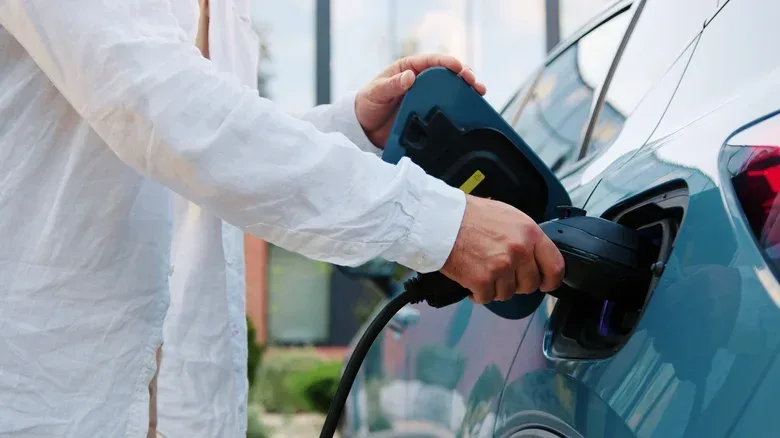
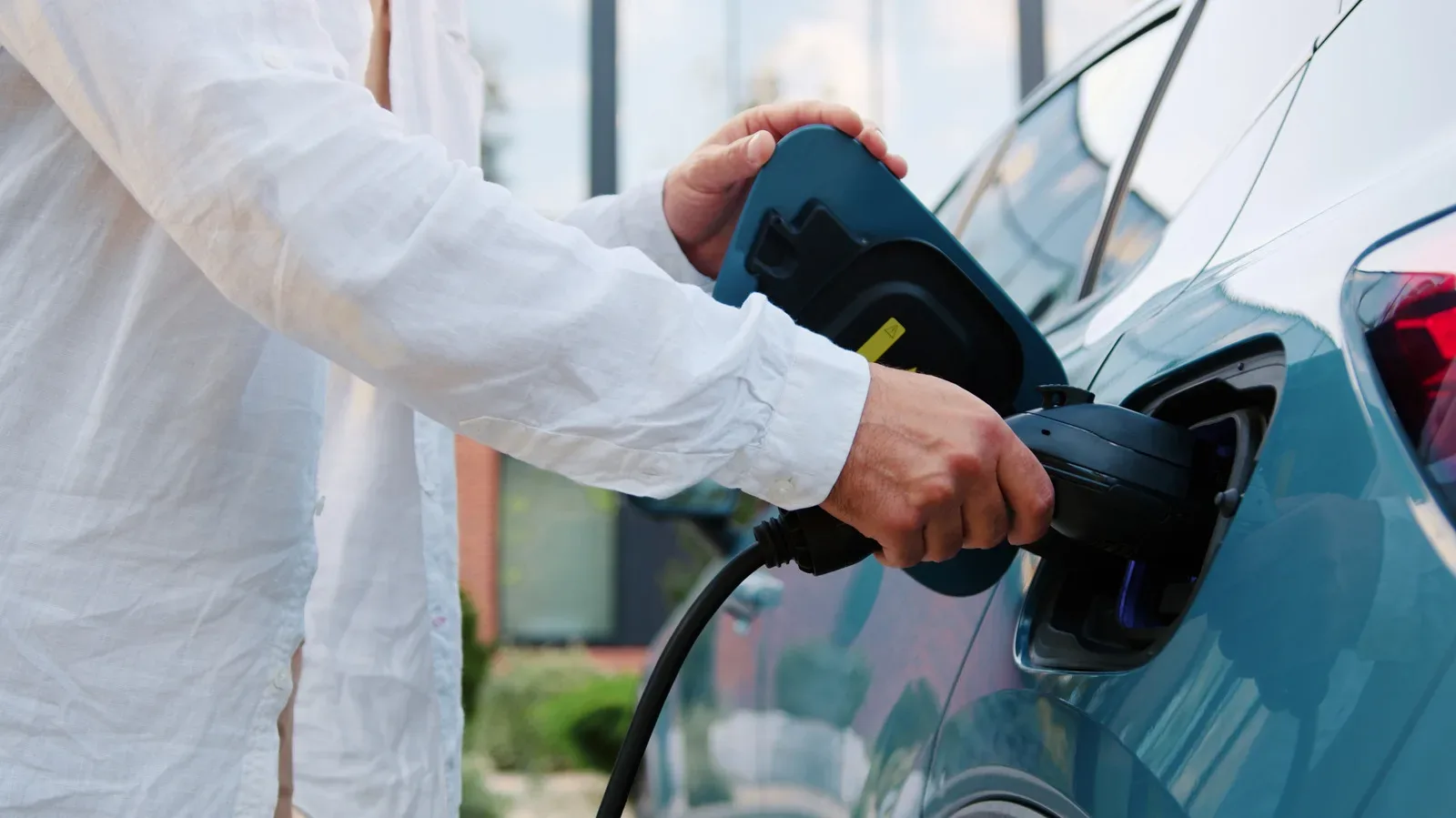
Anyone accustomed to a progress bar knows the feeling: everything is flying along until the final sliver takes an eternity. EV fast charging has the same apparent betrayal built in. A vehicle can restore a substantial portion of its battery remarkably quickly, yet the climb from roughly 80% to 100% can feel as if the charger has suddenly switched to dial-up.
That slowdown is generally not evidence of a bad battery, a broken charger or an owner making a catastrophic mistake. It is a controlled part of how modern lithium-ion battery packs charge. The vehicle deliberately asks for less power as the battery approaches full, trading headline speed for battery protection.
This is why charging claims so often focus on ranges such as 10% to 80% or 0% to 80%, rather than promising a time to 100%. The early and middle stages are where a battery can accept energy most readily. The final portion is mechanically more difficult and potentially riskier to rush.
Fast charging is about power — but also where conversion happens
Every charging method ultimately aims to restore the battery by moving lithium ions within its cells. During charging, lithium ions move from the cathode to the anode. When the vehicle is later driven, the process reverses: ions move back toward the cathode and contribute to the electrical current used by the car.
The charging options differ chiefly in the amount of power they can supply and in how they deliver it. A standard household outlet provides a relatively small flow of electricity. A home or public charging station provides more. A DC fast-charging station can typically deliver between 50kW and 350kW, with newer equipment capable of higher outputs.
kW, or kilowatt, is a measure of power: in this context, it describes the rate at which energy can be delivered. A larger number does not automatically mean every EV will charge at that maximum rate. The car’s battery and charging systems communicate with the station and determine what the pack can safely accept at a given moment.
The current type matters, too. Household outlets and conventional charging posts supply alternating current, or AC. The battery itself uses direct current, or DC, so the car’s onboard charger must convert AC to DC. That onboard component is constrained by the space and hardware available in the vehicle, which limits its charging rate.
A DC fast charger does that conversion in its own larger external equipment and supplies DC directly to the battery. In simple terms, the fast charger handles the heavy conversion work outside the car, while the car manages how much current it is prepared to receive. That is a major reason public fast-charging stops can be dramatically quicker than plugging into a regular outlet.
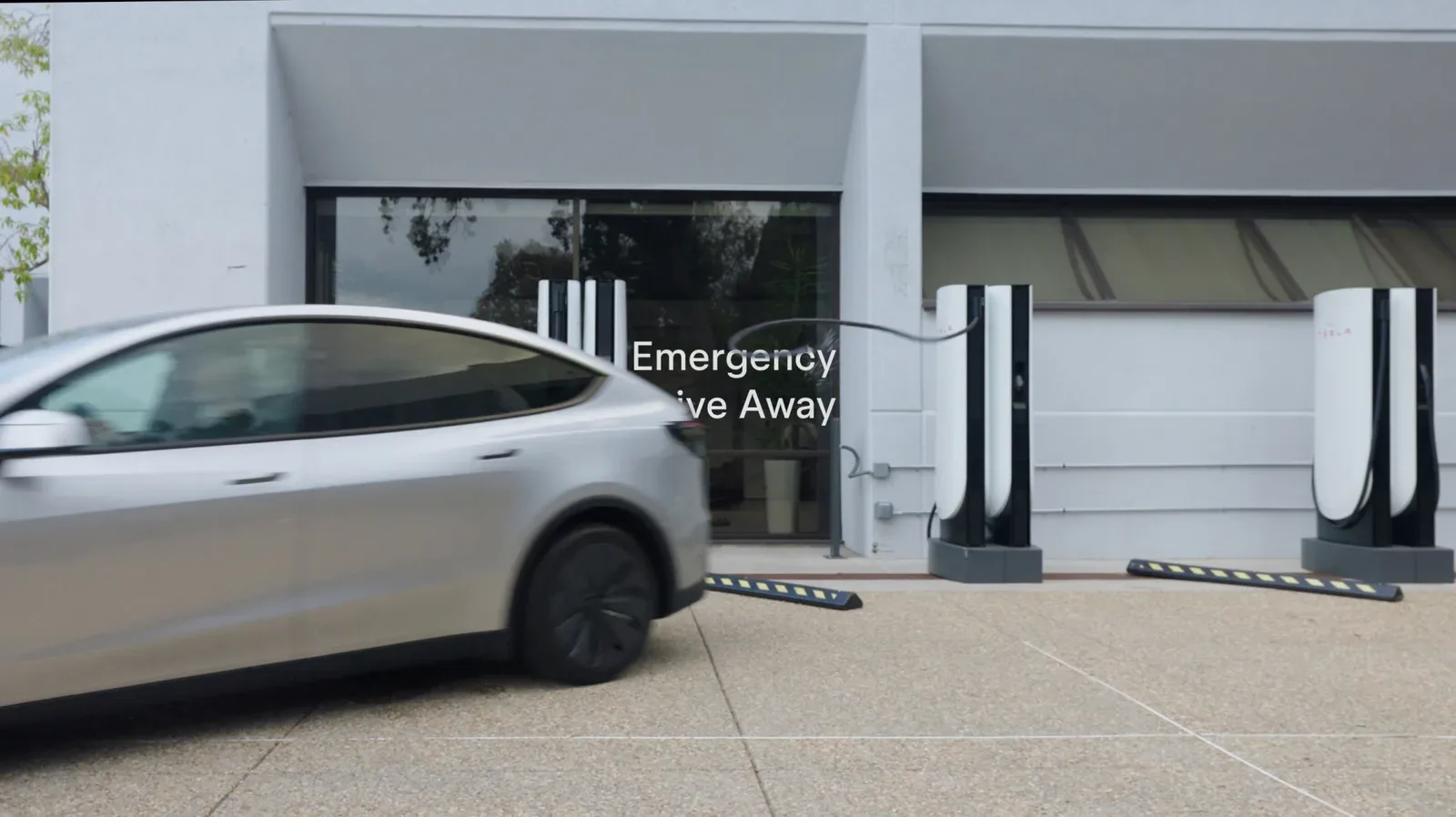
The difference is easy to see in the history of the Tesla Model S. When it debuted in 2012, a full charge from a typical household outlet could take more than 50 hours for up to 300 miles of range. Tesla now says a current Model S can add up to 200 miles in 15 minutes at a Supercharger. Those figures illustrate huge progress, but they do not repeal the underlying limits inside a battery cell.
The charging curve: why the final percentage points take longer
EV charging does not usually proceed at one unchanging rate. Instead, it follows what is commonly called a charging curve: the power accepted by the battery changes as its state of charge rises. The especially visible taper near a high charge level occurs because the cell reaches its voltage limit.
Initially, the charger can provide constant current. Once the cell reaches that voltage limit, the system holds the voltage and allows the current to fall. The result for a driver is straightforward: the percentage counter keeps advancing, but more slowly.
A useful way to picture it is a venue with open seats. At the beginning, people can enter, find a nearby open seat and settle quickly. As seats fill, the remaining openings become harder to reach. More movement is required, and forcing more people through the entrance does not create new seats. It simply causes congestion.
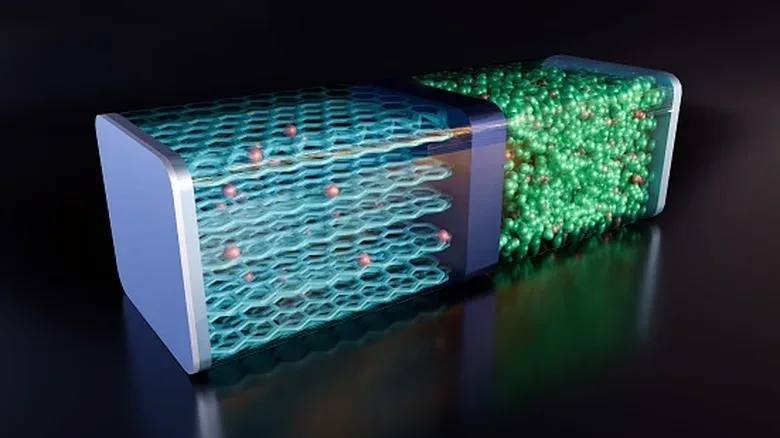
The battery equivalent is the graphite anode. Lithium ions need to move into that graphite structure and settle there. When the anode is less full, that task is comparatively easy. As it becomes increasingly occupied, ions have a more difficult journey and require more time to settle. The system reduces charging current because the cell cannot safely absorb ions at the same high rate it accepted earlier in the session.
That is why an advertised “10% to 80%” time is useful but incomplete. It describes an important real-world portion of a charging stop, especially for someone continuing a journey, but it should not be read as a promise that the remaining 20% will take only one-quarter as long. Charging time is not linear.
Why the car cannot simply force its way to 100%
The taper is not merely about patience. It is part of a safety and longevity strategy. If too much current is forced into an already crowded anode, lithium ions can accumulate at the surface faster than they can move into the graphite. Instead of settling where they are needed, they can form a thin deposit of metallic lithium on the graphite.
This is called lithium plating. It is a significant concern because it is partly irreversible: lithium that plates out is no longer available in the same way for normal battery operation, permanently reducing the material available to the cell. The metallic deposits can also grow into spike-like structures that may eventually produce a short circuit.
Put plainly, slowing down near full is not a punitive feature bolted on after the fact. It is the vehicle avoiding conditions that can harm the battery. The car begins reducing current before the dangerous scenario develops, not once damage has already occurred.
That distinction matters for drivers interpreting charging behavior. A fast charger easing off near 80% does not, on its own, diagnose a problem. It often indicates that the charging system is doing precisely what it was designed to do: respecting the voltage limit and reducing the risk of lithium plating.
What the 80% mark does — and does not — mean
There is nothing mystical about 80%. It is a commonly visible point in the charge process, not a universal physical wall shared by every vehicle and every battery design. The slowdown reflects the battery’s state of charge and the characteristics of its cells. Different packs, temperatures and charging hardware can produce different behavior, but the broad pattern remains: filling the last part of a lithium-ion battery is slower than replenishing its less-full portion.
For practical trip planning, that means the best use of a fast charger may often be getting enough energy to reach the next stop rather than waiting for 100%. The fast portion of the session is concentrated before the battery is nearly full; after that, each additional percentage point may cost disproportionately more time. A driver who needs the extra range, of course, still has a reason to remain connected. The key is simply setting expectations based on the curve rather than assuming a constant rate.
This is also a useful reminder when comparing specifications. A claim of rapid charging from 10% to 80% says something meaningful about a vehicle’s ability to take energy during that interval. It does not answer how long a full charge requires, nor does it mean the vehicle will sustain the peak rate throughout the advertised window. Fast charging is a negotiated, changing process, not a fixed faucet.
Consumer technology regularly turns complex behavior into a single friendly percentage, which can create confusion elsewhere as well. For example, tools such as receipt scanning for bill splitting make a multi-step calculation appear simple at the surface. EV charge indicators create a similarly clean interface over a more complicated system of voltage, current, heat and material movement. The simple display is useful; it just cannot show every constraint operating underneath.
BYD’s claimed route to a later slowdown
Battery companies are not ignoring the final-stage bottleneck. In March 2026, BYD unveiled its second-generation Blade Battery and said it had changed the battery structure to make the route through the anode more direct. The company says the graphite particles are arranged upright, giving lithium ions a shorter and straighter path rather than a more winding one.
BYD also says it changed the liquid through which ions travel to help them move more freely and modified the other side of the battery so ions can leave more quickly. The claimed result is lower internal resistance and less heat, two factors that can allow a battery to accept higher current.
Internal resistance describes opposition to the movement of electrical charge inside the battery. More resistance means more energy is lost as heat and can make high-power charging harder to sustain. Reducing it is not the same as eliminating every charging limit, but it can improve how readily a cell handles rapid charging.
Paired with BYD’s 1,500kW Flash Charger, the company says the battery can charge from 10% to 70% in five minutes and from 10% to 97% in nine minutes. Those are company-stated figures, and the important technical claim is not that the charge curve disappears. BYD’s approach suggests the taper can be pushed later and compressed, because ions have an easier path and the pack produces less heat while accepting high current.
That is the more realistic direction for EV charging advances. The objective is not to ignore the physics that make a near-full battery difficult to charge. It is to improve cell design and ion movement enough that the difficult phase begins later, takes less time and can be managed with less heat.
The useful takeaway for EV drivers
A slowing charge rate after 80% is usually a feature, not an alarm. DC fast charging works so quickly early in a session because the battery has ample capacity to accept ions. Near full, the battery management system tapers current to respect the cell’s voltage limit and avoid lithium plating.
- Fast-charging figures are often framed around 10% to 80% because that is the most efficient portion of the charge curve.
- DC fast chargers are quicker in part because they convert AC to DC outside the vehicle and send DC directly to the pack.
- The final stretch slows as lithium ions have more difficulty settling into a nearly full graphite anode.
- The slowdown helps prevent lithium plating, which can permanently reduce usable lithium and potentially contribute to a short circuit.
- New battery designs may shorten the slow final stage, but they still work within the same basic cell physics.
So the next time the charge rate drops while the battery percentage keeps climbing, the car is not necessarily losing its nerve. It is managing a crowded battery carefully — and making sure the convenience of a quick top-up does not come at the cost of the pack itself.