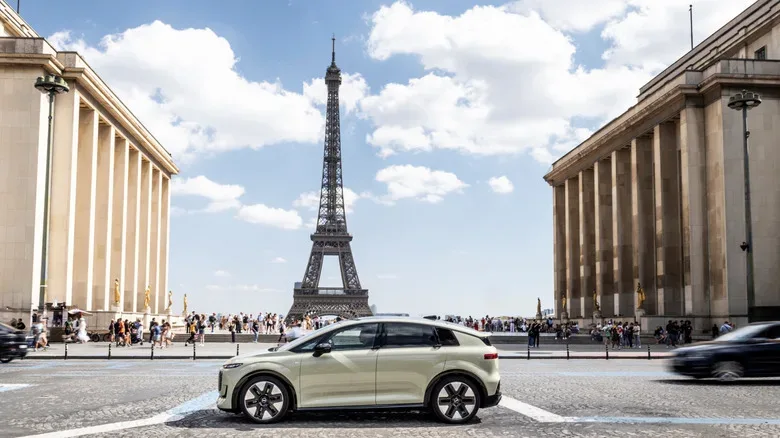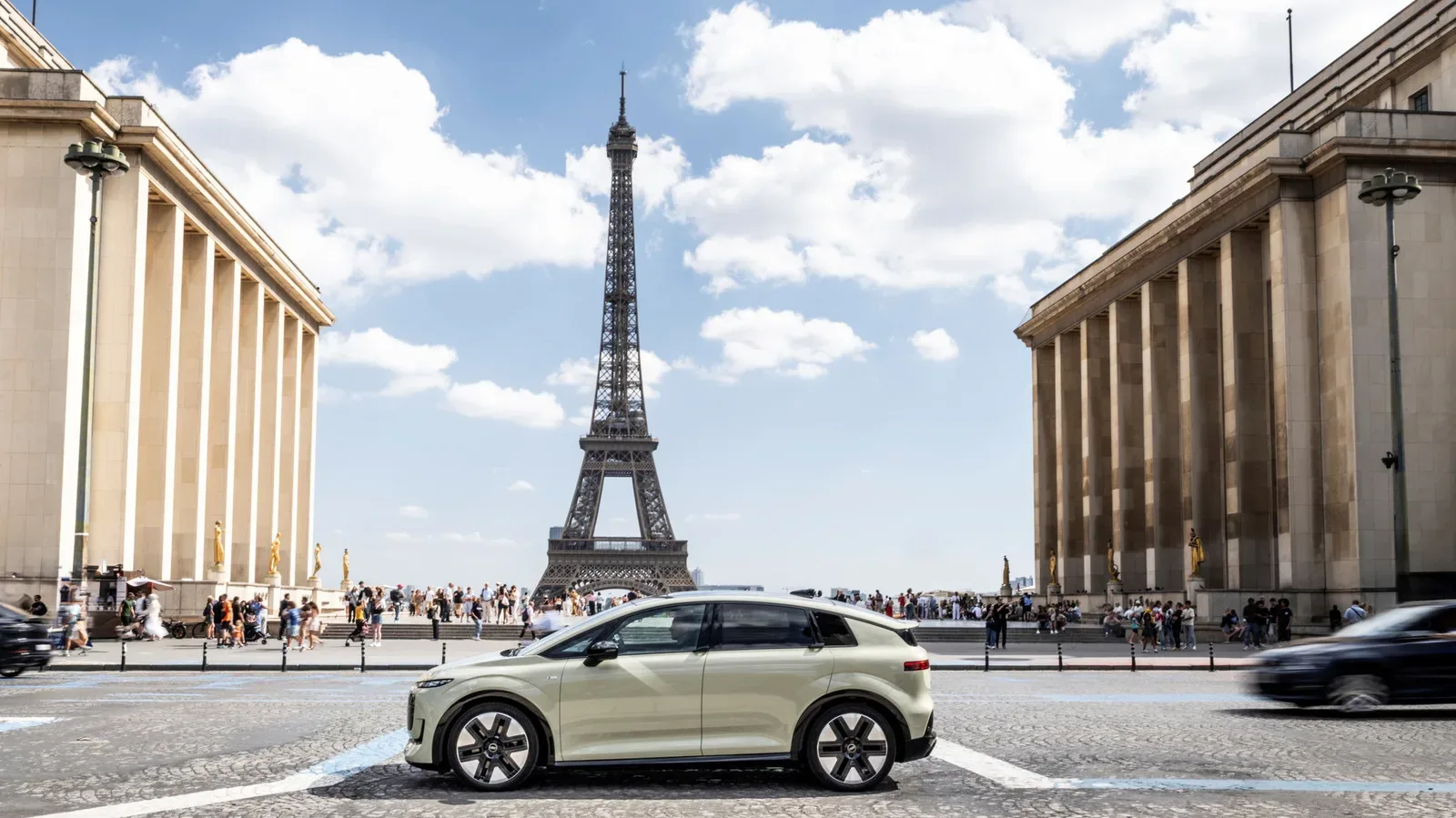
Audi’s newly revealed A2 e-tron is aiming for a kind of electric-car achievement that can sound less flashy than a huge motor output but matters every day: extracting more useful distance from every unit of battery power. The compact EV is positioned as an entry-level Audi rather than a high-performance flagship, and its headline claim is an estimated 646 kilometres of range on the WLTP cycle—roughly 400 miles—alongside energy consumption rated at 12.8 kWh per 100 km.
Audi calls the A2 e-tron its most efficient model to date. That is a notable direction for a marque that also sells dramatic, more expensive electric performance vehicles such as the RS e-tron GT Performance. Rather than trying to win a spec-sheet duel on brute force, the A2 e-tron’s stated mission is to make a smaller EV go farther through careful aerodynamic work, a choice of battery capacities and features that let its stored energy do more than move the car.
For anyone accustomed to comparing game hardware by watts, thermals and battery-life trade-offs, the basic philosophy will be familiar. Efficiency is rarely one giant unlock; it is the aggregate result of countless small decisions. In this case, Audi says those choices include smoother exterior treatment, fewer open areas around the wheels and electrically operated door handles designed to sit more cleanly within the vehicle’s profile.
The range number needs its WLTP asterisk
The A2 e-tron’s 646 km figure is an important headline, but it should be read with the test standard attached. It is a WLTP estimate, the European test procedure used to assess electric range. WLTP numbers are typically more optimistic than the figures drivers may associate with U.S. Environmental Protection Agency testing and MPGe ratings. In other words, roughly 400 miles is the quoted European-cycle result, not an EPA range rating.
That distinction does not erase the significance of Audi’s target. A compact EV reaching 646 km under WLTP would still represent a serious efficiency play. But prospective buyers and EV watchers should resist converting the figure into an assured real-world result for every route, season, speed or climate. Electric range naturally varies with temperature, road conditions, terrain, driving pace, cabin heating or cooling and other demands placed on the battery.
There is also no U.S. EPA rating to compare here, and the vehicle appears intended for Europe rather than America. Audi describes the A2 e-tron as tailored to European customer needs, making a U.S. arrival unlikely based on the information currently available. That means the most relevant early comparison point is its claimed WLTP positioning and its role in Europe’s compact EV market—not an imaginary stateside range contest that Audi has not entered.
Aerodynamics are the real co-op partner
Audi attributes much of the car’s projected range to its aerodynamic focus. The company lists a drag coefficient of 0.24 for the A2 e-tron. Drag coefficient is not a complete description of a car’s airflow performance, but it is a useful shorthand: lower aerodynamic resistance can reduce the energy required to maintain speed, particularly on faster roads where pushing air aside becomes a much bigger part of the workload.
The details Audi has shared point to an approach built around minimizing disruption. Refined outer surfaces help air pass over the body more smoothly. Reduced wheel gaps address an area where airflow can become turbulent. Flush-integrated electric door handles avoid adding protrusions that can disturb the car’s profile. None of these features alone is likely to create a 400-mile WLTP claim. Together, they are part of the broader efficiency package.
It is a reminder that EV design is not solely about installing the biggest possible battery. A larger pack can add range, but it can also add cost and weight. Better efficiency gives manufacturers another route to useful range, potentially allowing a more modest vehicle to compete on everyday practicality. Audi’s A2 e-tron appears to be leaning hard into that route.
Three battery capacities, with quick 10–80% targets
The A2 e-tron is set to offer three battery options:
- 52 kWh
- 61 kWh
- 84 kWh
Audi says the 84 kWh version can charge from 10% to 80% in as little as 29 minutes when using supported fast charging. The smaller battery variants are quoted at 24 to 25 minutes for the same 10–80% window. Those figures describe the specified charging interval rather than a full recharge, and actual charging time can depend on the charger, battery temperature, starting state of charge and other conditions. Still, the quoted figures suggest Audi wants the A2 e-tron to make practical use of rapid-charging stops regardless of which pack a buyer chooses.
The three-capacity approach also gives the compact model a clearer practical ladder. Buyers whose driving patterns favour lower cost and shorter regular trips may look toward the smaller batteries, while people who value the strongest stated range may be drawn to the 84 kWh option. Audi has not supplied every configuration detail here, so it would be premature to assign a particular range figure to each battery size. The 646 km WLTP headline should not automatically be assumed to apply across the entire lineup.
Bidirectional charging turns the car into a power source
One of the more versatile features is bidirectional charging. Audi says the A2 e-tron can supply electricity to devices including e-bikes and laptops, and it may also serve as a backup battery for a home during an emergency. This transforms the battery from a single-purpose propulsion reserve into a potentially useful source of power away from the road.
That does not mean every household setup will instantly become plug-and-play emergency infrastructure. Home backup use can involve compatible equipment and installation requirements that vary by market and system. Nevertheless, the capability is meaningful. A car that can recharge personal electronics or an e-bike has an obvious utility use case; the prospect of home backup broadens that utility much further.
For a site that spends plenty of time around portable tech, the laptop example is easy to understand. A long day away from an outlet can be less stressful if the vehicle itself is part of the power plan. The same broader interest in mobile, energy-conscious devices is visible in hardware such as the Xiaomi 18 Fold, though a compact EV battery operates on a vastly different scale from a phone.
Two large displays for the cabin
Inside, Audi plans a dual-screen arrangement comprising an 11.9-inch cockpit display for the driver and a central 12.8-inch touchscreen infotainment display. The cockpit screen handles the driver-facing information role, while the larger middle screen serves as the infotainment focal point.
Screen dimensions alone do not answer every usability question. Software responsiveness, menu design, physical controls, connectivity, driver-distraction safeguards and long-term support all matter to the daily experience. No detailed assessment of those areas is available from the announced specifications. What is clear is that Audi is giving the compact A2 e-tron an in-car presentation aligned with the display-heavy layouts expected in current EVs.
European orders begin September 10
Audi is scheduled to open preorders for the A2 e-tron on September 10, with a market launch expected in December. The starting price is listed at €38,200, described as approximately $44,300. Currency conversions move over time, so the dollar equivalent should be treated as a rough reference rather than a fixed U.S. price—especially because an American launch does not appear to be on the cards.
The A2 e-tron’s appeal will ultimately hinge on how its eventual market configurations, charging access and real-world driving performance line up with Audi’s claims. But the concept is straightforward and potentially compelling: a compact electric Audi that treats aerodynamic discipline, lower consumption, quick charging and usable vehicle-to-device power as core features rather than side quests. The biggest number is the 646 km WLTP estimate, yet the larger story is the method behind it. Audi is betting that efficiency itself can be the premium feature.