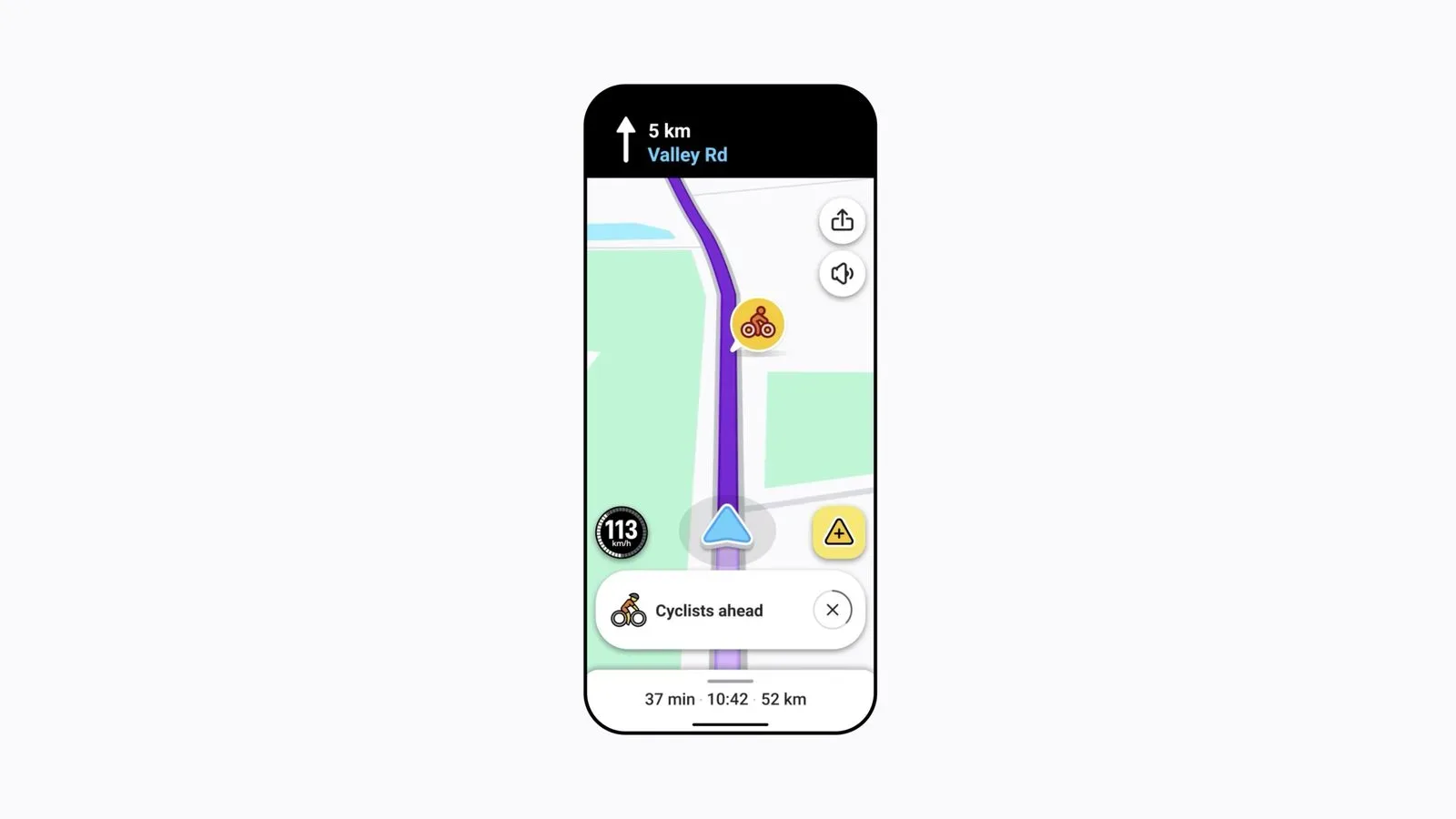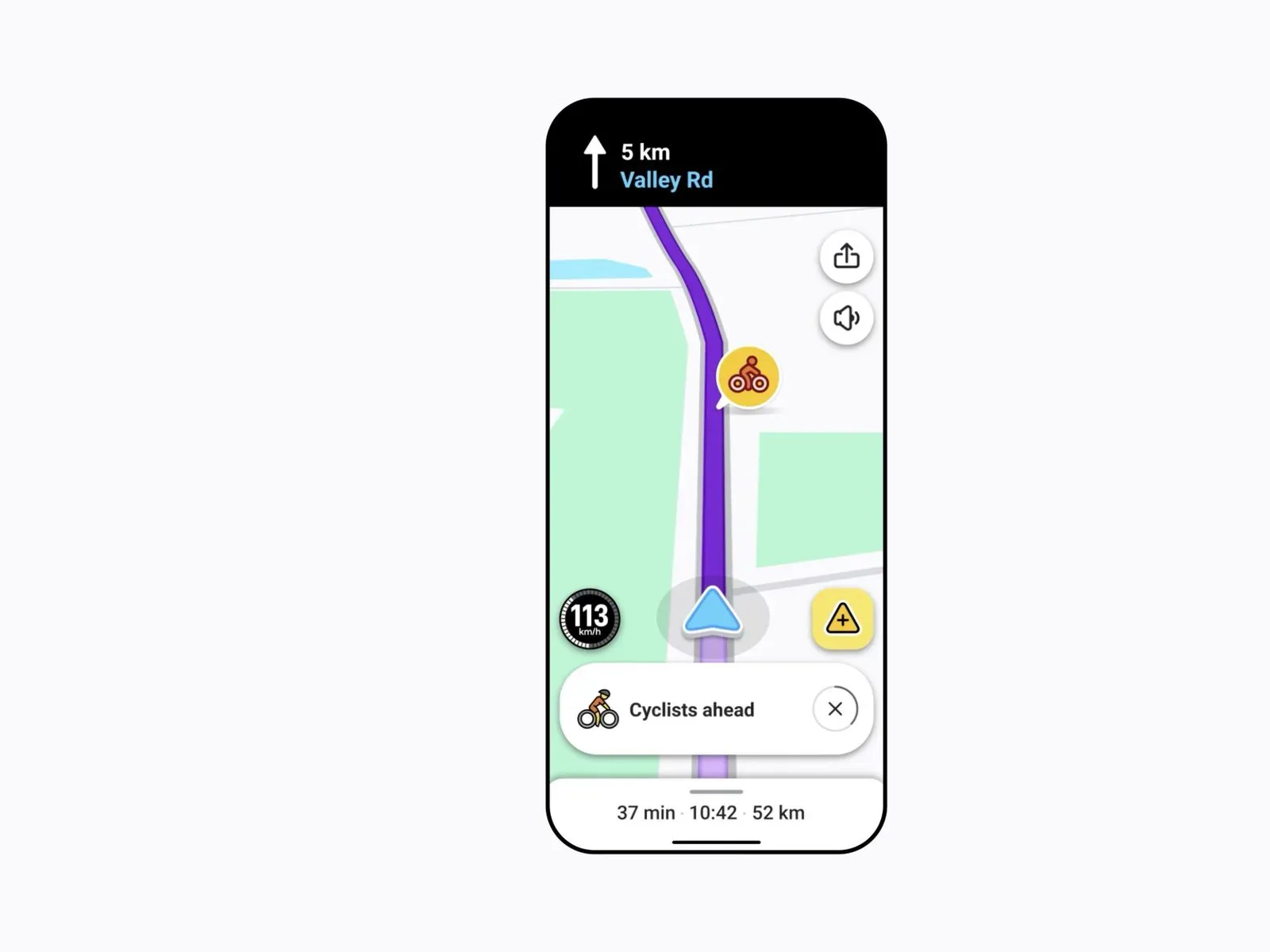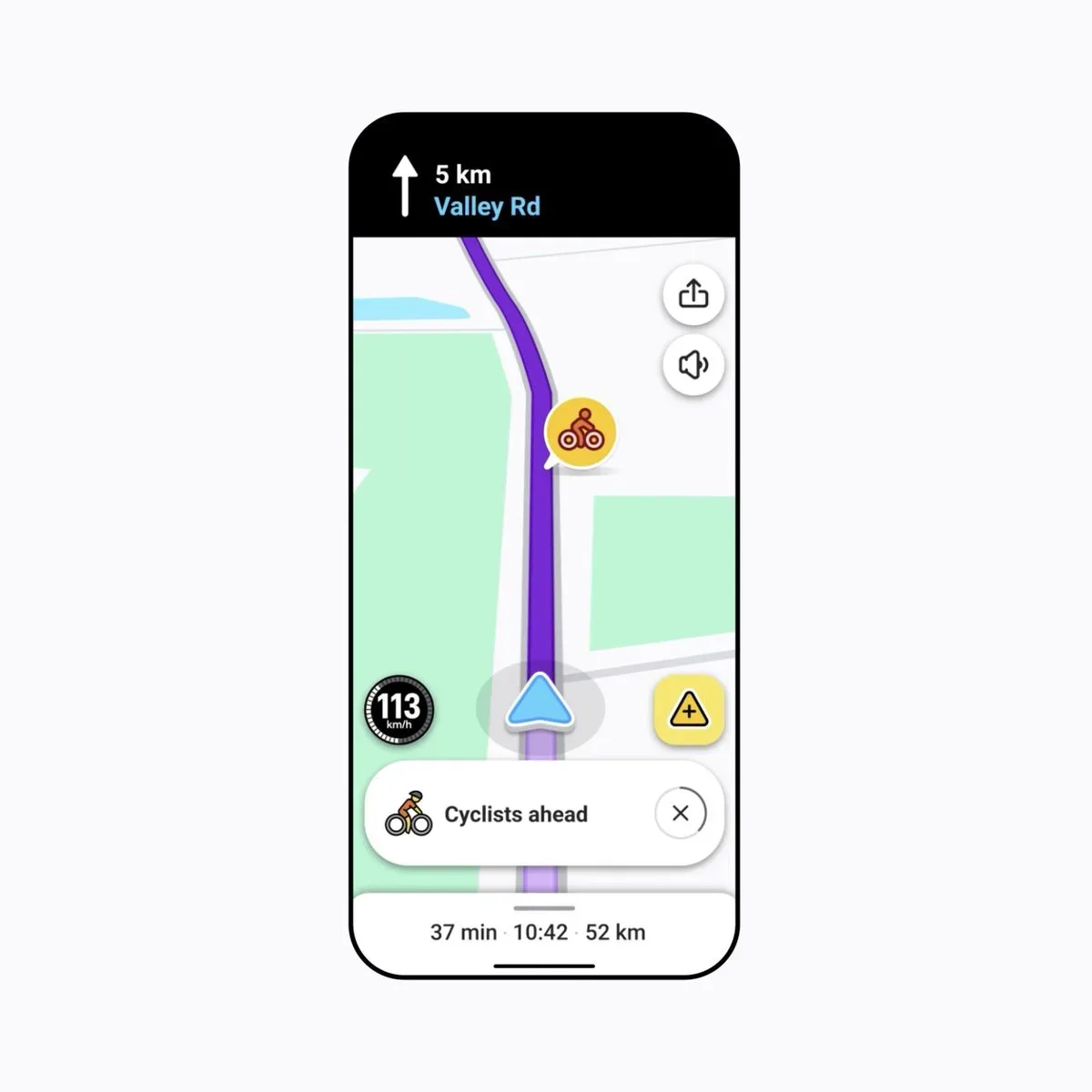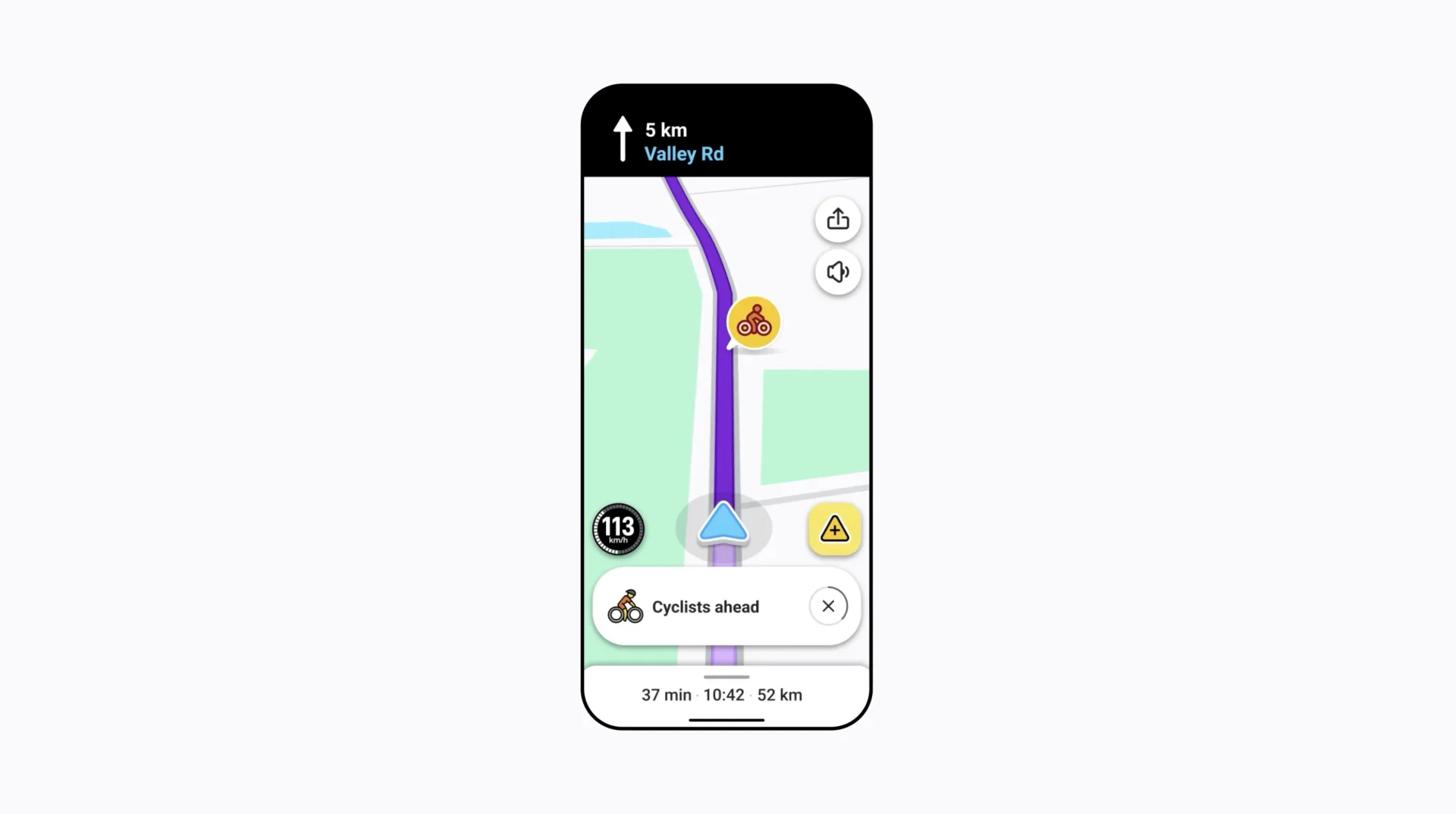
Waze is rolling out a new way for drivers to receive a heads-up about cyclists nearby, through an integration with Garmin LiveTrack. The idea is simple: when a rider deliberately enables LiveTrack on a compatible Garmin Edge bike computer or Garmin smartwatch, they can choose to appear in Waze as a moving icon. Drivers using Waze can then receive a notification that a cyclist is close by.
The feature is rolling out globally on Waze for iOS and Android. It is built around a narrow, practical use case rather than a new social map: give motorists a timely prompt to reduce speed, pay attention and leave room while sharing the road.
How the Garmin LiveTrack cycling alert works
LiveTrack is Garmin’s activity-sharing feature. In this Waze integration, it provides the live ride status that can power a temporary cyclist indicator. A rider must first turn on LiveTrack from a Garmin Edge cycling computer or Garmin smartwatch, then choose whether to be visible in Waze.
That makes the system explicitly opt-in. A cyclist is not automatically placed on the Waze map merely because they own a Garmin device or are recording an activity. The rider makes the choice to participate, and the Waze alert is tied to that active ride.
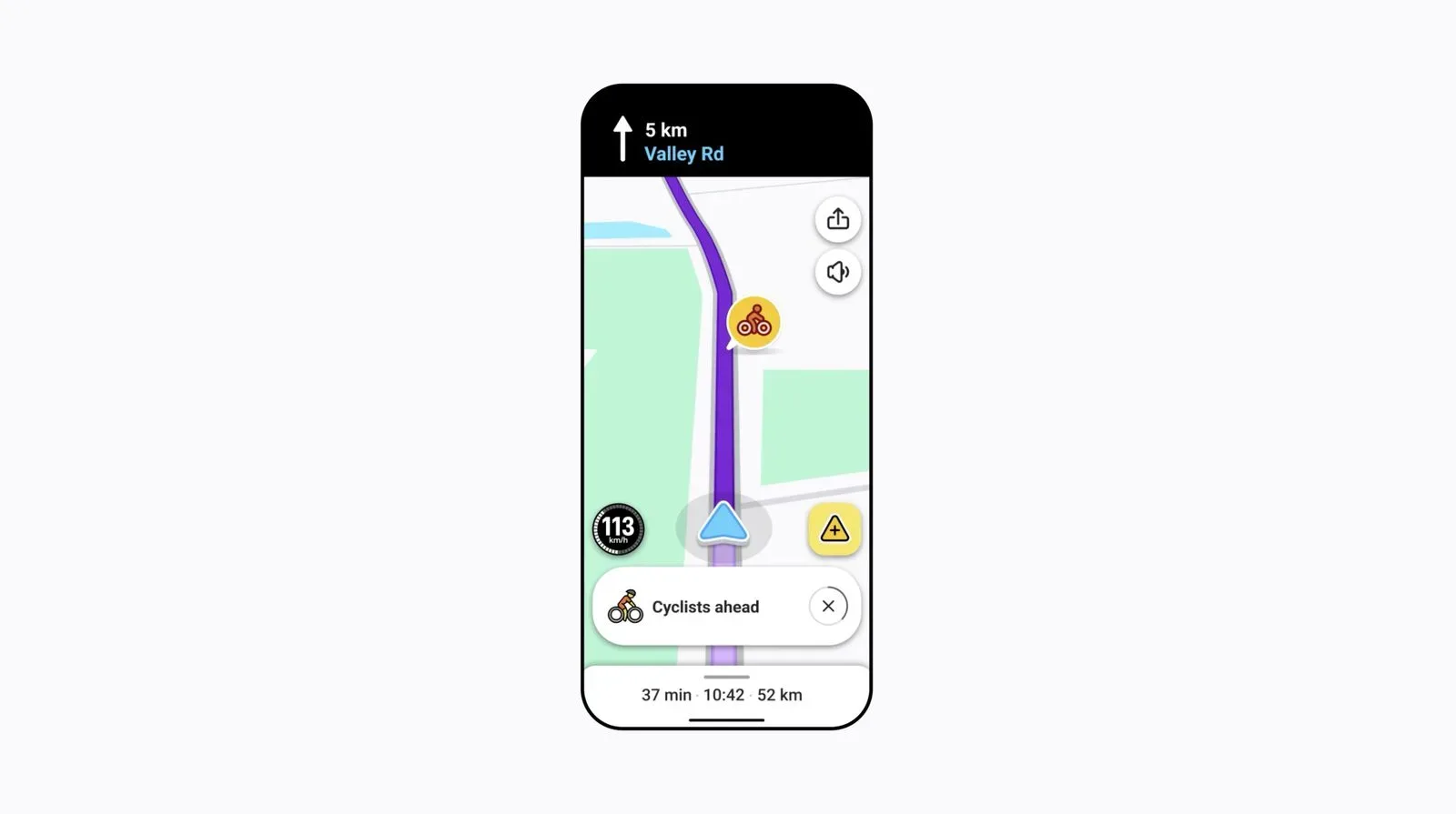
For the driving side, Waze says a cyclist appears as a real-time moving icon and triggers a nearby-cyclist notification. The intended effect is not to ask drivers to study another layer of navigation data. It is a quick warning that encourages better road awareness at the point where it could matter: before a driver reaches a rider.
There is a useful distinction here between a route-planning map and a situational alert. A navigation app normally directs a driver from one destination to another. This feature adds temporary information about a road user who may be moving through that same area. It is a small addition to the interface, but its value depends on being understandable at a glance and on the driver treating it as a prompt to focus on the road, not the screen.
Privacy boundaries are central to the design
Location-sharing features can be helpful precisely because they reveal where someone is, which is why their privacy limits matter. In this case, the companies say that Waze drivers receive only a temporary alert that a cyclist is nearby. The cyclist’s name, identity and exact route are not shared in the app.
That is an important boundary. A nearby alert is different from giving drivers a profile to follow or a complete route to inspect. The stated design keeps the information focused on immediate awareness rather than turning a ride into a publicly viewable trip history.
The alerts also stop automatically when the cyclist ends their ride on the Garmin device. That automatic end point matters because it limits the feature to the period of an active cycling session. Riders do not need to remember to separately disable their Waze visibility after finishing, at least as the integration is described.
The approach also means the information visible to a driver is deliberately less detailed than the data a cyclist’s own device may use to follow an activity. In practical terms, the system is designed to communicate that a cyclist is close, not to expose who that person is or where they have been.
What this means for cyclists
For Garmin users, participation begins with a compatible category of device: a Garmin Edge bike computer or Garmin smartwatch. LiveTrack must be enabled, and the rider must choose to appear in Waze. The feature therefore will not represent every cyclist on the road, including riders without those devices, riders who choose not to opt in, or riders who are not using LiveTrack.
That limitation is worth keeping in mind. The absence of an alert cannot mean that a road is clear of cyclists. Likewise, an alert is not a substitute for a rider’s normal road awareness or for the safety measures that drivers should already take around vulnerable road users. It is an additional signal, not a comprehensive live census of everyone cycling nearby.
Still, the opt-in model gives riders a clear choice. Someone who sees value in an extra driver-facing notice can enable it during a ride. Someone who does not want to participate can leave it off. The privacy design described for the feature is aimed at making that choice less consequential than broadly publishing a location: no name, identity or exact route is displayed to Waze drivers, and visibility ends with the ride.
What drivers should expect in Waze
Drivers will see a temporary notification when a participating cyclist is close and can see the cyclist represented as a moving icon. The relevant response is intentionally uncomplicated: slow down where appropriate, look carefully and share the road.
Waze has not described, in the available rollout details, a precise distance for “nearby,” the visual styling of every notification, or whether alert behavior changes by road type or driving conditions. Those details should not be assumed. The core promise is simply a real-time nearby-cyclist warning powered by participating Garmin LiveTrack users.
Because alerts arrive in a driving app, restraint is part of the feature’s usefulness. A warning that is too vague may be ignored, while one that demands too much attention could be counterproductive. The announced privacy limits and temporary nature of the alerts suggest an attempt to keep the experience focused: a short-lived awareness cue rather than a dense tracking interface.
A practical example of the feature’s role
Consider a driver following Waze directions while approaching an area where a cyclist is riding with LiveTrack enabled and Waze visibility selected. Waze can present a nearby-cyclist notification and moving icon. The driver has a reason to be especially conscious of speed, lane position and surrounding traffic before the encounter, rather than only reacting once the rider is directly ahead.
What the feature does not do is establish priority, tell either person what maneuver to make, or replace local rules and judgment. It supplies awareness. Road conditions, markings, traffic and the actions of other people remain part of the moment-to-moment decision-making that no single map alert can settle.
Global rollout on iOS and Android
The Garmin-powered cycling alerts are rolling out now to Waze users worldwide on iOS and Android. The rollout connects a Garmin activity feature with Waze’s driver-facing navigation environment, while placing controls with the cyclist and limiting what motorists can see.
For readers looking for the short version of the new connection between the two services, Garmin LiveTrack can place cyclists on Waze as temporary road alerts. The key details remain the same: riders must opt in, drivers receive a nearby warning, and personal identity and exact route information are not shared.
It is a deliberately modest use of live location data. Rather than making cyclists more searchable, it is intended to make them more noticeable to drivers at the time awareness is most useful. Whether it becomes widely visible in practice will depend on how many eligible Garmin users choose to enable LiveTrack and Waze visibility during their rides, but the guardrails are clear from the outset: participation is voluntary and the alert ends when the ride does.