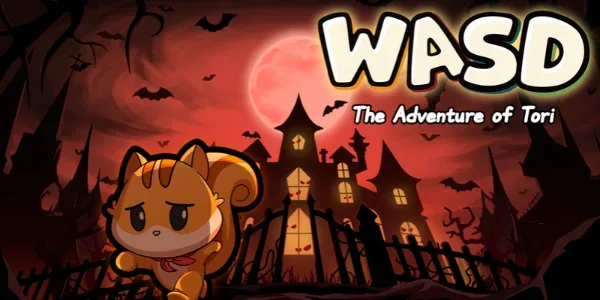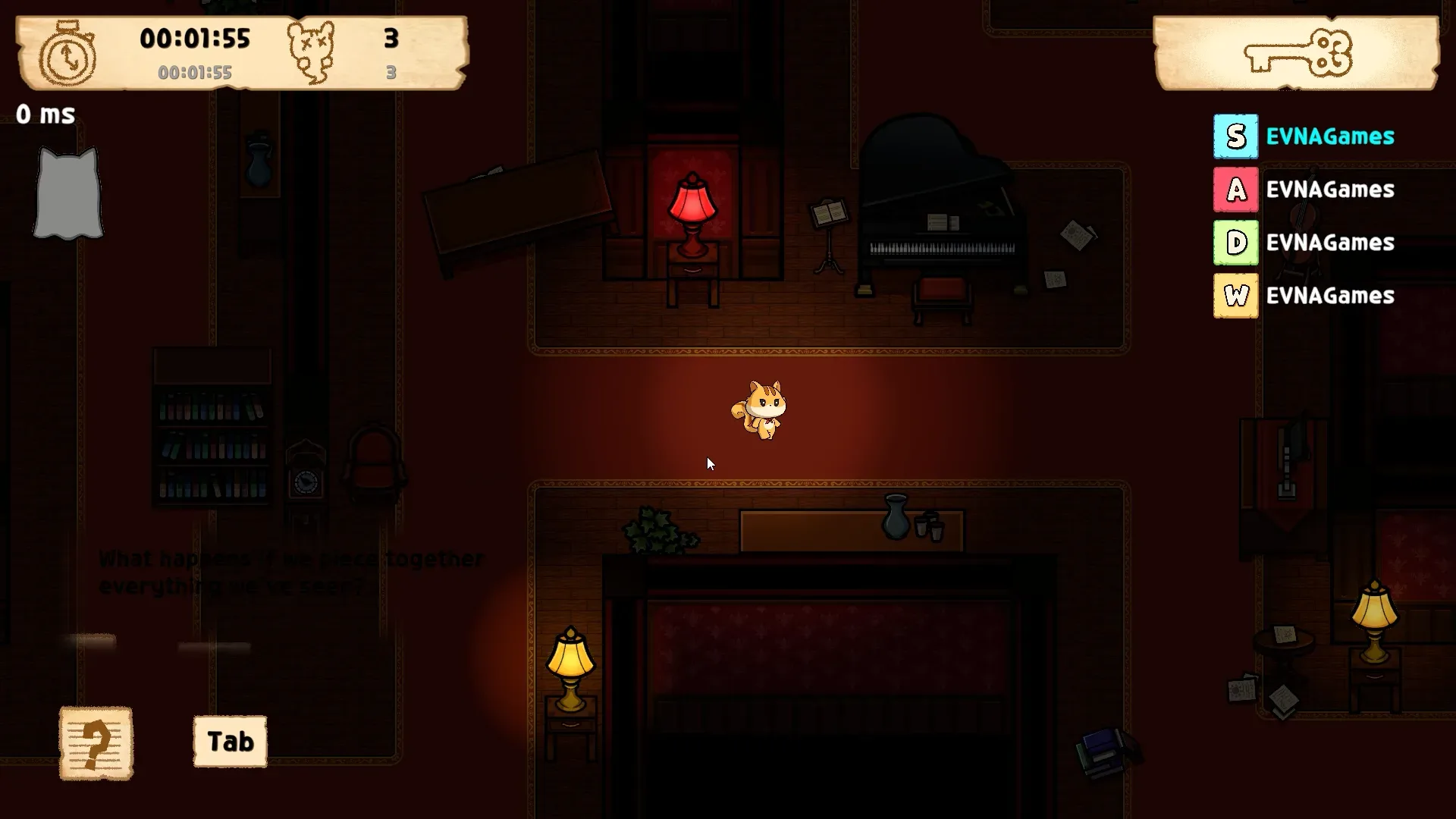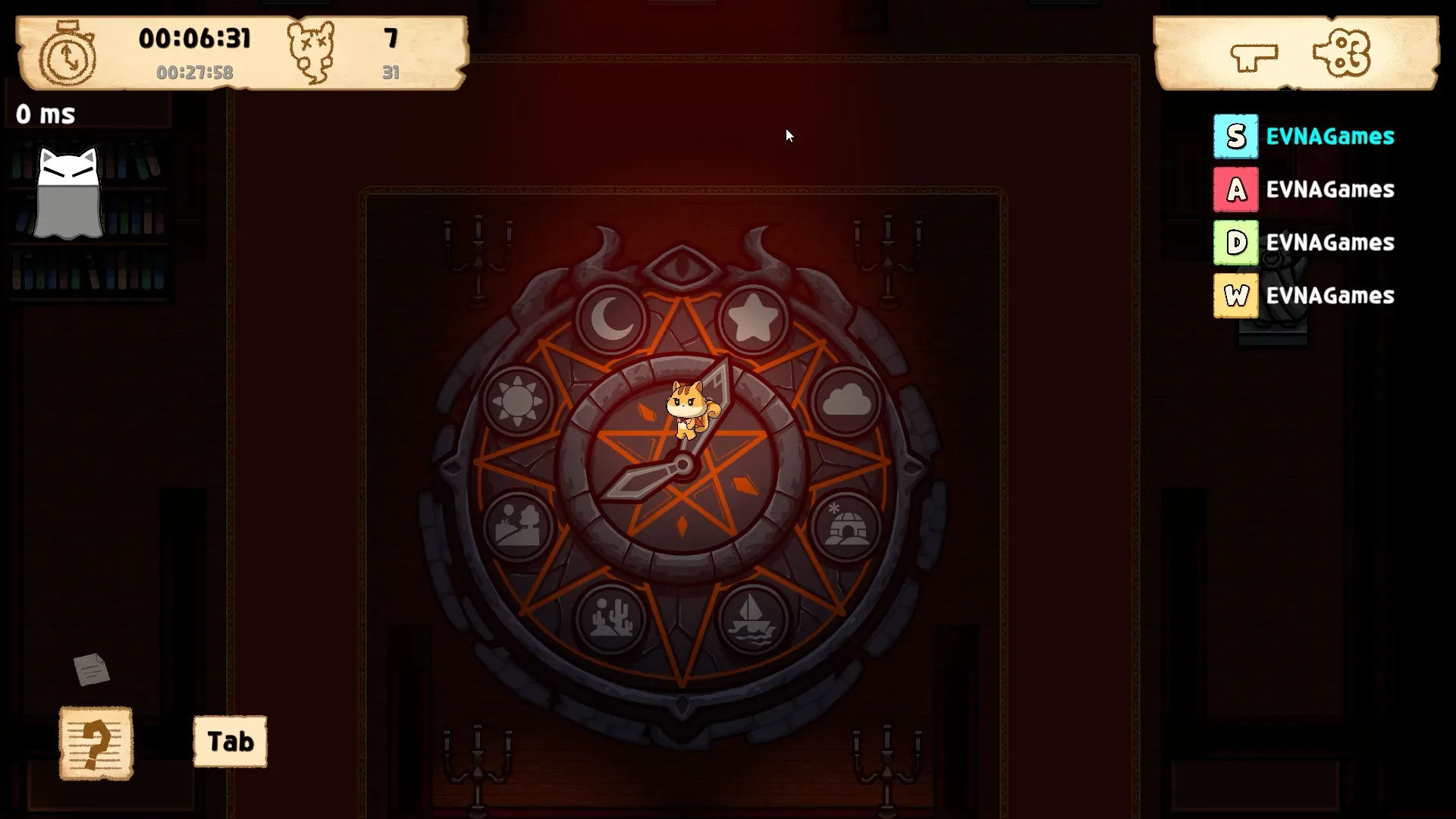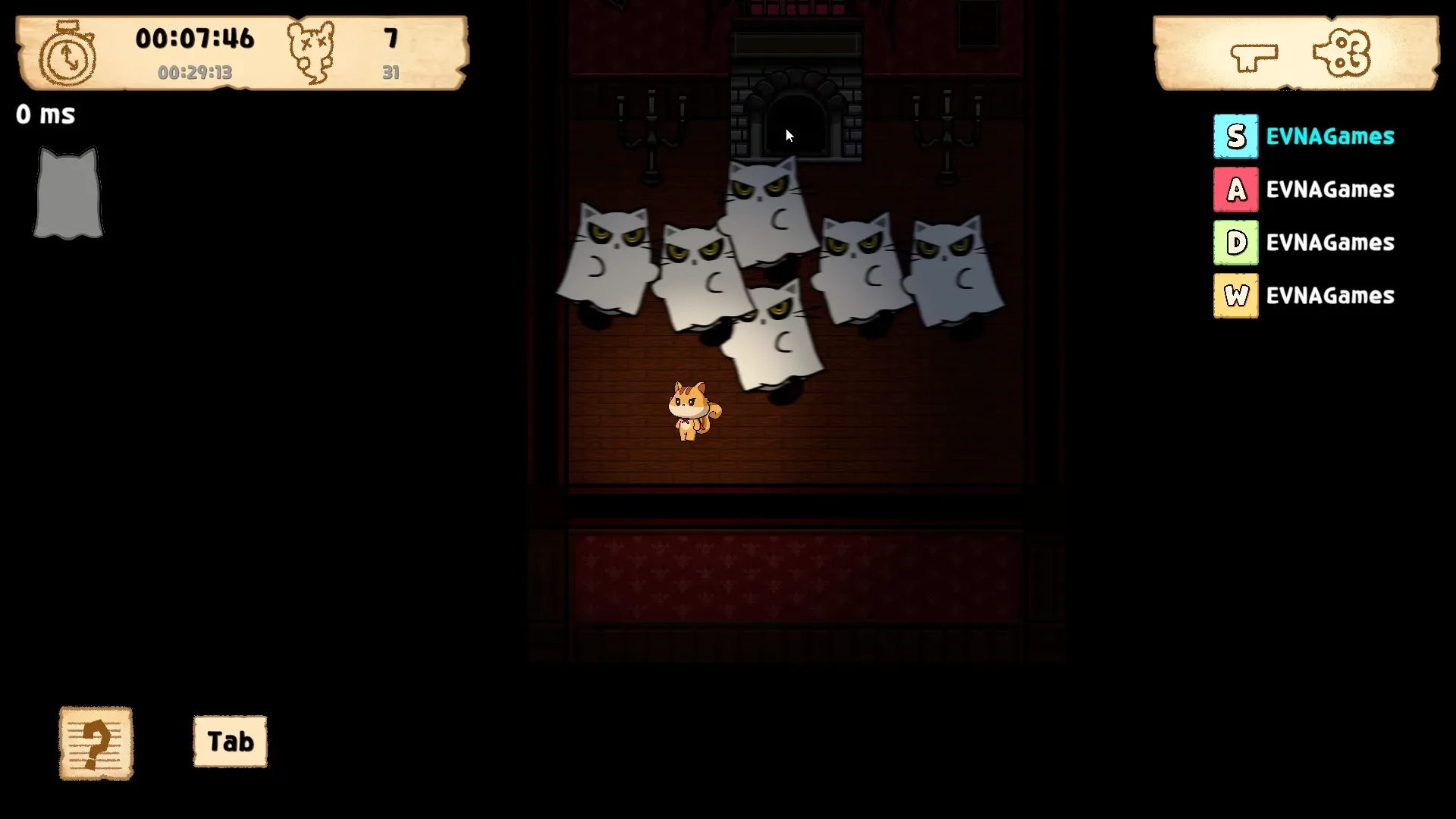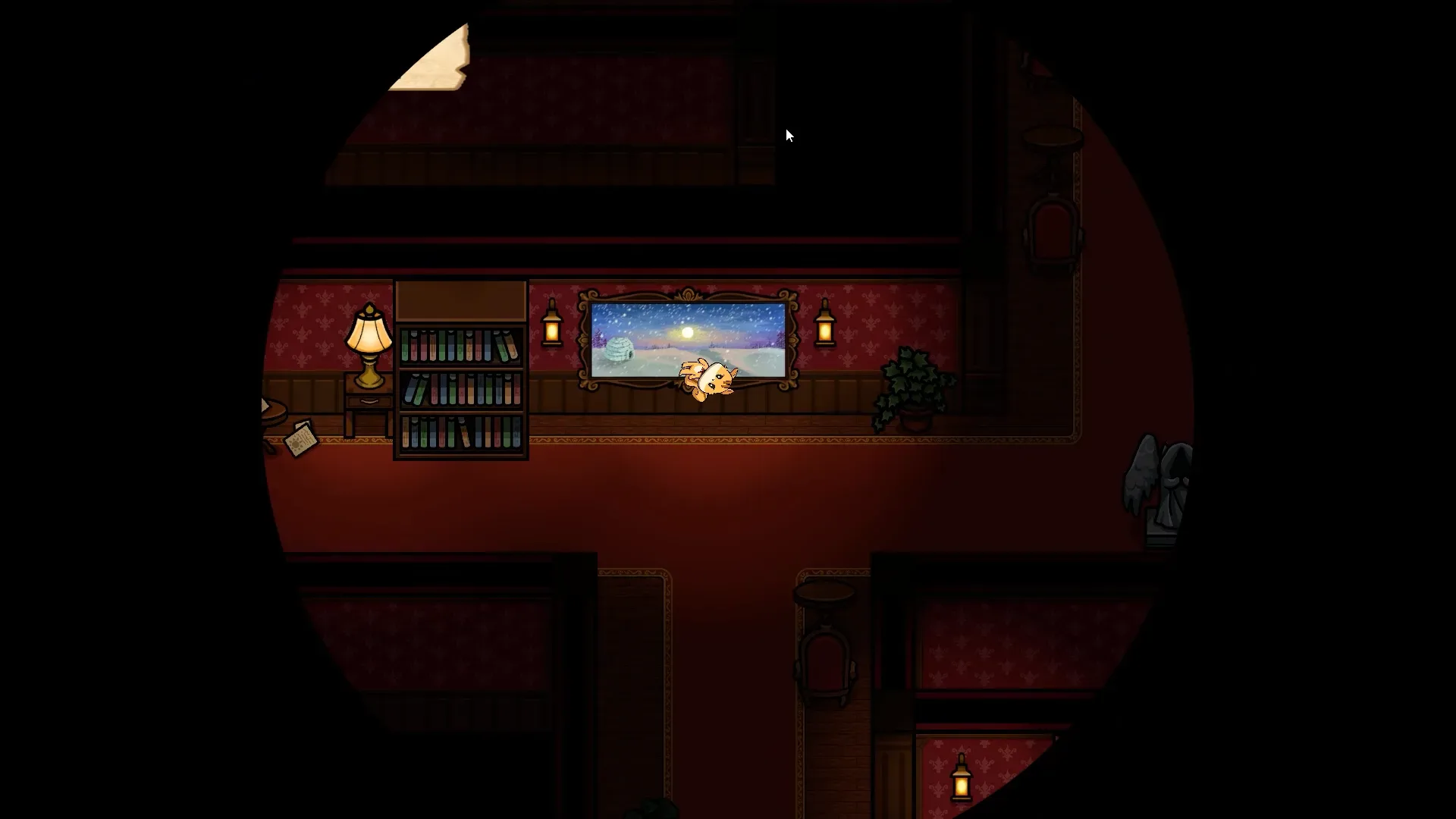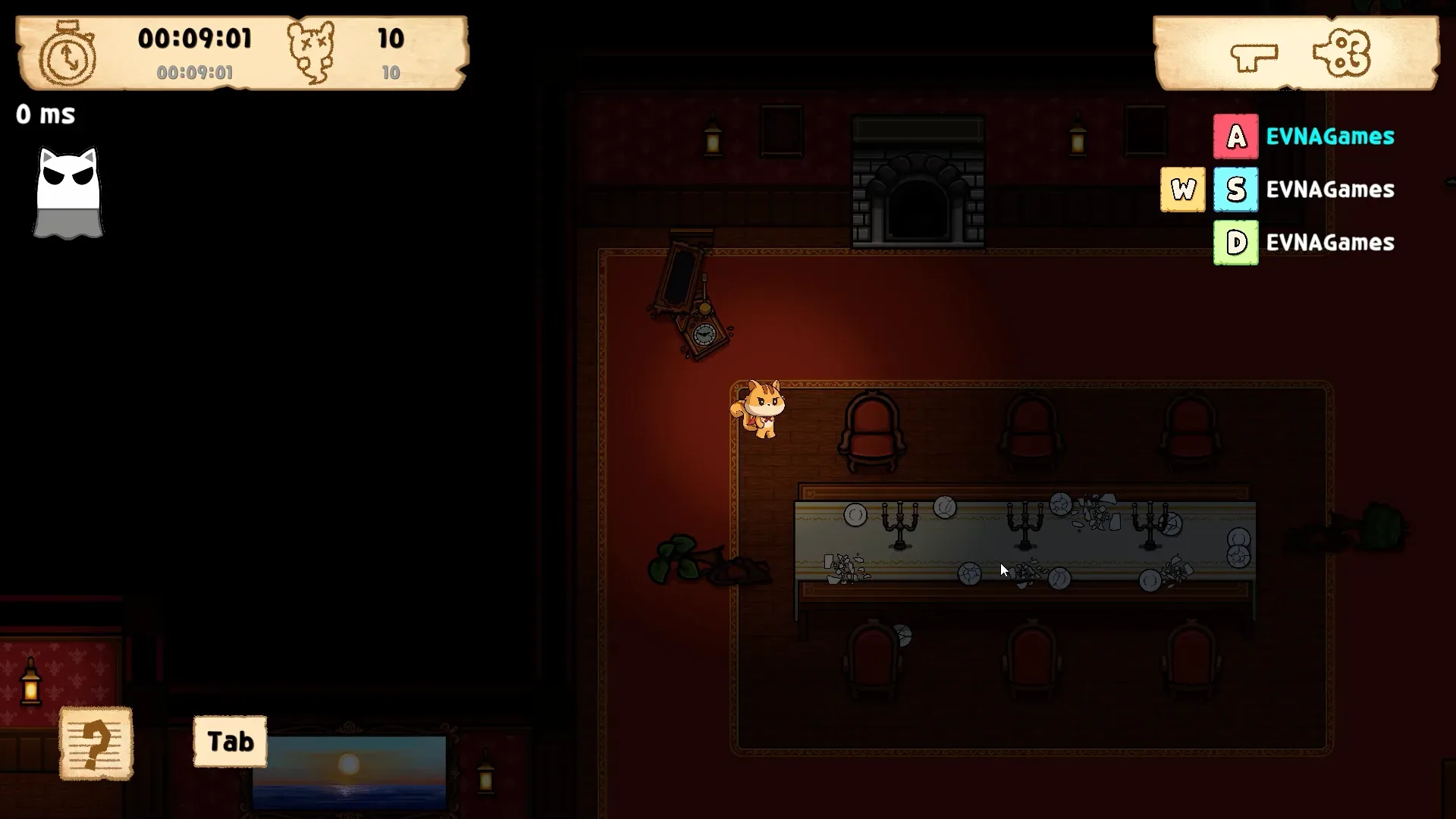
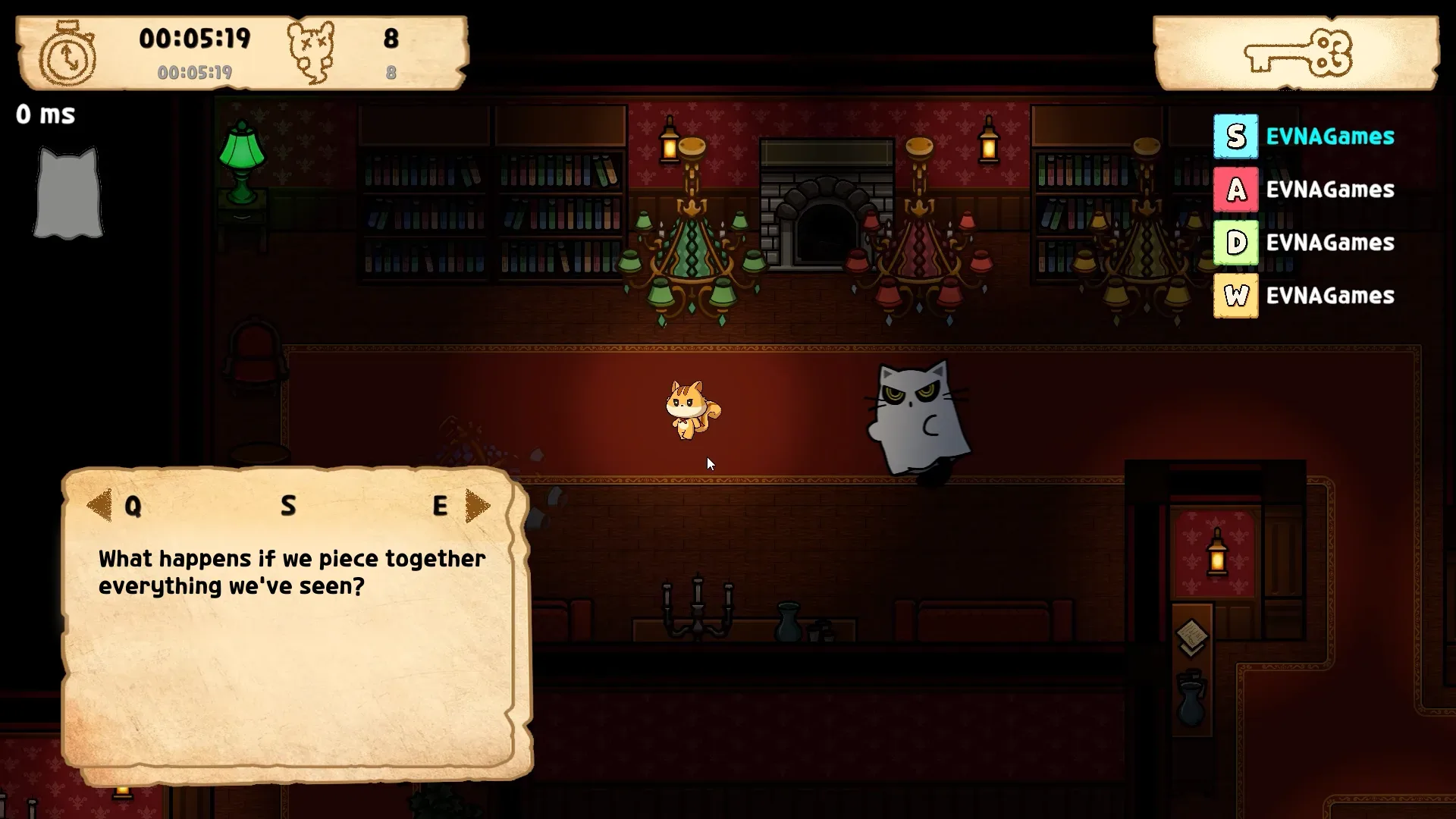
WASD: The Adventure of Tori has added a new horror-themed experience called Spooky Mansion. Released on November 27, the update moves the game’s distinctive cooperative movement system into an abandoned mansion, where teams must find clues, solve puzzles, earn keys and keep moving while a mysterious pursuer stalks the corridors.
The update is structured as a three-stage escape-room-style adventure. Each completed puzzle awards a key, and that key opens access to the next part of the mansion. It is a simple progression loop on paper, but it has a particularly awkward—in the deliberately good sense—fit with the game’s central rule: Tori cannot simply stop moving once movement has begun.
That restriction is what separates WASD: The Adventure of Tori from a standard co-op puzzle game. It is designed for two to four online players, with every participant assigned one or two of the familiar W, A, S and D movement inputs. Rather than having full individual control over a character, the group collectively operates Tori’s movement. Built-in voice chat supports the necessary rapid communication.
The result is less “one player leads while everyone else follows” and more “four people share a steering wheel while something unpleasant approaches from the dark.” Spooky Mansion is built around that tension.
A mansion designed for collective panic
The abandoned-mansion setting gives the game a natural home for clues, locked routes and sudden scares. Players search the environment for puzzle information, solve the problem in front of them, receive a key and move on to the next stage. A mysterious entity roaming the halls changes the stakes: groups are not only interpreting clues, but doing so while managing the possibility of pursuit.
In horror-game terms, a jump scare is an abrupt fright, often caused by a sudden visual or audio event. Suspense is the pressure created before that moment—the feeling that danger may be near, even when players do not yet know exactly where it is. The Spooky Mansion premise uses both: an entity can chase Tori, while the mansion’s puzzles create pauses in which players must communicate and decide what to do next.
That combination matters because the game’s movement model makes hesitation an active problem. In many co-op games, a nervous player can pause, retreat or let the most confident teammate take over. Here, teams have distributed control over movement, and Tori does not stop after starting. A player responsible for one direction may need to react instantly, but cannot independently solve the larger movement problem. The other players’ inputs remain just as important.
Spooky Mansion therefore appears aimed less at individual execution than at group coordination under pressure. The mansion’s locked progression supplies a clear shared objective, while the pursuing entity provides a reason for the group not to treat every room as a leisurely discussion space.
Related coverage includes WASD: The Adventure of Tori adds Spooky Mansion.
What the WASD co-op setup means
The title refers to the four directional keys commonly used for movement on a keyboard: W for forward, A for left, S for backward and D for right. In WASD: The Adventure of Tori, those inputs are divided between players. With two to four people participating, each person is responsible for one or two directions rather than a full set of controls.
That division creates an intentionally asymmetric form of cooperation. Asymmetric co-op generally describes multiplayer play in which participants have different roles, information or abilities. The source details only the key assignments here, not separate character classes or specialized puzzle roles, but the movement arrangement alone makes each player’s contribution different. One participant may hold an input that looks harmless in a calm room and suddenly becomes the crucial response when Tori needs to turn away from danger.
The practical implication is that communication is not optional decoration. Voice chat can help a party call out an observed clue, announce a needed turn or warn the team that the pursuing entity is nearby. Yet talking is only helpful if instructions are concise enough to act on. “Left” can be useful; a long debate over who pressed which key may be less useful when Tori is already moving.
The game’s no-stopping rule also makes momentum central to decision-making. Teams cannot rely on a stop-and-plan rhythm after they have initiated movement. Instead, they may need to agree on a direction before committing, then adapt as a group when new information changes the situation. A horror setting is a fitting match for that design, since loss of control—or incomplete control—is one of the genre’s most familiar sources of anxiety.
Three stages, keys and puzzle progression
Spooky Mansion is divided into three stages. The supplied details describe a consistent objective chain across those sections:
- Search the mansion for clues.
- Use those clues to solve a puzzle.
- Receive a key for succeeding.
- Use the key to unlock the next stage.
This is recognizably escape-room-style design: progress is tied to observation and problem-solving rather than solely reaching an exit or defeating an enemy. In this case, the escaping is cooperative and mediated through shared directional inputs. The keys make progress legible, because every solved puzzle has a stated consequence: the next area becomes available.
It is worth distinguishing that stated structure from details that have not been provided. There is no confirmed list of the individual puzzles, no description of the mansion’s rooms, and no stated information about how the entity behaves beyond wandering the halls and pursuing Tori. Players should not assume particular puzzle types, enemy patterns, difficulty settings or additional modes from the update’s overview alone.
Still, the confirmed design establishes a clear balance of pressures. Puzzle clues encourage players to inspect and discuss. Unstoppable movement prevents a fully passive approach to that discussion. The entity adds danger that may force faster decisions. The keys ensure that successful cooperation is not merely survival for its own sake; it leads to tangible progression through the mansion.
Who the new theme may suit
Spooky Mansion should be most relevant to established groups that enjoy communication-heavy online games and are comfortable with some chaos. The underlying premise is explicitly built for two to four players, and the update’s chase element suggests that teams will benefit from a shared tolerance for pressure, mistakes and the occasional startled reaction.
Groups planning a session may find it useful to establish a few basic communication habits before entering the mansion: use consistent direction language, call out relevant clues briefly, and avoid everybody trying to give a different movement instruction at once. Those are practical inferences from the shared-input concept, rather than disclosed in-game rules. The game itself already includes voice chat, giving players a built-in channel for that coordination.
For players drawn primarily to horror, the important point is that Spooky Mansion is not presented as a solo survival scenario. Its scares and pursuit are part of a cooperative puzzle framework. The monster-like presence is there to disrupt the team’s plans, while the team’s unusual control arrangement ensures that the disruption is a collective problem.
Launch promotion and release context
The Spooky Mansion update arrived on November 27. A promotion began the same day, offering 35% off the base game and 65% off the DLC for the promotional period. No end date for that period is provided, so anyone interested in the discount should verify its current status before purchasing.
WASD: The Adventure of Tori has sold 150,000 copies in Korea. That reported sales milestone provides useful context for a game built around a narrowly defined but memorable idea: turning ordinary movement keys into a shared cooperative responsibility. Spooky Mansion applies that idea to an abandoned-house escape sequence, where the cost of poor coordination is not just a missed turn but potentially a chase, a scare and a very public argument over who was supposed to press A.
For more titles dated November 27, see the day’s game release roundup.