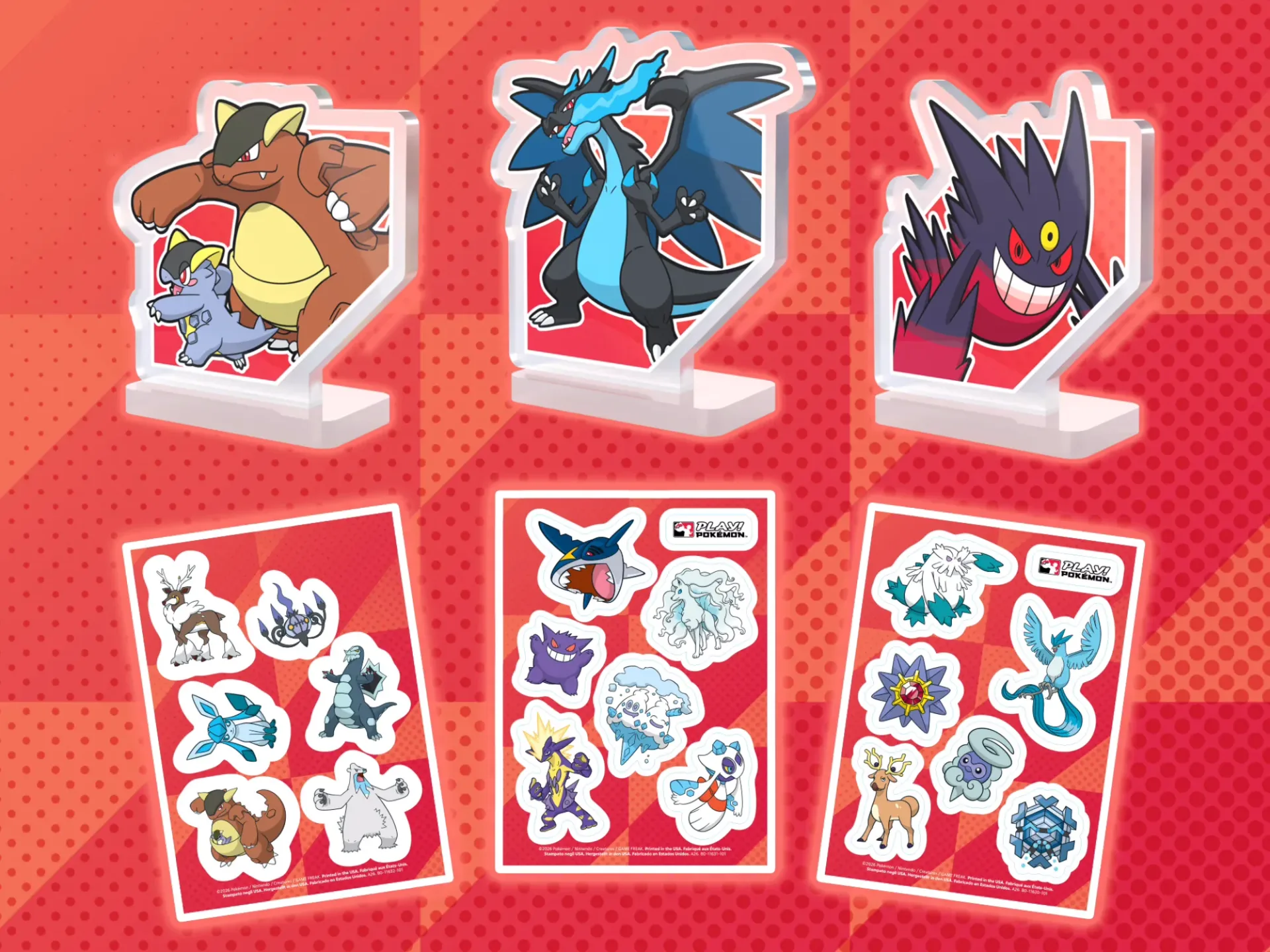
Pokémon League Kits are set for a refresh beginning in October, bringing new participation materials, three Mega Evolution acrylic standees and a redesigned Battle Box meant to let two players sit down for a compact Pokémon Trading Card Game draft.
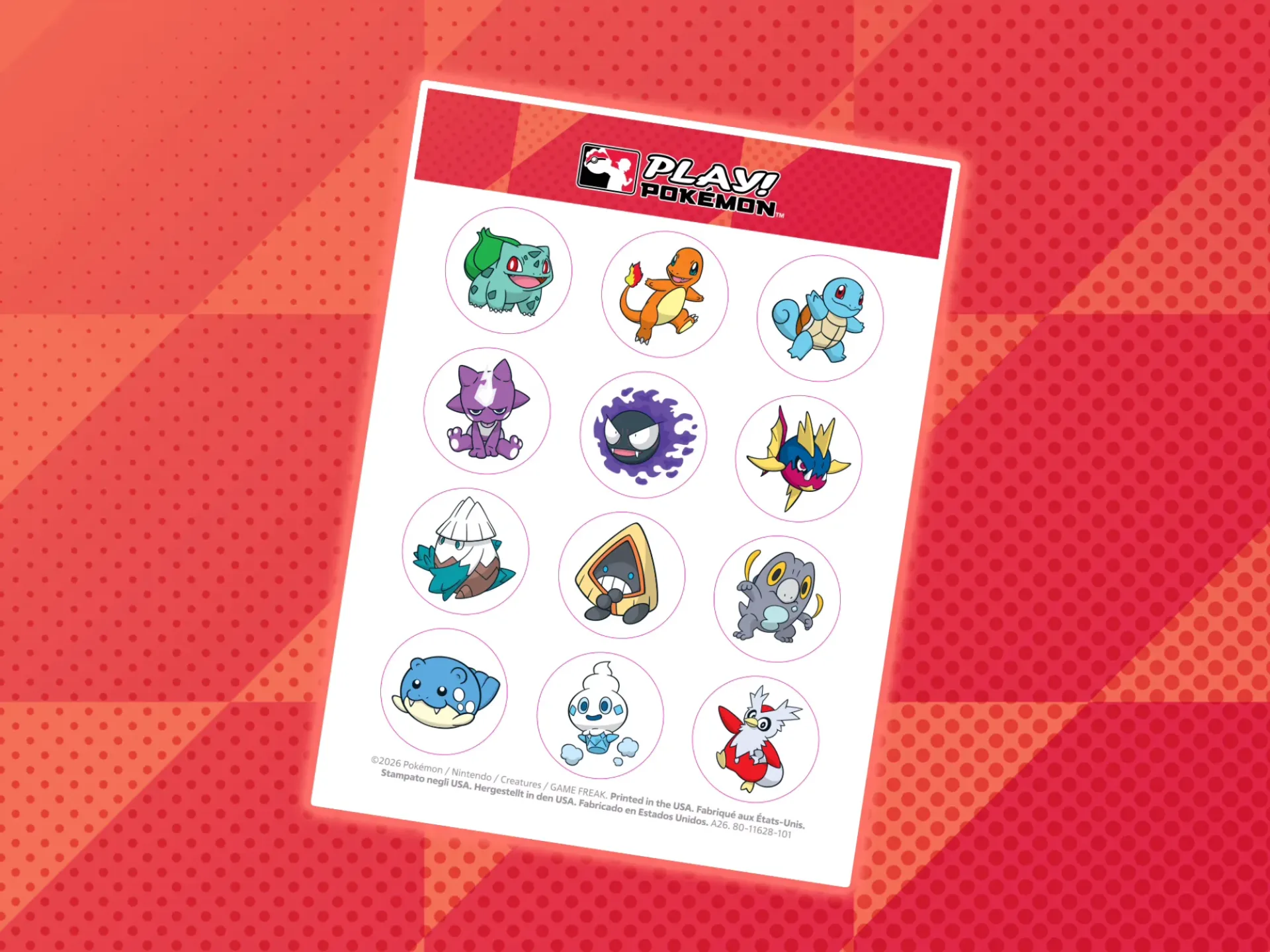
The update is directed at Play! Pokémon stores, which are expected to receive the new kits for their local League communities. The materials include sticker sheets, activity-tracking posters, avatar stickers, acrylic standees and the Battle Box. It is a notably broad mix: part recurring attendance program, part physical reward collection and part ready-to-run gameplay activity.
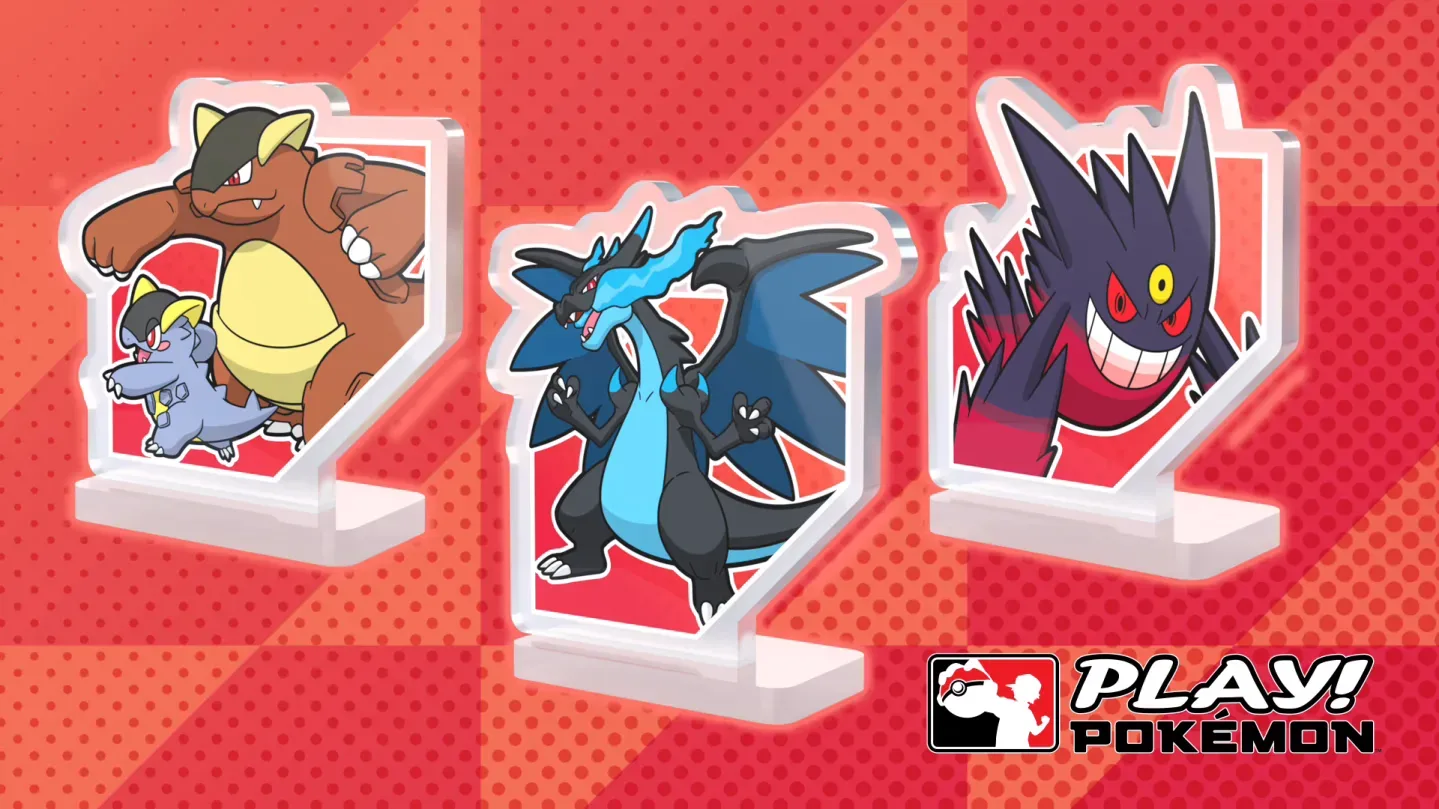
For regular League visitors, the headline prizes are acrylic standees featuring Mega Charizard X, Mega Gengar and Mega Kangaskhan. Players can qualify for them by earning the monthly maximum in League activity points at a local Play! Pokémon Store. The new posters are where those points are recorded, while avatar stickers give players a way to mark their own progress.
That makes the standees rewards tied to sustained participation rather than a one-time purchase or a card pull. The materials supplied do not specify the exact number of points required, how a store awards activity points, or whether every participating location will use identical schedules. Players interested in a particular standee should therefore ask their local store how it is running League activity before assuming the details.
For more context, explore ModRetro Teases an October Product Reveal, With Transparent Chromatic Speculation Building.
A reward program built around repeat visits
The October kit puts a visible structure around the social side of Pokémon League. A tracking poster is a simple tool, but it gives players a public, easy-to-follow record of their monthly activity. Avatar stickers make that record personal: instead of an anonymous tally, each participant chooses an icon to represent their progress.
For newcomers, this may be more approachable than arriving with a polished competitive deck and immediately playing formal matches. The stated program is intended for people at different experience levels and different ways of enjoying Pokémon. The prize pathway gives returning attendees a concrete target, while the tracking setup makes progression legible from week to week.
There is also an important collecting distinction. These Mega Evolution standees are physical League rewards, not Pokémon TCG cards. Their appeal may be strongest for players who want tabletop or shelf decoration featuring popular Mega Evolution Pokémon, but eligibility is based on local League activity. The available information does not establish print quantities, retail availability, individual distribution rules or a secondary-market value.
Related coverage includes New Pokémon League Prizes Arrive This October.
Collectors should also keep expectations grounded around the word “qualify.” Earning the monthly maximum of activity points is the stated route to receiving the standees, but the supplied details do not say whether a store has unlimited quantities, how it handles demand, or whether the three designs are awarded together or through separate milestones. Local confirmation matters more than inference here.
The Battle Box is a reusable, shared draft format
The other major component is the latest Battle Box, a self-contained option for two Trainers. It includes the items and instructions needed for a quick drafting experience. Each player builds a 40-card deck using only Battle Box cards, while Energy is supplied separately and is not drafted.
In trading-card-game terms, a draft is a format where participants build decks from a limited shared card pool rather than bringing a finished deck from home. That shifts the skill test. Deck construction still matters, but so does evaluating unfamiliar cards, deciding what to take before the other player can, and finding a workable strategy from the cards that remain available.
The Battle Box’s 40-card decks are also a key detail. A player is not expected to arrive with a standard constructed list. Instead, the experience begins with selection and deckbuilding inside the box’s own rules. Because Energy is provided and not part of the draft, players can concentrate their selections on Pokémon and Trainer cards rather than spending choices on basic game resources.
This edition contains 80 cards, with one copy of each card. That singleton structure means no card appears twice within the Battle Box card pool. It should create changing draft decisions from session to session: a card selected by one player in one game will be unavailable to the other, and a different sequence of picks can reshape both decks.
One copy of each card does not mean every game will be identical, or that every card will necessarily be used in every deck. It means the shared pool is designed without duplicate copies. The practical result is variety, especially for a two-player activity that can be reset and played again.
What “quick-and-easy drafting” means in practice
The Battle Box appears designed to reduce the preparation barrier for a casual TCG session. Players do not need to bring their own decks, assemble booster packs or decide which cards are legal from a larger collection before starting. The box provides the card pool, supplied Energy and instructions, then asks players to make two 40-card decks.
That should be useful for League sessions where a store wants to offer an activity beyond ordinary head-to-head constructed play. It can also give newer players a controlled way to learn deckbuilding choices without requiring them to own a broad card collection. Experienced players, meanwhile, get a limited format whose card availability is intentionally different every time cards are drafted in a new order.
There is one rule worth emphasizing for anyone whose instincts are shaped by collecting: the Battle Box cards must be returned after play. They are not participation prizes and are not intended to be taken home. The box is a reusable communal game component so additional Trainers can draft from it later.
That return requirement is central to its function. A Battle Box works because its full pool remains available for the next session. Removing cards would change later drafts and eventually prevent the product from delivering the designed experience. Players should treat its cards like shared League materials rather than personal trade stock.
Cards from Journey Together through Phantasmal Flames
The new Battle Box draws from cards released across a stated span beginning with Scarlet & Violet—Journey Together and running through Mega Evolution—Phantasmal Flames. That establishes the range of sets represented, though it does not provide a complete checklist in the available information.
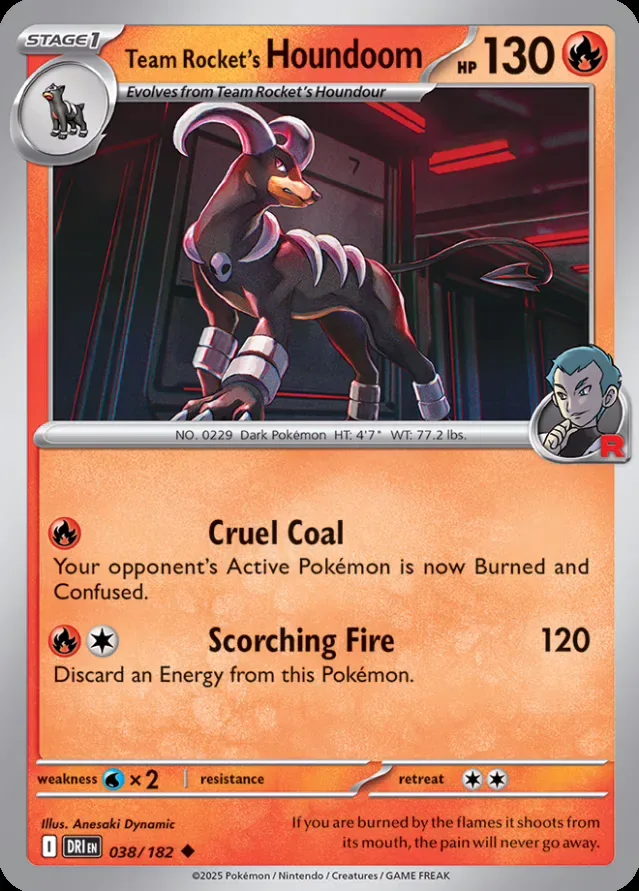
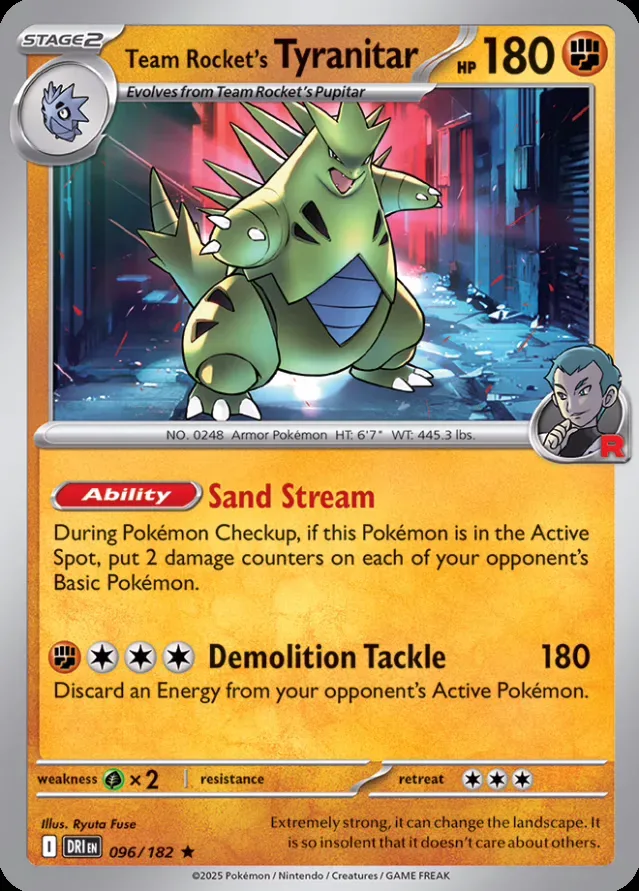
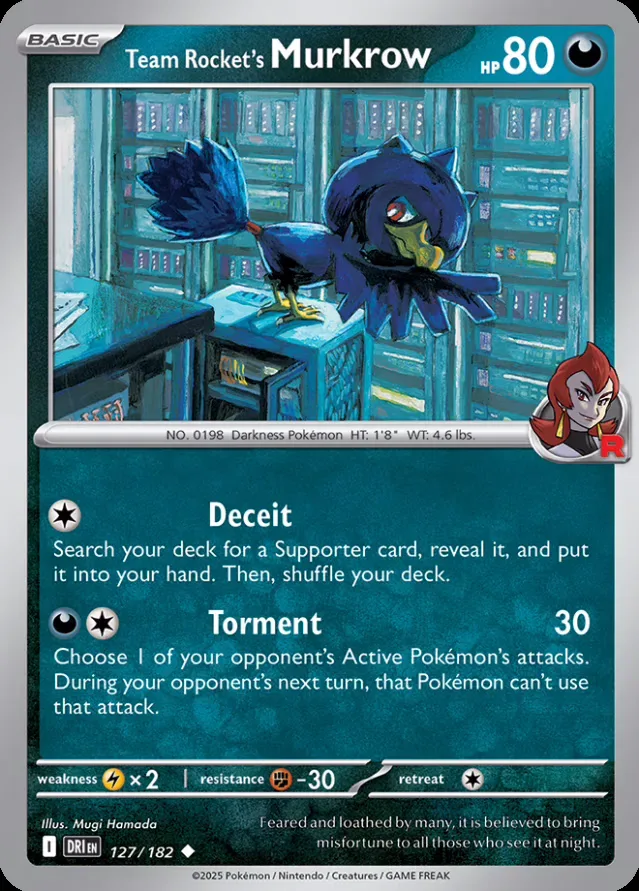
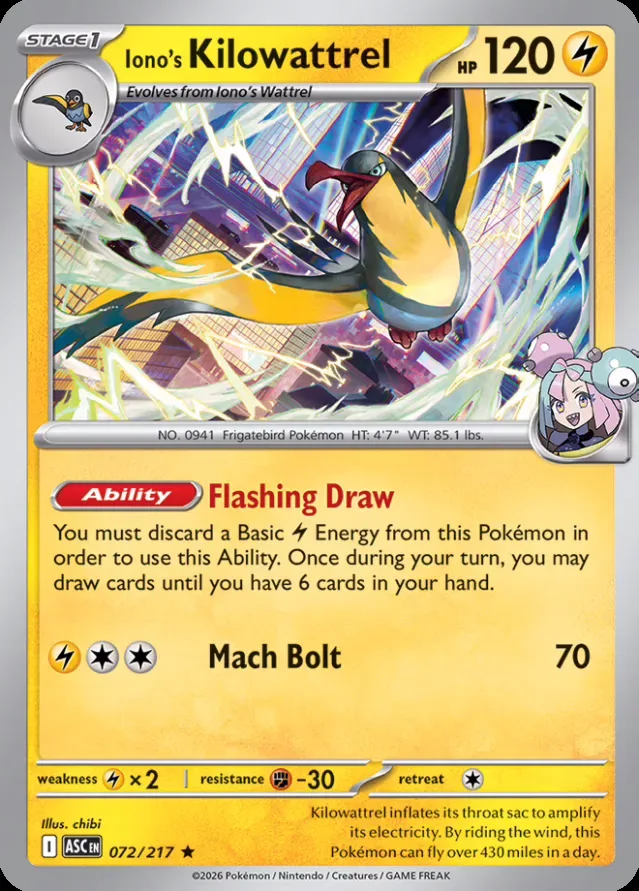
Only six cards from the 80-card pool have been previewed visually in the supplied material. Without a full list, it would be premature to characterize every archetype, rarity, evolution line or matchup that the box supports. What is clear is that the pool is deliberately curated across that release range, rather than being framed as a product containing multiple copies of a narrow deck list.
For players, the best approach is to treat the Battle Box as its own environment. A powerful card in a personal constructed deck does not automatically dominate a singleton draft pool, and cards that are modest elsewhere can become useful when choices are limited. Draft success will depend on the particular cards available, how the two players split them, and how effectively each player turns their selection into a coherent 40-card deck.
What to ask at a local League
Anyone planning a visit has two separate things to check: the reward program and the Battle Box activity. A local Play! Pokémon Store can clarify whether it has received the October League Kit, how it records monthly activity, what counts toward the maximum point total, and which standee rewards are available through its program.
- Ask how League activity points are earned and tracked during the month.
- Ask whether the store is running the Battle Box and when players can join a draft.
- Confirm whether a session is intended for two players and whether the store supplies all required materials.
- Remember that Battle Box cards are returned after the activity.
- Do not assume every participating store has identical timing or reward-handout procedures.
The October refresh therefore offers two complementary reasons to attend. The Mega Charizard X, Mega Gengar and Mega Kangaskhan standees give regular participants physical milestones to work toward. The 80-card Battle Box gives pairs of players a repeatable draft format that starts with shared cards rather than prebuilt decks. For a League night, that combination could make the trip about more than simply bringing a favorite deck: it adds an attendance track, a collectible reward goal and a different way to play the Pokémon TCG.