Magic: The Gathering has entered a particularly unusual corner of tabletop culture: the fast-food counter. Burger King Italy is running a limited promotion called the Great Gathering Bundle, pairing a meal with branded Magic accessories designed to resemble a Whopper. The promotion is available in Italy through November 30, and there is currently no indication that the bundle will be offered elsewhere.
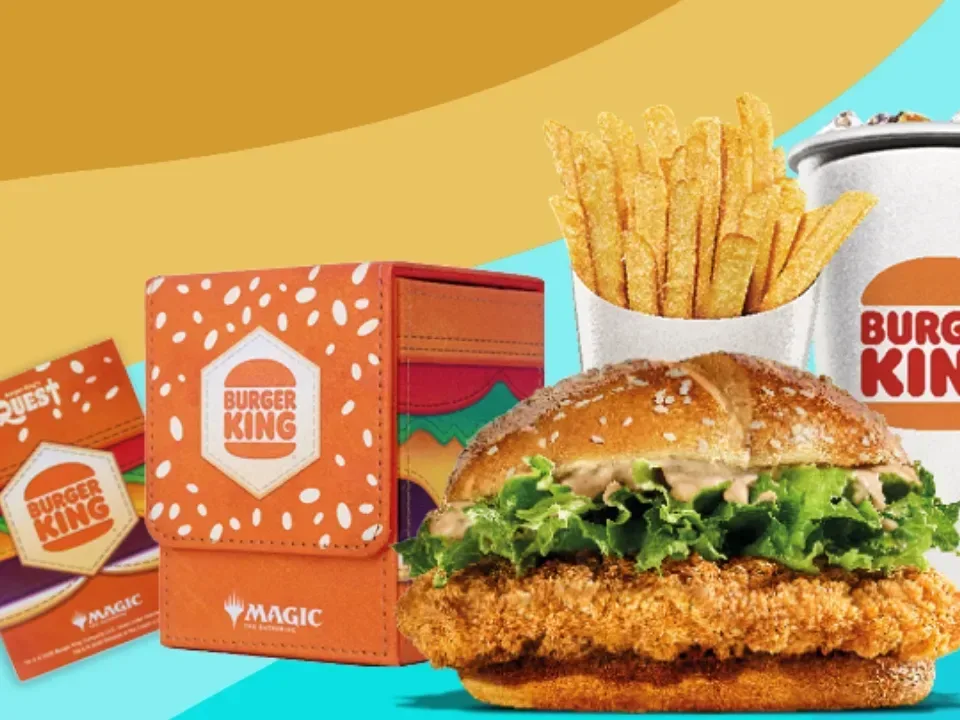
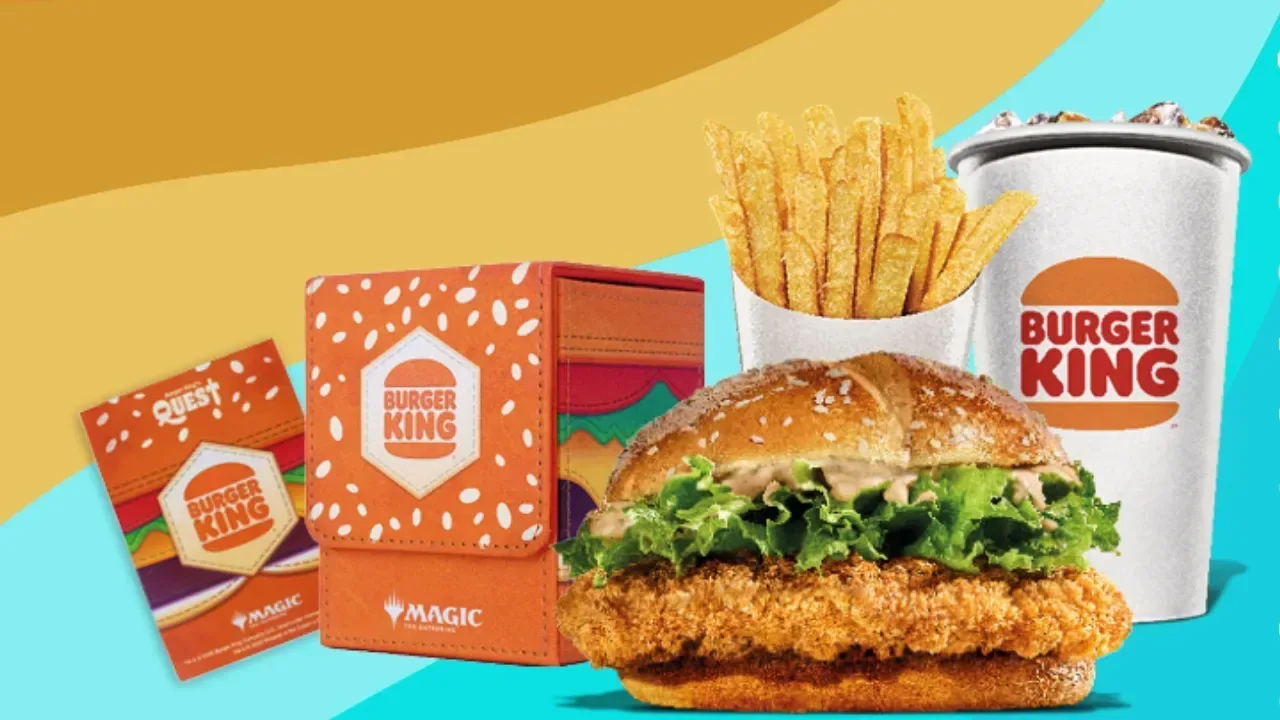
The food is familiar fast-food fare. Customers can choose a Chicken Krispper, Double Cheeseburger, or plant-based Impossible Whopper, accompanied by fries and a drink. The listed price is 19.90, described as roughly $22 USD. For Magic players, however, the meal is plainly not the main event. Each bundle includes a Burger King-themed deck box and a pack of 100 card sleeves.
The accessories lean all the way into the burger premise. Their design uses an orange sesame-bun look, with a patty and toppings represented in layered form. It is an intentionally silly visual for a hobby that can be extremely serious about card protection, deck presentation, and keeping a favorite Commander build together between game nights. It is also a collaboration that does not ask players to buy a randomized card product or hunt for a game-changing exclusive.
For the most immediate details of the regional offer, the Burger King Italy Magic bundle is described here. The important practical limitation remains simple: these accessories are tied to an Italy-only meal promotion, so players elsewhere cannot treat it as an ordinary local pickup.
For more context, explore PlayStation Plus November 2026 Games List Includes Death Stranding 2, Pirate Yakuza and Dragon Quest III HD-2D Remake.
What comes with the Great Gathering Bundle
At its core, this is a meal-and-accessories promotion rather than a new Magic product release. That distinction matters. The bundle contains:
- One eligible Burger King meal selection: Chicken Krispper, Double Cheeseburger, or plant-based Impossible Whopper.
- Fries and a drink.
- One Whopper-inspired Magic deck box.
- One set of 100 Burger King-themed card sleeves.
A deck box is a protective container for a player’s deck. In Magic, players commonly use one to carry a sleeved deck safely to a store, tournament, or casual gathering. A box that can hold a deck plus its sleeves is a useful object even when the exterior branding is comedic. The Whopper treatment turns that everyday piece of kit into a collectible accessory without changing the game itself.
Card sleeves are thin protective covers placed around individual cards. They reduce wear from shuffling and handling, while also making a deck’s card backs uniform during play. A 100-sleeve pack is particularly suited to Commander, a popular Magic format built around 100-card decks. That makes the bundle’s sleeve count feel deliberate: a player could sleeve one complete Commander deck, assuming they do not need spares for replacements or double-sleeving.
There is one early note of caution on quality. A customer sharing the items online praised the deck box but characterized the sleeves as somewhat flimsy and cheap-feeling. That is one user impression, not a comprehensive durability assessment, but it is useful context for anyone treating the accessories as play gear rather than display pieces. The deck box may be the stronger attraction; the sleeves may be better viewed as a novelty inclusion until more owners have used them over time.
No exclusive cards means a different kind of promotion
The Burger King collaboration does not include promotional Magic cards. That may sound like an omission in a trading-card promotion, but it avoids one of the most frustrating consequences of regional exclusives: creating game pieces that many players cannot reasonably obtain.
Promotional cards can matter for several reasons. They may carry alternate artwork, unique branding, scarcity-driven collector appeal, or—depending on what is printed—potential gameplay demand. When availability is limited to a single country or retail campaign, players outside that area can be left facing inflated resale prices. The situation can also invite scalping, where buyers acquire restricted items chiefly to resell them at a premium rather than use them.
By keeping the promotion focused on sleeves and a deck box, the Burger King bundle is less likely to create a gameplay-access problem. A player who cannot visit Italy is not denied access to a new legal card or a distinctive treatment of a sought-after game piece. That is a meaningful consumer-friendly boundary for a campaign built around a local restaurant partnership.
It does not mean the accessories will be easy to find outside Italy. Limited regional novelty items often attract interest precisely because they are not broadly sold. The Whopper deck boxes could still become a resale target, especially given the collision of recognizable fast-food branding, Magic’s established collector base, and a promotion with a fixed end date. But the stakes are different when the potentially scarce item is a storage accessory rather than a card someone needs to complete a deck.
Why the Italy connection is more than a random menu gimmick
The regional focus has a competitive-play component. Burger King is also sponsoring local Pauper tournaments as part of the collaboration. Pauper is a Magic format defined by cards that have been printed at the common rarity. Its identity is built around restrictions on card rarity rather than around a particular set or era, and it has a dedicated community of players who value the format’s distinct deck-building environment.
That tournament sponsorship gives the tie-in a clearer purpose than simply putting a logo on sleeves. It connects a mass-market restaurant promotion to places where players actually gather and play. For Burger King, that creates a route into an established local community. For Magic, it places the brand in front of people who are already participating in organized or semi-organized play, while potentially making the hobby more visible to restaurant customers who might not otherwise encounter it.
There is an appealing contrast in the setup. Magic is often associated with fantasy art, intricate rules interactions, and long, carefully maintained decks. A Whopper-themed deck box is deliberately less solemn. Yet the campaign still recognizes the social infrastructure around the game by supporting Pauper events rather than existing only as a disposable bit of packaging. The accessory may be the attention-grabber, while the tournament involvement is the part that connects it to play culture.
What players outside Italy should and should not infer
The bundle’s existence suggests that fast-food partnerships are an avenue Wizards of the Coast is willing to explore. It does not establish that the same offer, the same accessories, or any equivalent Magic meal will reach other territories. There is no stated expansion plan, so international fans should avoid treating online excitement as confirmation of a future local release.
It is reasonable, though, to see the collaboration as a test of how well a recognizable food brand and a tabletop game community fit together. Other major franchises have used restaurant promotions before, and Magic has the broad audience and visual identity to support more experiments. Whether this specific campaign leads anywhere larger will depend on factors that are not public here: local demand, the reception of the products, restaurant goals, and the priorities of the companies involved.
For now, the most accurate description is also the least dramatic. Italy has a time-limited Magic meal bundle with a branded deck box, 100 sleeves, and an association with local Pauper tournaments. Players in other countries can appreciate the burger-layered absurdity, but there is no official reason yet to plan for a domestic version.
A novelty item with a sensible limit
The Great Gathering Bundle works best as a piece of lightweight Magic culture. It gives players a usable deck container, enough sleeves to line up with Commander’s 100-card structure, and an aesthetic that is impossible to confuse with standard tournament accessories. The early sleeve-quality comment is worth remembering, and buyers should not assume the restaurant inclusion will match premium accessory brands. Still, the deck box is the more durable-looking centerpiece of the concept, at least from the available reaction.
More importantly, the campaign avoids turning a regional restaurant stop into a mandatory card chase. Magic’s most memorable promotional oddities can be fun without becoming essential. A Whopper deck box has exactly the right amount of consequence: it can make a table laugh, protect a deck, and become a conversation starter at a Pauper event—without making anyone feel they missed a crucial piece of the game because they live in the wrong country.