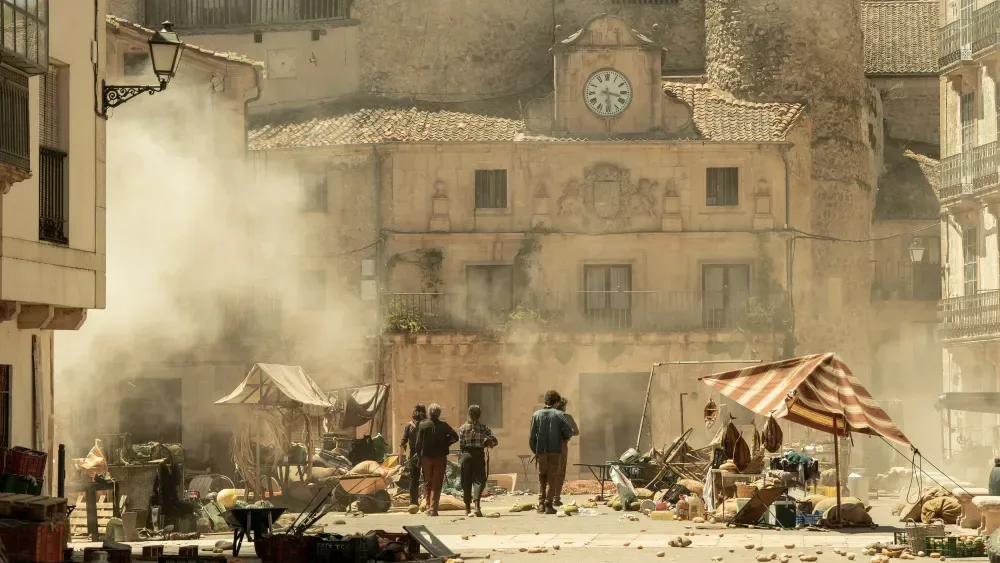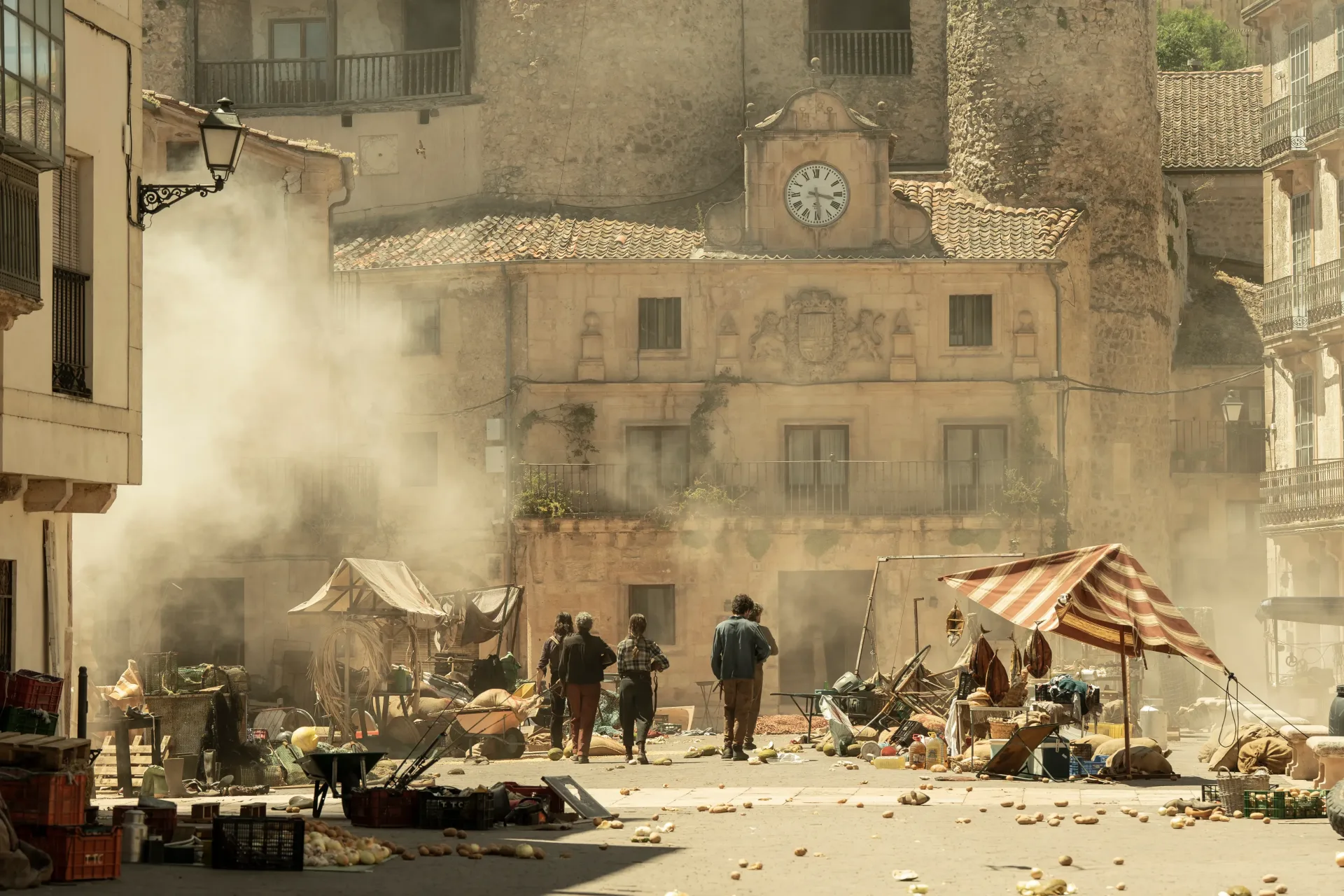
The road is finally getting a finish line. AMC+ has revealed a first look at the fourth and final season of The Walking Dead: Daryl Dixon, confirming that the series will return in 2027 for its conclusion. The upcoming chapter places Daryl Dixon and Carol Peletier in Spain, where the longtime survivors will cross the country’s badlands as the franchise prepares to close this particular branch of its post-apocalyptic family tree.
The confirmation makes Season 4 especially significant for Norman Reedus’ Daryl. The character’s story began with the original The Walking Dead in 2010, long before the central series ended its 11-season run in 2022. Daryl subsequently became the focus of this spinoff, which debuted in 2023 and took the familiar survivor far beyond the settings associated with the main show.
That international premise is not merely background scenery. It has been one of the defining features of Daryl Dixon: Daryl’s unexpected journey through Europe opened up a different view of the apocalypse, one shaped by new communities, languages, landscapes and ways of enduring after the world’s collapse. The final season’s Spanish setting indicates that the show will continue using geography as a major part of its identity right through the end.
Spain becomes the final season’s battleground
The announced setting is the badlands of Spain, with Daryl and Carol traveling together through the region. It is an evocative destination for a world overrun by the dead: severe, open terrain can make people feel exposed even before a walker enters the frame, while distance itself becomes an obstacle. The first-look reveal establishes the destination, but it does not spell out the precise mission, threat or endpoint awaiting the pair.
That distinction matters. A first look can establish mood and location without answering the larger questions that a final season invites. What does getting home mean now? Is the journey primarily about reaching a place, protecting people, confronting an enemy or choosing what kind of life remains possible? The available details do not yet provide those answers, leaving the 2027 premiere as the point where the show’s last major arc will come into clearer focus.
Still, Spain is a fitting continuation of the spinoff’s willingness to push Daryl beyond familiar territory. The franchise’s original core was built around prolonged movement through a devastated United States, whereas this series has made uncertainty across borders part of Daryl’s present. The final season appears set to retain that sense of displacement rather than retreating to an easy comfort zone.
Daryl and Carol are together again
Melissa McBride’s Carol is alongside Reedus’ Daryl for the final run. Their relationship has been one of the original show’s most durable bonds, built over years of loss, hard choices and a deeply practical trust. Neither character needs to explain the rules of survival to the other, and that shared history gives the final season an emotional foundation that goes well beyond a simple reunion.
For a franchise with a large ensemble legacy, placing these two survivors at the center provides a direct connection to its earliest era. Daryl’s longevity is remarkable on its own, but Carol’s presence turns the endgame into something more recognizably rooted in the relationship viewers have followed for well over a decade. The world around them may have changed countries, cultures and dangers; their partnership carries the accumulated weight of everything that came before.
Related coverage includes ‘The Walking Dead: Daryl Dixon’ Sets 2027 Final Season With Spain First Look.
The series is also adding Jimmy Smits as Captain Alejandro Perkins. Alejandro is described as a former U.S. Navy officer and medical doctor who devised his own distinctive method of surviving in the apocalypse. Those two elements—military experience and medical expertise—suggest a character with capabilities that could be useful in a hostile world, though the nature of his survival approach and his alignment with Daryl and Carol have not been detailed.
Smits joins a returning and expanded group that includes Romain Levi, Eduardo Noriega, Óscar Jaenada, Candela Saitta and Hugo Arbués. With the final season heading to Spain, the presence of these performers supports the series’ ongoing international character while leaving plenty of room for the show to define who becomes ally, adversary or something less easily categorized.
A spinoff that kept the franchise moving
The Walking Dead: Daryl Dixon launched in 2023, after the original The Walking Dead concluded in 2022. Its arrival was part of a broader effort to continue the universe through focused character stories rather than simply attempting to recreate the original ensemble format. Alongside sister series The Walking Dead: Dead City, it helped demonstrate that the franchise could keep exploring its world through smaller, more specific paths.
Daryl’s spinoff also had a clear built-in advantage: its lead was already inseparable from the series’ history. Reedus transformed Daryl into one of the defining figures of the original show across its run, and the spinoff gave that figure a new challenge—surviving without the immediate support system that had shaped so much of his past. Bringing Carol into the later journey changes that equation, but it also raises the stakes of what their final destination could represent.
There is something appropriately long-form about ending Daryl’s dedicated series after four seasons. His journey has spanned a long stretch of television history, from the original show’s 2010 beginning through a European detour and now a Spanish final chapter. The franchise has never treated survival as a neat, quick accomplishment. Closing this run gives the writers an opportunity to acknowledge that endurance also carries consequences: people evolve, relationships are tested, and continuing to live is different from finding a reason to live.
For fans who enjoy tracking how genre worlds endure across formats, eras and physical media, the broader question of preservation remains worthwhile too. Digital projects and their accompanying artifacts eventually become part of a genre’s history, much as classic game packaging does; GOG’s 3D big-box scans offer one example of how entertainment history can remain accessible beyond its original shelf life.
The team behind the closing chapter
David Zabel returns as showrunner and executive producer. The executive-producing group also includes Scott M. Gimple, Norman Reedus, Melissa McBride, Greg Nicotero, Brian Bockrath, Angela Kang, Jason Richman, Dan Percival and Steve Squillante. It is a substantial roster that combines key creative figures associated with the wider franchise and the personnel responsible for guiding this spinoff’s distinct identity.
That continuity is important as the show approaches its conclusion. A final season needs to serve the story in front of it while recognizing the history it inherits. Daryl and Carol are not blank-slate protagonists introduced for a limited run; they arrive with years of choices, friendships, grief and survival instincts behind them. The challenge is not just creating a dangerous new route through Spain. It is making that route feel consequential for characters who have already escaped more endings than most television heroes ever face.
The teaser trailer and first-look materials signal that the final leg is underway, but several major details remain unannounced. No specific 2027 premiere date has been provided. Story particulars beyond the Spain setting, Daryl and Carol’s journey, and Alejandro Perkins’ introduction are still being held back. That is a sensible position for an endgame season: confirmation offers viewers a destination, while the narrative itself keeps its most important turns in reserve.
For now, the clearest takeaway is simple. The Walking Dead: Daryl Dixon will end with Season 4 in 2027, taking two of the franchise’s most enduring survivors across Spain’s badlands. After a story that began in 2010, Daryl Dixon’s path is entering its final stretch—but the road ahead remains deliberately uncertain.