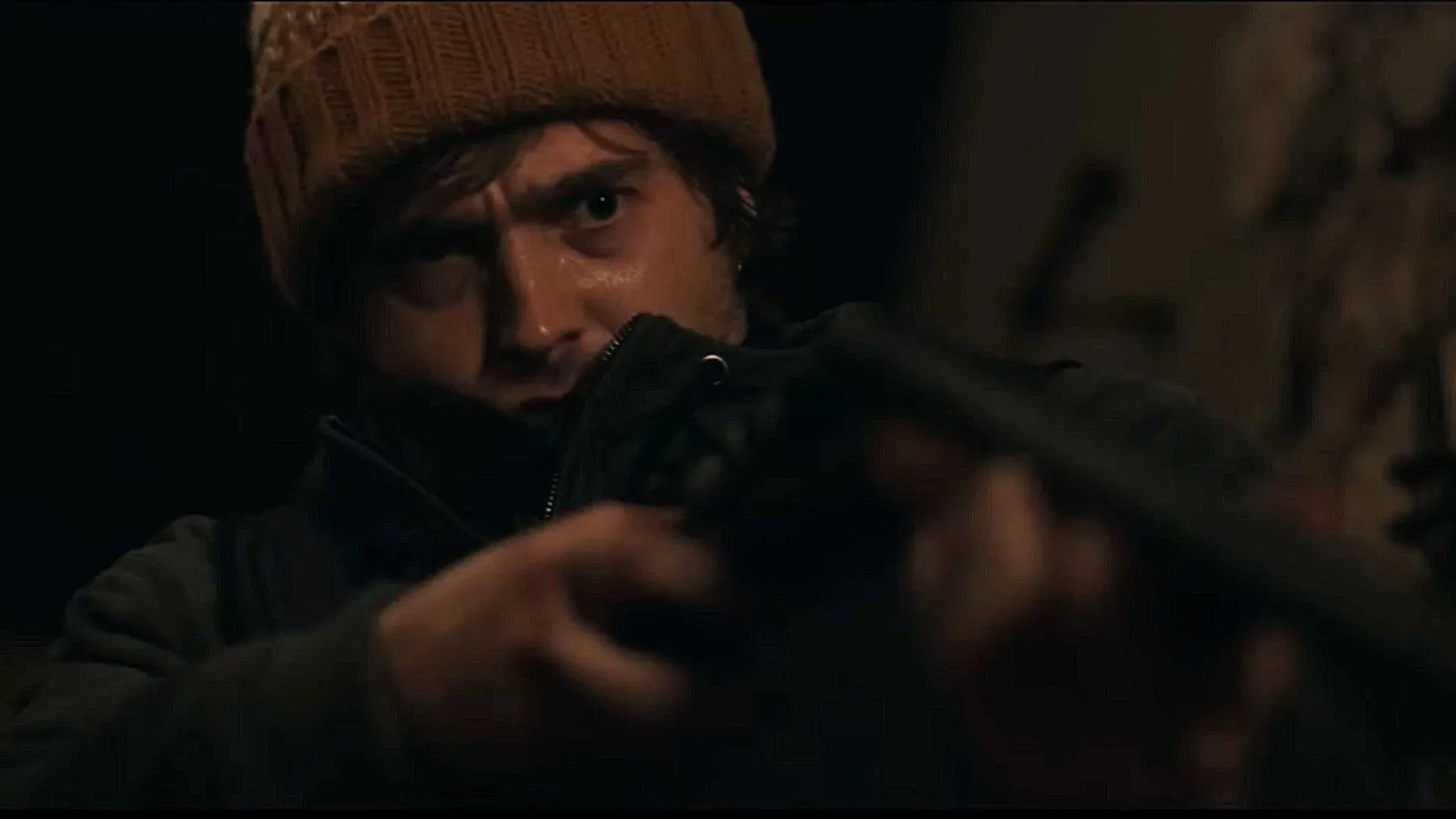
The upcoming Street Fighter movie appears determined to take one of fighting games’ most famous silhouettes seriously. Callina Liang, who plays Chun-Li, underwent intensive martial-arts and strength training for the role—work that reportedly made such a visible difference that her stunt double needed padding to more closely match Liang’s physique for action material.
Director Kitao Sakurai shared the behind-the-scenes detail during a pre-release media Q&A. It emerged while the cast and filmmakers discussed the physical preparation Liang took on to portray the iconic Interpol officer and kick-focused combatant. Sakurai said he noticed the stunt performer was wearing added padding while filming a scene later in the production, and learned it was being used to align the double’s shape with Liang’s newly developed build.
“I knew it was serious” when the double had to wear the padding to match Liang’s physique, Sakurai recalled.
It is a strange, funny, and oddly fitting production anecdote for Chun-Li. The character’s powerful legs have been an immediately recognizable part of her design for decades, alongside her distinctive costume, spinning kicks, and status as one of the most enduring faces in the fighting-game genre. A movie production using practical costume assistance not to make the lead actor look more like the character, but to help a double catch up with the lead actor’s training results, is an unusually direct measure of the commitment involved.
A role built around kicks demanded serious movement training
Liang has previously described the scale of the work behind her transformation. Her routine included Taekwondo, Muay Thai, and Wushu training, with roughly two hours per day devoted to those disciplines. That mix tracks closely with a role such as Chun-Li: the character’s identity is inseparable from explosive lower-body technique, carefully controlled poses, rapid combinations, and the ability to make screen-filling kicks look both stylized and dangerous.
Training for an action role is never just a question of visual resemblance. Movie choreography asks performers to repeat precise movements, maintain form for the camera, work safely around scene partners and stunt teams, and preserve a character’s personality while performing athletic material. For a character whose fighting style is so leg-driven, extra lower-body strength would have practical value alongside its cosmetic effect.
Liang said the regimen substantially changed both her training and diet. While bulking for the movie, she ate 12 eggs per day and had meals at two-hour intervals. She also said her thighs had increased by 6.5 centimeters each by the end of shooting. It was plainly an aggressive undertaking rather than a casual pre-production fitness plan; Liang described the constant eating as difficult, even though she said the approach delivered its intended result.
The resulting situation gave the cast plenty to laugh about. Noah Centineo, who portrays Ken Masters, joked that others had to wear the padding “out of solidarity.” Liang’s own summary was even more blunt: “We all had huge legs.”
Related coverage includes Street Fighter Movie's Chun-Li Training Was So Intense Her Stunt Double Needed Padding to Match Her Physique.
That kind of good-natured teasing is probably inevitable on a production where physical conditioning becomes part of the daily job. Still, the central detail is not merely a punchline. It suggests that the filmmakers were conscious of preserving continuity between Liang and the stunt performer in a character whose outline and physicality are especially familiar to viewers.
Studying Chun-Li beyond the gym
Liang’s preparation was not limited to exercise and martial-arts drills. She also said she downloaded every version of Street Fighter available on her PlayStation 5, recording Chun-Li’s moves on her phone to better study how the character carries herself in combat.
That is a practical way to approach a video-game adaptation. The games provide more than a list of attacks: they contain the timing, posture, rhythm, transitions, and attitude that players have associated with a character over many appearances. Chun-Li’s motions have a heightened quality because they must read quickly during a match, but translating that energy to a live-action film requires an actor to understand the difference between simply copying a pose and communicating why it belongs to that particular fighter.
For Chun-Li, the challenge is especially apparent. She cannot move like a generic martial-arts protagonist and still feel entirely like Chun-Li. Her kicks, balance, speed, and confidence are core pieces of the character. Looking directly at the games while training in several real-world disciplines gave Liang a route to combine recognizable game language with the demands of a physical film set.
There is a wider point here for adaptations of game characters: fidelity is often expressed through performance as much as props or costumes. An actor’s movement can carry an enormous amount of recognition before a character speaks. For another perspective on the importance of defining a game hero through performance, see this look at what a more forceful voice could mean for Samus Aran.
Why stunt-double matching matters
Stunt doubles are essential collaborators in action filmmaking, taking on work that may be too dangerous, too specialized, or too demanding to place entirely on the principal cast. Their ability to blend seamlessly into a scene depends on many details: costuming, hair, lighting, framing, timing, body language, and, in this case, body shape.
Padding is a normal filmmaking tool, but its use here lands differently because it ran opposite to the expected direction of an action-movie transformation. Instead of adding pieces to give Liang the character’s physical presence, the production reportedly needed to make an adjustment for her double after Liang’s own training had significantly altered her figure. For a role defined by athletic lower-body power, the choice makes sense as a continuity measure.
It also underlines the gap between the public’s usual shorthand for performer transformations and what production work actually entails. People often focus on a before-and-after physique, but the process includes rehearsal schedules, nutrition, choreographic repetition, stunt coordination, costumes, and the need to maintain consistency across scenes filmed at different times. When a performer changes considerably over the course of a shoot, the production has to account for that change everywhere the character appears.
None of this means the movie will rest its Chun-Li portrayal on muscle alone. The worthwhile test will be whether the finished performance captures the character’s discipline, intensity, and presence while still serving the film’s story. But the preparation described by Liang and Sakurai indicates a deliberate attempt to make Chun-Li’s physical identity feel earned rather than treated as a purely cosmetic reference.
The Street Fighter cast’s physical commitment is now part of the buildup
The anecdote arrives as anticipation builds toward the film’s theatrical release on October 16, 2026. Liang plays Chun-Li, while Centineo takes on Ken Masters. David Dastmalchian is set to appear as M. Bison, the franchise’s psycho-powered dictator and one of its most recognizable antagonists.
For fans, the practical question remains how these preparations will look once the movie is on screen. Video-game adaptations face a difficult balance: audiences want familiar visual and behavioral touches, but film action must have its own weight, pace, and clarity. The reported work on Chun-Li’s technique and conditioning suggests the team understands that her fighting style cannot be an afterthought.
And if nothing else, the production has supplied a wonderfully specific marker for what “committing to the role” can mean. In this case, it meant martial-arts practice, a relentlessly structured eating plan, larger thighs by several centimeters, a PlayStation 5 full of Street Fighter study material—and a stunt double whose costume department had to help maintain Chun-Li’s famously formidable silhouette.