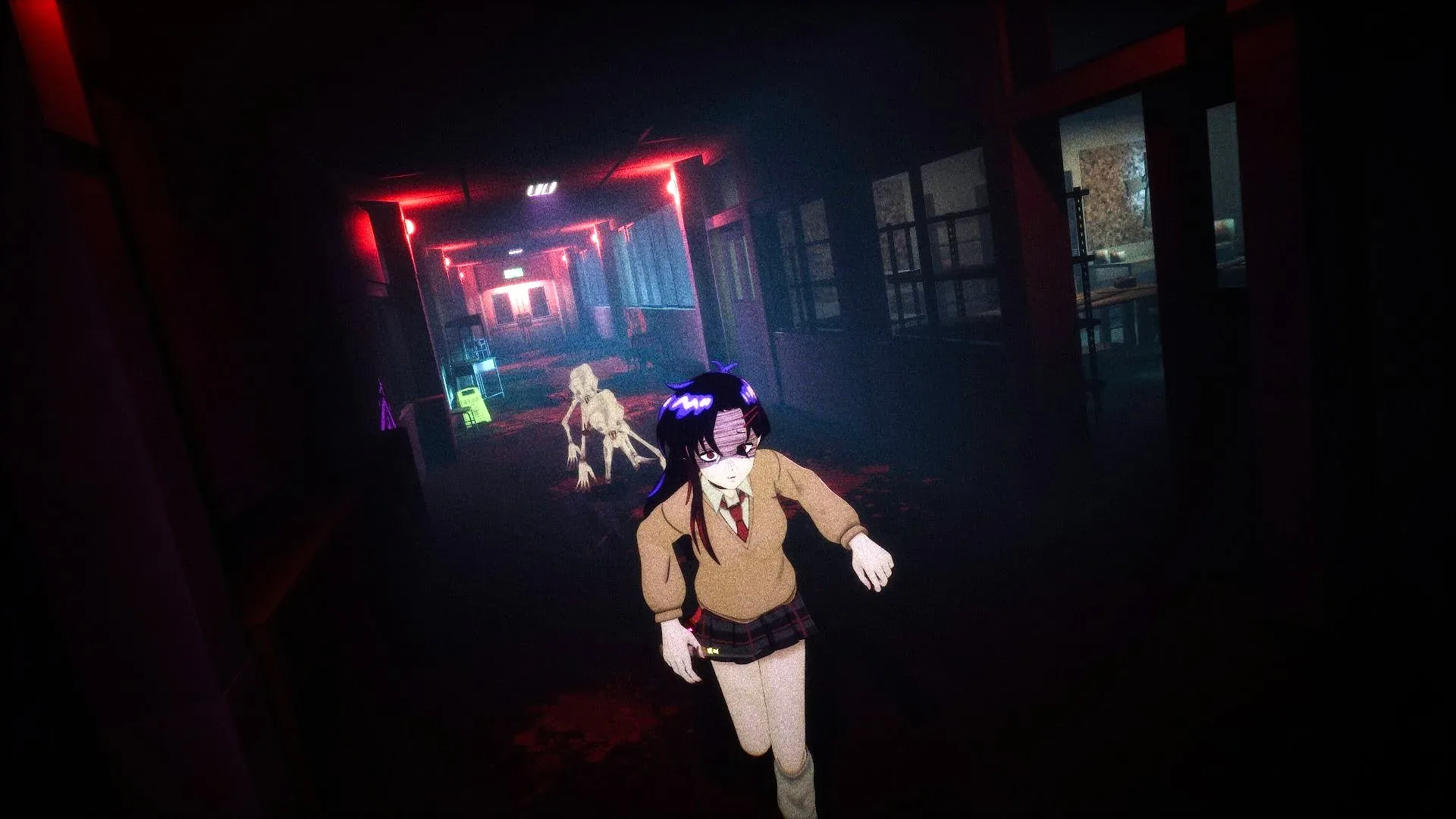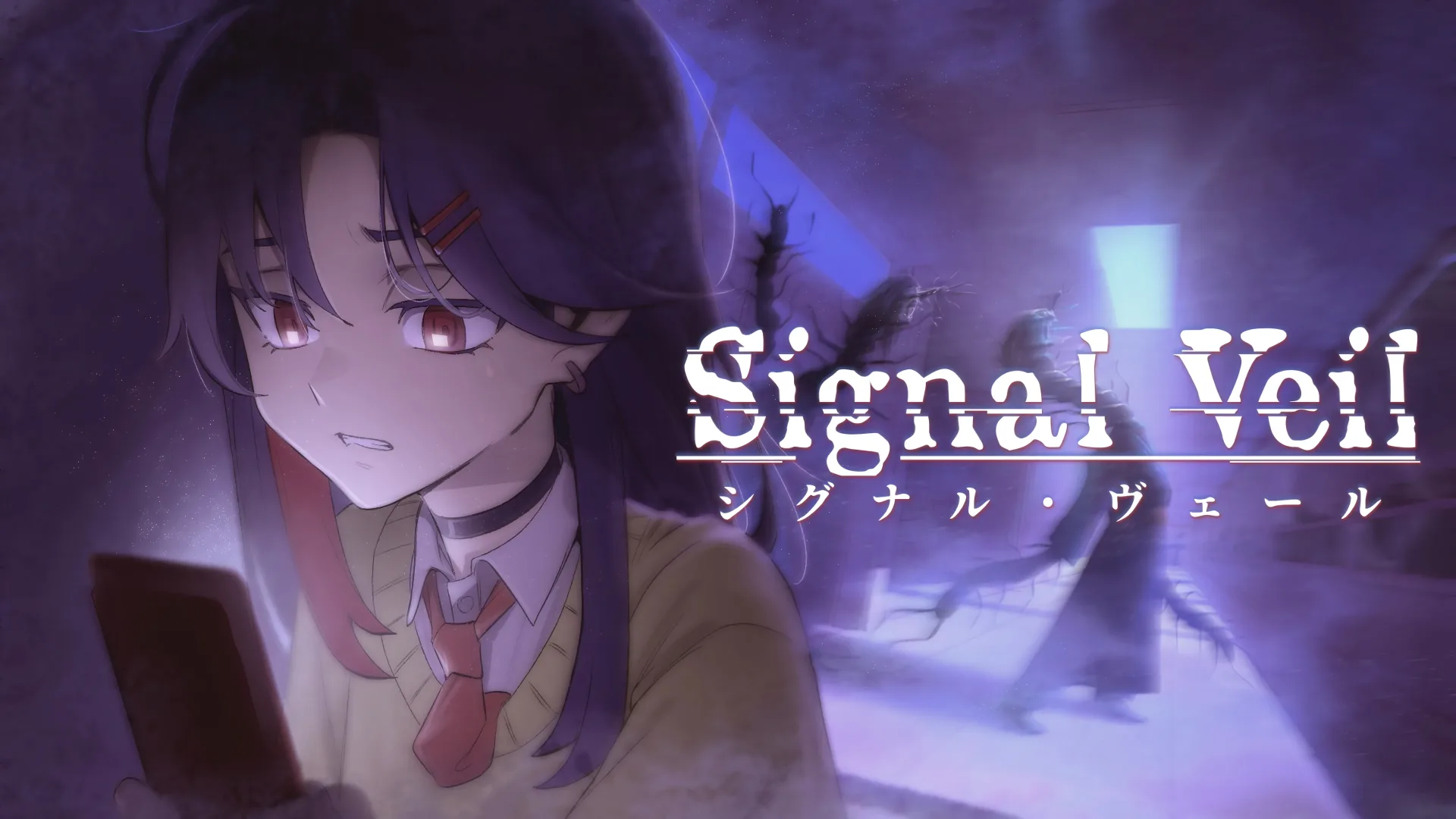
Serafini Productions and Chilean independent developer Time Hunters have revealed Signal Veil, a third-person survival horror game planned for PlayStation 5, Xbox Series X|S, Nintendo Switch 2, PC via Steam, and the Epic Games Store. Its premise centers on Aki Mizuno, a teenage schoolgirl investigating the unsettling legacy of her missing mother with one very unusual inheritance: an old cellphone that can react to spirits invisible to everyone else.
The game draws on a 1990s anime-inspired aesthetic while setting its supernatural threat within Nishikawa High School. Aki’s phone is more than a story device. It is presented as the central survival tool for navigating the school, finding supernatural evidence, and surviving encounters with hostile entities. That focus gives Signal Veil a deliberately constrained horror setup: the item intended to guide Aki toward answers is also the instrument that puts her in direct contact with danger.
A phone built for detection, disruption and discovery
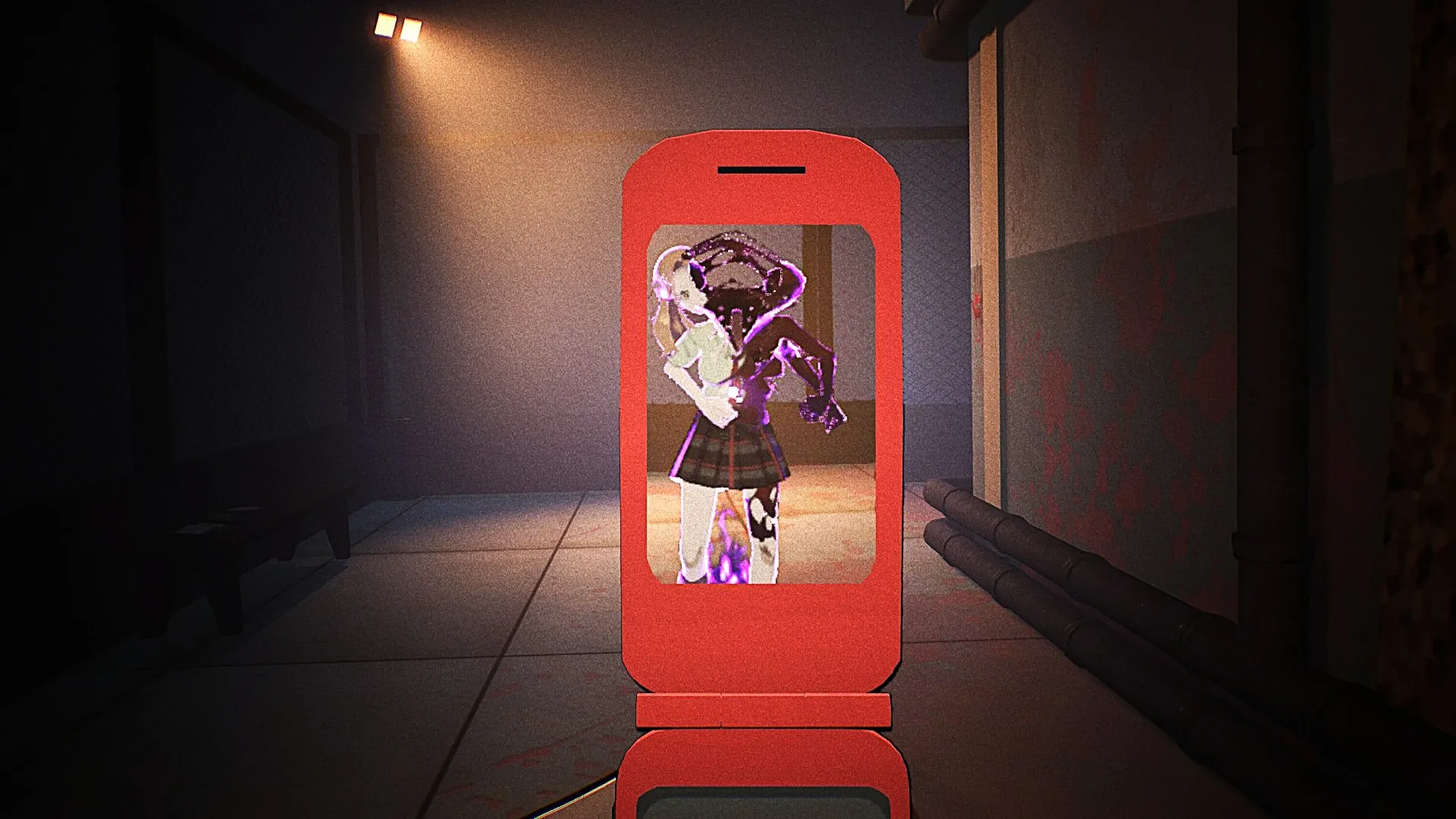
Aki’s inherited cellphone responds when spirits are nearby through vibrations and static. In practical terms, that makes it a detection device: instead of simply revealing an enemy on a map, it appears designed to make players interpret imperfect warning signals while moving through threatening spaces.
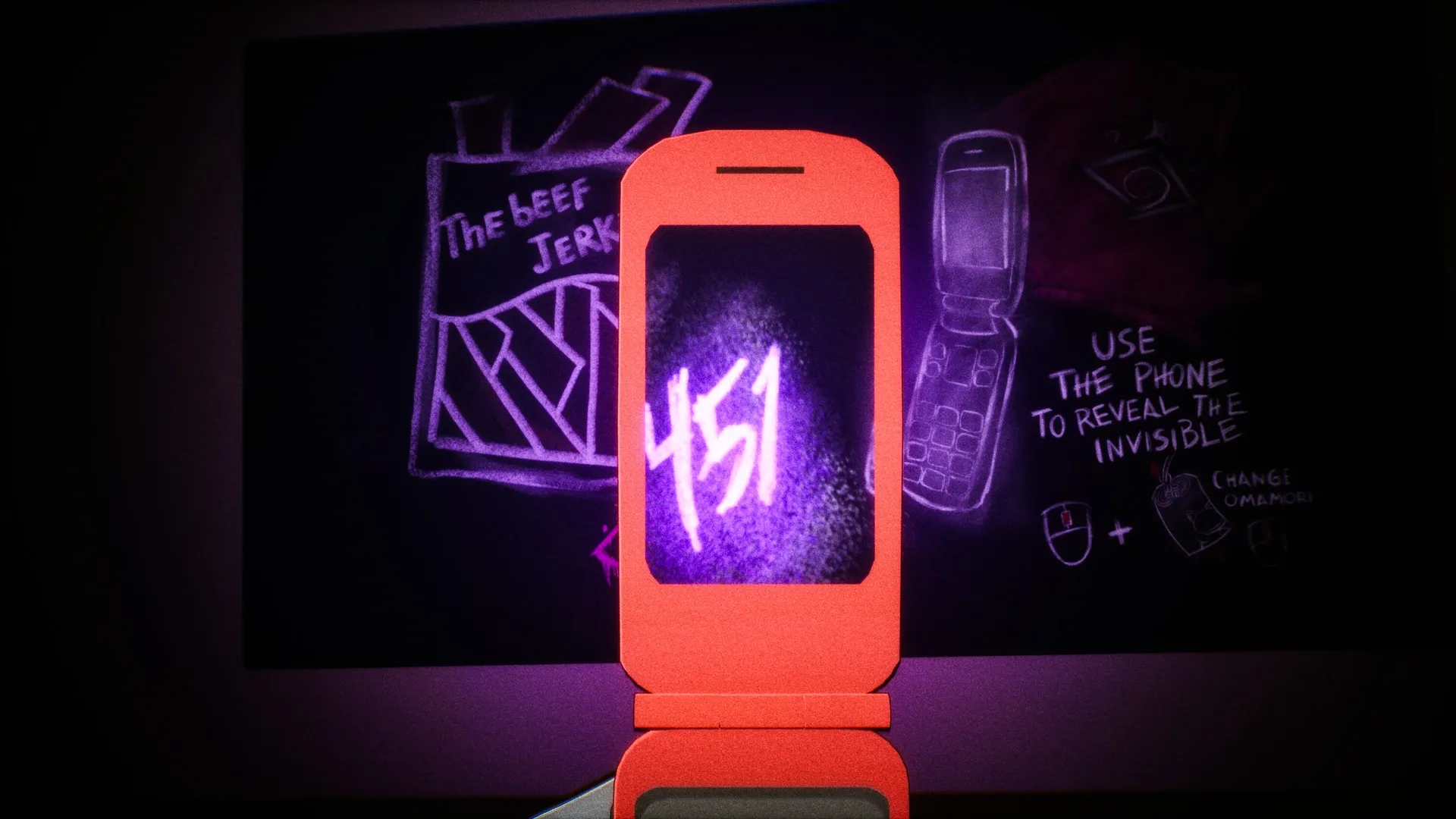
The phone also has a flash that can stun spirits and a camera function that reveals hidden objects or imprints. An imprint, in this context, is a residual supernatural trace rather than an ordinary physical item. The feature suggests that observation is a key part of progression. Players may need to use the camera not just to inspect their surroundings, but to expose information the school is actively concealing.
Those functions divide the device’s role into three connected parts:
- Detection: vibrations and static warn of nearby entities.
- Defense: the flash can temporarily stun an enemy.
- Investigation: the camera uncovers hidden objects and spectral imprints.
That is an important distinction from a horror game where a single gadget merely opens locked doors or serves as a flashlight. The phone is tied to awareness, vulnerability and investigation at once. It should therefore make even routine exploration feel conditional: a noise or vibration may be useful information, but it also signals that Aki is sharing space with something she cannot normally see.
Sanity changes the school—and the threat inside it
Signal Veil also links Aki’s worsening sanity to the state of Nishikawa High School. As her sanity deteriorates, the environment begins to warp and enemies become less predictable. The announcement does not specify how sanity is gained, lost or restored, so its precise mechanical structure remains unconfirmed. What is clear is that it is intended to affect both the place players explore and the behavior of the dangers they face.
“Sanity” in horror games usually refers to a system representing a protagonist’s declining mental stability under supernatural or traumatic pressure. Here, it is explicitly connected to environmental transformation and enemy unpredictability. That combination means the system is not framed merely as a visual effect. It has the potential to alter the reliability of the player’s knowledge: a familiar school corridor may no longer feel familiar, and an enemy’s behavior may not remain consistent when Aki is under greater strain.
Related coverage includes Signal Veil Reveals 90s Anime Survival Horror for Consoles and PC.
For the game’s school setting, that approach has obvious dramatic value. Schools are typically organized, comprehensible places with classrooms, halls and recognizable routines. Warping that structure can turn a location built for orientation into one that undermines it. The more the game makes its space feel unreliable, the more consequential the phone’s readings and camera discoveries can become.
Scarcity is meant to make each encounter matter
Time Hunters describes medicine, ammunition and mystical weapons as scarce. That places Signal Veil firmly within survival horror’s resource-management tradition, where players are expected to assess threats rather than respond to every problem with force.
Resource scarcity does not simply mean there are fewer supplies. It changes decision-making. Medicine becomes a safety reserve rather than a convenient reset after a mistake. Ammunition carries an opportunity cost: using it in one confrontation may leave less for a later one. Mystical weapons, meanwhile, fit the game’s ghost-focused premise and imply that supernatural threats require more than conventional firepower.
The stated design goal is strategy over brute force. Players should not assume that every enemy needs to be rushed or overwhelmed. Instead, they will need to understand the sequence necessary to deal with a spirit permanently and manage their limited supplies around that process.
The ritual-like enemy sequence explained
Encounters are built around a multi-stage ritual-like process: detect a spirit, provoke it, stun it, expose its essence, then purge it permanently. While the reveal does not provide detailed controls or timing rules, each stage establishes a different kind of risk.
- Detect: use the phone’s supernatural responses to identify the entity’s presence.
- Provoke: draw the spirit into an active encounter rather than remaining safely unaware of it.
- Stun: use the phone’s flash to create a temporary opening.
- Expose: reveal the enemy’s essence, the vulnerable supernatural core required for the next step.
- Purge: complete the process and remove the entity permanently.
The phrase permanently is especially meaningful for a survival horror loop. It indicates that successful encounters may change the danger level of a location rather than simply delay an enemy. That could make a carefully completed purge worthwhile when resources are tight, while also making failed or interrupted sequences costly. The exact balance between avoidance, temporary defense and permanent purging has not been detailed, but the structure points to combat that is intended to be procedural rather than purely reactive.
Fixed cameras make information a limited resource
Signal Veil uses classic fixed camera angles. In a fixed-camera system, the viewpoint is placed at selected positions in the environment instead of being freely controlled by the player at all times. The technique limits what can be seen around a corner or behind the character, which is useful in horror because it turns vision itself into a source of uncertainty.
That design choice pairs closely with the phone mechanics. When a player cannot simply swing the camera around to inspect every angle, vibrations, static and the camera’s ability to reveal hidden traces become more significant. The game can create tension from incomplete information without needing to fill every moment with direct attacks. A signal from the phone may tell players something is close, but a fixed viewpoint can deny them a clear look at what is waiting.
The approach also makes the announced 90s anime inspiration more than a broad visual label. Fixed framing, a schoolbound supernatural mystery and an older cellphone as the key interface all support a more deliberately composed style of horror. The exact visual and narrative influences have not been identified, so it would be premature to draw a direct line to any particular anime or game. Still, the announced components consistently point toward a horror experience interested in tension, limitation and supernatural investigation.
What has been confirmed so far
- Developer: Time Hunters, an independent studio based in Chile.
- Publisher: Serafini Productions, based in Tokyo.
- Genre and perspective: third-person survival horror.
- Protagonist: Aki Mizuno, a teenage schoolgirl searching for answers surrounding her missing mother.
- Setting: Nishikawa High School.
- Core device: a cellphone that senses spirits through static and vibrations, can stun with its flash, and reveals hidden objects or imprints through its camera.
- Platform plans: PlayStation 5, Xbox Series X|S, Nintendo Switch 2, Steam and Epic Games Store.
An announcement trailer and press kit are available, but no release date, price, edition details, or demonstration has been specified in the reveal. That leaves major questions open, including how the sanity system will be managed, how frequently players will face spirits, and how much room there will be to avoid combat entirely.
For now, Signal Veil has established a clear mechanical identity: a haunted phone supplies the clues, a warped school conceals the danger, and scarce resources make an exorcism-style confrontation something to plan rather than casually repeat. Players looking for more newly announced PC projects can also follow Demidoff Corp’s folklore-driven industrial mystery.