Open-ear headphones are built around a simple compromise: music, podcasts and calls should not require shutting out everything happening around you. Shokz’s OpenRun Pro 2 pursues that idea with a frame that sits outside the ear canal, and its Black Friday price has fallen to $124 from $179. That is a $55 reduction, or roughly 31%, and is described as the model’s lowest price in a year.
The discounted version is the Standard size with a headband. The offer is open to all shoppers, though the retailer has marked the listing as selling quickly. As with any time-sensitive promotion, the price and stock status can change.
For runners, cyclists and gym-goers who dislike traditional earbuds, the real appeal is not merely that the OpenRun Pro 2 avoids eartips. It is that its design aims to preserve an awareness of nearby traffic, people and ambient noise while audio is playing. That makes it a notably different proposition from sealed earbuds designed primarily to isolate the listener.
What “open-ear” means in practice
Conventional earbuds place a small speaker in or near the ear canal. Depending on the fit and tip material, they can reduce the amount of outside sound that reaches the listener. That can be welcome on a train, in an office or at home, but it may be less desirable on a roadside route or busy shared path.
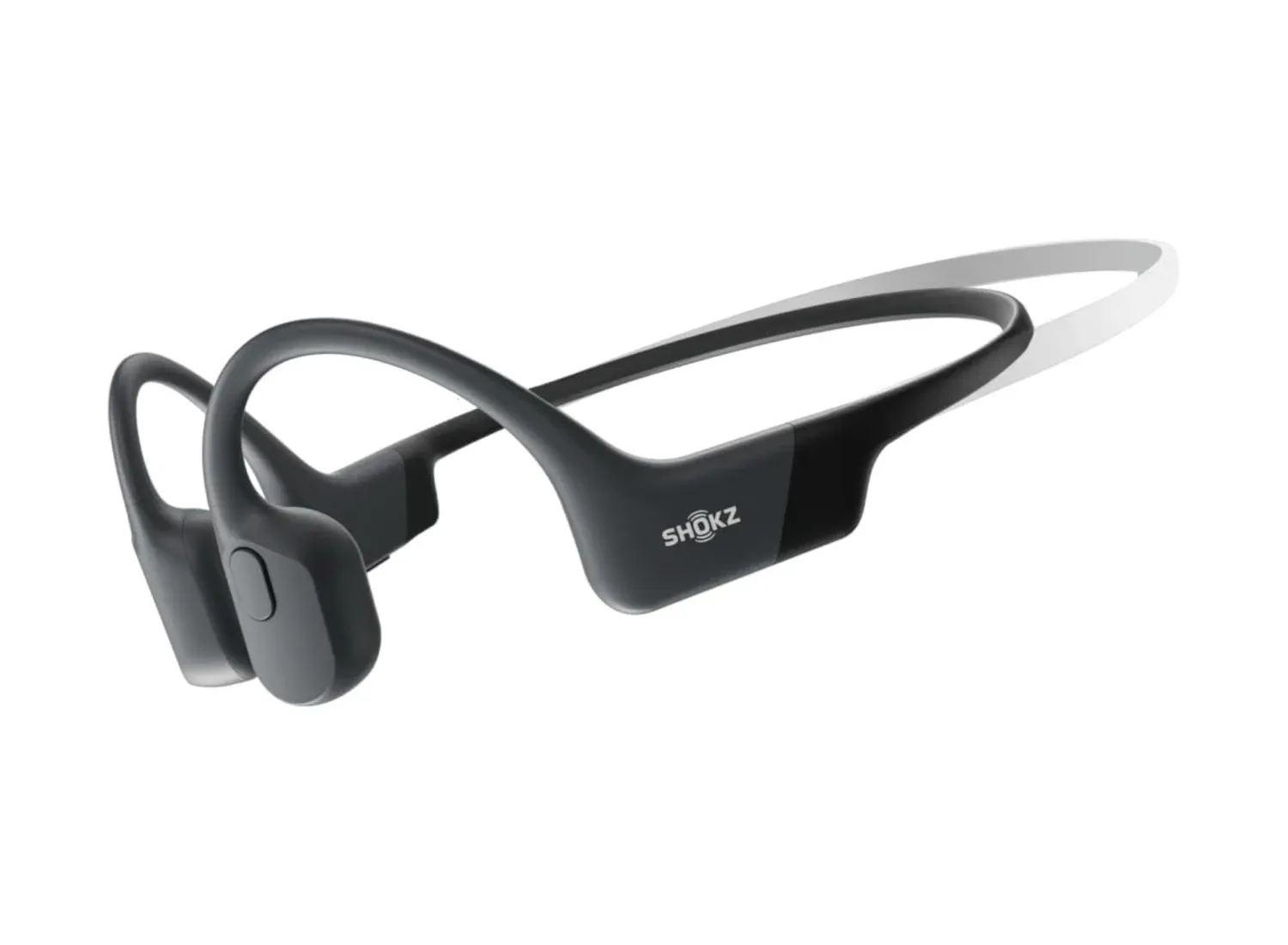
The OpenRun Pro 2 instead leaves the canal unobstructed. Shokz uses bone conduction, a method that sends sound as vibrations through the cheekbone area, rather than relying only on a speaker directing sound into the ear. The practical implication is straightforward: outside sounds can still reach the ear normally, so a runner may be better able to notice a bike approaching, a person speaking nearby or activity around a gym.
That should not be mistaken for a safety guarantee. Open ears may help maintain situational awareness, but they do not replace looking around, keeping audio at a sensible level or following local rules for roads and paths. The value of the format is that it does not deliberately block the ear canal in the way many earbuds do.
The product also has a reflective strip on its band. It is a small physical feature, but one suited to low-light training: reflected light can make the wearer more noticeable when light hits the band. Paired with the open-ear approach, it shows that this model is being positioned around outdoor activity rather than private, isolated listening.
A hybrid answer to bone conduction’s bass problem
Bone-conduction audio has traditionally carried a predictable trade-off. It can keep ears open, but low-frequency sound—bass—has often been a weak point. Low frequencies are the deep elements of a music track: kick drums, basslines and the lower body of voices. The supplied product information describes older bone-conduction headphones as sounding thin because cheekbone vibration is not especially effective at reproducing those lower frequencies.
The OpenRun Pro 2 addresses that limitation through a second driver using air conduction for bass, while the bone-conduction system handles the higher frequencies. In plain terms, it is a hybrid design: one part of the system delivers vibrations through the bone area, while another moves sound through the air for the frequencies that benefit from it.
That division of labor matters more than a specification-sheet novelty. A purely open-ear sports headset can be useful for awareness yet still feel compromised if music lacks weight or podcasts sound too slight. The two-driver arrangement is intended to make the presentation fuller without changing the central idea of keeping the ear canal clear.
Shokz also says sound leakage is kept low. Leakage is audio that escapes the headphones and can be heard by nearby people. It is especially relevant to open designs because they do not seal against the ear. Lower leakage could make the OpenRun Pro 2 more considerate on a treadmill or in a shared gym, although the exact amount will naturally vary with volume and surroundings.
Built for motion rather than pocketability
The headset uses ear hooks and a one-piece frame built around nickel-titanium memory wire. Memory wire refers to material designed to spring back toward its original shape after bending. In this case, Shokz says the frame can return to shape after being crushed at the bottom of a gym bag.
That is a practical distinction from separate true-wireless earbuds. The OpenRun Pro 2 has a rear band and connected structure rather than two independent buds that must be fitted individually and kept in a charging case. A one-piece frame can make the headset easier to grab before a run, and the ear hooks are meant to hold it steady through cycling, burpees and similar movement.
The trade-off is inherent to the design: buyers should expect a visible band rather than the near-invisible profile of small earbuds. Anyone considering the deal should also pay attention to the stated size. This sale covers the Standard-size version, so the fit should be part of the decision rather than an afterthought.
Sweat resistance is another relevant fitness-oriented feature. The provided details do not give a formal resistance rating, so it would be unwise to infer a level of water protection beyond that claim. What is established is that the headset is intended to handle sweat from demanding training sessions.
Battery estimate, listening modes and calls outdoors
Shokz rates the OpenRun Pro 2 for up to 12 hours of battery life. For a person who runs 45 minutes each day, that works out to about 16 sessions before a recharge under the stated estimate. Real battery life can differ with volume, call use and listening mode, but the headline number is substantial for a headset aimed at regular workouts.
The companion Shokz app includes two sound options. Volume Boost Mode is designed to help when environmental noise makes audio harder to hear, such as on a street with buses or construction. Classic Mode returns the product to pure bone-conduction listening for people who prefer that original approach.
Those settings give the model a useful degree of choice. An open-ear headset necessarily shares the listener’s attention with the outside world; a louder environment can compete with a quiet podcast or an understated section of music. Volume Boost Mode is Shokz’s answer to that challenge, while Classic Mode offers a more traditional bone-conduction presentation. Neither mode changes the basic point of the product: outside sound remains part of the experience because the ear canal is left open.
Calls are another area where outdoor headphones face a familiar obstacle: wind. Shokz says the OpenRun Pro 2 has two wind-resistant microphones and AI noise reduction, with a claim that the system filters almost all background noise, including wind at speeds up to 15 miles per hour. AI noise reduction generally means software processing attempts to identify a speaker’s voice and suppress competing sounds. It is intended to make a caller hear more voice and less wind or surrounding activity.
The 15 mph figure is the stated condition for the wind claim, not a blanket promise that calls will be clear in every outdoor situation. Still, the focus on wind resistance is particularly relevant for runners and cyclists, for whom calls often happen away from quiet indoor rooms.
Who this sale is most likely to suit
The OpenRun Pro 2 looks best suited to people whose first priority is hearing what is around them while they listen. Runners on shared routes, cyclists, walkers and gym users who want to remain responsive to nearby conversation are the clearest audience. The reflective band, sweat-resistant construction, secure hooks and 12-hour quoted battery rating all reinforce that activity-focused use case.
It may also appeal to listeners who have never liked the sealed sensation of in-ear buds. The design avoids placing anything inside the ear canal, and the hybrid driver arrangement is intended to improve on the thinner sound often associated with older bone-conduction hardware.
Buyers primarily chasing isolation, silence or the most private possible listening environment should understand the opposite goal is at work here. Hearing the world is a feature, not a flaw. That distinction is more important than the discount alone.
At $124, the sale makes the OpenRun Pro 2 a more accessible entry into Shokz’s open-ear approach, with a $55 saving against the cited $179 price. Shoppers comparing workout technology may also want to see how other current hardware discounts are shaping up, including this Switch 2 storage expansion deal. For the OpenRun Pro 2 specifically, the key question is simple: whether keeping ears physically open is worth more to you than the isolation offered by conventional earbuds.
Shop the products
Check current price, model and availability at the retailer.