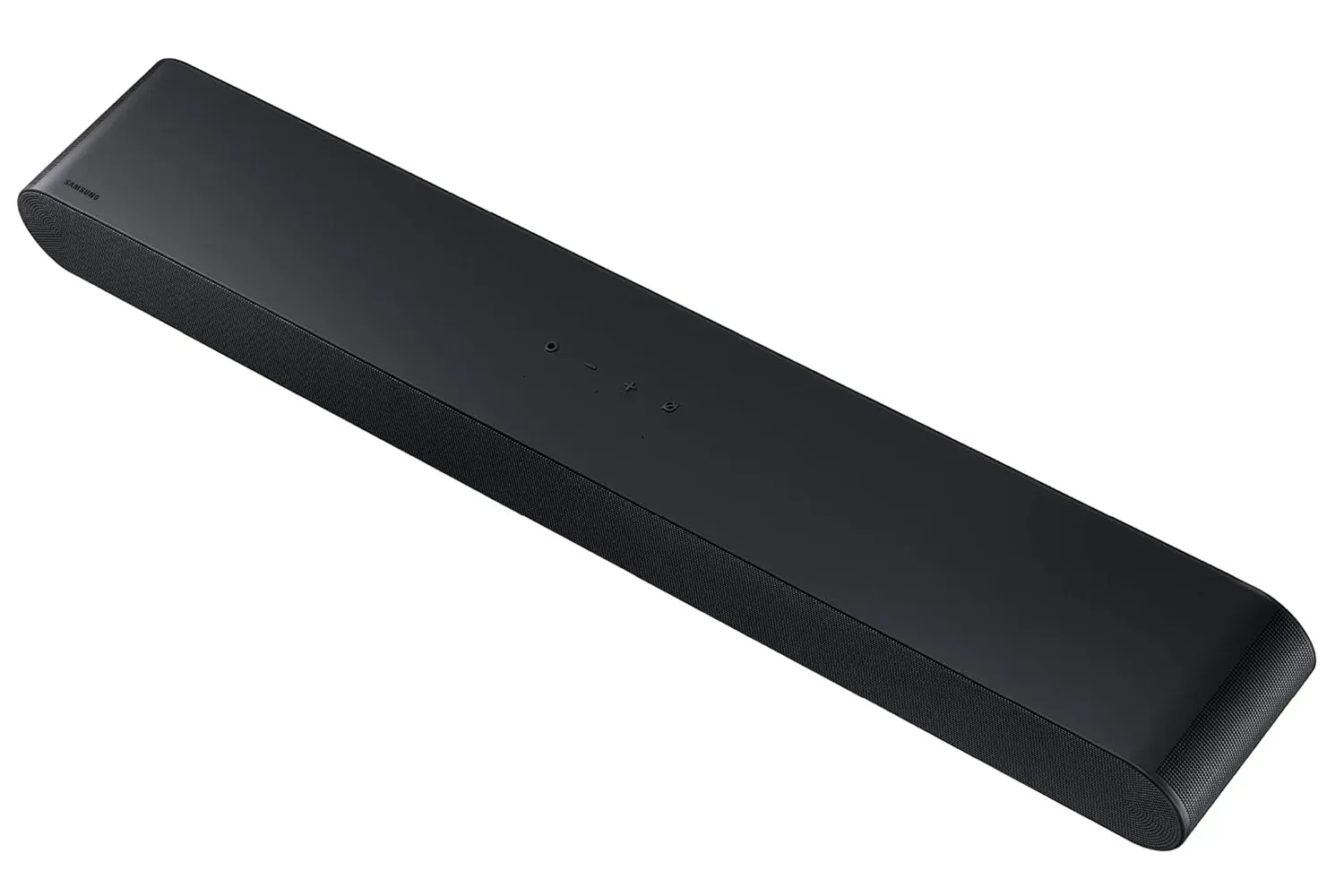
Samsung’s S60D 5.0-channel soundbar has dropped to $298 on Amazon, a reduction of 26% from its stated $400 list price. That puts an all-in-one Dolby Atmos soundbar below $300 without requiring buyers to find floor space for a separate subwoofer.
For a gaming and TV setup, the appeal is less about adding another glowing box to the entertainment unit and more about simplifying the one already there. The S60D combines its bass hardware inside the bar, supports wireless Dolby Atmos where the rest of the setup permits it, and includes automatic room tuning. It also has a few features that become more meaningful for people already using a compatible Samsung TV—most notably Q-Symphony and Game Mode Pro.
There is an important qualifier in that list: the S60D is broad in several ways, but not every headline feature applies equally to every television. Its core soundbar functions, built-in Alexa, Chromecast, AirPlay 2 and SmartThings support are useful across a range of households. Q-Symphony and the automatic gaming mode, however, are tied to Samsung television compatibility. Shoppers with another TV brand should assess the S60D first as a compact soundbar, rather than paying for ecosystem benefits they will not receive.
A single-bar approach to TV and game audio
The S60D is described as a 5.0-channel soundbar. In plain terms, the “5” refers to five audio channels, while the “.0” means there is no separately designated external subwoofer channel in the package. Rather than shipping a wireless subwoofer that needs its own power outlet and a place on the floor, Samsung builds the low-end hardware into the soundbar itself.
That design solves real setup issues. A separate subwoofer can create cable-routing and placement decisions even when its connection to the bar is wireless, because it still needs power. It can also be awkward in a small living room, bedroom or desk-adjacent gaming space, where the floor is already occupied by consoles, charging stations, seating and the occasional controller that somehow migrated under the TV stand.
The usual compromise with an integrated design is bass performance. Larger, separate subwoofer enclosures can have advantages because they are not constrained by the soundbar’s dimensions. The supplied information says Samsung’s built-in implementation covers typical living-room listening without obvious gaps, but prospective buyers should still view the S60D’s compactness as a priority choice. Its pitch is a cleaner, simpler all-in-one system—not a claim that physical placement and room size stop mattering.
For gamers, that can be a reasonable trade. Games depend on more than sheer low-end rumble: speech, positional cues, music and effects all compete for attention. A soundbar that reduces the hardware footprint while offering scene-aware processing may be more useful in a mixed-use TV space than a larger multi-piece system that is difficult to arrange properly.
What wireless Dolby Atmos does—and does not—mean
Dolby Atmos is an audio format intended to add a greater sense of height and placement to a sound field. Rather than treating all sound as locked to conventional speaker channels alone, Atmos content can carry information about where certain sounds should appear within a three-dimensional space. The practical result can be a more enveloping presentation when the content, playback device and audio equipment all support it.
The S60D’s wireless-capable Dolby Atmos support means it can receive an Atmos signal without an HDMI eARC cable when the wider setup supports that arrangement. That condition matters. “Wireless” is convenient shorthand, but it is not an assurance that every TV, streaming device or game connection will send Atmos in the same way. Buyers should confirm what their particular television and source devices can output before treating a cable-free Atmos route as guaranteed.
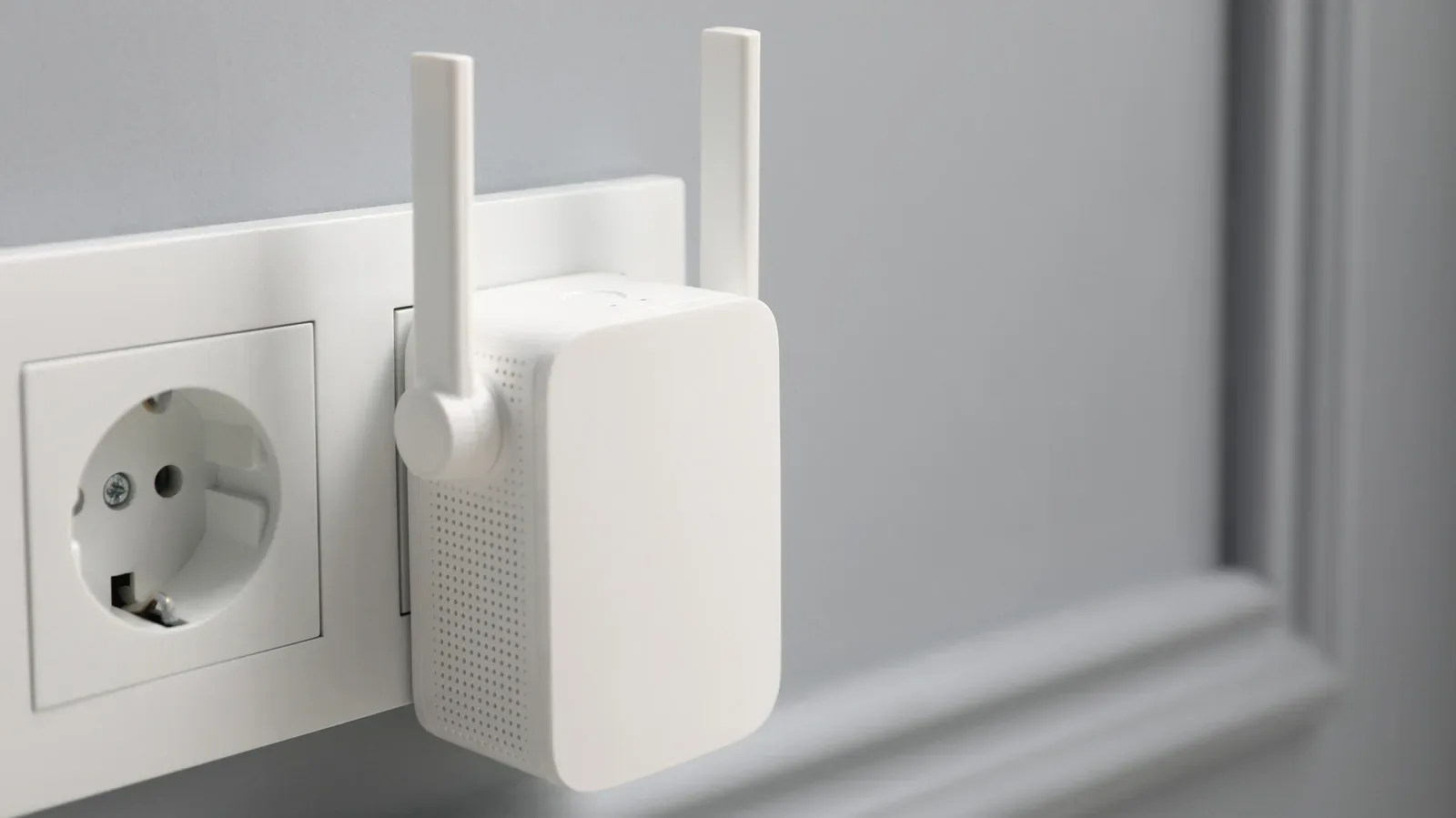
That said, the option is valuable for installations where a long HDMI run or another visible cable would undermine the point of buying a tidy single-bar setup. Reliable wireless networking also matters for wireless streaming features and connected-home operation. Anyone trying to improve connectivity in one difficult room may find this practical network guide relevant: Wi-Fi extenders can help one room, but they are not a complete network plan.
Automatic tuning is aimed at the room, not just the content
Samsung includes SpaceFit Sound Pro, which analyzes a room’s acoustics and automatically adjusts equalization. Equalization, often shortened to EQ, is the balancing of frequency ranges—such as bass, midrange and treble. In an ideal installation, the soundbar would have open space and a straightforward seating position. Real rooms are rarely ideal. Furniture, alcoves, uneven layouts and reflective surfaces can all influence what reaches the listener.
Automatic calibration does not change the physical dimensions of a room or turn every placement into a perfect one. Its practical role is to compensate for some of the tonal effects that a room creates. This is particularly relevant to the S60D because its all-in-one form factor will appeal to people placing it in constrained spaces in the first place.
SpaceFit Sound Pro is joined by Adaptive Sound, which analyzes content in real time and can raise dialogue-forward audio when appropriate. Samsung also identifies a dialogue-focused function called Active Voice Analyzer, or AVA. Its stated purpose is to keep voices above the room’s noise floor—the general level of background sound in the space.
That is potentially useful well beyond films. Modern games often place mission instructions, character dialogue, environmental sound and music in the same dense audio mix. Clearer voices can make story scenes and spoken cues easier to follow, especially if household noise is competing with the TV. It should not be confused with a magical fix for every poor mix, but it is a relevant convenience feature for people who regularly reach for subtitles or the volume control when dialogue arrives.
The Samsung TV advantages are real, but conditional
Q-Symphony is one of the S60D’s more distinctive features. With a compatible Samsung TV, it coordinates the soundbar with the television’s own speakers instead of disabling the TV speakers when the soundbar is active. The intended result is more speaker surface area operating together.
This is an ecosystem feature, not a universal soundbar benefit. It does not apply when paired with a Sony or LG television, for example. That does not make the S60D unsuitable for those TVs; it simply means the purchase case changes. A non-Samsung owner is buying the bar for its integrated bass design, Dolby Atmos capability, calibration tools and smart connectivity, rather than for combined TV-and-soundbar playback.
Game Mode Pro follows a similar compatibility boundary. It activates automatically when a connected compatible Samsung TV detects a gaming source. Samsung says the mode optimizes the soundbar’s upward-firing speakers and acoustic beam for 3D audio positioning.
“Upward-firing” refers to speakers aimed toward the ceiling rather than directly at the listener. They are used to help create a sense of sound overhead through reflection. An acoustic beam is Samsung’s term for directed sound processing intended to improve positional effects. For players, the goal is a more spatial presentation: not merely making effects louder, but helping audio feel placed around or above the seating area.
As with any automated mode, its convenience is the key selling point. A compatible Samsung TV can recognize the gaming source and switch behavior without asking the user to manually hunt through audio menus every session. For a household that moves between games, movies and streaming apps on one display, that kind of handoff can be more valuable than another niche setting hidden behind a remote-control button.
Wireless listening and smart-home coverage
The S60D’s feature list extends beyond television audio. Alexa is built in, while Chromecast and AirPlay 2 offer ways to send audio from phones and tablets. Chromecast is commonly used for casting supported audio from compatible devices and apps; AirPlay 2 is Apple’s wireless audio system. Together, they make the bar more plausible as a general room speaker rather than hardware used only when the television is on.
SmartThings integration gives the bar a place in Samsung’s connected-device ecosystem. For an existing SmartThings household, that may reduce the number of separate apps needed for routine control. For everyone else, it is simply an option rather than a requirement.
The strongest case for the S60D at the listed $298 price is therefore specific: it suits someone who wants a cleaner living-room or gaming setup, values automatic sound adjustment, and either owns a compatible Samsung TV or is comfortable treating the Samsung-only features as extras. The discount brings those capabilities below the $300 mark, but compatibility remains the detail worth checking before adding it to a cart.
What to verify before buying
- TV brand: Q-Symphony and Game Mode Pro’s automatic behavior are benefits for compatible Samsung TVs, not all televisions.
- Atmos path: Wireless Dolby Atmos depends on the capabilities of the overall setup. Check the television and playback sources, not just the soundbar’s specification.
- Room priorities: The built-in subwoofer favors a tidy, single-unit installation. Those seeking a separate bass unit should recognize that this is a different design approach.
- Network needs: Chromecast, AirPlay 2, Alexa and SmartThings are most useful when the home network is dependable where the soundbar is installed.
- How the TV is used: Dialogue assistance and gaming-specific processing are most relevant for viewers who switch frequently between games, streaming and television.
Shop the products
Check current price, model and availability at the retailer.