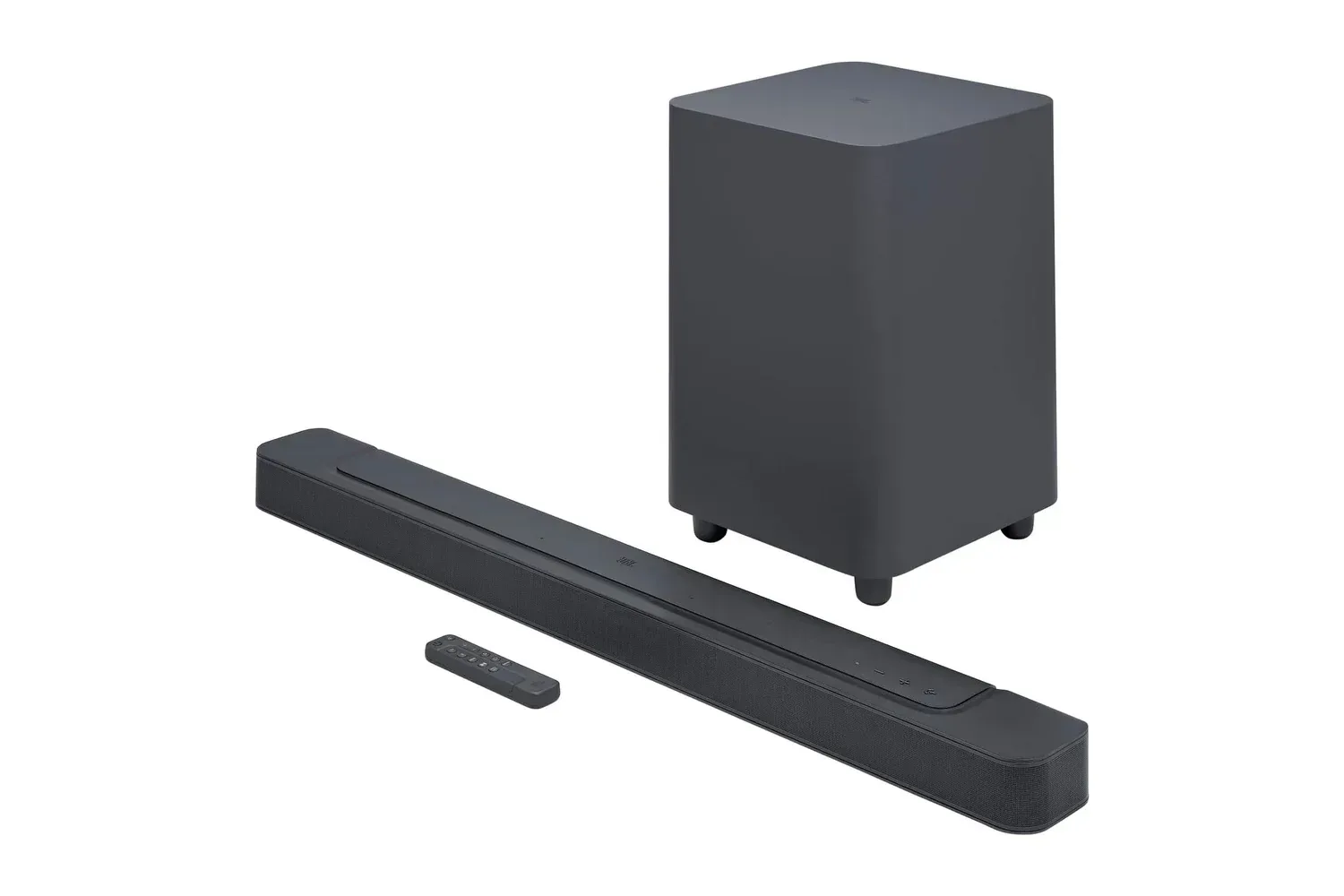
JBL’s Bar 500 soundbar is listed at $400, down from $550. That is a $150 reduction, or 27% off the stated price, for a home-theater package built around a 5.1-channel soundbar and a separate 10-inch wireless subwoofer.
For players trying to improve TV audio without adding a full set of rear speakers and lengthy cable runs, the important part of this setup is its approach: JBL combines Dolby Atmos and its MultiBeam processing to pursue a broader, more enveloping sound field from the front of the room. It also includes HDMI eARC, 4K Dolby Vision passthrough, built-in Wi-Fi streaming support, and app-based setup controls.
That does not turn a single soundbar into the same physical arrangement as a system with discrete speakers behind the couch. It does, however, make the Bar 500 a potentially practical middle ground for people who want more scale, bass and dialogue clarity than television speakers can provide, while keeping installation comparatively simple.
What comes with the JBL Bar 500
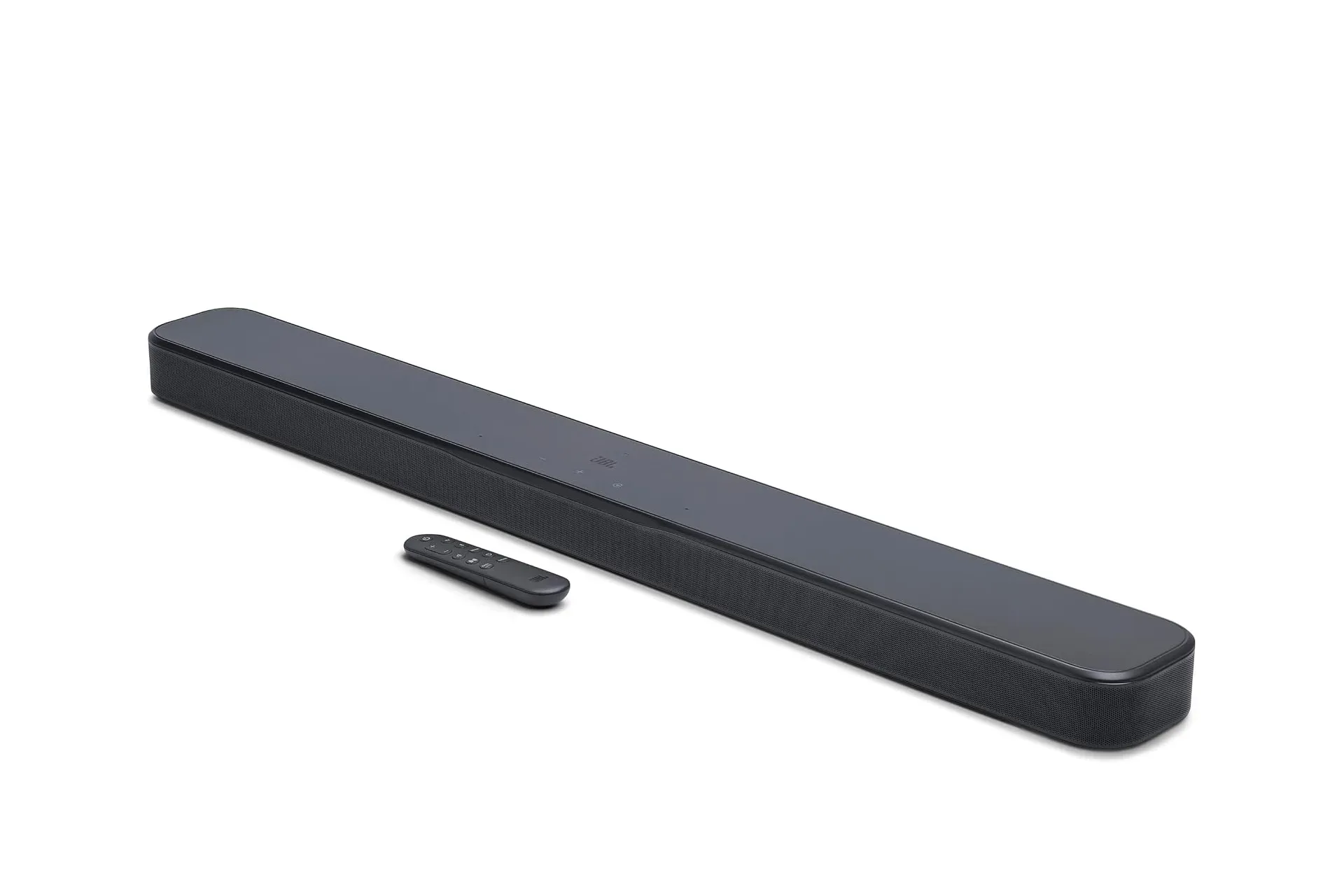
The listed system consists of a 5.1-channel soundbar plus a 10-inch wireless subwoofer, with 590W of total system power. The bar measures about 40 inches wide and 2.2 inches tall, dimensions intended to make it suitable for placement beneath many televisions.
The separate subwoofer handles low-frequency effects. In practical terms, that is the portion of a game or film mix responsible for weight: engine notes, explosions, thunder, musical kick drums and other bass-heavy sounds. Television speakers and compact all-in-one bars often have limited room to move air at the low end. A dedicated 10-inch subwoofer is meant to give those effects more presence.
“Wireless” here applies to the connection between the subwoofer and soundbar; the subwoofer still needs power wherever it is placed. That flexibility can be useful when a room’s best bass position is not directly beside the TV stand, but it also means buyers should consider where an outlet is available before treating placement as completely unrestricted.
Dolby Atmos and MultiBeam: what they are trying to do
Dolby Atmos is an audio format associated with positioning sound as objects within a three-dimensional space. In supported film and television content, the intended effect can include movement overhead as well as around the listener. The Bar 500 supports Dolby Atmos, while JBL’s MultiBeam technology is designed to widen the perceived sound field using reflections from the room’s walls.
MultiBeam’s role is especially relevant to the Bar 500’s no-rear-speaker proposition. Rather than placing physical surround speakers to the left, right and behind the seating position, it directs sound in ways intended to bounce from side walls and create the impression of sound arriving from outside the bar’s physical width.
That is a room-dependent technique. Walls, room shape, furniture, openings and the distance from the listening position can all affect how reflections behave. The supplied JBL One app includes controls for adjusting surround intensity, allowing users to tune the amount of perceived surround effect to their room and preference.
This is also why expectations matter. MultiBeam and Atmos processing are geared toward immersion and scale from a compact front-of-room installation. They are not a promise that every room will reproduce the same positional effect, nor do they remove the physical differences between reflected sound and dedicated rear channels. For many living rooms, though, avoiding extra speakers is precisely the point.
A connection setup that suits consoles and streaming boxes
HDMI eARC is one of the Bar 500’s key conveniences. eARC, short for Enhanced Audio Return Channel, allows a compatible TV and soundbar to exchange audio over a single HDMI connection. The straightforward benefit is less cabling between the screen and the audio system.
The Bar 500 also supports 4K Dolby Vision passthrough. Passthrough means a connected device, such as a game console or streaming player, can run through the soundbar on its way to the TV without giving up its 4K Dolby Vision video signal. This arrangement is useful for a setup where the soundbar is being used as an HDMI link in addition to an audio device.
For gaming, the appeal is clear: the console can remain part of a clean, TV-centered setup while the audio hardware takes on the task of improving game sound. The supplied details do not specify console-specific audio modes, latency figures or HDMI bandwidth capabilities beyond the stated 4K Dolby Vision passthrough, so those requirements should be checked carefully by shoppers whose purchase depends on a particular display feature.
People weighing a soundbar against wireless speaker options may also want to consider the role of the TV connection. A device made primarily for music playback can be very useful elsewhere in a home, but a soundbar’s HDMI eARC support is designed around a television-first system. That distinction is worth keeping in mind alongside reports on wireless speaker connectivity and persistent playback behavior.
Dialogue, calibration and day-to-day controls
JBL includes PureVoice dialogue enhancement, described as an algorithm that improves voice clarity even at higher volume levels. Dialogue processing can be valuable during games, movies and shows where spoken lines have to compete with effects and music. It is not a substitute for a well-balanced original mix, but it gives users another tool when voices are getting lost in a dense soundtrack.
The JBL One app handles a significant part of the Bar 500’s setup and adjustment process. Along with surround controls, it offers Easy Sound Calibration, which automatically configures the system for the room. The practical advantage is that users are not required to begin with manual speaker-distance and level settings typical of more elaborate home-theater arrangements.
The system also has built-in Wi-Fi, AirPlay, Alexa Multi-Room Music and Chromecast built-in. JBL says this provides access to more than 300 streaming services, covering use cases such as music, podcasts and internet radio played directly through the soundbar. Wi-Fi additionally supports automatic software updates.
That broader streaming support makes the Bar 500 more than a TV-only accessory. When the screen is off, it can still operate as a living-room music system with a dedicated subwoofer. Conversely, someone who only needs better dialogue from TV shows and never plans to stream music may find those features less important than the HDMI, calibration and physical fit considerations.
Who the $400 package makes the most sense for
At the listed $400 price, the JBL Bar 500’s clearest proposition is convenience with meaningful home-theater hardware included. A 10-inch wireless subwoofer, Dolby Atmos support, room-calibration tools and HDMI eARC are all part of one package rather than items to assemble separately.
It may be a compelling fit for a player or movie watcher who wants stronger bass and a larger perceived soundstage but does not want rear speakers in the room. It is also suited to those who value having streaming, TV sound and app-based controls within one system.
Before buying, measure the available space below the television, identify a power location for the subwoofer, and think honestly about the room’s layout. MultiBeam’s reflected surround approach is tied to the room itself, while the subwoofer’s performance and placement options depend on access to power. Buyers who need a specific advanced console-video feature should also verify it independently, as the available details only establish 4K Dolby Vision passthrough.
Still, the core value proposition is easy to understand: the Bar 500 aims to make games, movies, television and music sound bigger without demanding a complicated multi-speaker installation. The current listed price cuts $150 from the stated $550 price, making it a notable option for shoppers who want a Dolby Atmos-capable soundbar with a separate wireless subwoofer.
Shop the products
Check current price, model and availability at the retailer.