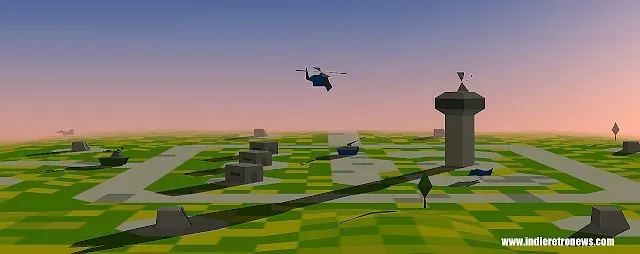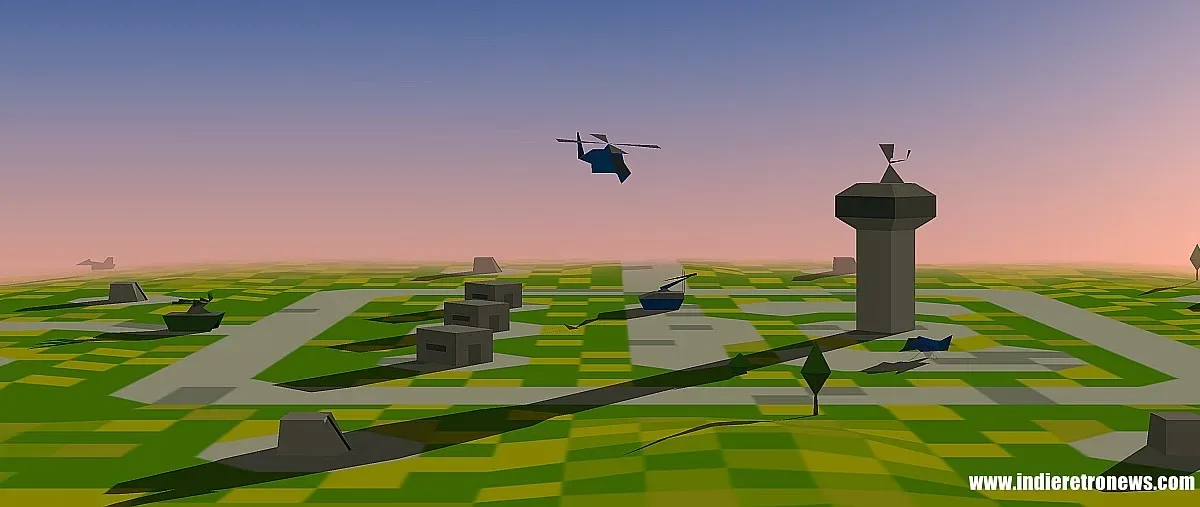
ZeeWolf and ZeeWolf 2: Wild Justice, two Amiga 3D shoot ’em ups from Binary Asylum, are being overhauled for modern PC as the Wolf Duology. The unofficial project from Almost There Games combines the 1994 original and its 1995 follow-up in one package, preserving their low-polygon gunship action while adding a contemporary presentation and usability features.
The proposed package covers 64 missions across both campaigns. Its focus is not limited to simply firing at anything that appears in front of the cockpit: players fly a prototype gunship through hostile areas on land, at sea and in the air, taking on combat as well as rescue, escort, transport, defence and seek-and-destroy assignments.
That variety is important to the identity of the duology. The player’s vehicle is armed, but it is also a machine with operational limits. Fuel and ammunition are finite, carrier resupply is part of the loop, and some objectives require landing gear or winch use. In other words, the missions are built around managing a gunship rather than treating it as an endlessly supplied flying turret.
For a related look at how older games solved very different design constraints, see our feature on Vault Boy and an old RPG interface problem.
What the Wolf Duology modernization includes
The modernization is described as delivering a widescreen, high-resolution 3D presentation at modern frame rates. It also introduces modern lighting, dynamic shadows and reflective water. Those changes target the way the games look on current displays without replacing the fundamental low-poly visual identity of the originals.
Low-poly refers to 3D models made with relatively few polygons, the flat geometric surfaces used to construct objects and environments. In games of this era, that economy was closely tied to the hardware’s rendering limits. Here, the stated aim is to keep that original identity intact while improving image clarity, smoothness and environmental effects.
Widescreen support likewise has a practical purpose beyond filling more of a monitor. A wider aspect ratio can change how much of the surrounding landscape is visible at once, which may be particularly useful in a game that asks the player to track threats and targets across open spaces. It does not, by itself, indicate altered mission design; it is a presentation upgrade.
Players who prefer the older look will have a classic graphics mode available. Alongside the visual options, the project lists support for modern keyboards and analog controllers. An analog controller uses a stick with a range of directional input rather than only on-or-off directions, potentially allowing more graduated steering and aiming movement than a digital directional control.
Related coverage includes Wolf Duology Modernizes ZeeWolf and ZeeWolf 2 for PC.
A mission set built around more than air combat
The Wolf Duology’s stated feature list points to three weapon systems: a cannon, rockets and air-to-air missiles. The enemy roster spans land, sea and air forces, while vehicles, buildings and designated objectives can be destroyed. Taken together, that gives missions several possible pressures: hostile units may demand immediate attention, but infrastructure or a specific target can still be the actual condition that decides success.
The non-combat mission types add another layer. A rescue objective may prioritize reaching and retrieving something safely. Escort and defence missions shift attention toward protecting another unit or position. Transport work makes the gunship’s movement and landing-related systems more central, while seek-and-destroy tasks foreground locating and eliminating targets. The supplied details do not establish how every individual mission handles those goals, but they do make clear that the campaigns are intended to range beyond straightforward elimination sorties.
Landing gear and winch operations are especially notable because they tie the player to the world below the aircraft. A winch is a cable-based mechanism used to lift or lower a load. Its inclusion suggests that at least some tasks are designed around careful positioning rather than speed alone. Limited fuel and ammo add a planning consideration: staying in the fight must be balanced against the need to return to a carrier for resupply.
In ZeeWolf 2: Wild Justice, players can also remotely control additional vehicles. That feature distinguishes the sequel within the combined release by allowing action beyond the main gunship. The available information does not specify which vehicles can be operated or how those sequences are structured, so it is best viewed as a confirmed extra capability rather than a complete description of the sequel’s mission mechanics.
Quality-of-life additions and what they mean
The PC version is also slated to include save slots, Easy-mode checkpoints, high scores and in-game achievements. These are modest additions on paper, but they address several common friction points when revisiting older action games.
Save slots let players maintain more than one stored progression state, useful for separating a current campaign from an earlier point they may want to revisit. Checkpoints are restart points placed during a mission or sequence; the listed Easy-mode checkpoints may make the games more approachable for players who do not want a failed attempt to erase as much progress. The description limits that checkpoint feature to Easy mode, and does not provide further difficulty details.
High scores preserve a traditional score-chasing incentive, while in-game achievements provide discrete goals or milestones within the package. No individual achievement requirements have been detailed. Their presence nevertheless gives players an additional way to track progress through a pair of campaigns whose core appeal lies in demanding, varied missions.
Why a classic-mode option matters
A visual overhaul can be a difficult balance for a revival of an older 3D game. Greater resolution, smoother movement, reflective water and dynamic shadows can improve legibility on modern hardware, yet they can also alter the particular texture players remember. Offering classic graphics mode alongside the enhanced rendering is therefore a meaningful part of the project’s approach.
It creates two routes into the same games: one emphasizing a cleaner, updated technical presentation, and one oriented toward the earlier visual style. That is not the same as claiming a perfectly identical historical experience—modern keyboard and controller support, save options and other additions still shape how the package is played—but it acknowledges that the original low-detail presentation has value of its own.
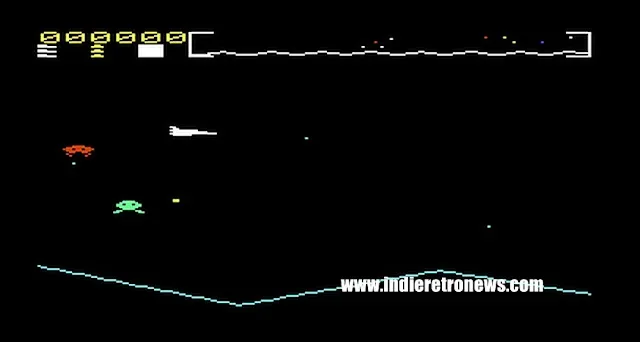
The plan also fits a wider interest in bringing older computer games to current machines without discarding what made them recognizable. An unofficial Stargate-inspired VIC-20 homebrew, for example, shows another route for revisiting vintage game design: adapting the spirit of a classic to a different technical setting. Wolf Duology instead centers on revisiting two existing Amiga campaigns with updated PC-facing features.
What is confirmed, and what remains unspecified
The currently described Wolf Duology feature set is substantial: both games, 64 missions, modernized 3D graphics, a classic visual setting, keyboard and analog-controller support, three weapon systems, destructible targets, varied objective types, resource management, sequel-specific remote vehicle control, and several convenience features.
However, no price, release date, storefront, system requirements or detailed configuration options have been supplied. There is also no detailed breakdown of the 64-mission split between the two games, nor a mission-by-mission explanation of the new presentation settings. Until those particulars are provided, the clearest expectation is a modern-PC revival intended to make ZeeWolf and ZeeWolf 2: Wild Justice easier to play on contemporary setups while retaining their distinctive polygonal gunship character.