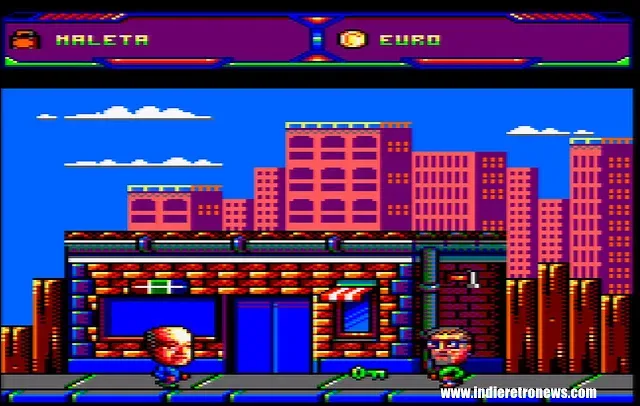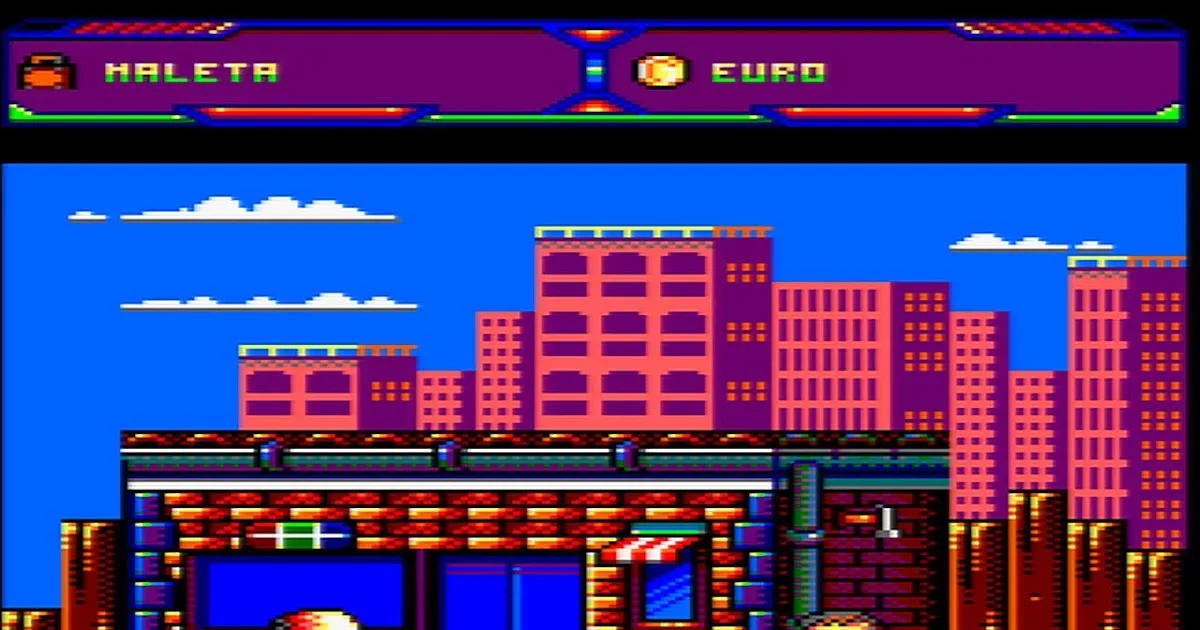
The Amstrad CPC’s modern software library has another new entry in Roland&Mej Build, an adventure platformer from The Qproyect. Its premise turns the era’s computer-brand rivalries into the game’s central joke and its central mission: Roland and Marc are now technology spies, tasked with entering competing corporate headquarters and stealing plans for celebrated 8-bit computers.
That assignment takes the pair into offices associated with Spectrum, Commodore and MSX. The route is not presented as a simple sightseeing tour through old computer history. Each location is guarded by a named tech-pioneer figure—Clive, Jack and Nishi—and being caught means an immediate ejection from the premises. The result is a platforming setup built around infiltration, pressure and the prospect of being sent back out when a guard spots the intruders.
It is a distinctly self-aware use of the Amstrad CPC as a platform. Rather than treating the machine as merely a target for a retro-styled game, Roland&Mej Build makes the wider 8-bit scene part of its fiction. Spectrum, Commodore and MSX are not just names in the background; they are the rival destinations Roland and Marc must breach in pursuit of the schematics.
An 8-bit corporate caper
The game’s stated objective is to fast-track the theft of blueprints for the market’s most legendary 8-bit computers. That gives the platforming an espionage frame: the protagonists are infiltrators, the offices are hostile ground, and detection has an explicit consequence. Clive, Jack and Nishi are described as personally guarding their respective turf, turning the historical-brand nods into active obstacles rather than purely decorative references.
“Adventure platformer” is a useful description here, but it should not be read as a detailed list of mechanics that has not been provided. The available information establishes playable characters, corporate locations, guards and a schematic-stealing goal. It does not set out the number of stages, the structure of the campaign, controls, enemy patterns, difficulty settings or the precise rules behind being ejected. Those remain details for players to discover from the game itself rather than assumptions to attach to the announcement.
Still, the premise clearly gives the game a personality beyond a generic spy chase. Roland and Marc are placed in an exaggerated version of a technological rivalry, where the prize is not a state secret but the design information behind beloved machines. The comic tension comes from pitching computer-industry history as a covert operation—and from making the people guarding those brand domains part of the danger.
A homebrew project for the CPC
Roland&Mej Build is described as a homebrew release. In this context, homebrew means a new work made for an older platform outside that platform’s original commercial lifespan. The label matters because it identifies the game as contemporary development for vintage hardware, not an unearthed period release or a newly announced remake for modern systems.
The project was built entirely with cpctelera, identified as a popular development toolkit. A development toolkit is the collection of software tools used to make a game; it can help creators organize the work needed to turn art, music, code and game design into software that runs on a particular machine. The supplied details do not specify which individual cpctelera components were used, but the all-in use of the toolkit is an important production note for a CPC-specific game.
Related coverage includes Roland&Mej Build Brings a New Spy Platforming Mission to Amstrad CPC.
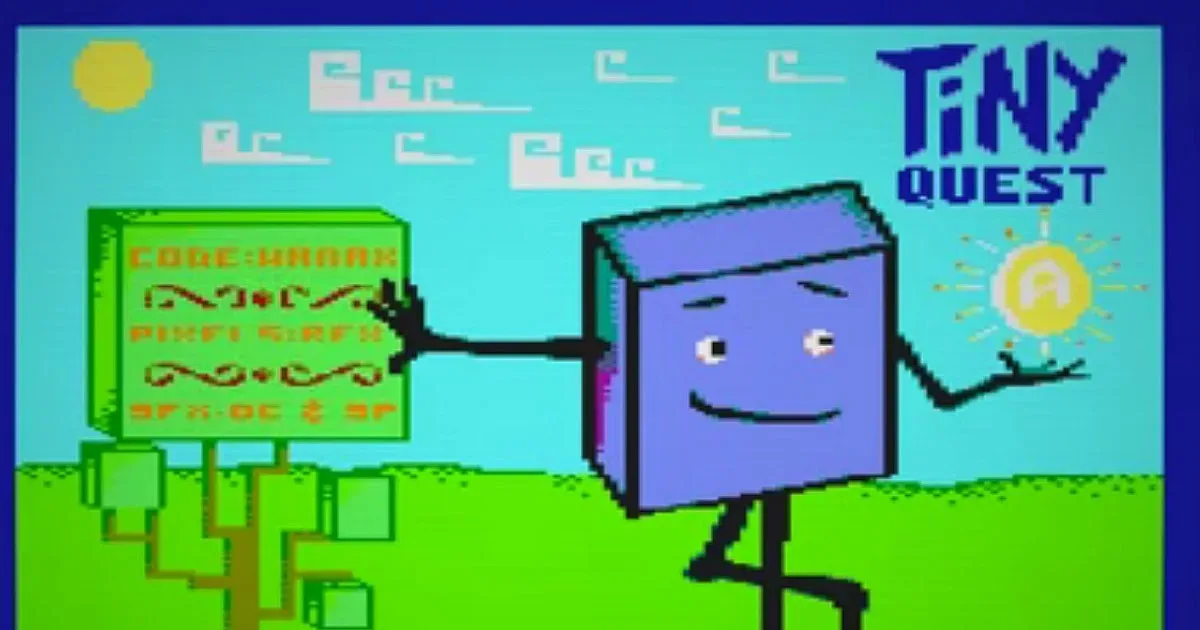
The release also arrives in a moment when the platform is still receiving new work. Readers looking for another recent CPC story can see Tiny Quest’s arrival on the Amstrad CPC. Each project has its own approach, but their presence illustrates why new releases on classic machines remain worth tracking as present-day game development rather than treating them solely as archival curiosities.
A collaborative credit list
The Qproyect’s game is also presented as a broad collaboration. José Antonio Quijada Lopez programmed Roland&Mej Build. TiTan created the in-game graphics, while WYZ composed its chip music. Sencico supplied the cover art, and Fran Quijada designed the physical collector’s edition. SpDizzy Special receives special thanks.
Those credits distinguish several parts of the production that can otherwise disappear behind the single word “homebrew.” Programming refers to the work of making the game function on its intended hardware. In-game graphics are the visual material players encounter during play, while cover art serves the release’s packaging or presentation. Chip music is the game’s music created for the sound capabilities associated with the machine. The separate collector’s-edition design credit further identifies a physical edition as part of the project’s presentation.
Importantly, the available details name the physical collector’s edition and the person who designed it, but do not provide a release date, price, retailer, edition contents, production quantity or regional availability. Prospective buyers should therefore avoid treating the collector’s-edition mention as confirmation of those specifics. Likewise, no details have been provided here on digital distribution, supported media formats or how to obtain the game.
What makes the premise fit the platform
Roland&Mej Build’s idea works on two levels. On the surface, it is a compact platforming mission: enter headquarters, evade the people in charge and secure the target schematics. Beneath that, it stages a playful meeting between the Amstrad CPC and other landmark names from the 8-bit computing landscape. A game running on one classic computer sends its protagonists after secrets held by other classic-computer rivals.
That approach avoids treating old technology as a museum exhibit. The competing brands become the setting for a light spy story, while the team’s credits show a current group of contributors using CPC-focused tools to make a fresh game. The material supplied describes the project as made by fans for fans, and that fan perspective is visible in the premise itself: it assumes the audience will enjoy seeing era-defining computer identities transformed into guarded offices and high-stakes targets.
For players, the practical takeaway is straightforward. Roland&Mej Build is a newly released CPC adventure platformer with Roland and Marc as its playable spies, three rival corporate locations in its setup, and an immediate-failure threat when the guarding figures catch them. For retro-development watchers, it is also a cpctelera-built collaboration with distinct programming, graphics, music, cover-art and collector’s-edition design roles.
There is room for the game’s humor to land precisely because the stakes are knowingly small-scale and specific: two spies, several guarded offices and the supposedly indispensable plans for legendary 8-bit machines. Roland&Mej Build turns that narrow obsession into the mission, and gives the Amstrad CPC another modern homebrew tale built around the history of the machines competing beside it.