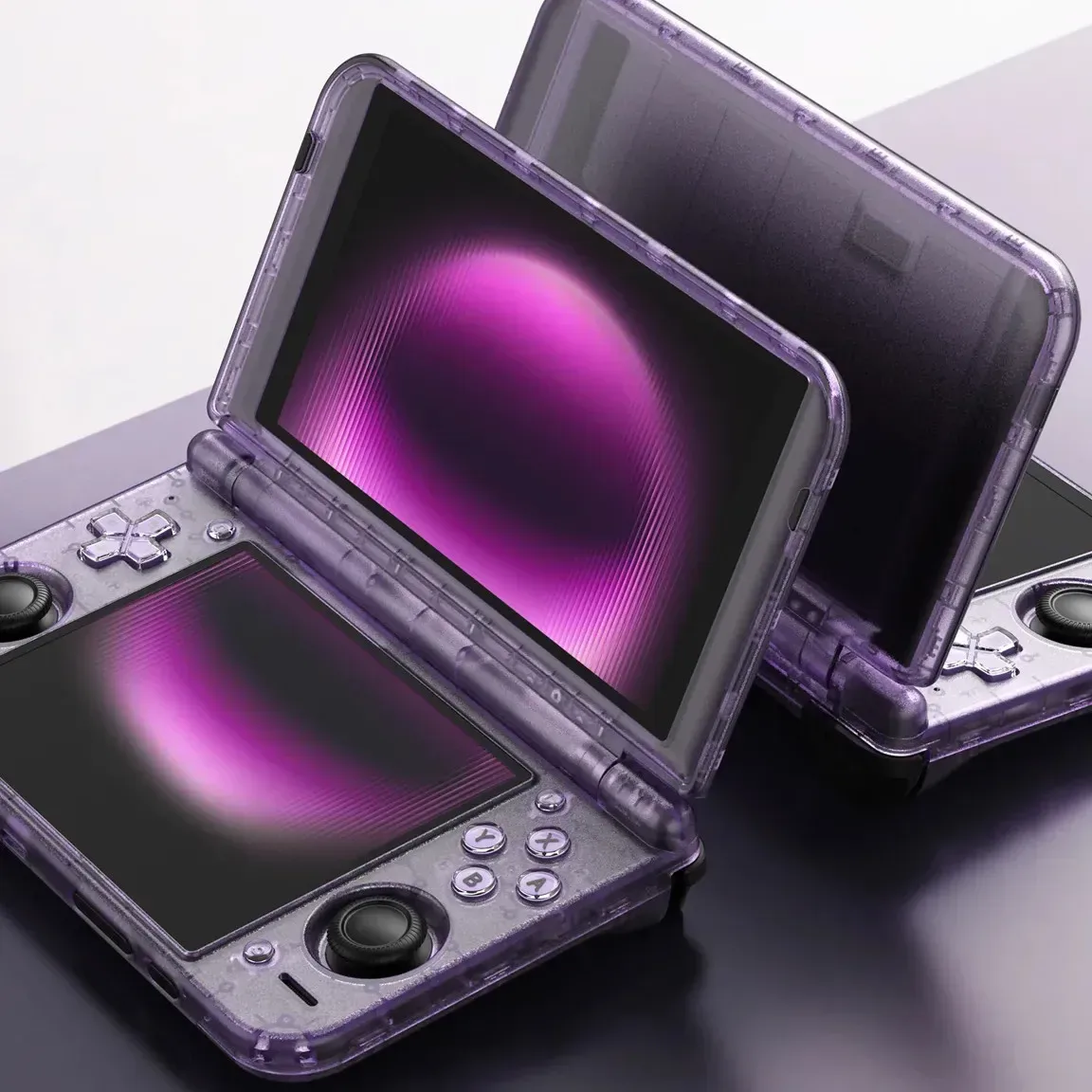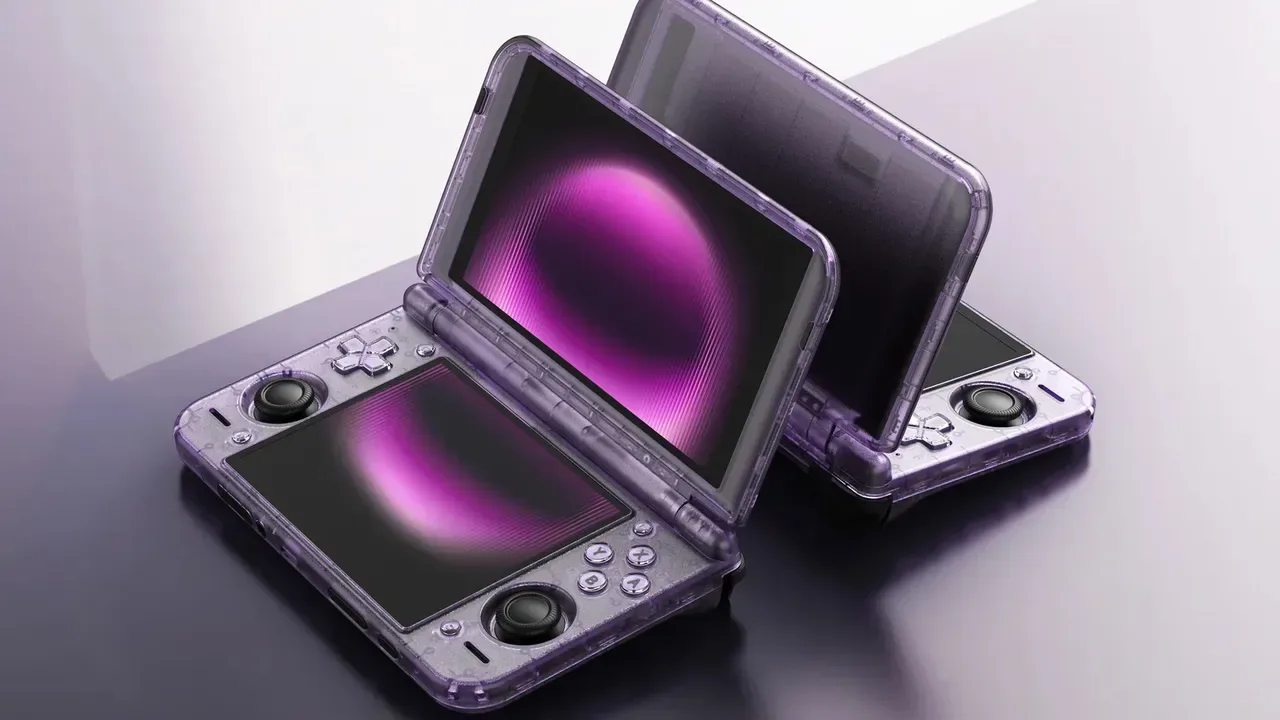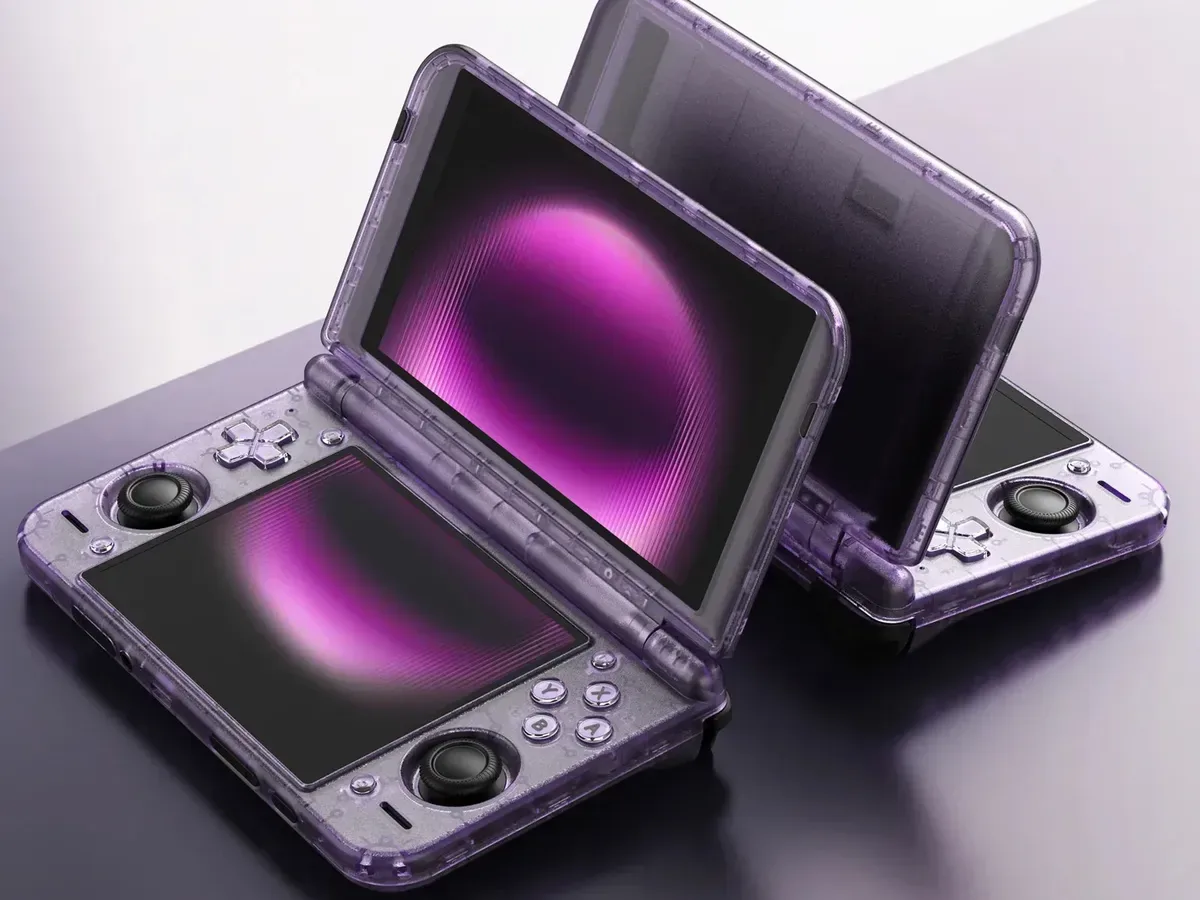
The modern handheld boom has room for machines chasing raw PC performance, machines built around current console libraries, and machines with a much more particular mission: recreating the two-screen rhythm of Nintendo’s DS and 3DS families. Retroid’s upcoming Pocket Duo falls squarely into that final camp. With two AMOLED displays, Android 16, physical controls, and an entry price starting at $150, it is positioning itself as a purpose-built option for players whose retro backlog does not fit neatly onto a single panel.
That focus matters. DS and 3DS software was designed around a hardware idea as much as a collection of buttons: one display for the main action and another for maps, menus, inventories, touch input, puzzles, or an entirely separate viewpoint. A conventional single-screen handheld can run games from those systems, but it has to make compromises in layout, screen switching, scaling, or touchscreen placement. A clamshell-style dual-screen device does not automatically solve every emulation concern, yet it addresses the central visual problem in a way that feels far closer to the original format.
Two AMOLED screens, with room for two very different jobs
The Pocket Duo’s primary display is a 5.5-inch, 1080p AMOLED panel. Beneath it sits a 4.5-inch screen at 960p, also AMOLED. On paper, that gives the upper screen the larger canvas while retaining a substantial lower display for touch-driven interfaces and information-heavy layouts.
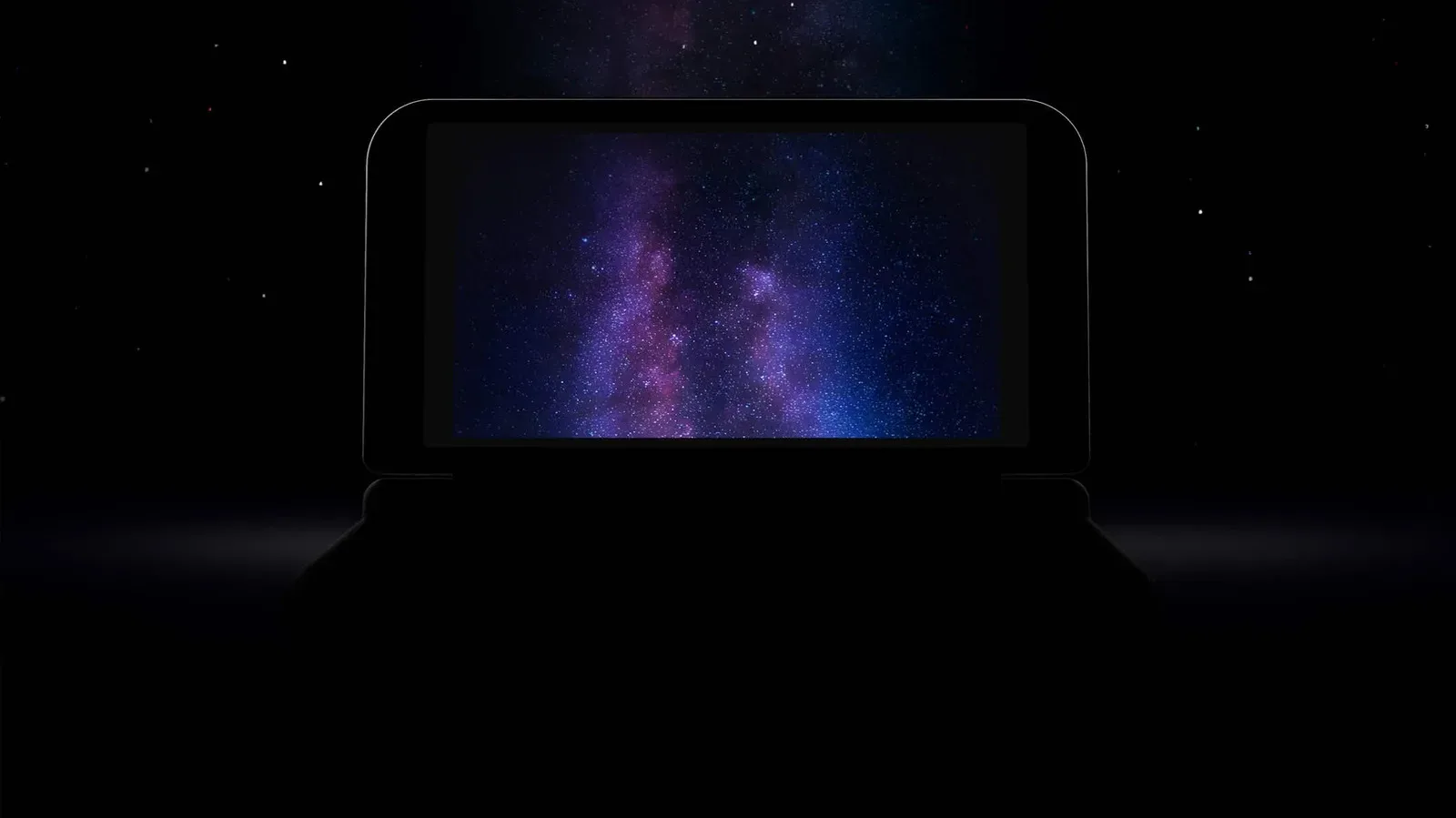
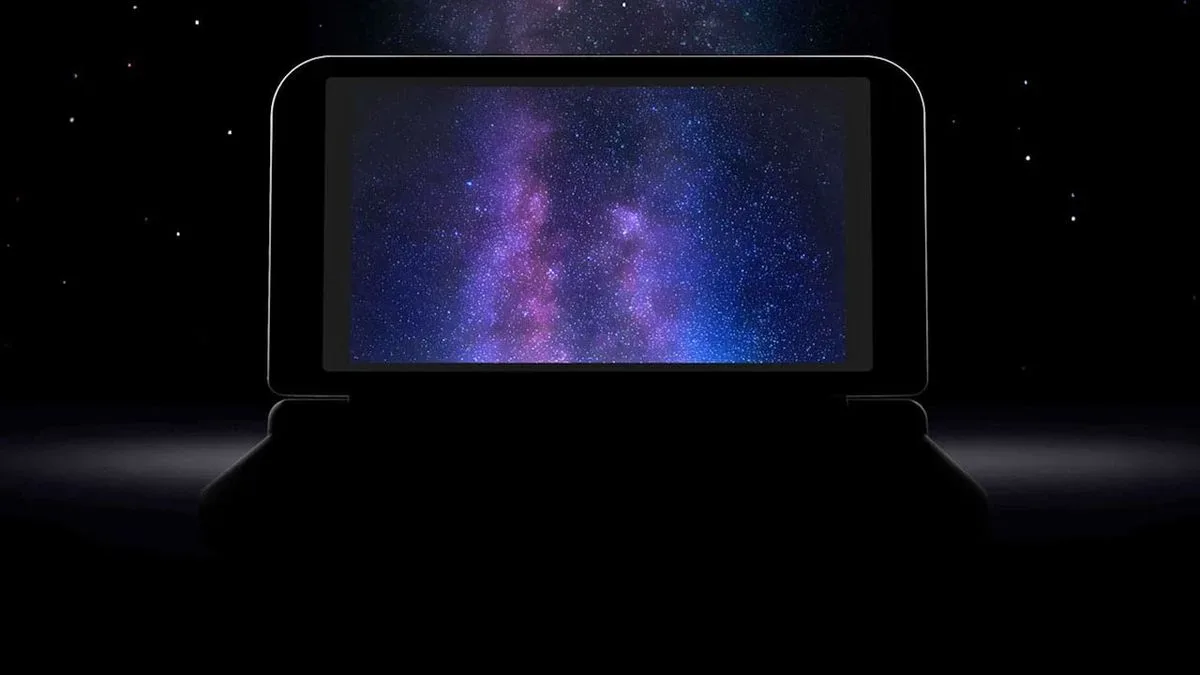
AMOLED is an especially eye-catching specification in a retro-oriented handheld. The technology can provide deep blacks and vivid color, which could make compatible games, Android apps, menus, and video look excellent. At the same time, display quality is only one part of the experience. How well a dual-screen handheld works will ultimately depend on practical matters that remain unknown: hinge construction, control placement, touchscreen behavior, speakers, battery endurance, cooling, ergonomics, software polish, and the ease of configuring emulators across two separate panels.
Those unanswered questions are important because the Pocket Duo has not launched yet. The published specifications and pricing establish an intriguing direction, but they are not a replacement for independent testing. Anyone interested in the device should treat performance claims, thermals, battery life, and day-to-day usability as items still awaiting confirmation.
Pocket Duo pricing: flagship versus Lite
Retroid has outlined two versions of the hardware. The standard Pocket Duo is the higher-spec model, priced at $270. It includes 8GB of RAM and 128GB of storage. A pre-order coupon is said to reduce that price by $20, bringing the effective cost to $250 for buyers able to use it.
The Pocket Duo Lite is listed at $150. Its RAM and storage are each half of the flagship configuration, meaning 4GB of RAM and 64GB of storage. That $120 separation makes the Lite more than a token budget edition. It creates a potentially meaningful choice: spend as little as possible on the dual-screen design, or move up for additional memory and internal space that may better suit a broader Android library and more demanding use cases.
- Retroid Pocket Duo: $270; 8GB RAM; 128GB storage.
- Pre-order coupon: $20 off the standard Pocket Duo price, where applicable.
- Retroid Pocket Duo Lite: $150; 4GB RAM; 64GB storage.
- Operating system: Android 16.
- Processor: Qualcomm Dragonwing Q-7790.
- Displays: 5.5-inch 1080p AMOLED primary display plus a 4.5-inch 960p AMOLED secondary display.
The available finishes lean into portable-gaming nostalgia. Reported color choices include shades reminiscent of GameCube purple, a grayish white associated with classic Game Boy hardware, clear blue, and atomic purple. Transparent and purple handhelds have long been a highly effective shortcut to the part of the brain that remembers carrying cartridges in a jacket pocket, so the palette is not exactly subtle. It does, however, fit the audience.
Related coverage includes Retroid Pocket Duo Targets DS and 3DS Fans With Dual AMOLED Screens.
Android 16 broadens the device beyond one generation of games
Running Android 16 means the Pocket Duo is not restricted to one narrow category of software. The Google Play ecosystem provides access to native Android games and apps, while Android’s longstanding emulator support gives users multiple possible routes for older systems. The dual displays make DS and 3DS emulation the obvious headline use, but the handheld is also intended to accommodate other retro platforms.
There is a useful distinction here between a device being capable of emulation and an individual game being guaranteed to run perfectly. Compatibility can vary by title, emulator, settings, and future software updates. Some games may benefit greatly from the second panel; others may expose quirks involving controls, touch functions, unusual display layouts, or performance demands. The Dragonwing Q-7790 is central to the Pocket Duo’s potential, but the final verdict will depend on actual emulation results rather than a chip name alone.
Players using emulation should also obtain software legally. Dumping games and system data from cartridges and hardware they own is one lawful route often used for personal preservation and play. The handheld itself is hardware; responsible software sourcing remains the owner’s obligation.
A direct challenge to the AYN Thor’s dual-screen proposition
The Pocket Duo arrives in a small but increasingly interesting class of Android dual-screen handhelds that includes the AYN Thor. The comparison is particularly sharp around price. AYN’s Thor Lite is listed at $259 and uses a Snapdragon 865, while the Thor Base increases the processor to a Snapdragon 8 Gen 2 and carries a $329 price.
Retroid’s $270 standard Pocket Duo therefore lands just above the Thor Lite’s stated price, while sitting well below the Thor Base. The $150 Duo Lite, meanwhile, places a dual-screen Android design at a considerably lower opening number. Specifications do not make this a simple one-to-one contest, especially since each configuration has its own processor, memory, storage, design, and software considerations. Still, the pricing makes Retroid’s intent clear: it wants to be taken seriously by buyers who previously assumed they would need to pay closer to premium territory for a specialized two-screen portable.
The real opportunity is not merely “DS and 3DS games on a handheld.” There are already ways to play those libraries away from original hardware. The appeal is in reducing friction. A compact device that keeps both screens visible, preserves touch access, offers conventional controls, and can also run Android software has the potential to become a convenient all-in-one companion for a particular era of portable gaming.
That era remains culturally significant well beyond the hardware itself. Nintendo’s handheld history still shapes what players expect from on-the-go games, from pick-up-and-play puzzle sessions to sprawling role-playing adventures. For a wider look at that ongoing legacy, see our coverage of Zelda’s four-decade milestone and its enduring place in Nintendo history.
Sold out pre-orders leave the launch date as the biggest missing piece
At present, pre-orders for both Pocket Duo models are sold out. No launch date has been confirmed. That means prospective buyers know the basic hardware outline and pricing, but not when retail availability will begin or when the next chance to place an order will appear.
For handheld enthusiasts, sold-out early allocations are not unusual. Smaller manufacturers frequently make hardware available in limited batches, with later ordering windows following as production and distribution progress. That possibility should not be mistaken for a confirmed restock schedule, however. Retroid has not provided a launch date in the information currently available, and buyers should watch for official ordering updates rather than assuming a particular timeline.
Why the Duo Lite may be the more disruptive model
The $270 Pocket Duo will naturally attract attention for its 8GB/128GB configuration and stronger value proposition against other specialized dual-screen devices. Yet the $150 Pocket Duo Lite could prove just as consequential. It is the version that tests whether a genuinely lower-cost device can deliver the core appeal of the format without making ownership feel like an exercise in compromise.
Four gigabytes of RAM and 64GB of internal storage are modest specifications beside the standard unit, and potential buyers should be realistic about that. More storage is useful for Android apps and larger personal collections, while extra RAM can matter in broader multitasking and software scenarios. But a lower-priced model that retains the two AMOLED displays and Android 16 may be exactly what some enthusiasts want: a focused portable for a focused library, rather than another expensive mini-PC competing to do everything.
For now, the Pocket Duo is a promising specification sheet rather than a finished recommendation. Its display arrangement, Android foundation, color options, and pricing have made it one of the more compelling upcoming retro handhelds for DS and 3DS-minded players. The remaining questions—release timing, supply, build quality, battery life, and real-world emulation behavior—will decide whether Retroid has made a clever niche device or a new default answer for two-screen retro play.