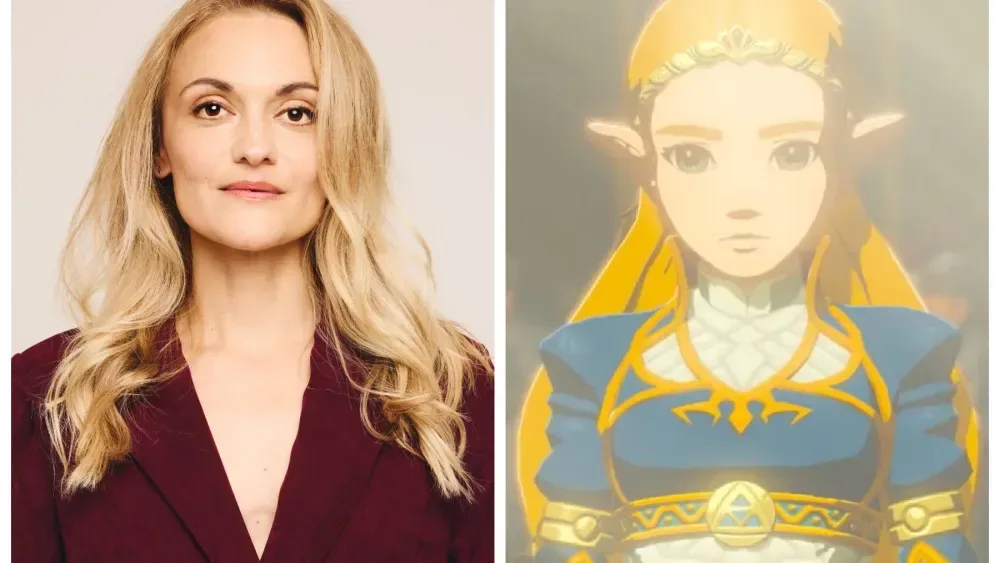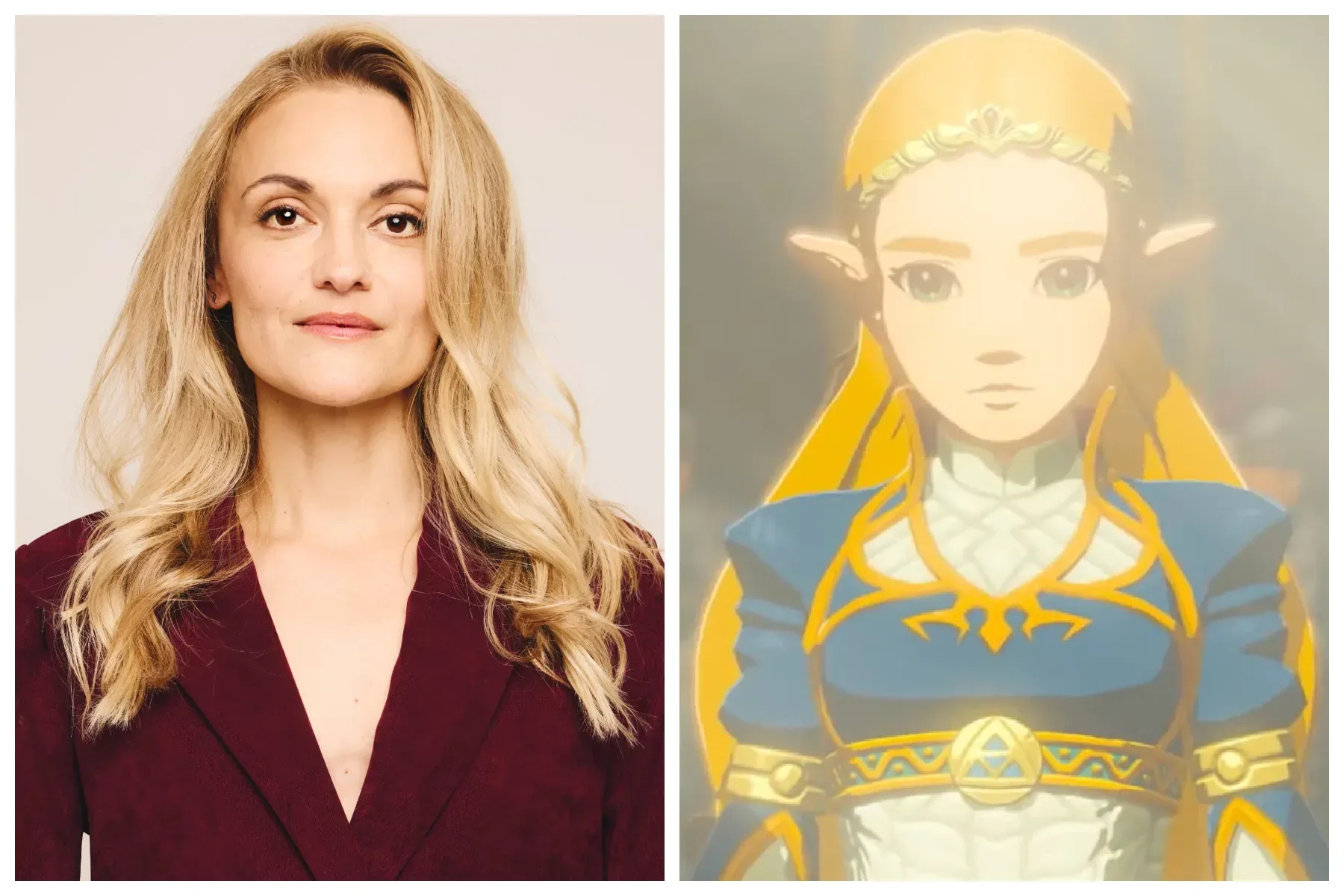
Forty years is a very long time for a game series to keep finding new doors behind suspiciously bombable walls. The Legend of Zelda reaches that landmark in 2026, and Patricia Summersett—English voice of Princess Zelda beginning with 2017’s The Legend of Zelda: Breath of the Wild—has been reflecting on the unusual scale of the moment.
Summersett’s time as Zelda represents roughly a quarter of the franchise’s history, an outcome she understandably could not have forecast when she made a major move to Los Angeles. She had already acted for a decade and had worked in Canada and London, but the role that became her defining gaming credit arrived early in that new chapter. It also arrived disguised behind the usual fortress of aliases, limited information, and nondisclosure agreements that surrounds a major video-game production.
In other words, the performer building a new English voice for one of games’ most recognizable princesses did not know she was auditioning for Princess Zelda. Hyrule’s royal security apparently took the job seriously. Somewhere, a guard was probably told the audition sides were for “Definitely Not Zelda: The Extremely Normal Fantasy RPG.”
A voice built from clues, not franchise homework
Summersett said she had auditioned for more than one character and relied on the character description in the script rather than knowledge of the final project. She found an archetype that felt natural to her physically, adjusted her lower everyday speaking voice upward for a younger princess, and settled on a placement that sat comfortably in her vocal range. A more classical English quality was also part of the creative direction, though a fantasy setting leaves room for broad interpretation.
That lack of advance knowledge may have been an advantage. Zelda comes with nearly four decades of player expectations, shifting incarnations, musical motifs, timelines, transformations, and enough lore to make a family tree look like a plate of enchanted spaghetti. Without the franchise name attached, Summersett could pursue what was on the page and respond to direction in the room instead of trying to imitate an imagined ideal.
She has suggested that learning the identity of the project only after signing the necessary paperwork was an enormous shock. Her goal at the time had simply been to make a strong impression after moving to California and to prove that the leap was worthwhile. The result was a role in one of Nintendo’s biggest modern successes—and a performance that helped give Zelda an intimate, composed, and distinctly human presence in an era when the series leaned harder into cinematic storytelling.
That process is a useful reminder that continuity in a long-running series is not always created by direct imitation. A character can retain her spirit through qualities such as intelligence, gentleness, resolve, and curiosity even as a new performer, a new script, and a new version of Hyrule alter the surface details. Zelda has never been only one person in one palace, and the series has repeatedly made that flexibility one of its strengths.
Relaxed delivery for a thoughtful princess
For Summersett, the Zelda voice is also physically comfortable to perform. She noted that reaching any particular vocal range takes warm-up, but recording Zelda ultimately leaves her feeling settled rather than strained. The voice is soft and requires relaxation, even when the character is contemplating ancient disasters, offering guidance, or carrying the kind of kingdom-level responsibility that would make most people immediately request a sick day.
Related coverage includes Patricia Summersett Reflects on Zelda’s 40th Anniversary and What May Come Next.
Maintaining a youthful, open-hearted emotional center contributes to that sensation. It is an unusually pleasant place for a performer to work, particularly compared with roles that demand sustained anger, harshness, fear, or physical vocal intensity. Zelda can be serious and cerebral, but Summersett’s description emphasizes that the performance’s underlying gentleness is not an accident. It is part of the character’s vocal foundation.
Since Breath of the Wild, Summersett has voiced Zelda in Hyrule Warriors: Age of Calamity, The Legend of Zelda: Tears of the Kingdom, and Hyrule Warriors: Age of Imprisonment. The growing list reflects both her association with the character and the busy modern life of a franchise that now extends across mainline adventures, Warriors spin-offs, merchandise, concerts, adaptations, and a fandom capable of identifying a three-note melody from across a convention hall.
From NES and Mario to a worldwide Zelda community
Summersett was not entering the world of Zelda with no connection to Nintendo. She grew up with an NES at home and had played the original The Legend of Zelda as well as Ocarina of Time. She described herself as more of a Mario player when she was younger, with the original Super Mario Bros. and Super Mario Bros. 3 particularly important in her household, but she was already familiar with Zelda’s place in the company’s history.
Discovering exactly what she had booked therefore carried a substantial jolt. That reaction makes sense: Zelda is not merely another fantasy role. It is a character whose iterations are remembered in granular detail by generations of players, from the quiet mystery of the early NES games to the 3D revolution of Nintendo 64 and the vast landscapes of the Switch era.
Her relationship with that legacy is now deeply tied to the convention circuit. Summersett has spent nearly a decade meeting fans around the world, hearing how the games have mattered to them and encountering players who perform “Zelda’s Lullaby” on an ocarina. For someone who joined a property with such established history, those encounters offer a direct view of the story’s international reach.
She did research after receiving the role, including reading Hyrule Historia and learning the Hylian language associated with Twilight Princess. But she also stressed a central acting principle: historical research can inform the work, while the actual recording must be grounded in the script and the immediate direction. Performers are cast for what they bring, not to chase an unreachable abstraction created by decades of fan memory.
That balance is especially important for a character who has changed so many times. Zelda can be a princess, scholar, leader, alter ego, adventurer, pirate captain, magical incarnation, and frequently the only adult in the room when Link is busy smashing every crate in a 40-mile radius.
Ocarina of Time remake questions remain locked behind the NDA door
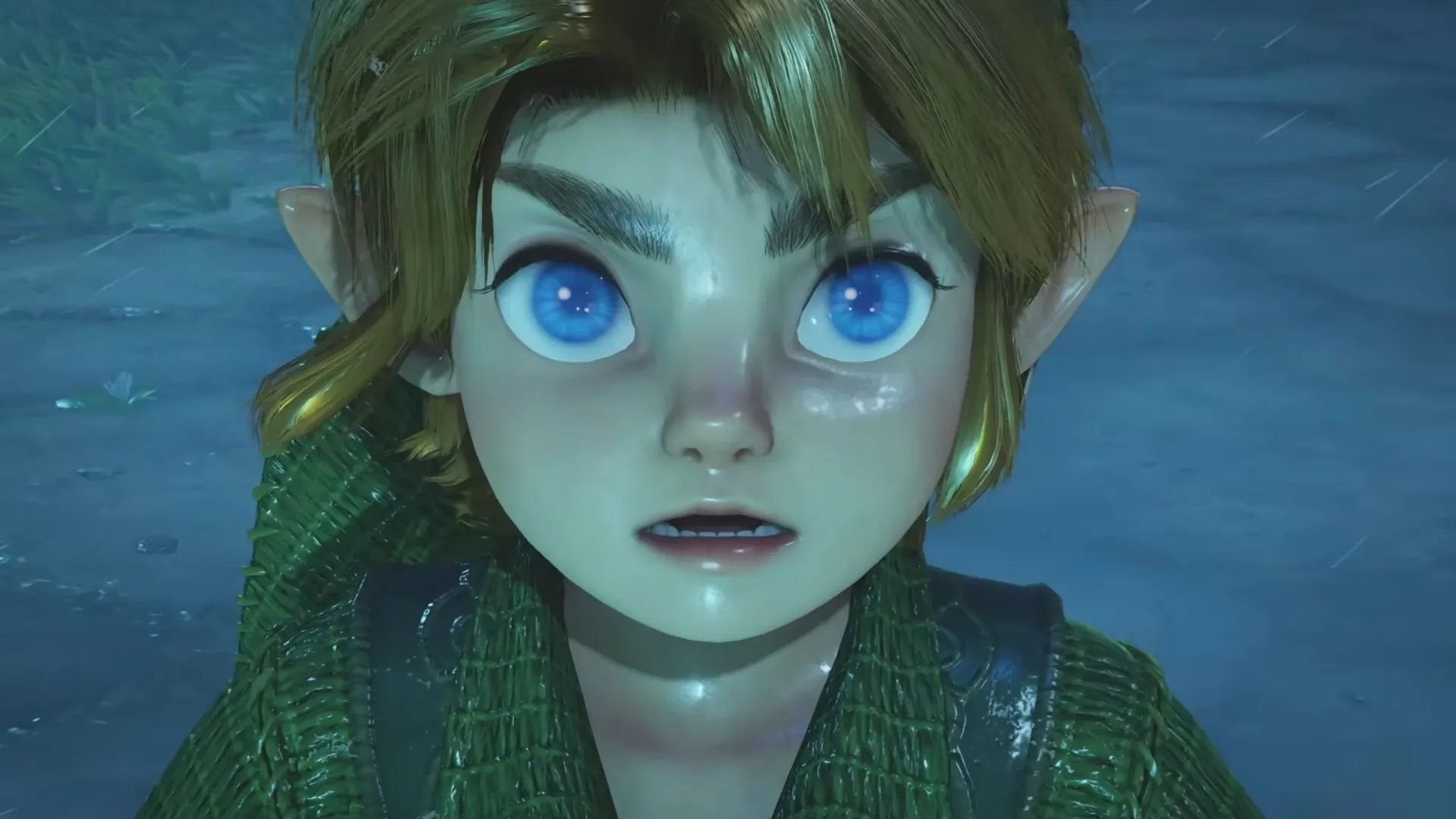
Interest in a reported Ocarina of Time remake, said to be due in November, naturally raised one immediate question: will Summersett return as Zelda? Her answer did not provide confirmation either way. She said she could not discuss whether she is involved with an unreleased project, and she did not claim participation or rule it out.
The important part is the uncertainty. Fans should not treat her enthusiasm for the prospect as evidence of casting. She expressed excitement for people who have wanted an adaptation of Ocarina of Time for a long time, but no official involvement was established by her comments. For more Nintendo industry context as the business continues to evolve around projects like these, see why one developer sees more room for successful AA games.
If a remake does arrive, the question of voice performance will be only one part of its challenge. The original Nintendo 64 game has a specific historical status: it transformed how many players understood 3D adventure design, targeting systems, environmental puzzles, and musical interaction. Modernizing it would mean weighing technological ambition against a memory so beloved that even the Water Temple has acquired the soft glow of nostalgia. Yes, somehow even that.
The April 2027 movie is another mystery
A live-action The Legend of Zelda film is slated for April 2027, with Bo Bragason set to play Princess Zelda. Summersett did not offer a prescription for how the filmmakers should adapt the character, saying that the production has people assembled for those decisions and that she is not the filmmaker determining its approach.
Her perspective was notably open to multiple interpretations. Zelda has always accommodated recurring archetypes and new variations, much like other major franchises that revisit familiar figures through fresh casts and eras. That does not remove the pressure on a screen adaptation—video-game films tend to generate vigorous opinions before anyone has seen a single finished scene—but it does leave room for a version with its own identity.
Summersett likewise could not confirm or deny whether she has been asked to appear in the film. She voiced appreciation for adaptations that acknowledge game voice actors, while making clear that nondisclosure obligations prevent her from offering specifics. Until a production announcement says otherwise, any claim about her movie participation belongs in the same treasure chest as the unconfirmed remake casting: closed, locked, and guarded by a very polite but immovable NDA.
Creative work beyond Hyrule
Outside Zelda, Summersett said she is working on several video games that remain undisclosed. She is also returning to music with a newly envisioned version of her band and beginning to write essays. Her creative interests include both stepping away from technology in natural settings and exploring interactive tools such as Mi.Mu gloves, associated with musician Imogen Heap.
The combination fits the larger reflection behind Zelda’s anniversary. There is comfort in a long-running story that continues to find new audiences, but Summersett is also looking toward different forms and creative experiments. After almost 10 years connected to a character defined by courage, curiosity, and reinvention, that seems appropriately Hylian.