The ZX Spectrum’s pixels have spent decades performing heroic work under conditions that would make a modern graphics card request a wellness day. They have raced, fought aliens, explored caverns and, apparently, endured the deeply unsettling prospect of the screen going dark. PiglyFlag, the latest ZX Spectrum release from RetroSouls, takes that small but wonderfully strange idea and turns it into a monochrome puzzle adventure starring a piglet that needs help finding the exit.
Its premise is as charmingly dramatic as a lone loading-screen beep at midnight: when the display fades to black, favourite digital companions are left alone in the darkness, missing the people on the other side of the screen. Creator Denis Grachev frames PiglyFlag around rescuing one especially frightened little piglet. The player’s job is to guide and push the piglet through each stage, reach the exit, and avoid the hostile creatures called the Brymlis.
That is a tidy setup, but it has the kind of focused clarity that suits the Spectrum beautifully. There is no stated need for a sprawling inventory, a 900-page codex, or a wizard who insists the piglet first recover seven mystical turnips from an open world. PiglyFlag’s stated goal is immediate: protect the piglet, negotiate the dangers in the level, and get out. Sometimes the most effective adventure begins with a simple question: can this tiny pig make it past the things that would very much prefer it did not?
A monochrome mission with a very worried passenger
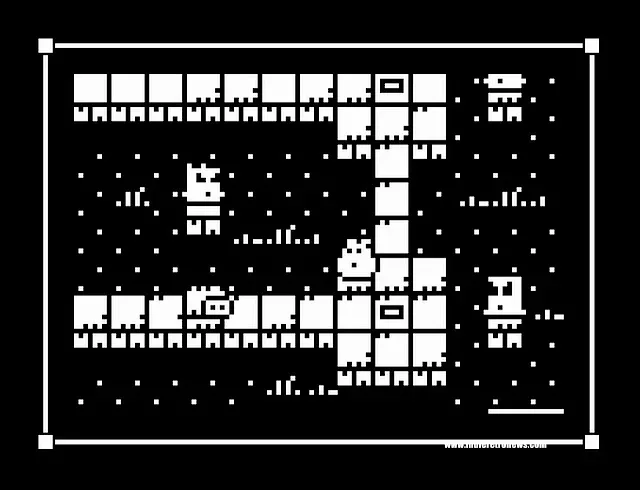
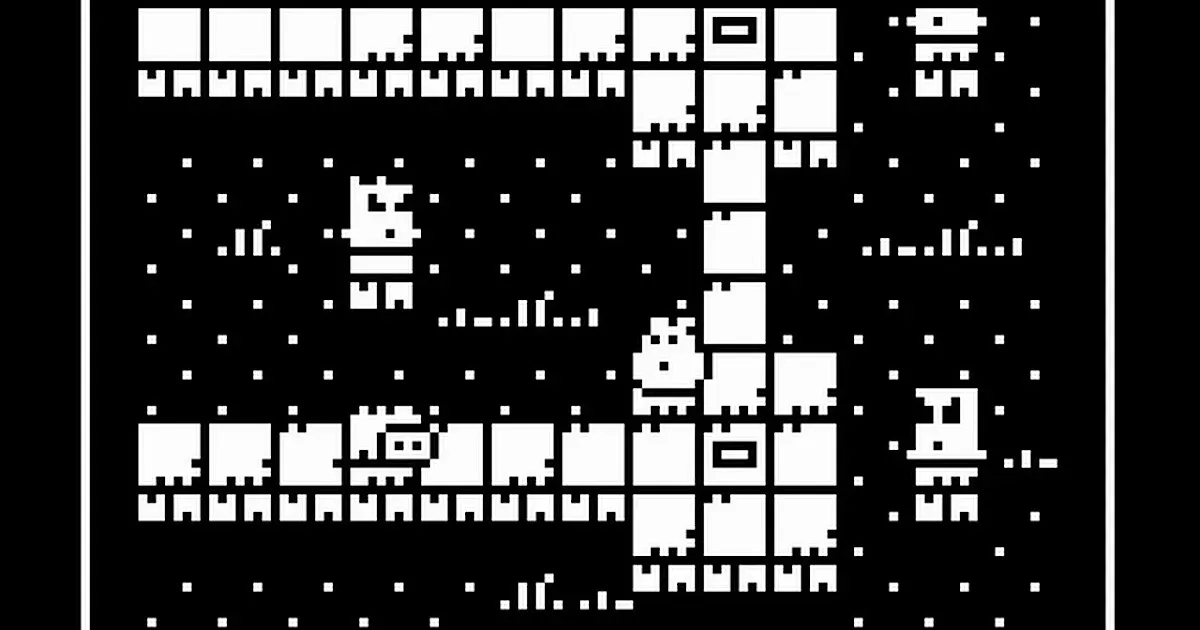
PiglyFlag is presented in monochrome, a visual decision that aligns neatly with its darkness-themed fiction and the ZX Spectrum’s enduring appeal. The game’s atmosphere does not need an elaborate palette to establish that the piglet is in trouble. Black-and-white contrast can make routes, boundaries and hazards feel direct, while leaving the player to concentrate on movement and planning rather than admiring seventeen varieties of reflective puddle.
The essential action is guiding and pushing the piglet toward safety. That wording matters. This is not merely a game about moving a character from one corner of a room to another; the piglet is central to the puzzle. Getting it to an exit while Brymlis occupy the same anxious universe suggests players will need to watch positioning, anticipate danger and carefully reset their plan when the local wildlife objects to their rescue operation.
The Brymlis are the game’s named threats, and they sound like exactly the sort of creatures that have no sympathy for a frightened animal trying to leave. Their role is clear even without a long bestiary: they are treacherous obstacles standing between the piglet and a successful escape. The result is a premise where each level can turn into a compact rescue problem. The goal may be small in physical scale, but the pressure is personal. Nobody wants to be responsible for telling a pixel pig that the exit was technically nearby.
Keyboard-first control, as nature and 1980s design intended
RetroSouls has included control support for classic Sinclair 1/2 and OPQAM/Space keyboard layouts. For players with long-standing Spectrum muscle memory, those options are more than a footnote; they are part of how a game feels at the point where thought becomes movement. A puzzle game can be won or lost on the comfort of its inputs, especially when a wrong direction places the piglet within regrettable Brymlis range.
The game also provides a straightforward recovery tool: pressing R restarts the level. That is the right kind of mercy for a puzzle adventure built around hazards and route-finding. Rather than making a failed attempt into a prolonged administrative process involving menus, confirmations or a tiny clerk demanding duplicate forms, the player can return to the beginning quickly and apply what they have learned.
Related coverage includes PiglyFlag Brings Monochrome Piglet Rescue Puzzles to ZX Spectrum.
Quick restarts also fit the particular rhythm of retro puzzle games. A player tests an approach, discovers that a Brymli has converted the plan into an educational disaster, and immediately tries another route. The failure is not erased, exactly; it becomes information. In a design centered on getting a vulnerable companion through a dangerous space, that brisk loop can keep attention on the solution rather than on downtime.
Keyboard controls remain a useful reminder that the Spectrum format has its own language. Modern games frequently offer layers of configuration and several controller profiles, but an old-school key layout has a pleasing bluntness. Learn the mapping, commit to it, and do not blame the piglet if the wrong key is pressed during a moment of panic. It is a small, tactile connection between the player and the machine’s legacy.
The people behind the piglet’s escape plan
PiglyFlag brings together several contributors from the Spectrum scene. Denis Grachev is credited as the creator, while Ivan Seleznev made the loading screen and Oleg Nikitin composed the chiptune soundtrack. Artemka Vasilev and Dmitri Ponomarjov provided moral support during development.
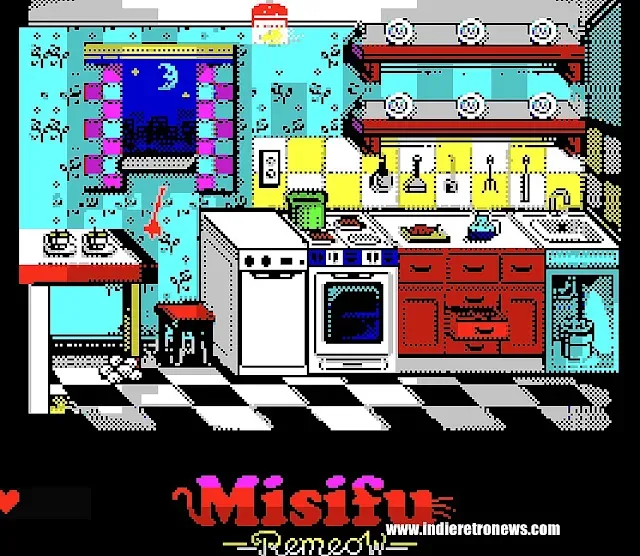
That collection of credits highlights how even a compact, focused retro game can be a collaborative production. A loading screen has long held a special place in Spectrum culture: it is the artwork that greets the player before the program begins, setting a mood while the machine gets ready. PiglyFlag’s vibrant loading image gives the monochrome game an additional visual introduction before the piglet’s predicament starts in earnest.
Nikitin’s chiptune music is another fitting ingredient. In games built for classic hardware, a soundtrack is not merely background decoration; it can help establish pace, give repeated attempts a sense of energy and make a small puzzle space feel more alive. PiglyFlag’s setup—darkness, a nervous piglet and persistent threats—has room for music that keeps the rescue mission moving without needing to deliver an orchestral lecture on every step.
The moral-support credit deserves respect, too. Making games often involves the kind of problem-solving that can turn a single stubborn behaviour into a major villain. Not every contribution is a sprite, track, line of code or loading-screen brushstroke. Encouragement matters, especially when one is trying to ensure that a piglet, a push mechanic and a population of Brymlis all coexist without causing a full-scale collapse of the pixel economy.
Why small Spectrum releases still matter
PiglyFlag arrives as another example of ongoing development for a platform whose original era is firmly part of gaming history. New software for the ZX Spectrum is not attempting to compete by pretending that decades of technical change never happened. Its appeal is different: creators work inside recognizable limitations and conventions, then look for fresh ideas that can flourish there.
In this case, the fresh hook is not simply “a puzzle game on old hardware.” It is a rescue story with a deliberately unusual bit of digital folklore. The notion that pixels are lonely when the display goes dark gives the adventure a gentle personality before the first Brymli has a chance to ruin anyone’s afternoon. A frightened piglet is an immediately readable motivation, while the exits offer a clear destination for each puzzle.
The release also shows why a restrained concept can be valuable. There is a dependable pleasure in games that communicate their stakes without a long onboarding sequence. Players know there is danger, know the piglet must be guided safely, know the exit is the target, and know that R provides a rapid second chance. That is enough information to establish a challenge without overcomplicating the initial encounter.
For readers interested in how older gaming habits continue to echo through contemporary software, keyboard control schemes are part of that story too. Even the idea of using a dedicated key for an immediate retry feels remarkably current in spirit. Modern puzzle games may place it behind a button prompt or a slick transition, but the principle remains universal: when the plan fails, let the player get back to the interesting part. The ongoing importance of keyboard access is visible well beyond retro systems, including discussions around a new Windows keyboard shortcut for a native Gemini app.
A direct route into darkness, danger and determined pig-rescuing
Everything described about PiglyFlag points toward a concise, accessible Spectrum experience: monochrome presentation, level-by-level objectives, classic control choices, immediate restarts and a clear rescue mission. Its threats are not abstract hazards with generic labels; they are Brymlis, which makes every failed path sound slightly more like an unfortunate encounter with a local menace that has its own union rules.
Most importantly, the game gives its puzzle action a heart. The player is not just trying to solve a map efficiently. They are trying to bring a scared piglet out of darkness and toward an exit. That is a modest objective, perhaps, but modest objectives are often the ones that make a game memorable. On the ZX Spectrum, a handful of pixels can still carry a surprising amount of urgency—particularly when some of those pixels are a pig, the rest are Brymlis, and the R key is waiting patiently for the next rescue attempt.