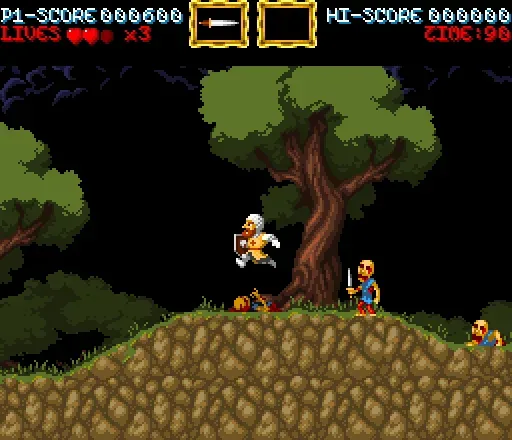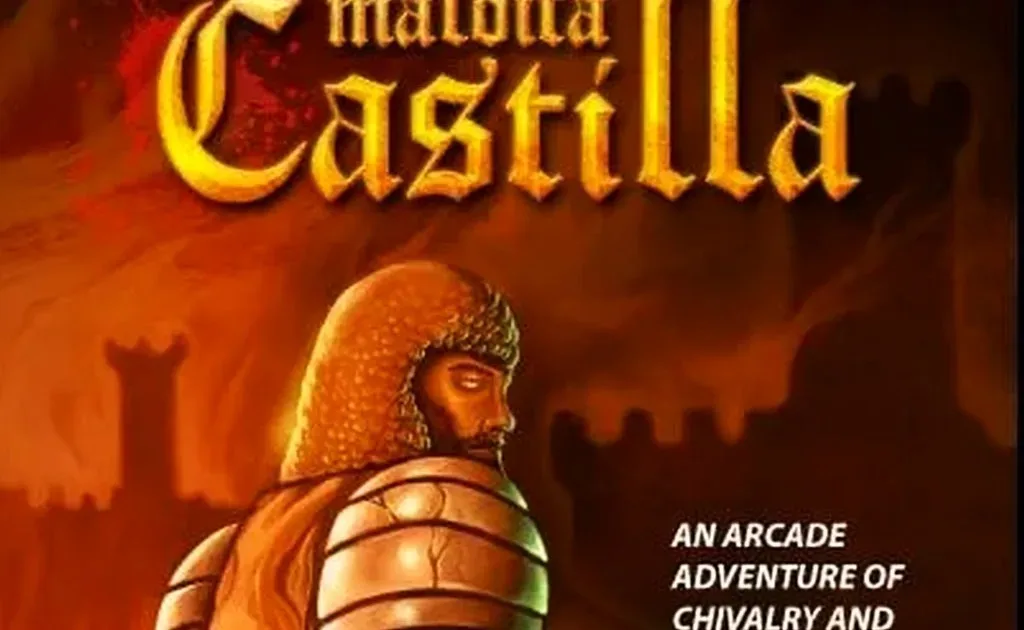
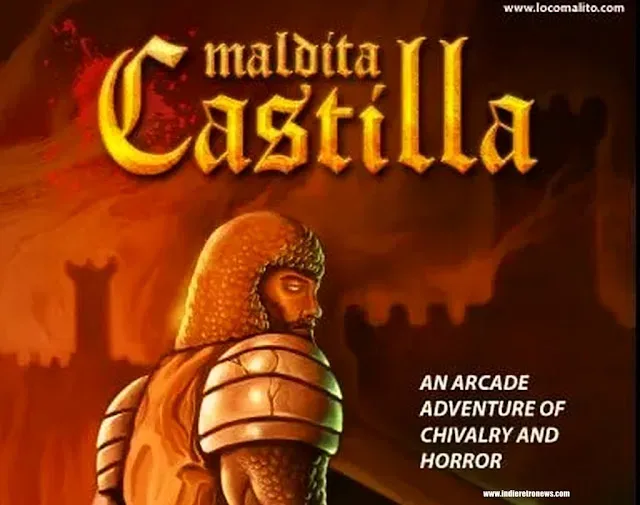
Maldita Castilla, also known as Cursed Castilla, is being brought to Commodore Amiga AGA hardware by MainakeProject. The forthcoming homebrew port has the blessing and support of original creator Locomalito, and a playable demo is already available with the game’s complete first level and its closing boss encounter.
That makes this more than a proof-of-concept screenshot or a short technical teaser. Players with the relevant Amiga setup can work through an actual introductory stage, face its boss and get a direct sense of how this demanding action-platformer translates to the older hardware.
A modern retro game returns to retro hardware
Locomalito originally created Maldita Castilla in 2012. Its design deliberately looks back to hard-edged arcade action-platformers, particularly Ghosts ’n Goblins, while pursuing a setting with its own regional character. The game’s dark fantasy draws on Spanish myths, chivalric romances and broader European folklore rather than treating its old-school influences as a simple coat of pixel-art paint.
MainakeProject’s Amiga AGA version is a port: a conversion of an existing game so it can run on a different platform. In this case, the challenge is not to invent the game’s identity from scratch, but to preserve as much of that identity as possible while adapting it for classic Amiga hardware. The project uses authentic game assets and the original soundtrack by Gryzor87, two details that matter enormously for a game whose atmosphere is closely tied to its art, enemies, fantasy imagery and music.
It is also a homebrew project. In retro-gaming terms, “homebrew” generally describes software created outside an original platform holder’s historical commercial release cycle. The term does not automatically mean unofficial in every sense, however. Here, MainakeProject is making the port with the original creator’s full blessing and support, a significant distinction for a conversion of an established indie game.
Why the demo is the important part
The first-level demo gives the project a useful, practical benchmark. A complete stage asks a port to handle the things that make an action-platformer feel right in motion: player control, enemy encounters, scrolling or scene transitions where applicable, visual readability, sound, pacing and the pressure of reaching a boss. It is a much more meaningful slice than a title screen or a small isolated test room.
For players, the demo is also a chance to judge the game on its own terms. Maldita Castilla is associated with arcade-inspired difficulty, and the included boss offers an immediate test of that approach. A player can discover whether the port’s opening stretch delivers the deliberate challenge expected from the game, rather than merely admire the novelty of seeing it on Amiga AGA.
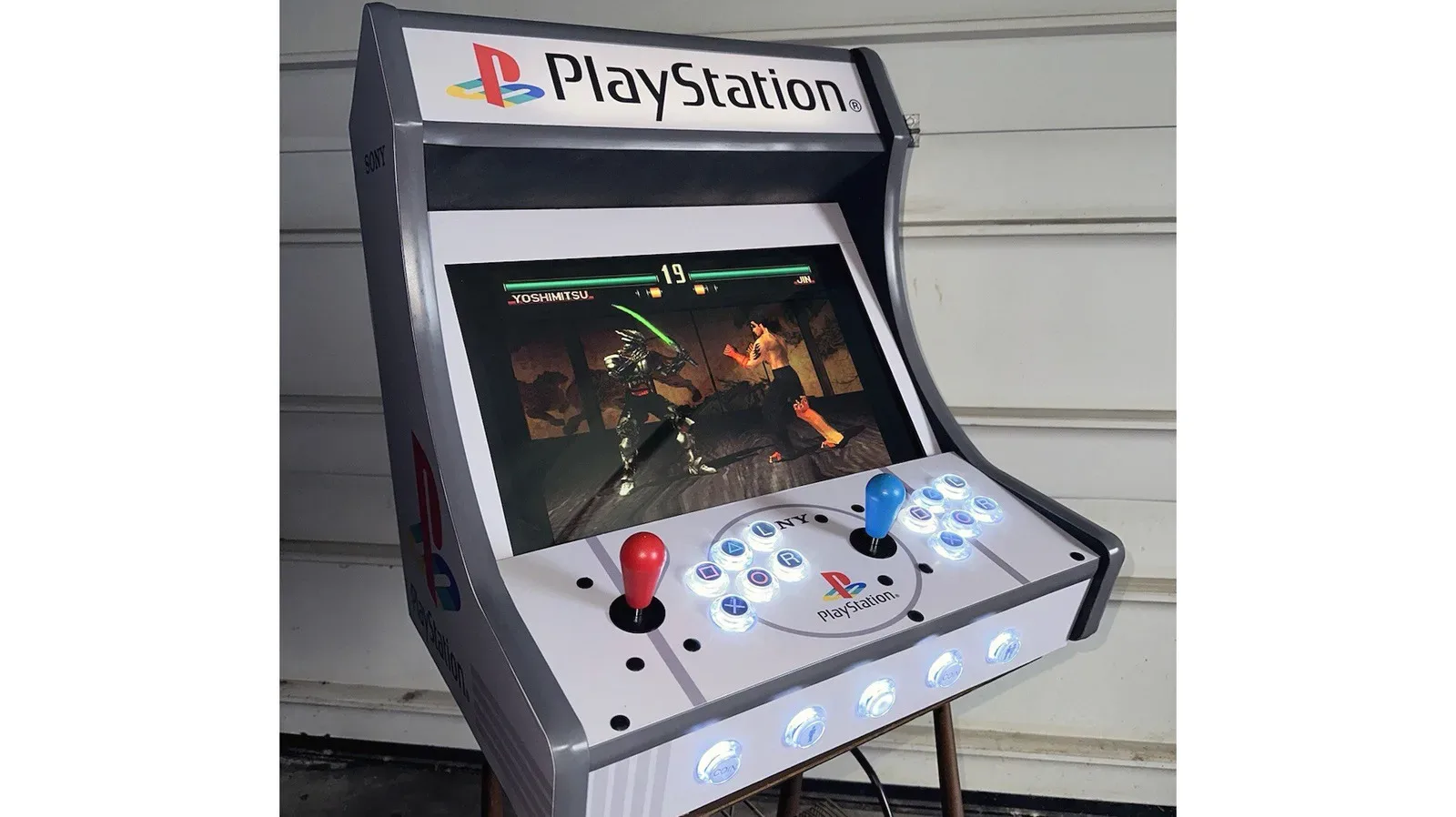
That is a healthy way to view retro-hardware releases. The initial appeal may be the platform itself, but the lasting question is whether the software remains satisfying to play. Classic systems continue to inspire projects precisely because their technical constraints and distinctive audiovisual character can make a familiar game feel newly situated. The appeal is similar to the wider fascination with purpose-built retro gaming hardware, though not every nostalgia-driven machine lands equally well; see our look at a PlayStation arcade cabinet caught between display piece and play space.
Related coverage includes Maldita Castilla Is Coming to Amiga AGA With a First-Level Demo.
Faithful assets and soundtrack are a promising foundation
The use of authentic assets means the Amiga AGA version is not being presented as a loose reinterpretation of the original. It is attempting to carry over the visual material associated with Maldita Castilla. Likewise, retaining Gryzor87’s original music preserves a major component of the game’s intended mood.
For a folklore-inflected fantasy adventure, that preservation has particular value. The setting is not an incidental backdrop for jumps and attacks; it is part of what distinguishes Maldita Castilla from the arcade classics that helped inspire it. Keeping the recognizable art and score together gives the port a better chance to retain the game’s dark, mythic tone.
There is a useful line between homage and imitation here. Maldita Castilla openly takes cues from an arcade tradition represented by Ghosts ’n Goblins, but its narrative texture comes from Spanish myth, romances of chivalry and European folklore. The Amiga AGA project, in turn, is not a newly invented game pretending to have been made in an earlier era. It is a newer game being adapted for an older machine, with approval from the person who made the original.
What has and has not been confirmed
The confirmed material is encouraging but remains limited. MainakeProject is working on an Amiga AGA port; Locomalito has offered blessing and support; authentic assets and Gryzor87’s original soundtrack are being used; and the available demo contains the whole first level plus its final boss.
Those details support confidence that there is a real, playable project behind the announcement. They do not, on their own, establish a final release date, a price, a distribution format, a complete feature list, or the exact Amiga AGA configurations required for the finished version. Prospective players should avoid assuming those specifics until MainakeProject confirms them.
That restraint is especially worthwhile with homebrew development. A playable demo demonstrates progress, but a full conversion can involve additional work across the rest of the game. The first stage is a meaningful sign, not a guarantee that every remaining portion is complete or that a final launch timetable has been locked in.
An appealing fit for the Amiga audience
MainakeProject describes the effort as being made by Amiga fans for Amiga fans, and the available demo makes that sentiment concrete. Rather than asking the community to wait for a distant promise, it offers an opening level that can be played now. That approach lets interest form around the game’s actual performance and challenge.
Maldita Castilla is a fitting candidate for this sort of treatment. It was already designed in conversation with older arcade action, but it is not merely a museum piece. Its dark fantasy premise, folklore influences, original assets and soundtrack give it a defined identity to carry into its new platform home.
For Amiga AGA owners, the immediate news is simple: there is a playable route into MainakeProject’s port today, beginning with the full first level and a boss fight. For retro-game fans more broadly, it is a noteworthy example of a newer indie work being carefully redirected toward classic hardware without discarding the material that made it recognizable in the first place.