Dead of the Brain, the lurid 1992 zombie adventure from Japanese developer FairyTale, has arrived on Steam in what is described as its first official English-language release. It is a notable return for a game tied to the PC-98 era: a substantial part of Japanese computer-game history that remains difficult for many international players to access, understand, and play in its original form.
The premise is proudly, messily horror-movie material. Cole receives a late-night call from Dr. Cooger, whose attempt to create a formula capable of reviving the dead has already gone off the rails. A test involving Cooger’s cat turns violent, a police officer is killed, and the glowing substance begins to circulate. Before long, the city has become a ghoulish disaster zone. Cole must investigate a wider conspiracy while navigating the outbreak through a mixture of pointing, clicking, and shooting.
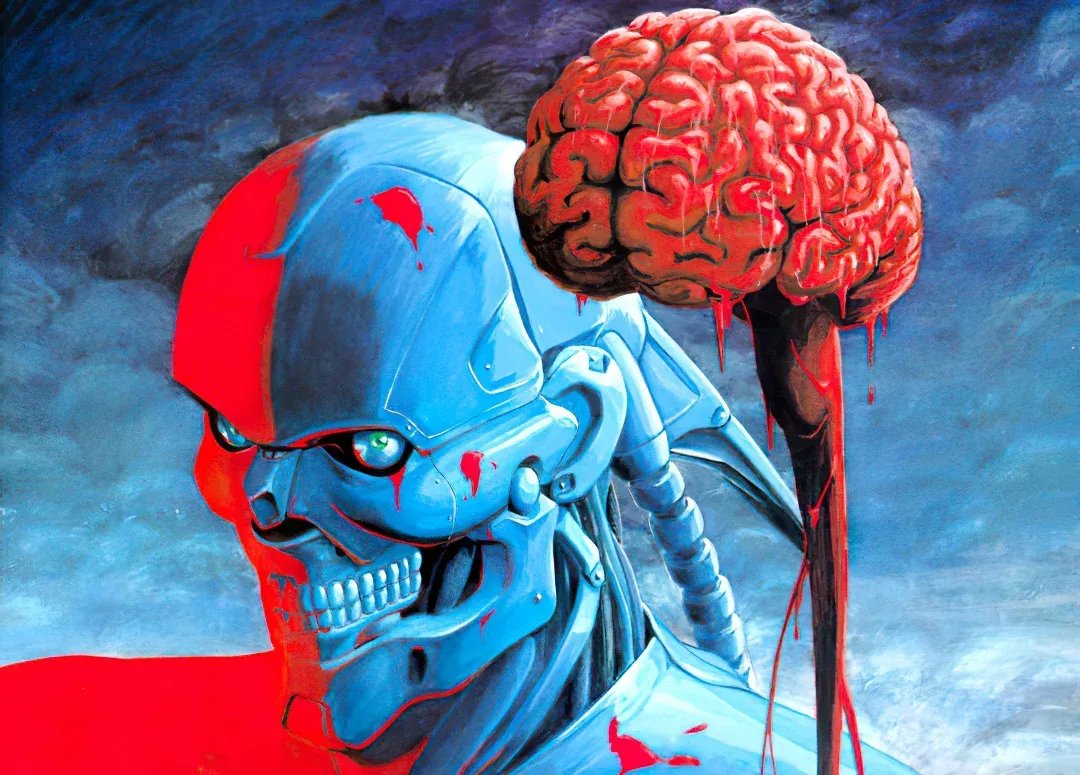
That setup makes no attempt to hide its affection for splattery zombie cinema. Dead of the Brain draws openly from George Romero’s Living Dead films and the body-horror chaos associated with Brian Yuzna’s Re-Animator movies. Its appeal is not subtle dread so much as a knowingly gross, B-movie escalation: dodgy science, animated corpses, liquid-looking monsters, and characters who understand the familiar rules of a zombie story even as they are stuck living through one.
An obscure PC-98 horror game becomes more approachable
PC-88 and PC-98 refer to families of Japanese personal computers. Their libraries contain thousands of games, but many works from those systems have never received official translations or broad modern releases outside Japan. That does not make every game from the platforms a lost masterpiece; it does mean language, hardware expectations, and age have made a large portion of their catalogues hard to approach for people who did not grow up with them.
Dead of the Brain sits squarely in that space. It has a reputation as an infamous, excessive horror title, yet its original release was connected to a machine ecosystem unfamiliar to much of Steam’s audience. An official localization changes the practical situation considerably. Instead of treating the game as an artifact accessible mainly through partial knowledge of Japanese, older hardware, or unofficial efforts, players can encounter its story and jokes in English through a contemporary storefront.
The distinction matters because localization is more than converting individual words. Horror comedies often depend on timing, genre references, awkward bravado, and the way characters react to awful events. The English version is described as a new handcrafted localization, an especially relevant detail for a game whose tone involves deliberate genre play. Its cast does not merely face a zombie outbreak; it appears aware of the tropes surrounding it, giving the adventure a self-conscious style closer to horror-comedy than straight survival horror.
“Handcrafted” is worth unpacking here. In this context, it indicates language work created for the game rather than an automated text conversion. That is valuable for an older title built around dialogue and narrative progression. A translation has to communicate plot information clearly, but it also has to carry the intended personality of the script. When a game is riffing on established zombie and mad-scientist clichés, a literal but lifeless rendering can flatten the reason those scenes exist. The stated aim of this release is to let the game’s tongue-in-cheek voice come through in English.
Point, click, shoot: what kind of game is Dead of the Brain?
Dead of the Brain is described as an adventure game in which players point, click, and shoot their way through the conspiracy behind the outbreak. The phrase establishes a useful expectation: this is not presented simply as an action game about mowing down zombies. Investigation is central to the setup, and interaction with the environment belongs alongside combat.
For players accustomed to modern genre labels, “adventure game” generally signals an emphasis on exploration, narrative progress, examining places or objects, and solving the next problem rather than pure reflex-driven action. Dead of the Brain’s shooting element adds a different kind of pressure to that formula. Its protagonist is not only collecting clues in a city overwhelmed by the dead; he is also dealing with immediate threats. That combination suits the game’s movie-inspired premise, which pivots from one grotesque escalation to another.
The story’s opening also establishes a classic horror engine: a catastrophe caused by a supposedly controlled experiment. Cooger’s resurrection formula is initially tested on a house cat, with disastrous consequences. From there, the incident widens beyond the laboratory and into the streets. The source material is explicit that the situation is not as simple as it first appears, positioning the adventure as an investigation into a bizarre conspiracy rather than a straightforward escape from an undead city.
Players interested specifically in low-budget horror energy may find that framing more useful than trying to map the game onto newer zombie releases. Dead of the Brain comes from 1992, and its identity is rooted in an older style of computer adventure and the visual vocabulary of gore-heavy film. The draw is the collision of those things: an old Japanese PC game, an outrageous undead plot, and a narrative that is happy to grin while covered in fictional slime.
FairyTale’s move from erotica to horror
Dead of the Brain was FairyTale’s first move into horror. Before it, the developer’s output was almost entirely erotica. The game later received a direct sequel and a spin-off associated with the Nightmare Collection, suggesting that its horror detour became a meaningful part of FairyTale’s legacy.
That background is also relevant to the Steam edition. The publisher, FAKKU, is a long-running hentai platform that has begun a program focused on bringing retro Japanese games that are not pornographic to modern hardware. It is an unusual but coherent connection: both the original developer’s history and the publisher’s established identity exist near adult-oriented Japanese media, while Dead of the Brain itself is being presented as a retro horror adventure.
FAKKU has said that some racier sequences were removed from the Steam version to avoid a harsher platform rating. It has also said that those sequences can be restored through a free patch available from its homepage. The practical takeaway is simple: the Steam release is the accessible official English version, but it is not necessarily identical to the version available after applying the optional external patch.
That does not automatically tell prospective players how significant the edits are, because no precise list of the removed material is provided here. It does, however, make the split important to know before buying. Anyone who wants the Steam presentation can use it as offered; anyone seeking the publisher’s uncensored restoration should consult the publisher’s own patch information and make an informed decision. The existence of the patch should not be confused with a claim that the game’s core zombie plot or adventure structure is absent from the Steam edition.
Why this release is bigger than one undead adventure
Modern availability is not a replacement for preservation, but it can be one of the ways older games remain playable and discussable. A title locked to an unfamiliar old computer platform and an untranslated script has a narrow audience by default. A storefront release with official English text gives it a new route to players who are interested in retro horror but have never explored PC-98 software.
Dead of the Brain’s arrival also lands during a period of renewed attention for peculiar horror games from earlier PC eras. Both Ecstatica games have been remastered for Steam, while the FMV curiosity The Dark Eye has also become available under a different name. These projects are not interchangeable. They come from different styles of horror and different technical traditions. Together, though, they underscore that the horror-game canon is much broader than the small group of series most often revisited on current platforms.
For anyone browsing Steam’s seasonal scares, the best expectation is to treat Dead of the Brain as a historical horror-adventure rediscovery rather than a newly designed throwback. Its age, PC-98 origin, zombie-film influences, adventure mechanics, and newly localized script are all part of the package. Players looking for more modern inexpensive scares can also browse a range of Steam horror games across remakes, roguelikes, stealth games, and other styles.
FAKKU’s stated plans extend beyond Dead of the Brain. The publisher is also set to bring out Dengeki Nurse, a 1992 RPG described as madcap. That prospective release reinforces the larger goal: not merely reviving one notorious gore fest, but opening a channel for older Japanese non-pornographic games that might otherwise remain peripheral to modern PC audiences.
Dead of the Brain, then, offers a particularly messy entry point into that effort. It begins with an irresponsible resurrection experiment, moves into a citywide ghoul outbreak, and layers a conspiracy under the gore. Its Steam debut gives English-speaking players a legitimate new opportunity to see what FairyTale made when it stepped into horror for the first time—and why this peculiar piece of PC-98 undead fiction has endured as a curiosity worth exhuming.