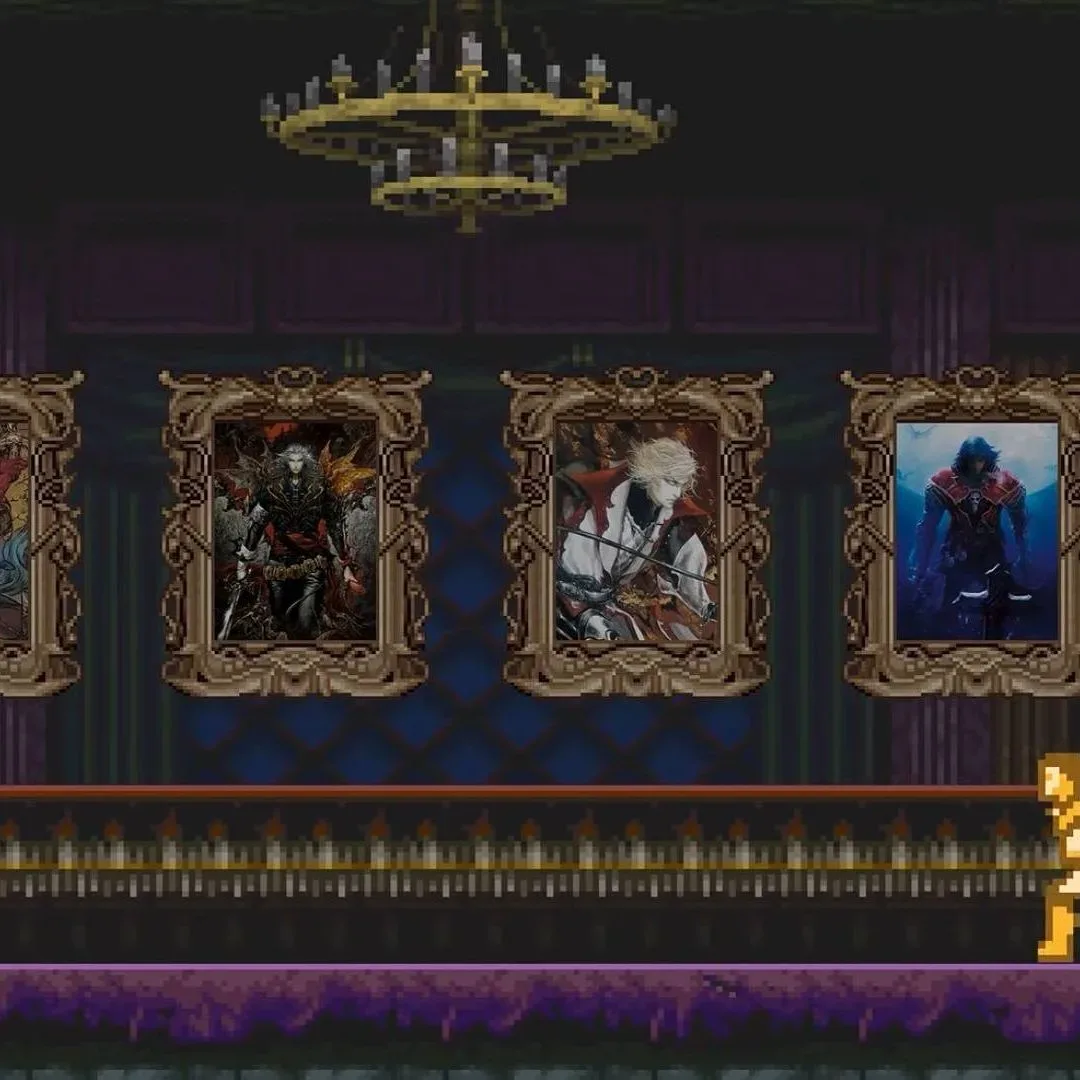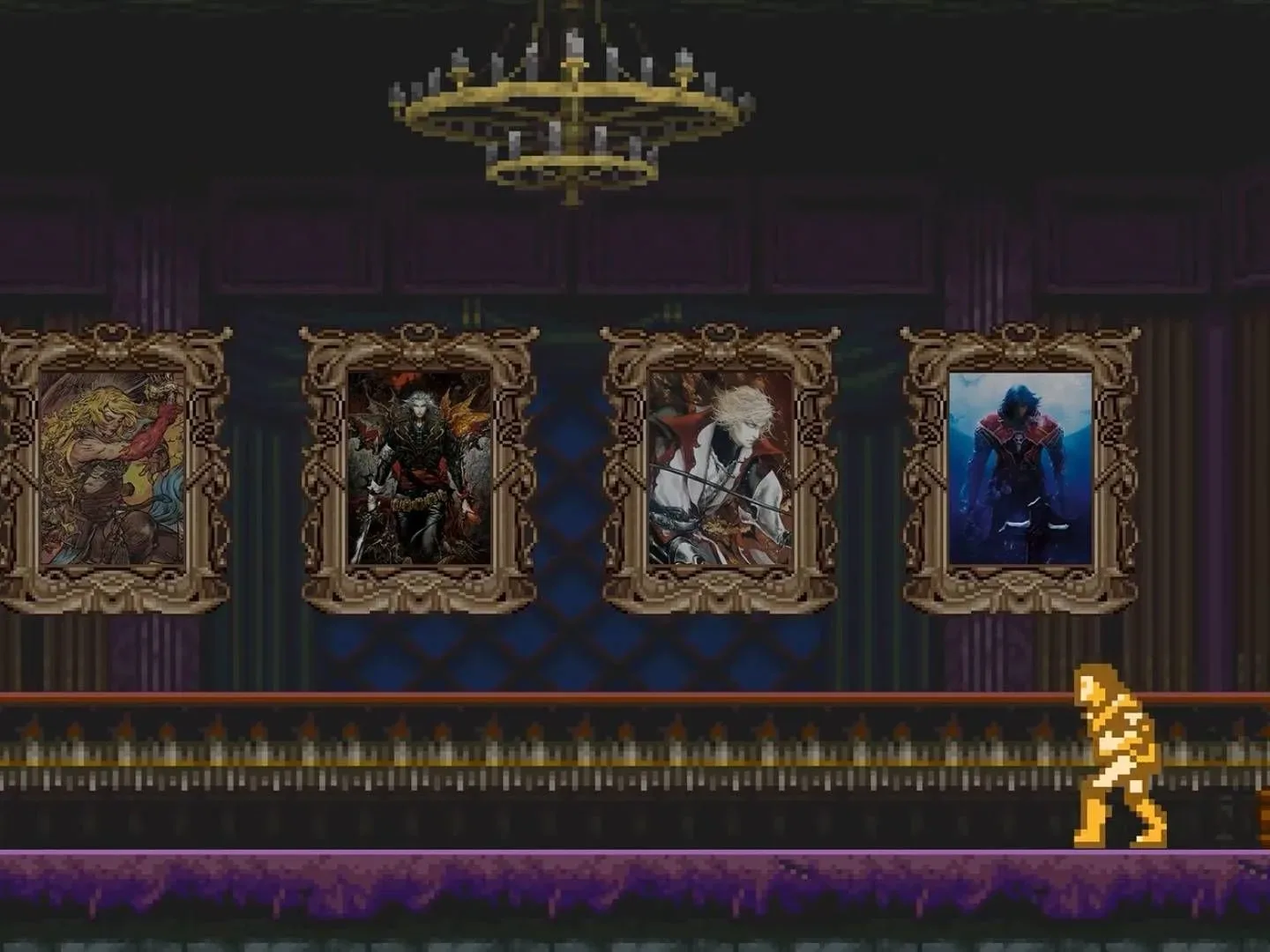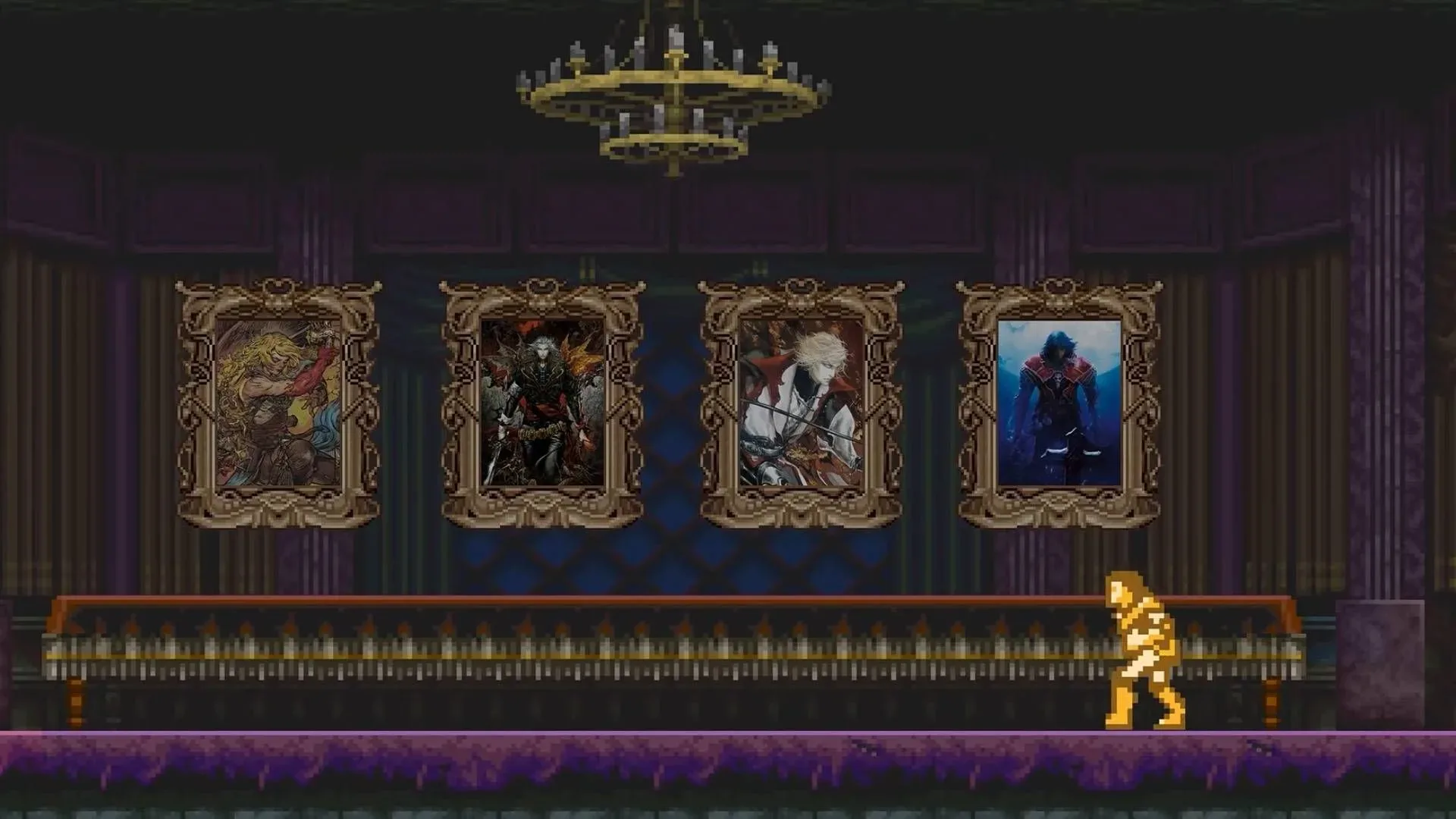
Castlevania’s 40th-anniversary celebration has given fans a reason to inspect the castle walls rather than simply admire the decorations. A closing sequence in Konami’s retrospective video features Simon Belmont walking through Dracula’s castle, passing portraits that appear to represent Castlevania: Belmont’s Curse, Castlevania: Lament of Innocence, Castlevania: Curse of Darkness, and the original Castlevania: Lords of Shadow.
That selection has sparked speculation that a collection focused on Castlevania’s 3D games could be planned after Belmont’s Curse arrives on October 15. It is an intriguing possibility, particularly because several of the series’ three-dimensional entries remain tied to their original hardware while much of the wider Castlevania library has returned through compilation releases.
For now, though, the important qualifier is simple: the video is not a collection announcement. The portrait sequence is open to interpretation, and neither a title, platform list, release window, feature list nor lineup has been confirmed. The evidence supports fan interest and a potentially deliberate choice of imagery—not a promise that every portrait will become a product.
Why four portraits have caused so much noise
Anniversary videos are designed to summarize a franchise, so callbacks are expected. Yet the ending’s choices stand out because the portraits do not merely span every era evenly. They point toward a distinct part of Castlevania’s history: games built around 3D presentation.
Lament of Innocence and Curse of Darkness were PlayStation 2 releases, while the first Lords of Shadow represented a later interpretation of Castlevania in three dimensions. The video also includes Belmont’s Curse, the upcoming mainline game. Seeing those works grouped in a prominent final sequence naturally invites the theory that Konami is establishing a bridge between the new release and an older, less frequently reissued corner of the catalog.
That theory becomes more appealing when set against the franchise’s recent preservation pattern. Castlevania has remained visible through animation and collections, and many mainline games have been brought back in some form. The notable holdouts have been the 3D games: the Nintendo 64-era Castlevania and Legacy of Darkness, the two PlayStation 2 titles, and the Lords of Shadow trilogy have not received the same collection treatment described for other parts of the series.
A collection, in this context, would mean a package that republishes multiple older games together on newer platforms. It does not automatically mean remakes. A rerelease could preserve the original games with compatibility work and presentation options; a remake would involve substantially rebuilding them. Nothing in the anniversary footage establishes which, if either, approach is in play.
The omissions matter as much as the inclusions
The hopeful reading of the portraits has a major complication: they do not represent every obvious 3D candidate. The Nintendo 64’s Castlevania and Legacy of Darkness are absent. So is Lords of Shadow 2, despite the appearance of the first game in that sub-series.
Related coverage includes Konami's Castlevania Anniversary Video Sparks Hopes for a 3D Game Collection.
Those absences do not disprove the idea of a future collection. A video montage can prioritize recognizable characters, individual favorites, visual variety, or whichever assets best fit a scene. It may also be that the video is simply highlighting selected chapters rather than encoding a precise product lineup. But omissions are a useful brake on overconfident theories. If the portraits really are a hint, they could point to a partial selection rather than one exhaustive “all 3D Castlevania” package.
There is another entirely reasonable explanation. Castlevania is strongly associated with 2D sprites, and a party sequence that wants to visually represent the 3D games may use framed artwork instead. Under that interpretation, the portraits are an elegant visual solution, not a release roadmap. Fans should treat the scene as a clue worth watching, not an answer.
Why these games are worth revisiting
The three-dimensional Castlevania entries have never enjoyed the same universal consensus as 2D landmarks such as Symphony of the Night or Aria of Sorrow. That does not make them disposable footnotes. Their uneven reputation is precisely why an accessible rerelease could be valuable: it would allow players to reassess them without requiring their original systems.
Curse of Darkness has a particularly committed audience and introduced Hector, a character who has become one of the better-known figures associated with this branch of the franchise. Lament of Innocence and Curse of Darkness also occupy an important place in the series’ PlayStation 2 era, a period that experimented with how Castlevania’s combat, monsters and gothic spaces could work away from the side-scrolling template.
The original Lords of Shadow is another notable inclusion in the anniversary montage. It was produced by Hideo Kojima, distinguishing it within the series, and it represented a high-profile attempt to present Castlevania through a more cinematic 3D action format. Whether players prefer that approach or the exploratory rhythm of the 2D games, it is a substantial part of the franchise’s history.
That is why the potential of a 3D-focused package is larger than a nostalgia exercise. Availability determines who can meaningfully form an opinion. When games remain locked to older platforms, discussion tends to be shaped by memory, second-hand impressions and the limited audience that still owns compatible hardware. A modern rerelease would create an opportunity for new players to meet these games on their own terms—and for longtime fans to revisit what they liked, disliked, or perhaps misunderstood the first time around.
What a real announcement would need to clarify
If Konami does announce a collection, the title alone will not settle the most useful questions. The critical details would be the games included, the target platforms, and the treatment of each release.
- The lineup: Would it contain only the titles suggested by the portraits, or also the Nintendo 64 games and the remaining Lords of Shadow entries?
- The platforms: The existing games originate from different console generations. Players will want to know exactly where the package can be played.
- The form of the rereleases: Are these direct ports, enhanced versions, remasters, or something more extensive? Those labels carry different expectations, so they should not be used interchangeably before an announcement provides specifics.
- Presentation and options: Older 3D games often raise practical questions about controls, display choices and accessibility. No improvements have been established, but those would be meaningful details to watch for in any formal reveal.
Until those answers exist, it would be premature to assume a definitive archive of every 3D Castlevania game. A smaller package centered on the highlighted PlayStation 2 games and the first Lords of Shadow would be different from a release that also includes the Nintendo 64 titles and the wider trilogy. The anniversary video does not resolve that distinction.
Belmont’s Curse is the confirmed near-term release
The concrete Castlevania news is Castlevania: Belmont’s Curse, a new mainline installment scheduled for October 15. It is described as the first new mainline Castlevania game in 12 years. A demo is also set to begin the Halloween season in October, and save data from that demo will transfer into the full game.
That save-transfer detail matters for anyone planning to try the demo: progress earned there is intended to carry over, rather than being limited to a standalone preview. It also keeps attention on the immediate future of the series even as fans decode the retrospective video for signs of its past.
The timing is fitting. Castlevania’s current moment is both forward-looking and archival: a new mainline game is approaching, while fans are asking whether a group of older 3D releases may finally escape their original platforms. For horror-game fans filling out their October plans, there is also a broader seasonal calendar taking shape, including an October 2 streaming date for Evil Dead Burn.
For now, the portraits remain a tantalizing bit of castle décor. They may be a carefully planted signal. They may be a selective celebration of 3D Castlevania history. Either way, the response makes one point clear: there is still an audience eager to see Lament of Innocence, Curse of Darkness, the Nintendo 64 games and the Lords of Shadow era made easier to access. The next meaningful step will need to come from a clear, specific announcement—not another frame-by-frame investigation.