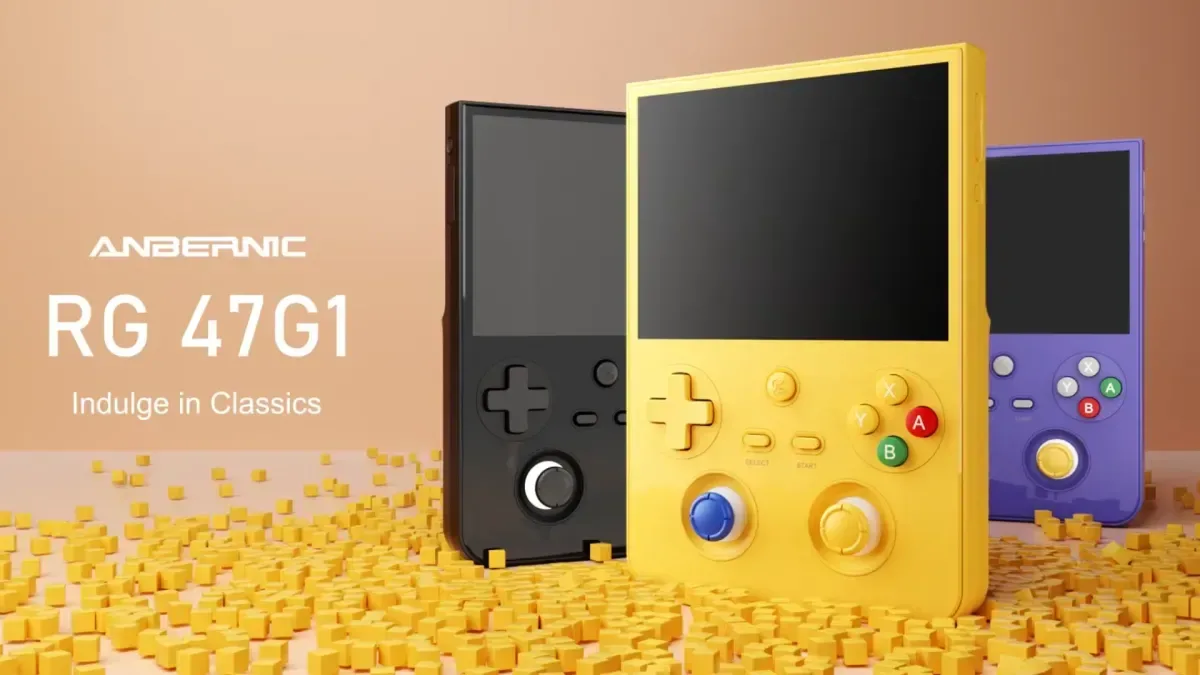
ANBERNIC has revealed the RG 47G1, a new vertical Android handheld that pairs a deliberately retro silhouette with a specification that is firmly aimed at the current portable market. Its headline feature is a 4.7-inch display with a 4:3 aspect ratio and a 120Hz refresh rate, while the announced hardware list also includes Qualcomm’s Snapdragon G1 Gen 2 processor, a 5,500mAh battery and an active cooling system.
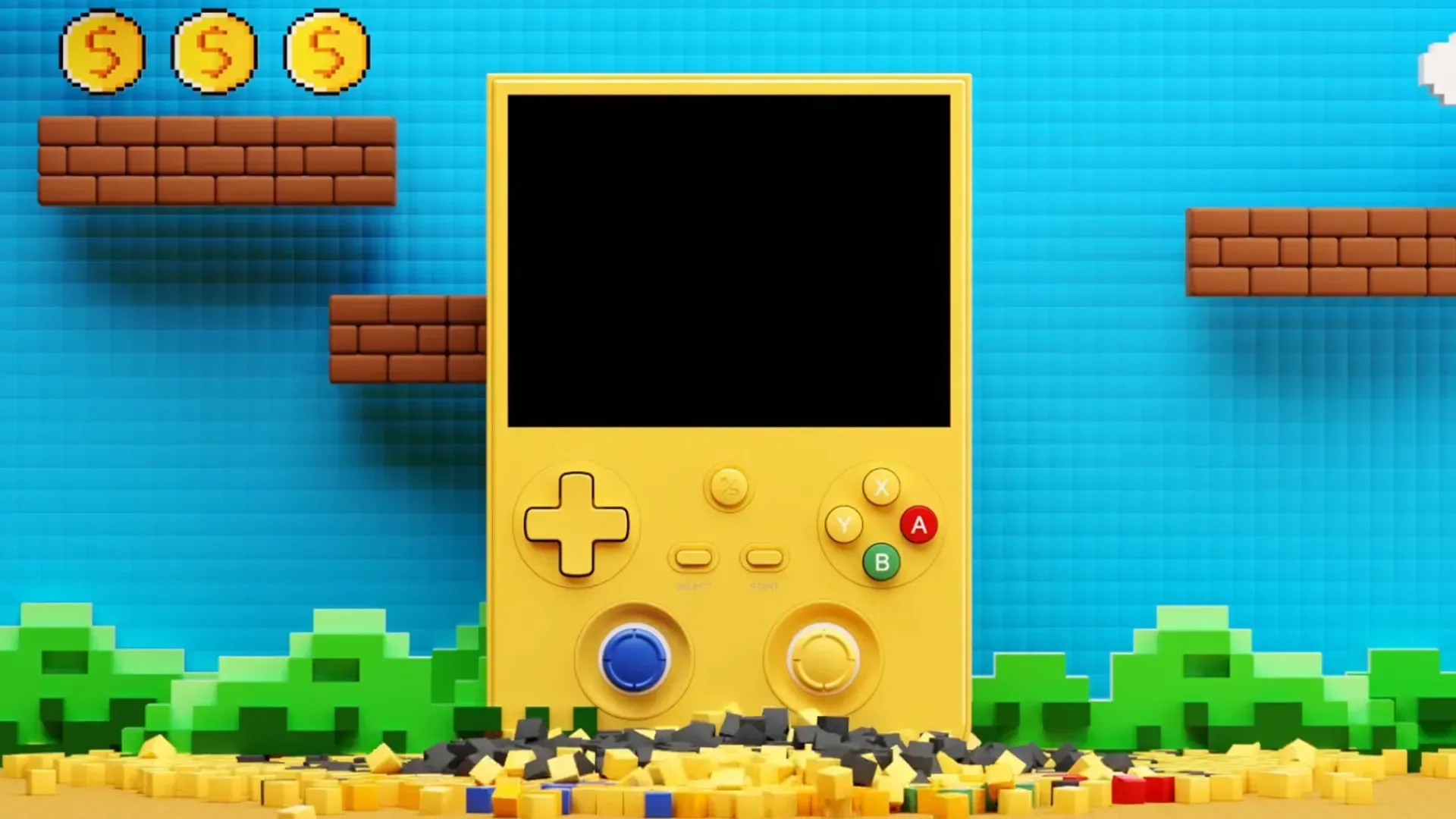
The company is positioning the RG 47G1 as an Android device with an “iconic retro design,” high-refresh-rate screen and value-oriented performance. It will be offered in Pika Yellow, Retro Purple and Black. The yellow and purple versions are described as having a sparkling glass front faceplate, giving the handheld’s front a more decorative finish than the standard all-business black option.
There is one major caveat for anyone building a purchase plan around it: ANBERNIC has not provided a price or release date. The RG 47G1 is an early reveal, not a product with confirmed retail timing. That makes its eventual value difficult to judge, especially in a category where the final price can substantially change how attractive a specification sheet looks.
What has been announced for the RG 47G1
- Display: 4.7 inches, 4:3 aspect ratio, 120Hz refresh rate
- Processor: Qualcomm Snapdragon G1 Gen 2
- Battery: 5,500mAh
- Thermals: active cooling system
- Operating system category: Android handheld
- Colours: Pika Yellow, Retro Purple and Black
- Exterior detail: sparkling glass front faceplates on Pika Yellow and Retro Purple
That combination is notable because it puts screen behaviour at the centre of the pitch. Retro handheld announcements usually make a display’s size, resolution or aspect ratio the easy talking points. Here, the refresh rate is the figure doing the heavy lifting.
Why 120Hz is interesting — and what it does not promise
Refresh rate is the number of times a display updates each second. A 120Hz panel can refresh up to 120 times per second. In principle, that can make menus, Android navigation and games designed to run at high frame rates appear more fluid. It can also reduce the time between display updates relative to lower-refresh panels.
That does not mean every classic game will suddenly run at 120 frames per second. A game’s original frame rate, the performance of the software running it and the way that software is presented all remain important. Many older games were built around frame rates far below 120fps. A high-refresh screen cannot rewrite their original animation or logic.
Its potential benefit for retro play is more nuanced: a faster-refreshing panel may offer more flexible timing for displaying content that originates at different frame rates. In modern Android games, meanwhile, the screen gives software capable of higher frame rates the opportunity to show them. Whether a particular title takes advantage of that opportunity will depend on the game and the device’s software configuration, neither of which has been detailed here.
The 4:3 shape is the other half of the display story. An aspect ratio describes the relationship between a screen’s width and height. A 4:3 panel is closer to the squarer proportions associated with many older games than the widescreen displays used by most current phones. For people who prefer a screen shape aligned with classic presentation rather than one that is fundamentally phone-like, that is a meaningful design decision.
Related coverage includes ANBERNIC Unveils RG 47G1 Vertical Android Handheld With 120Hz Screen.
There will still be compromises. Modern Android interfaces and games are commonly designed with wider screens in mind, so a 4:3 display is not automatically the ideal canvas for every app. The RG 47G1’s appeal is in its focused identity: a vertical portable that puts traditional-looking proportions first while still using Android hardware.
A vertical design in a crowded handheld space
Vertical handhelds place the screen above the controls, echoing the basic layout associated with many early portable systems. That configuration is compact, familiar and particularly suited to games that were created around a portrait-oriented handheld body. ANBERNIC’s latest approach is not merely to repeat the old formula, but to combine it with a relatively large screen, a 120Hz panel and active cooling.
The company’s emphasis on a playful colour palette matters here too. Pika Yellow and Retro Purple are overtly retro-styled names, while the sparkling glass faceplates are a visual differentiator intended to make the device look less utilitarian. Black provides the restrained alternative for buyers who want the same format and core specification without the brighter aesthetic.
Design, however, will be only one part of the final equation. Vertical handheld buyers will need details that have not yet been announced, including the price, release date, software experience and the practical effect of the cooling solution. The current reveal establishes the RG 47G1’s broad direction, not its complete buying case.
What the Snapdragon chip, battery and cooling suggest
The processor named for the RG 47G1 is the Qualcomm Snapdragon G1 Gen 2. A system-on-chip, often shortened to SoC, combines major components such as processing and graphics functions into the central silicon package used by a mobile device. ANBERNIC has framed the result as high-value performance, but has not set out game-specific performance expectations or compatibility claims for the RG 47G1. It is best not to turn the processor name alone into promises about which games it will run or how they will perform.
The listed 5,500mAh battery is a capacity rating. It is useful for comparing the size of the battery, but it is not a direct runtime figure. Actual battery life will vary with screen brightness, refresh-rate behaviour, workload, cooling activity and the software being used. With no official runtime estimate in the announcement, buyers should avoid treating the capacity number as a guarantee of a certain number of hours.
Active cooling means the device is designed to use a cooling system rather than rely only on passive heat dissipation through its shell. The practical aim is to manage heat during demanding workloads. It may be especially relevant to an Android handheld expected to operate beyond lightweight retro titles, but its noise level, effectiveness and behaviour are all unknown at this stage.
The details that still need answers
For now, the RG 47G1 is best understood as a hardware reveal with a very clear visual and display-led proposition. The 4.7-inch 4:3 screen and 120Hz refresh rate are the central points; the Snapdragon G1 Gen 2, 5,500mAh battery and cooling system round out a package intended to be more capable than a purely nostalgic device.
Price is the most important missing detail. ANBERNIC has described the machine in value terms, but without a number, shoppers cannot measure it against existing vertical Android handhelds or decide whether the newer display is worth waiting for. Release timing is equally open. No date has been announced, so any expectation of an early-2027 launch remains speculation rather than a confirmed schedule.
That uncertainty is especially relevant during a season when portable hardware is frequently discounted. Anyone comparing options may also want to keep an eye on broader Black Friday gaming deals, but the RG 47G1 itself should not be treated as an available deal until its price and launch plans are officially set.
For buyers who already own a vertical handheld, the question will be whether the faster display, updated processor and bright new finishes represent a compelling step up. For newcomers, the appeal is easier to state: the RG 47G1 is aiming to put a classic portable shape around a contemporary Android feature set. The next announcement needs to explain exactly what that proposition will cost and when it will arrive.