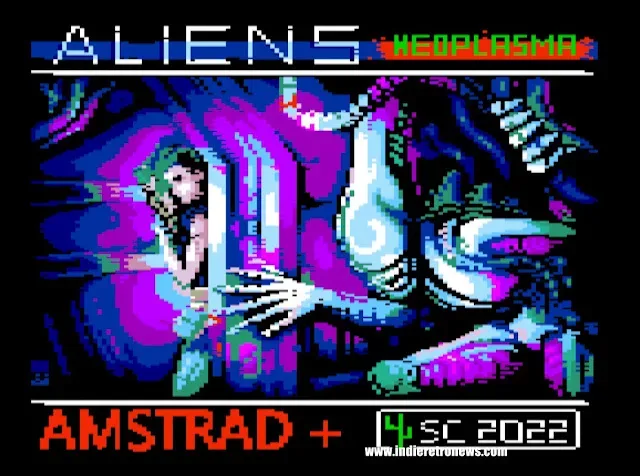
Aliens NeoPlasma, the tense science-fiction horror platformer first released for ZX Spectrum, has made its way to the Amstrad CPC Plus in an unofficial enhanced port. Developed by Devil System with AI assistance, the game follows Ashley Smith, who wakes aboard the starship Achilles and finds a routine journey transformed into a hostile struggle to stay alive.
The CPC Plus version keeps the central premise intact: Ashley must negotiate a dangerous maze of platforms, ladders and automatic doors while dealing with limited ammunition and grenades. Survival is not framed as a matter of simply shooting everything in sight. Resources are scarce, the ship’s corridors conceal threats, and the immediate objective is to reach the medical bay.
That setup gives the game a familiar but effective survival-horror structure on 8-bit hardware. Movement through the environment, access to routes and supplies, and the decision to spend a finite explosive or round of ammunition are all part of the pressure. The Achilles is not merely a backdrop for enemy encounters; its connected spaces, terminals and counters are central to the player’s attempt to make it through.
A Spectrum game adapted for the CPC Plus
Aliens NeoPlasma originally appeared on the ZX Spectrum and was developed by the Sanchez Crew. The new version is described as an unofficial port for the Amstrad CPC Plus, rather than a wholly separate sequel or remake. Its most notable additions concern how it uses the Plus machine’s visual capabilities.
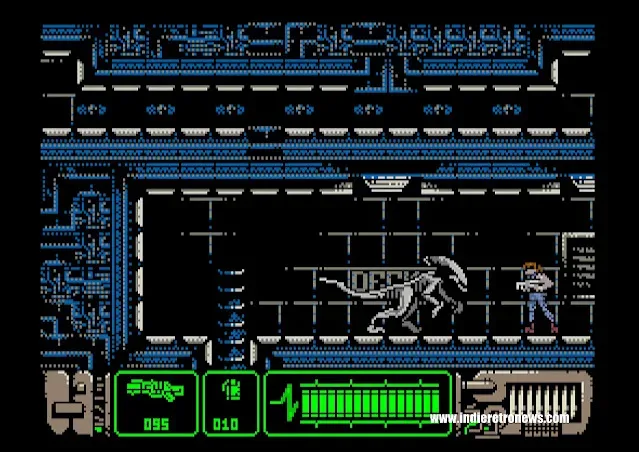
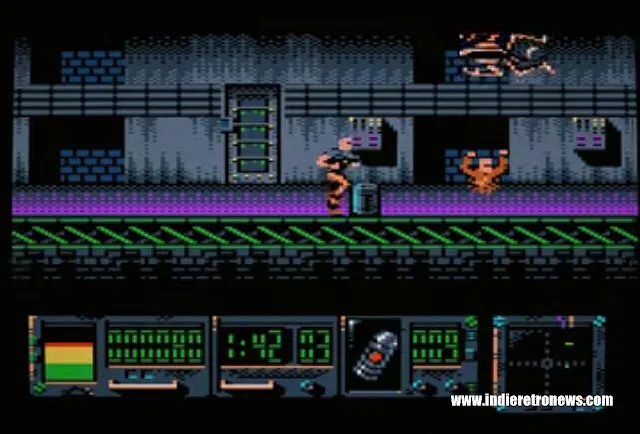
During gameplay, the port uses MODE 1, the CPC display mode identified here as the higher-resolution presentation. It also uses custom sprite colours and the system’s ASIC sprites. In practical terms, a sprite is an independently handled moving visual object such as a player character or enemy. Hardware sprite support can reduce the amount of work otherwise needed to draw and move those objects as part of the game’s general display, helping the action remain fluid.
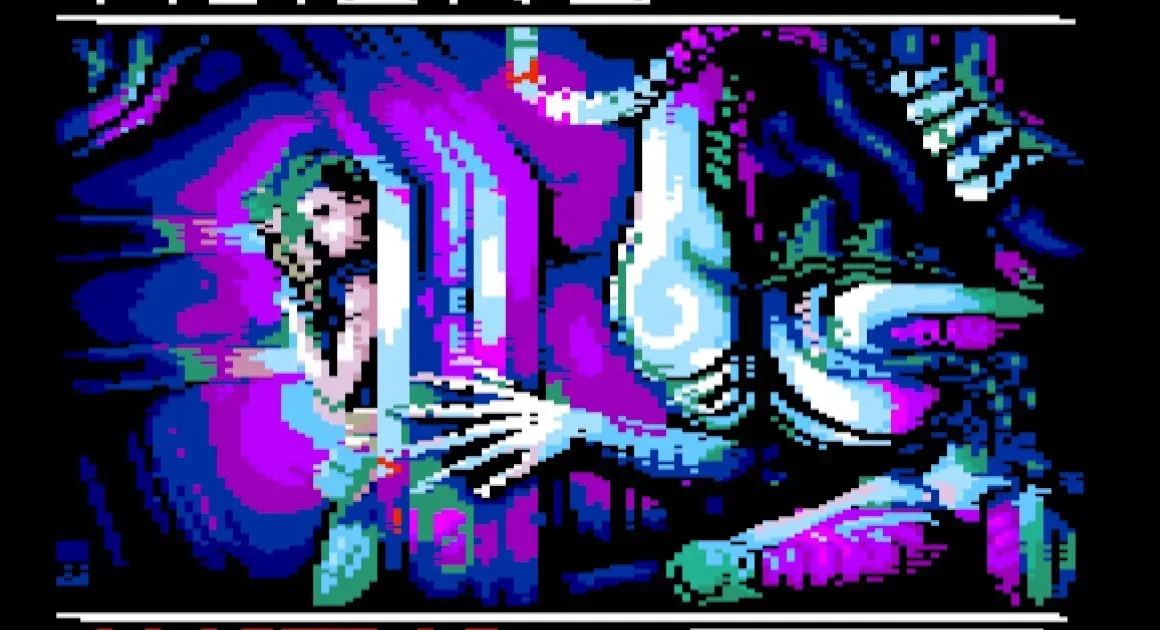
The result is a version built around sharper gameplay graphics while still preserving a different visual approach for its presentation material. The cover and title screen use MODE 0, the more colourful display mode. That split is a sensible fit for the game’s needs: MODE 1 serves the navigational clarity needed among ladders, platforms and doors, while MODE 0 is used for the atmospheric art that introduces the experience.
What the enhanced presentation means
“Enhanced” can describe many kinds of ports, so the available details are worth separating carefully. The information provided points to visual and technical adaptation for Amstrad CPC Plus hardware: high-resolution MODE 1 graphics in play, custom sprite colours, and hardware-accelerated ASIC sprites. It does not establish new levels, altered story material, different enemies, fresh music, or changes to the underlying progression. Those should not be assumed from the label alone.
What is clear is that the port is designed to use the Plus rather than merely display the original game unchanged. Smooth on-screen motion matters especially in a platformer where a player is traversing vertical routes and narrow spaces under threat. Clearer player and enemy movement can be as valuable to the atmosphere as it is to readability: a hostile presence that moves cleanly across a dark corridor is easier to track, but no less unsettling.
Related coverage includes Aliens NeoPlasma Reaches Amstrad CPC Plus With Enhanced Visuals.
Custom sprite colours also matter because they permit a tailored look for the objects moving around the screen. Combined with the two display modes, the version appears aimed at balancing a colourful title presentation with a sharper in-game view. It is a technical choice that supports the game’s immediate concerns: identifying paths, judging movement, locating interactable points, and reacting before limited supplies become a larger problem.
Survival on the Achilles
Ashley’s route through the Achilles is defined by the search for safety, specifically the medical bay. The journey requires using terminals and counters encountered across the ship, adding an interaction layer beyond platforming and combat. These objects appear to be part of the player’s route through the vessel and of the broader attempt to survive its concealed horrors.
The important tension comes from the collision of several pressures:
- Navigation: ladders, platforms and automatic doors shape where Ashley can go and how quickly she can retreat or advance.
- Threat: dangers are waiting in the ship’s dark corridors, making every newly entered area uncertain.
- Resource management: ammunition and grenades are finite, so their use has consequences.
- Objective pressure: the medical bay gives the exploration a clear survival-focused destination.
- Environmental interaction: terminals and counters are not incidental scenery; players need to use what they find.
Resource management is the technical term for making decisions around limited consumables. In this case, it means weighing whether ammunition or grenades should be used in a given danger rather than treating combat as inexhaustible. The supplied details do not specify exact quantities, weapon behaviour or the effects of individual terminals, but the intended mood is clear: supplies cannot be treated casually.
That limitation is also what makes the platforming spaces meaningful. Ladders and doors are not just architectural decoration when the player may need to avoid a threat, find an alternative route or conserve precious firepower. A labyrinth works best in horror when its geography forces attention, and the Achilles is presented as precisely that kind of environment.
AI assistance and the port’s context
The development credit notes that Devil System made Aliens NeoPlasma with help from AI. That is a significant part of how the game is described, though the available information does not detail which parts of production used AI, what tools were involved, or how extensively they shaped the finished work. It would therefore be inaccurate to claim that AI created particular art, code, audio or design elements.
What can be said is that the game’s arrival on another retro platform adds a concrete release to the continuing discussion around AI-assisted creative work. The broader argument is not settled by one project, and a credit alone does not explain a production process. But it does make transparency important: players can distinguish between confirmed facts—the AI-assistance credit and the named developers—and assumptions that have not been substantiated. For a wider look at how creative-industry figures have framed the issue, see this discussion of AI as a creative tool and concerns around artists.
Why the CPC Plus version is notable
The Amstrad CPC Plus port gives a game associated with the ZX Spectrum another hardware-specific form without abandoning its core identity. It remains a claustrophobic platforming survival game about Ashley Smith’s escape attempt aboard the Achilles. The key change is the use of CPC Plus display modes and ASIC sprite capabilities to shape how that ordeal looks and moves on screen.
For players interested in retro releases, the appeal is not simply that an existing game can now be played on another machine. It is that the adaptation has a stated visual direction: MODE 1 for the play field, MODE 0 for the cover and title screen, plus custom colours and hardware sprite handling. Those are concrete technical decisions, not vague claims of improvement.
The game’s fundamentals remain deliberately harsh. Ashley has an unsafe ship to cross, scarce ammunition and grenades to manage, interactive points to locate, and a medical bay to reach before the dangers in the Achilles end the journey. The enhanced CPC Plus presentation may make that nightmare run more fluid, but it does not make the corridors any friendlier.