Raw Fury has used its first “Unshowcase” to put release dates, platform plans and test details behind a broad group of games rather than centering the presentation on a single marquee reveal. The update stretches from a programmable dungeon crawler and a new Kingdom Two Crowns quest to a co-op physics game, console ports and a handful of reminders for projects already on the way.
The most distant firm date belongs to Dungeon Automata, from Medium-Rare Games, which is scheduled to launch on January 26, 2027. Nearer-term releases include the Pharaoh Lands DLC for Kingdom Two Crowns on December 1, KuloNiku: Bowl Up! on Nintendo Switch 2 and Nintendo Switch on November 25, Appulse on November 26, and Dome Keeper on PS5 and Nintendo Switch on December 14.
There is also a limited-access opportunity on the board. Sign-ups are open for a Steam playtest of Bye Bye Bonnie, which is planned to start in early December and supports invitations for as many as three friends. Raw Fury additionally pointed players toward new material for Cassette Beasts 2002 and My Cannibal Family, noted that Hillthorn is already available, and held back one more announcement for December.
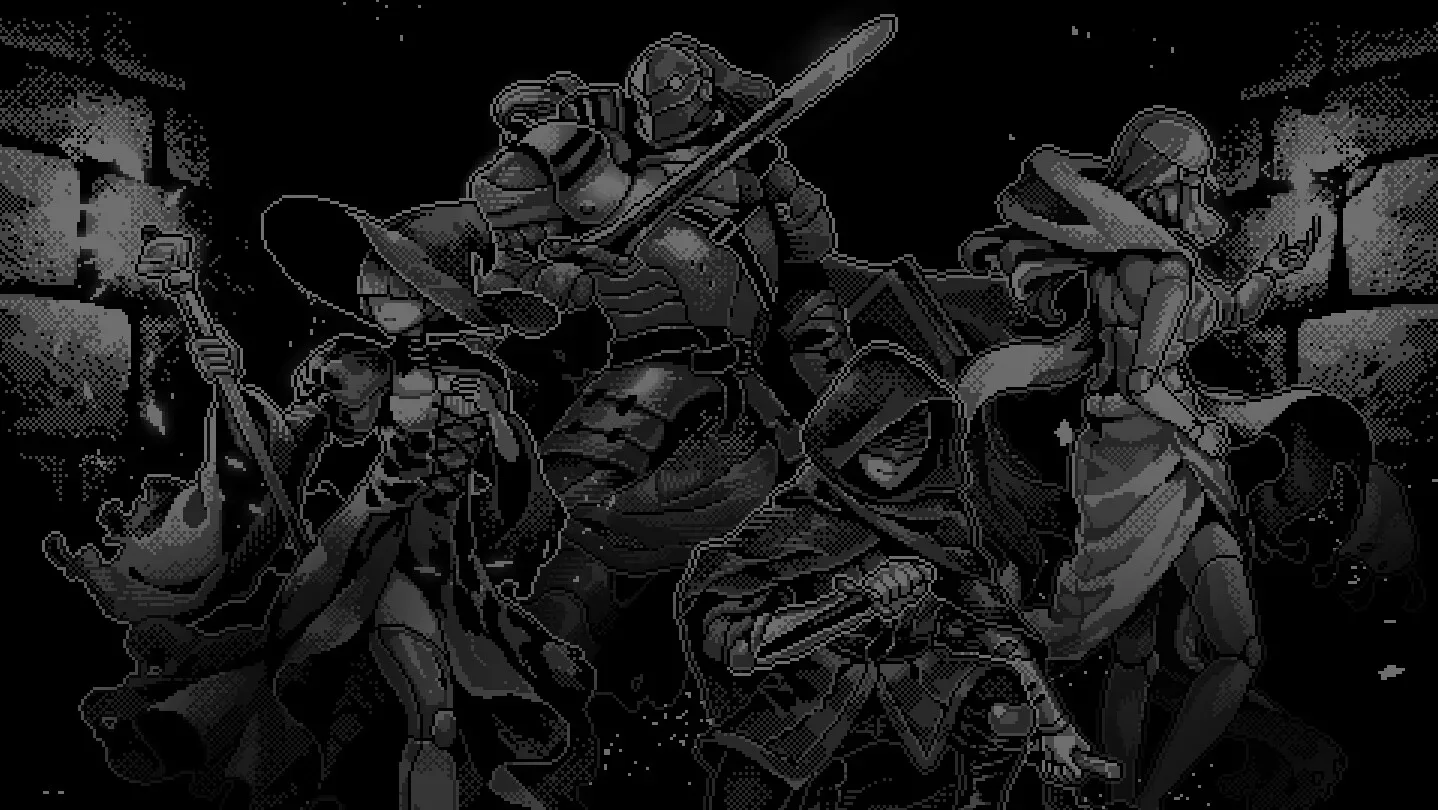
Dungeon Automata’s central idea: program first, then enter the dungeon
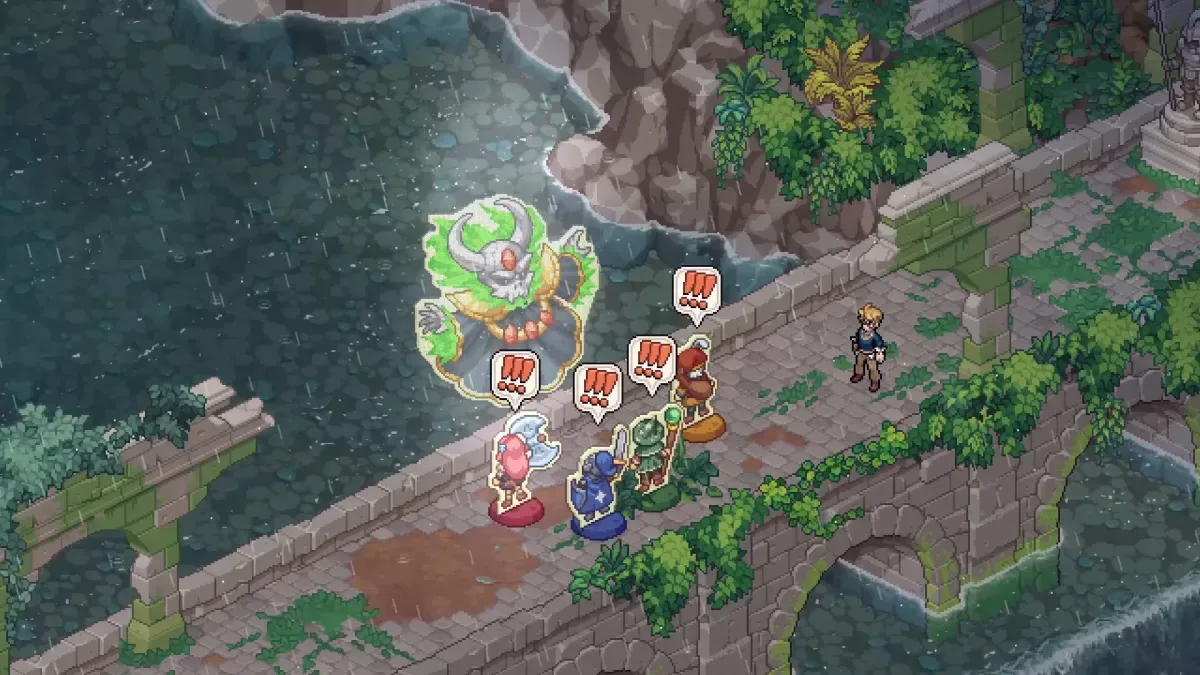
Dungeon Automata is framed as a meeting point between a JRPG-style dungeon crawler and an auto battler. That pairing matters because the supplied description puts the player’s attention on preparation and system design as much as direct moment-to-moment command.
An auto battler is broadly a strategy format in which combat actions resolve automatically once the player has established the relevant team, formation, rules or other setup. The player’s skill therefore often lives in reading an opponent, making efficient changes between encounters and building a setup with useful interactions. Here, the described tool is visual node-based programming.
Node-based programming presents instructions as visual elements that can be connected into a chain or network. Rather than entering traditional lines of code, a player can work with linked rules and conditions. In the context outlined for Dungeon Automata, those nodes are used to direct the party. Players will analyze enemy actions and optimize party “blueprints” in order to keep pushing through the dungeon.
That makes “blueprints” an important word in the announcement. It suggests that the party’s behavior is not simply a fixed character build; it is a set of instructions that can be revised as players learn how enemies operate. The likely practical loop, based on the announced premise, is observation followed by adjustment: identify an enemy behavior, alter the party logic to account for it, then see whether the new plan survives the next challenge. Specific combat systems, party sizes and progression details have not been outlined, so it remains too early to assume exactly how far those blueprints can be customized.
The January 2027 date gives this concept a clear place in the publisher’s longer-range lineup. It is also one of the more technically distinct projects in the collection of updates, since its core pitch is about giving players a visual way to author decision-making rather than merely issuing each action manually.
Pharaoh Lands gives Kingdom Two Crowns another quest
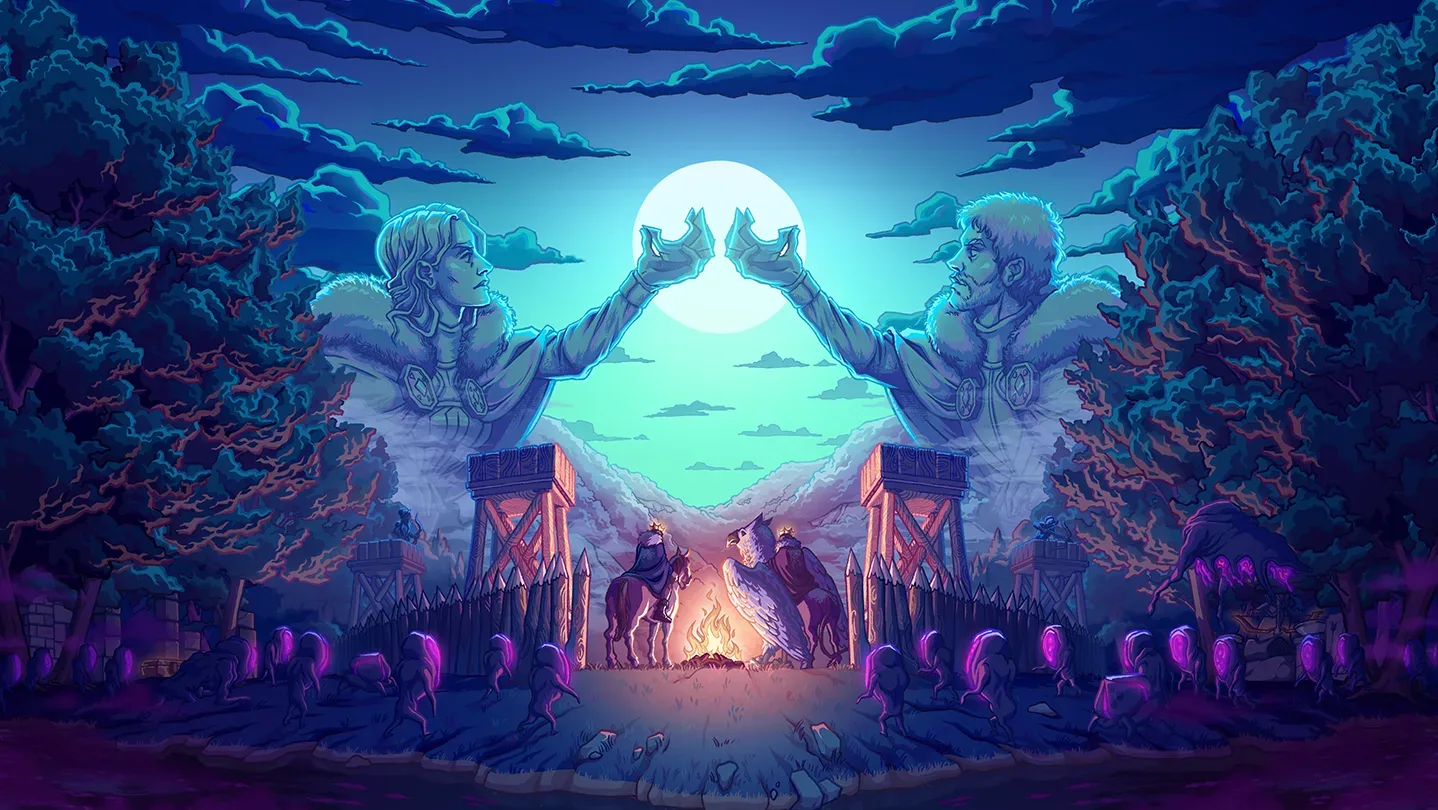
Kingdom Two Crowns is getting Pharaoh Lands on December 1. The DLC adds another quest to the side-scrolling micro-strategy adventure and places players in an ancient Egypt-inspired Valley of the Kings, where they will investigate the source of the chaos.
DLC, or downloadable content, is additional material made for an existing game. In this case, the key promise is a new quest and setting rather than an announced sequel. Players interested specifically in Kingdom Two Crowns should therefore view Pharaoh Lands as an expansion of that game’s ongoing adventure. The announcement does not specify its price, exact length, or every gameplay addition, so those are details still to be clarified.
The “micro-strategy” label is useful shorthand for a game built around strategic choices without necessarily requiring the sprawling interface or scale commonly associated with grand strategy. Combined with the side-scrolling description, it signals a format in which movement through a horizontal world and economical decision-making are both central. Pharaoh Lands uses the Valley of the Kings as its thematic location, but only the Egypt-inspired setting and the chaos-focused quest have been confirmed so far.
Bye Bye Bonnie opens sign-ups for co-op playtesting
Bye Bye Bonnie, from Brainwash Gang, is entering the pre-release testing phase on Steam. The playtest is scheduled for early December, and participants can invite up to three friends, allowing groups of up to four people to play together if all invitation slots are used.
This is explicitly a playtest, not a statement that the game itself is launching in early December. A playtest is a session intended to let selected players try a work in progress. It can help developers gather feedback and observe how a game functions in real player groups, but the announcement does not state what feedback will be collected, how long the test will run, or whether every person who signs up will gain access.
The game is described as handcrafted, co-op and physics-based, combining adventure platforming with golf-inspired mechanics. “Physics-based” generally means that interactions are designed around simulated motion, force or collision. “Golf-inspired” identifies the influence without confirming that the game uses a conventional golf structure, scorecard or course format. The most concrete takeaway is that the design combines traversal with mechanics informed by golf, and that cooperation is an intended part of the experience rather than a peripheral option.
For groups that want to take part, the invitation allowance is especially relevant: a single participant can bring three friends. That offers a clearer picture of the planned social scale than a generic statement that the game has multiplayer. It does not, however, establish broader platform support beyond the Steam playtest.
November and December release calendar
The Unshowcase also makes the closing stretch of the year unusually busy across Nintendo, PlayStation and PC. Here are the dated items in chronological order:
- November 25: KuloNiku: Bowl Up! launches for Nintendo Switch 2 and Nintendo Switch.
- November 26: Appulse releases.
- December 1: Kingdom Two Crowns receives its Pharaoh Lands DLC.
- Early December: The Steam playtest for Bye Bye Bonnie is expected to begin.
- December 14: Dome Keeper arrives on PS5 and Nintendo Switch.
- January 26, 2027: Dungeon Automata launches.
KuloNiku: Bowl Up! is the update with the clearest immediate Nintendo focus, having been announced for both the newer Switch 2 hardware and Nintendo Switch. That dual-platform statement is important: it confirms both versions, rather than leaving the earlier Switch’s status implied.
Dome Keeper, meanwhile, has a console arrival set for PS5 and Nintendo Switch. The update describes it as arriving on those platforms on December 14; it does not provide additional information about content differences, performance modes or other platform-specific features. Players should avoid assuming parity details that have not been announced.
Appulse is characterized as a top-down shooter with pinball-inspired mechanics and releases November 26. A top-down game uses a camera perspective looking down on the play space, while pinball-inspired mechanics point to design ideas taken from pinball rather than necessarily a literal pinball table. The release notice establishes the date, but it does not elaborate on the full mechanical implementation or platform lineup.
Cassette Beasts 2002, My Cannibal Family and Hillthorn remain in the mix
Not every mention came with a new release date. Cassette Beasts 2002 recently received a Showcase containing new details, while My Cannibal Family now has a gameplay walkthrough showing its monster-horror simulation in action. A walkthrough is best understood here as a presentation of gameplay, not a guarantee of a public demo or a release date.
Hillthorn is available now, making it the sole project in the roundup identified as already released. Beyond that availability note, the update does not set out new features or future content plans for the game.
Together, these reminders show why the presentation is better read as a publisher-wide status board than a conventional single-game reveal. It contains imminent releases, expansion content, a work-in-progress test, an already available game, fresh video material and a future 2027 launch. That variety can make the schedule harder to scan, but it also provides a practical way for players to separate what can be played now, what needs a playtest sign-up and what belongs on a longer-term watchlist.
What players can act on now—and what remains unknown
There are three immediate actions supported by the update. Players can sign up for the Bye Bye Bonnie Steam playtest; they can track the dated November and December releases or DLC; and they can look into the newly highlighted Showcase and walkthrough material for Cassette Beasts 2002 and My Cannibal Family. There is also one project, Hillthorn, identified as currently available.
Just as important are the boundaries of what was not announced. There are no prices supplied for the games or Pharaoh Lands. There are no detailed lists of features, no confirmed test duration for Bye Bye Bonnie, and no explanation of the additional December announcement beyond the fact that it has been teased. The Unshowcase provides a set of useful calendar markers, not exhaustive product breakdowns.
For a wider look at how game publishing announcements can intersect with industry news, see this industry update. In Raw Fury’s case, the immediate story is less about one surprise and more about a deliberately varied slate: programmable dungeon strategy in 2027, an Egyptian quest for Kingdom Two Crowns, co-op testing for Bye Bye Bonnie, and a concentrated set of releases across the next several weeks.