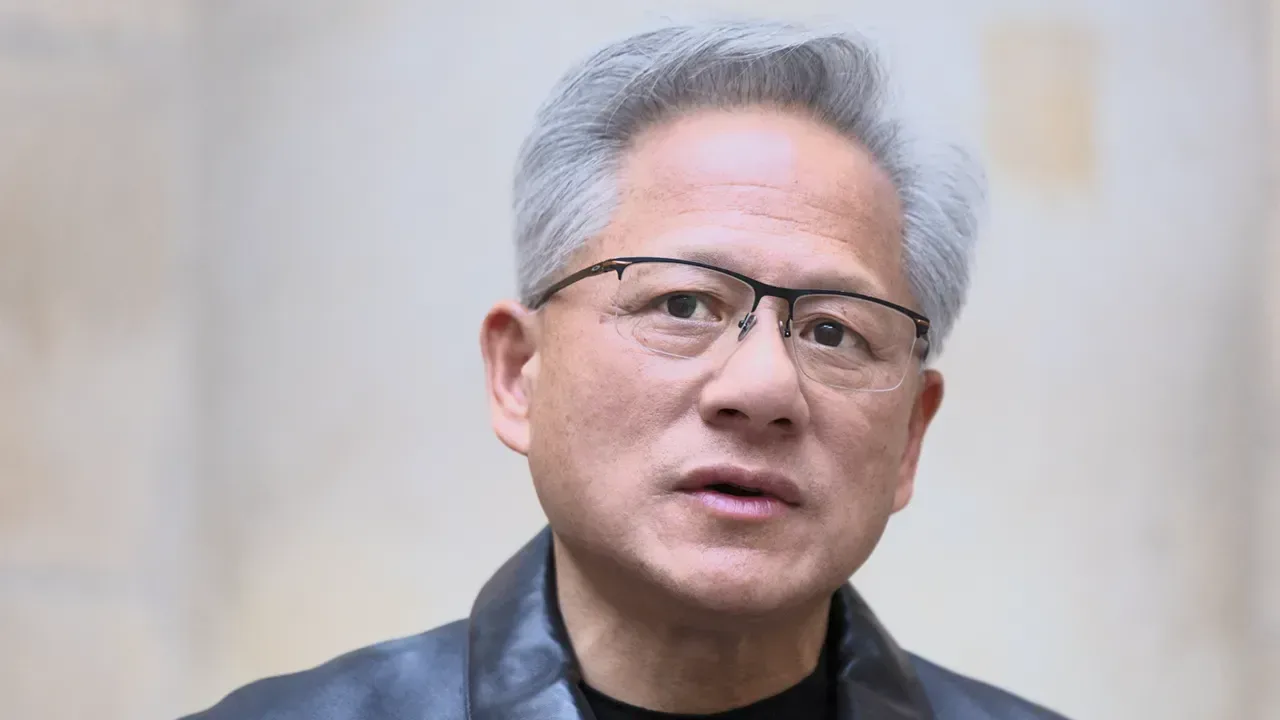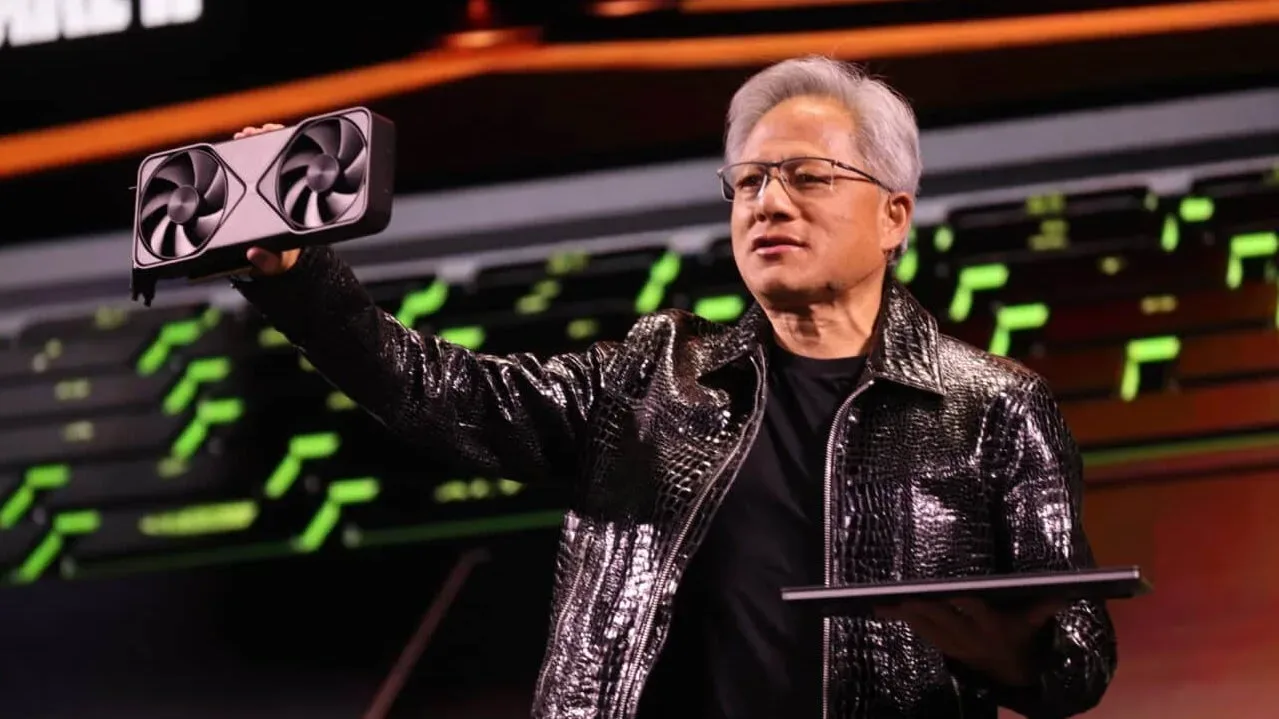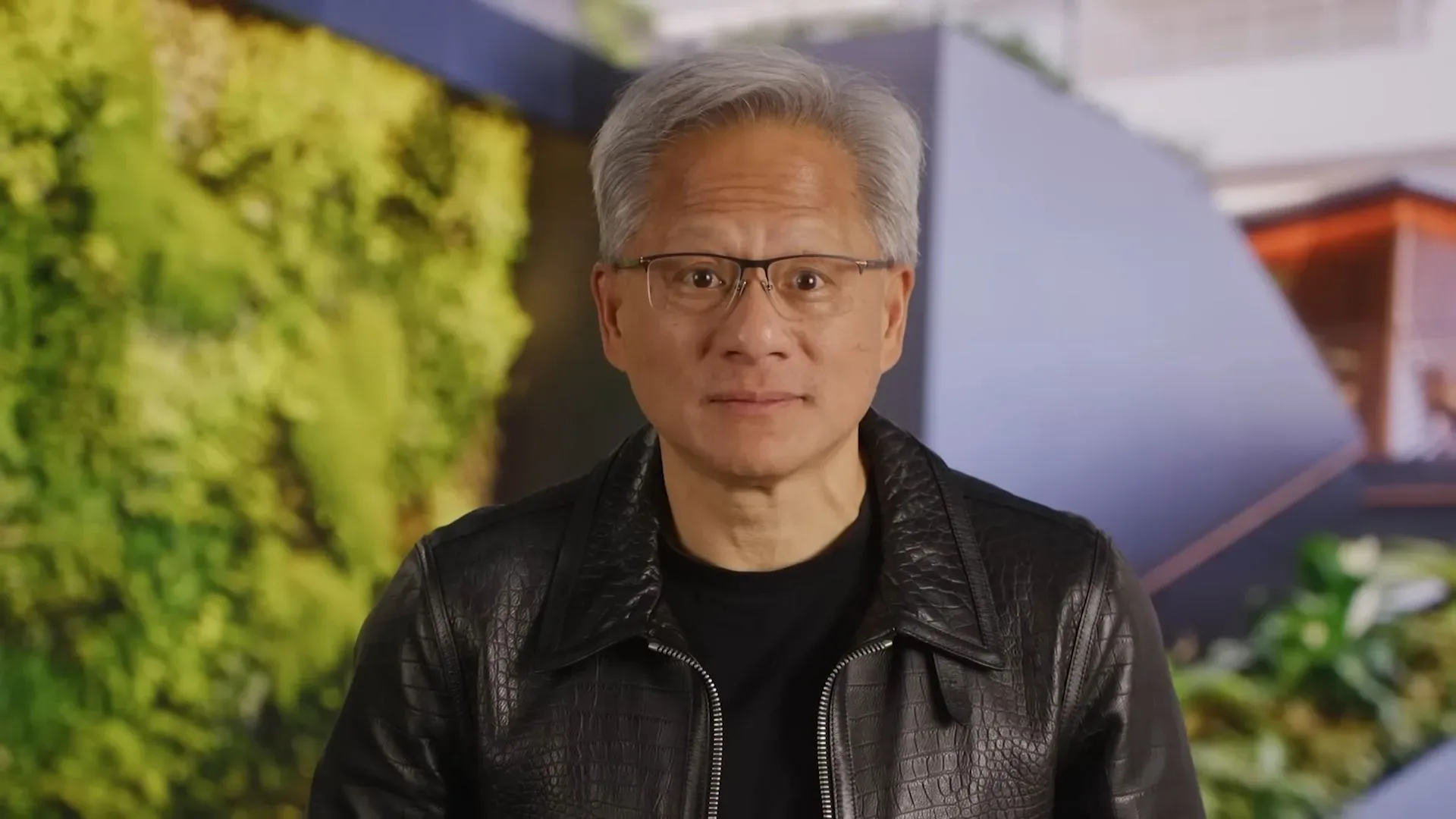

50 Cent has turned a major technology-company leadership shake-up into a G-Unit recruitment gag, posting an AI-generated video that depicts him alongside Jensen Huang and inviting the departing Nvidia executive to become head of AI at G-Unit Film & Television.
The clip uses 50 Cent’s “P.I.M.P.” and is not genuine footage of the rapper and Huang together. Its caption frames the proposed position as a playful pitch rather than a business announcement: there is no stated deal, hiring, partnership or role for Huang at G-Unit.
The timing is what gives the post its unusually sharp contrast. On November 12, Nvidia said Huang had resigned immediately as president, chief executive and board member. Colette Kress, the company’s finance chief, became interim CEO while continuing as CFO. Nvidia’s board is looking internally and externally for a permanent chief executive, and it named Harvey C. Jones as its first chairman.
A joke built around AI imagery
The post’s format matters as much as its punchline. Rather than merely writing an invitation, 50 Cent used a synthetic video to put himself and Huang in the same fictional visual space. AI-generated media can combine real people’s likenesses in scenes that never happened; here, the post makes clear that viewers are seeing a constructed clip, not a meeting or collaboration.
That distinction is important when the subject is a recognisable corporate figure in the middle of a fast-moving news event. A stylized or comic video may be an obvious joke in context, but the underlying production method can still obscure the line between a real encounter and an invented one when it is reposted without its original caption.
It also makes the gag neatly self-referential. The hypothetical job is an AI leadership job, and the visual device selling the joke is AI-generated. For a film and television venture, AI can broadly refer to computer systems used to generate or assist with text, images, sound and video. The post does not identify any specific tool, project or production plan, so it should not be read as an indication that G-Unit Film & Television has adopted a particular AI system or hired an executive to oversee one.
AI’s expanding role in entertainment has created plenty of practical questions around disclosure, authorship, performer likenesses and audience trust. But those wider debates are separate from this post. The confirmed, narrow point is that this was an AI-made video used for a public joke—not evidence of a new media-tech initiative.
Why Nvidia’s leadership news is more consequential than the punchline
Huang’s resignation followed a board-level crisis involving personal-conduct allegations and an independent investigation. In a November 8 message to employees, Huang acknowledged being unfaithful to his wife, apologised to his family and said there was no excuse for his actions.
“I was unfaithful to my wife. My actions hurt her and our children. There is no excuse for what I did. I am deeply sorry.”
The matter also raised questions beyond the personal disclosure. It involved Alice Huang, a businesswoman linked to Megaspeed; she and Jensen Huang are not related. Reporting had described U.S. intelligence concerns about her relationship with the chip executive and alleged connections to Chinese intelligence. Those suspicions remain allegations, not an established finding that espionage occurred.
That careful separation is essential. An allegation is a claim that has not been proven. An independent investigation is a formal fact-finding process, not a declaration that misconduct or a security breach has been established. On November 8, the board said it had no reason to believe national security or company secrets had been compromised.
Two days later, independent directors retained former acting U.S. Attorney Joon H. Kim and the law firm Wachtell, Lipton, Rosen & Katz for the inquiry. A further reported alleged relationship concerned Kimberly Powell, Nvidia’s healthcare vice president, who reported to Huang. Neither the existence of an investigation nor reports concerning its subject matter should be treated as a substitute for its eventual findings.
For Nvidia, the immediate practical outcome is governance continuity and a search for a permanent leader. Kress retains her finance responsibilities while serving as interim CEO, a structure that can keep both executive decision-making and financial oversight moving during a transition. The board’s choice to search inside and outside the company signals that it has not publicly limited the succession process to one predetermined candidate.
What an interim CEO actually means
An interim CEO is a temporary chief executive appointed to lead an organisation while its board determines a longer-term appointment. The title does not necessarily indicate whether that person will, or will not, be considered for the permanent role. Nvidia has said Kress is interim CEO and that its search will include internal and external candidates; beyond that, the eventual appointment remains unknown.
The new chairman designation is also notable. A chairman leads the board rather than the company’s day-to-day executive operation. The board’s role includes overseeing management, succession and major governance matters. Naming Jones as Nvidia’s first chairman gives that oversight structure a defined leader at the same moment the company is handling an immediate CEO transition and an ongoing independent inquiry.
For people following technology and games, the company-level change is worth separating from speculation about products, platforms or future plans. The supplied information does not describe any changes to Nvidia hardware, software, game partnerships or consumer support. It establishes a leadership transition and investigation, not a roadmap revision. Treating the latter as inevitable would be guesswork.
The G-Unit context: publicity, not a personnel move
50 Cent’s wording also points toward G-Unit’s film-and-television ambitions, including activity tied to Shreveport studio plans. Still, the social post is best understood as an attention-grabbing cultural response, not a corporate filing in disguise. A caption inviting someone to “come be head of AI” is not the same thing as a confirmed appointment, and the AI video does not show an actual shared production.
That gap between viral presentation and real-world confirmation is increasingly useful to keep in mind around AI content. Viewers can apply a basic checklist:
- Check whether the depicted event happened: A realistic-looking clip can be synthetic, edited or staged.
- Read the surrounding context: Captions and labels may establish that a post is satire, promotion or commentary.
- Separate a joke from a transaction: A public invitation does not confirm a contract, meeting or employment offer.
- Keep allegations distinct from findings: Reported concerns and investigative steps are not proof of every claim associated with them.
These are not merely social-media hygiene tips. In a story where an AI-generated video intersects with corporate upheaval, the distinction affects how quickly misinformation can spread. The joke works because it is implausibly bold: one of entertainment’s most conspicuous personalities mock-recruiting a recently resigned technology leader. Yet its visual realism is also precisely why the context needs to travel with it.
There is a related issue for the games space, where AI’s use in fan projects and asset creation has been contentious. Questions around AI tools and official game assets show how technical capability, rights concerns and public messaging can collide well before a finished product reaches an audience.
What is confirmed—and what is not
The confirmed core of this story is straightforward: 50 Cent posted an AI-generated, non-documentary video with a humorous invitation for Huang to lead AI at G-Unit Film & Television; Nvidia announced Huang’s immediate departure from its CEO, president and board roles; Kress became interim CEO while remaining CFO; and the board launched and staffed an independent investigation.
What is not established is equally significant. There is no announced G-Unit employment agreement. There is no indication that 50 Cent and Huang filmed together. There is no stated evidence that Nvidia’s secrets or national security were compromised. And allegations regarding intelligence ties must not be presented as fact.
That leaves the G-Unit post as a timely, technically themed joke set against a serious executive transition. The AI video may make it shareable, but Nvidia’s succession process and independent inquiry are the developments that will determine what comes next.