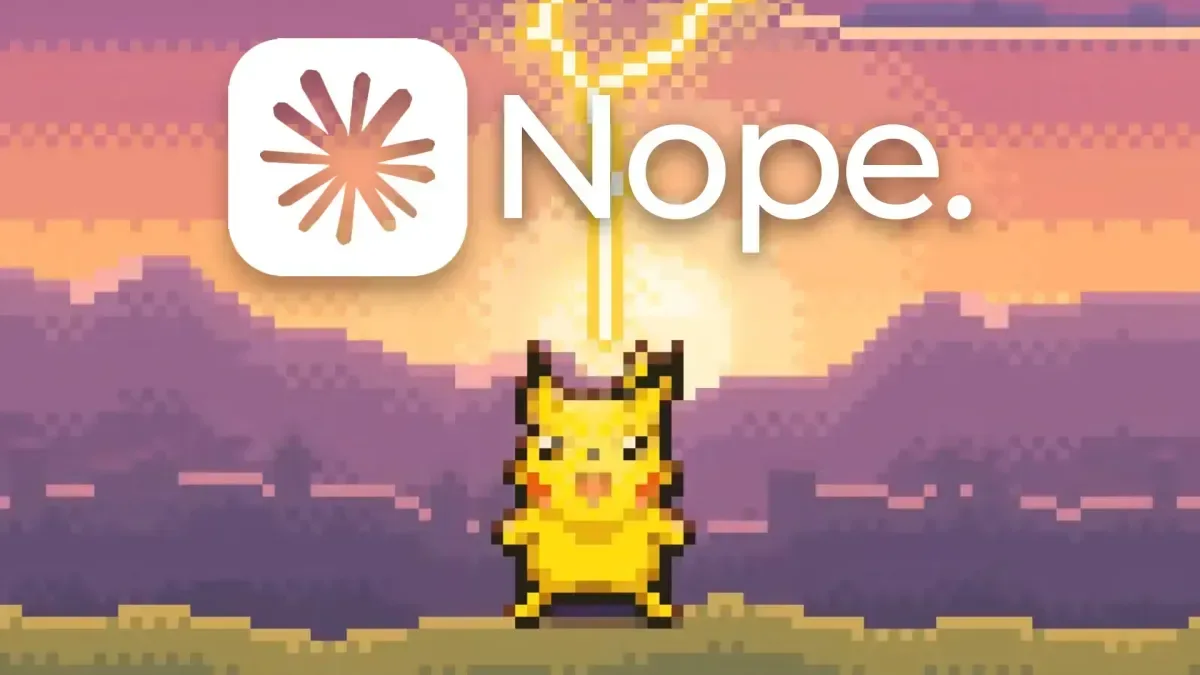
A creator developing a Pokémon-themed fan game says Claude has started rejecting requests involving official Pokémon imagery, putting a sudden constraint on a project they say has consumed two years of work, long days and substantial monthly AI-tool expenses.
Big Kid Nation, the creator behind Pokémon Arena 2D, shared a screenshot of a Claude response that reportedly declined to generate code intended to work with images the system identified as official Pokémon designs. The creator characterized the change as a crackdown by Anthropic and voiced frustration over the money and effort they say they have invested.
The episode is not simply a story about one AI prompt being refused. It illustrates the unusually precarious setup behind AI-assisted fan projects: the project depends simultaneously on a rights holder tolerating the use of its intellectual property, and on outside AI services continuing to assist with tasks involving that property. Neither condition is fully in the creator’s control.
For players watching from the sidelines, it is also a useful distinction to keep in mind: an unofficial project can be free, ambitious and earnestly made, yet still face obstacles that a licensed game does not. That is particularly true when the game’s identity is built around recognizable characters and artwork.
What the creator says changed
Big Kid Nation says Claude models are “starting to refuse” work on Pokémon fan projects. The shared example concerned code made to interact with images detected as official Pokémon designs, rather than a broad technical failure of the game itself. That distinction matters. A refusal of a particular request does not, by itself, establish that every coding task for the project is unavailable, or that a finished build could not run.
It does mean an AI assistant may no longer be a dependable part of a workflow where official visual assets are involved. For an AI-assisted project, reliability is central. If a creator has structured their process around asking a model for code, debugging help, implementation ideas or asset-related logic, a policy or behavior change can introduce delays precisely where the project is most dependent on outside help.
The available information does not establish the full scope of Anthropic’s approach, whether a fixed policy update prompted this particular response, or what kinds of Pokémon-related requests may be handled differently. The strongest supported claim is the narrower one: the creator reports encountering refusals tied to detected official Pokémon designs.
That nuance is worth preserving amid online arguments. A single refusal is evidence of a real workflow problem for its recipient. It is not enough on its own to map every limit of a service’s rules, nor to predict what will happen with every future request.
Related coverage includes Pokémon Fan Project Hits AI Roadblock as Claude Begins Refusing Official Assets.
Pokémon Arena 2D’s stated pitch and investment
Pokémon Arena 2D is described on Big Kid Nation’s website as a free-to-play pixel-art game built around real-time arena battles. The creator says it has been in development for two years.
In separate social-media posts, Big Kid Nation said they had faced expenses of up to $2,000 a month and spent 10 to 14 hours a day learning and building through much of this year and last. Those are the creator’s own claims, not independently verified accounting, but they frame why the Claude refusal has drawn such a strong response.
The creator also says the project has not taken in money, contrasting it with other fan projects that use services such as Patreon or itch.io. A lack of monetization may affect how a creator describes their own motivations, but it does not turn the use of another company’s protected characters, designs or imagery into a settled legal question. Likewise, spending heavily on subscriptions and time can make a project feel personally owned without conferring rights to the underlying franchise material.
That separation can be uncomfortable, but it is practical. There are two different investments in play: the creator’s investment in the new work they have done, and the rights holder’s control over the franchise elements on which that work relies. One does not automatically cancel the other.
“Vibe coding” is a workflow, not a permission slip
Big Kid Nation has described the development process as “vibe coding,” a term generally used for building software through natural-language requests to AI tools rather than writing every part manually from the outset. In practice, that can involve asking a model to draft code, explain an error, revise a system or suggest an implementation, then testing and iterating on the result.
The phrase can obscure the amount of labor that still happens around the AI. Big Kid Nation pushed back against the idea that the work was simply “AI slop,” and described running overnight battle simulations to look for balance problems before spending long stretches at the computer themselves. Battle simulation, in this context, means letting software repeatedly play out or model encounters to surface outcomes that may indicate an unfair strategy, an overpowered character or another balance issue.
That is a meaningful development task. An AI model can produce a draft, but generated code still has to be integrated, inspected and tested. A game also needs someone to decide what should exist, assess whether the result fits the intended design and identify issues that automated output misses. The reported use of overnight simulations is a concrete example of that iterative work.
But labor and originality are separate questions from intellectual-property use. A creator can do substantial engineering and design work while still building around recognizable materials owned by someone else. AI does not create that tension; it can make the tension more visible because it speeds up some production work while also making the resulting pipeline dependent on a third-party platform’s safeguards.
The practical risk is dependency
The most useful lesson for developers is not “never use AI,” nor is it that every fan effort is identical. It is that projects have dependencies, and a hosted AI model is one of them. When a game’s process relies on a provider responding to prompts in a certain way, the provider’s guardrails can become a development constraint as consequential as an engine limitation or a missing team member.
For a project using protected franchise elements, there is an additional dependency: the continued absence of action by the rights holder. The creator said Pokémon Arena 2D had so far avoided intervention by the companies associated with the Pokémon franchise. That is not the same thing as approval, a license or a promise of future tolerance.
Creators considering fan work should therefore separate several questions that are often compressed into one:
- Can the game be built? Technical feasibility, including whether the necessary tools will assist with the work.
- Can it be shared? Distribution platforms, payment services and tool providers may each have their own limits.
- Can it keep operating? A project can function today while remaining vulnerable to a policy change, a rights complaint or the loss of a key service.
- What work survives if the franchise material is removed? Systems such as arena combat, simulations and general code may be more adaptable than character names, art and brand-specific presentation.
Those questions are not accusations about a creator’s intentions. They are project-planning questions. They matter more, not less, when the creator is committing thousands of dollars per month or structuring their life around an unpaid game.
A dispute over originality adds another complication
Big Kid Nation also highlighted another Pokémon-themed project, Poké Derby, as an example of what they considered an original vibe-coded effort. The project appears to be a Pokémon-styled take on the Japanese horse-racing game Umamusume. Commenters pointed out the similarity, underscoring how easily “original” can mean different things in fan-game discussions.
Originality can describe a creator’s new mechanics, coding work, structure or combination of ideas. It can also be used more broadly to mean a work is not merely copied. Neither usage settles whether a game relies on someone else’s characters, visual identity or recognizable premise. A project can add genuine creative work while also inviting comparisons to existing franchises or games.
That is why the label applied to a development method—whether “vibe coding,” AI-assisted, handmade or otherwise—does not answer the underlying questions. The important details are what the game uses, what the creator has made themselves, what services the project needs, and what permissions actually exist.
Where official Pokémon games fit in
For people who want a Pokémon game without the uncertainty surrounding a fan production, the next officially announced releases are Pokémon Winds and Waves, due exclusively for Nintendo Switch 2 next year. Official releases operate under the franchise’s licensing and distribution structure; fan projects do not.
That does not make the appeal of a fan concept mysterious. Fan developers often pursue modes, aesthetics or combinations they feel are underserved, and Big Kid Nation’s stated arena-battle, pixel-art idea is an example of a creator chasing a specific vision. Yet the same franchise recognition that makes a fan project instantly legible is what can make it hard to insulate from rights and platform constraints.
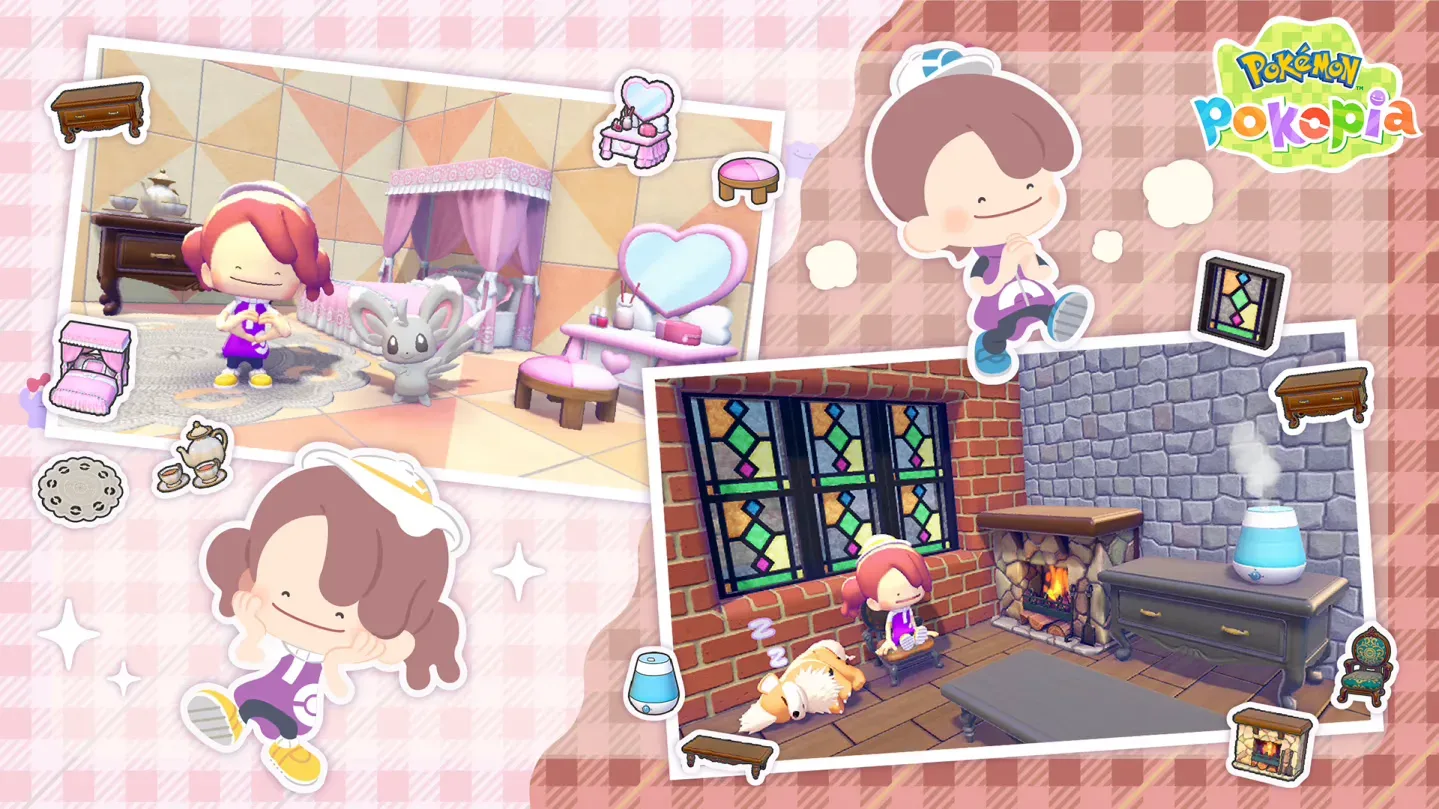
Players looking for current official Pokémon-related extras can also keep an eye on items such as Pokémon Pokopia’s Mystery Gift furniture sets, which exist inside an authorized ecosystem rather than alongside its legal uncertainty.
What happens next remains unclear
There is no indication here that Pokémon Arena 2D has been shut down, nor is there evidence that all development on it has stopped. The immediate reported issue is narrower: Claude has apparently begun refusing certain work involving images detected as official Pokémon designs.
Still, the incident exposes the risk of treating an AI subscription as permanent production infrastructure—especially for a project already dependent on unlicensed franchise material. A creator may retain their ideas, their time spent learning and portions of their technical work, but they cannot assume every external tool will continue to support every part of a fan-game pipeline.
Big Kid Nation’s frustration is understandable in light of the costs and effort they report. The more durable takeaway, however, is not that a tool owes a project continued assistance. It is that building around licensed characters while relying on hosted AI produces stacked uncertainties. The model may refuse an asset-related request; the rights holder may object; the creator may be left deciding how much of the work can be reworked into something independent.