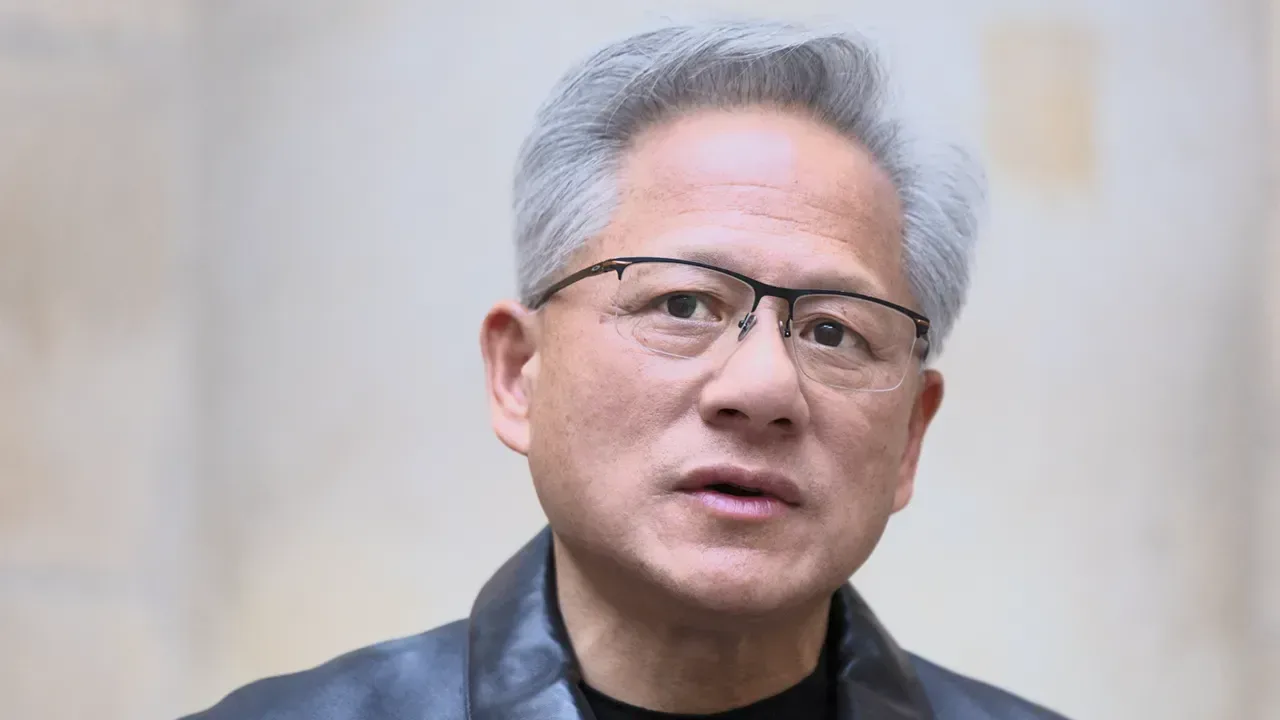
Nvidia’s board is reportedly preparing to discuss CEO Jensen Huang’s future after the company opened an internal review connected to allegations about his personal conduct and potential security implications. The situation remains unresolved, and the most important confirmed point is narrow: Nvidia has said its board is examining available information, while also stating it has no reason to believe national security or Nvidia secrets were compromised.
That distinction matters. Reports concerning the matter contain serious, unverified allegations, including claims involving a person described as a possible foreign intelligence concern and a separate alleged relationship with an employee who reported to Huang. Those claims should not be treated as established facts. Nvidia’s announced inquiry, rather than the allegations themselves, is the concrete corporate development at this stage.
Huang reportedly acknowledged being unfaithful in a letter to employees and apologized to his family. That reported personal admission does not, by itself, settle questions about corporate policy, management conduct, information security, or whether the board will take any action.
What Nvidia has said
In its statement announcing the review, Nvidia said the board places U.S. national and economic security at the center of the company’s and shareholders’ interests. The company added that it had no reason to believe either national security or Nvidia secrets had been compromised, but that its inquiry would examine all available information. Nvidia also said Huang supported the review and would cooperate with it.
That language is cautious but meaningful. A board-led review is a governance process in which directors evaluate facts, risks, policies, and potential responses. It is not a finding of wrongdoing, and it does not guarantee a leadership change. Its scope could include questions about conflicts of interest, workplace reporting relationships, access to sensitive information, internal controls, and whether disclosures or other remedial steps are necessary.
For now, reports that the board could meet to consider Huang’s position should be understood as reports of possible deliberation, not confirmation that he has been removed or that a decision has been made.
Why the board’s review is significant
Nvidia is not simply another hardware company. Its chips are central to the enormous infrastructure buildout behind modern artificial intelligence, and scrutiny around its operations naturally extends to security, export controls, supply chains, and relationships involving sensitive technology. A perceived security issue at the executive level can therefore create risks that go well beyond reputational damage.
In plain terms, corporate governance is the system through which a company’s board oversees executives and protects the interests of the business and its shareholders. A board’s responsibility becomes particularly visible when a CEO is personally connected to a matter that could affect the company’s legal exposure, security posture, workplace culture, or credibility with partners and regulators.
The company’s statement did not say its technology or confidential information had been exposed. That is a critical limitation on what can responsibly be inferred. An investigation can be precautionary: boards may examine a concern specifically because it is serious enough to test, even when there is no evidence yet that the feared harm occurred.
The workplace dimension requires separate scrutiny
The reported allegation involving an executive who allegedly reported to Huang would raise a different category of concern from the national-security questions. Relationships involving a senior executive and a subordinate can create a conflict of interest because the senior person may influence the other employee’s pay, promotion, assignments, evaluation, or job security.
Even where conduct is consensual, companies often have rules that require disclosure, changes to reporting structures, or recusal from employment decisions. Whether Nvidia policies apply here, whether any policy was violated, and what the board has learned are not established by the information available. Those are precisely the kinds of questions an internal inquiry may be designed to address.
Keeping those issues separate is important. Personal misconduct allegations, employment-policy concerns, and potential information-security risks can overlap in a news cycle, but each relies on different facts and can lead to different corporate responses.
Why any leadership decision would matter to gaming and PC hardware
Huang co-founded Nvidia and has led the company since 1993. His public profile is unusually intertwined with Nvidia’s identity, from graphics hardware used by PC players to the company’s wider ambitions in AI computing. Any change at the top would inevitably draw attention from the gaming hardware market, enterprise customers, developers, shareholders, and companies building AI systems.
That does not mean a reported discussion of succession equals disruption to Nvidia’s products or existing roadmap. No change to GeForce hardware, drivers, software support, or product plans has been announced in connection with the review. Readers should be wary of claims that attempt to turn an unresolved executive story into a confirmed prediction about future GPUs or gaming services.
Still, leadership stability can matter in industries where long-term investment and relationships are especially consequential. For a look at another major company confronting the pressure around ambitious development plans, see this examination of the challenge facing CD Projekt Red with The Witcher 4.
What remains unknown
- Whether Nvidia’s board has held the reported meeting or reached any decision about Huang’s role.
- Whether the internal review has established any violation of company policy or law.
- Whether the company has identified any security issue involving confidential information, technology, or national security.
- Whether any alleged workplace relationship was disclosed or handled under applicable company procedures.
- Whether Nvidia will provide further public detail beyond its initial statement.
Until the company provides an update, the responsible reading is straightforward: Nvidia has acknowledged a review, says it has no reason to believe secrets or national security were compromised, and says Huang will cooperate. Everything beyond those points—particularly assertions of espionage, security breaches, or a settled outcome for the CEO—requires independent confirmation.
The stakes are real because Nvidia is a pivotal company in both high-performance computing and gaming hardware. But a high-stakes inquiry is not the same as a proven breach, and a reported board discussion is not the same as an executive ouster.