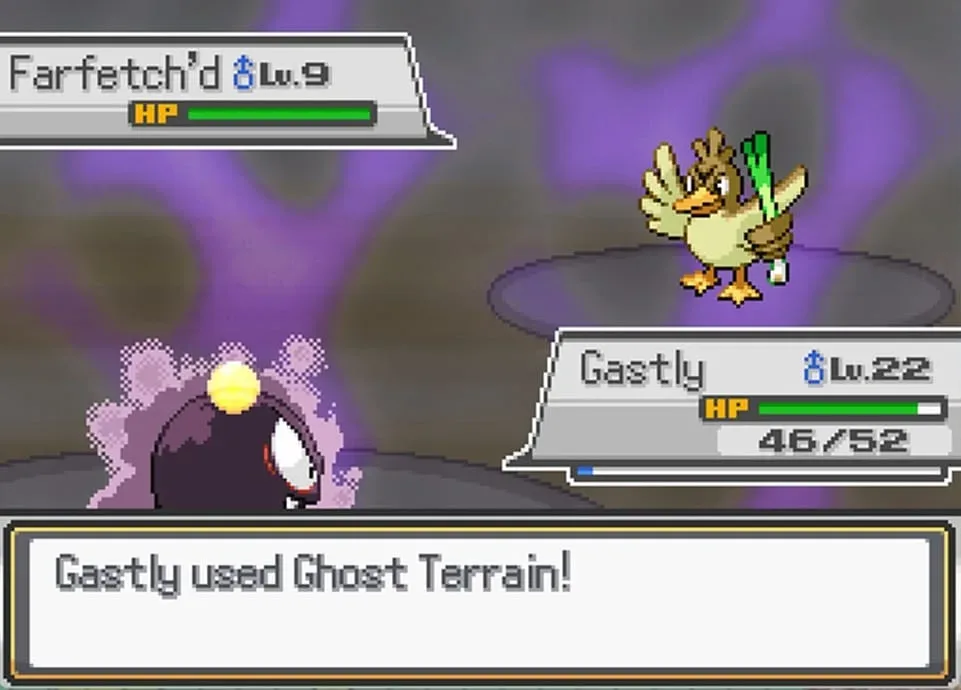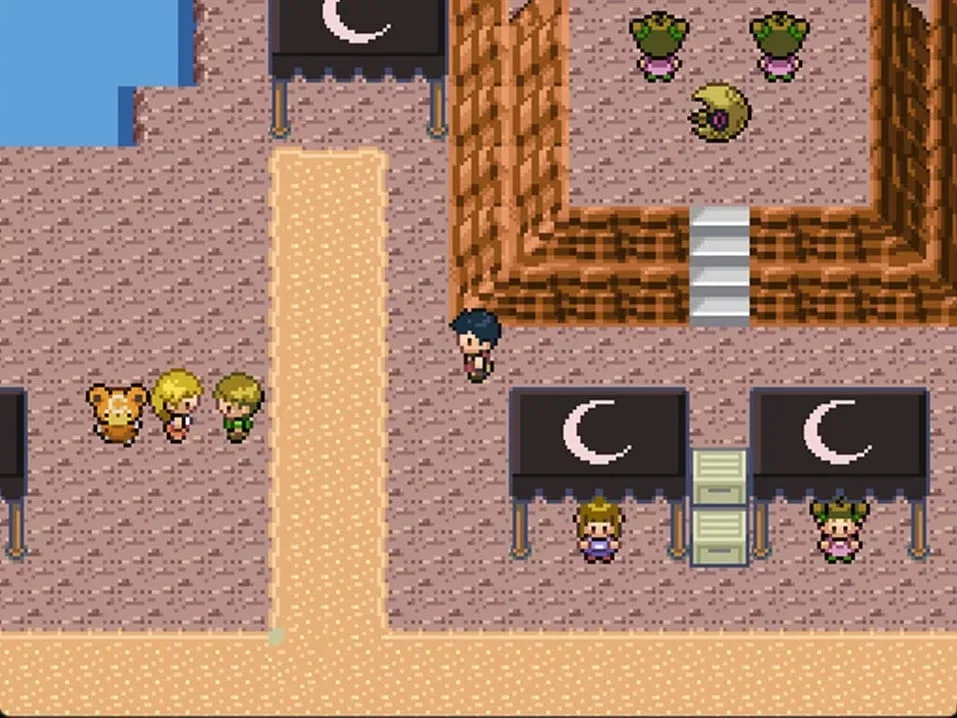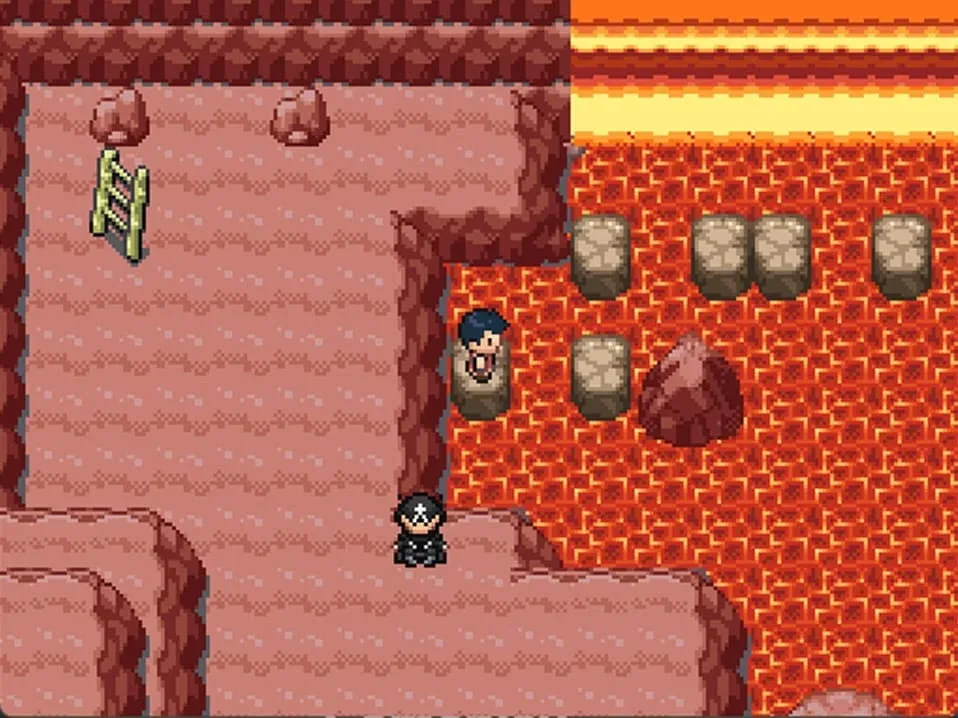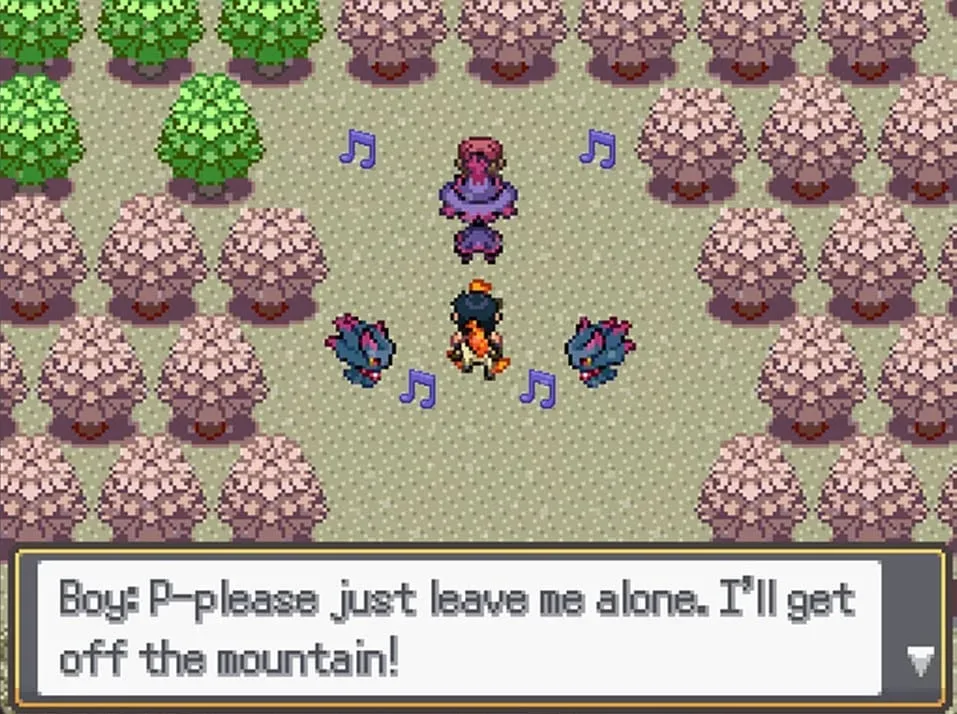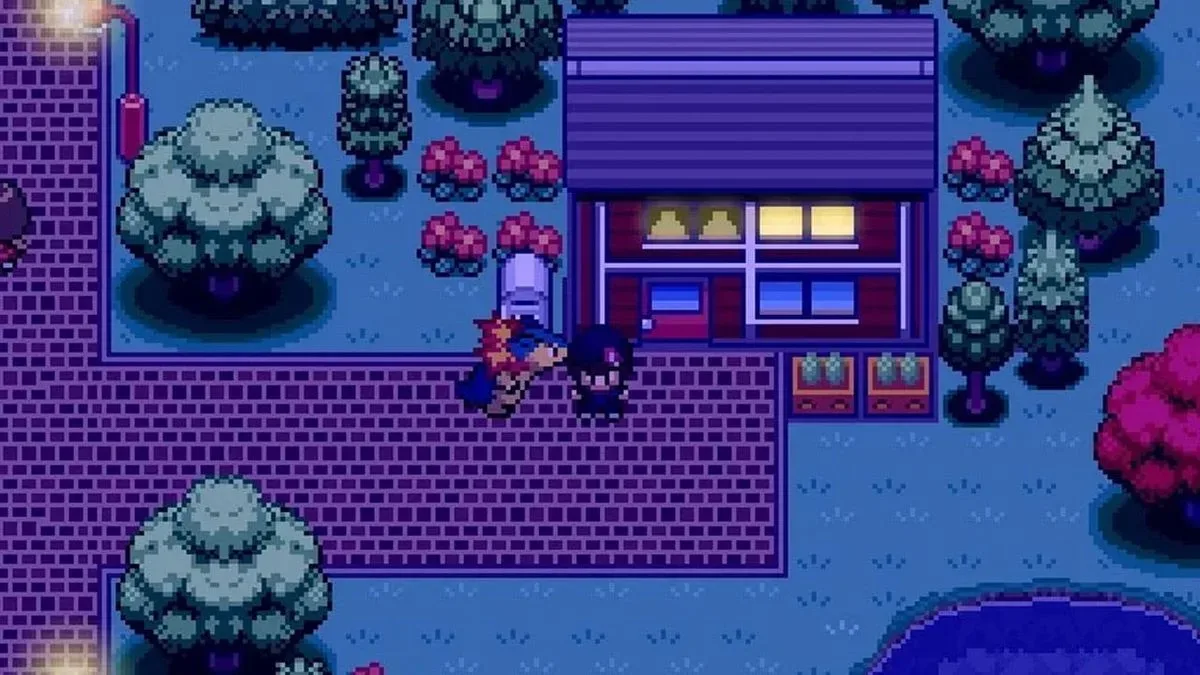
Pokémon Specter, a spooky Pokémon ROM hack, now has a playable demo built around a haunted regional mystery rather than a routine badge-collecting trip. Its story begins with a trainer waking in an unfamiliar canyon with no memory of how they arrived. The location is Ygelle, a region where ghosts have become a serious enough problem that aspiring trainers have stopped setting out on their usual adventures.
That central disruption gives the demo a different starting point from a conventional Pokémon journey. Gyms remain part of the structure, but the region is already in crisis, and the player character is not entering it as a fully informed newcomer. Instead, they wake up with amnesia, encounter a ghost that appears unwilling to leave their side, and gradually uncover why that spirit is tied to them.
The project’s Halloween-ready premise is more than a coat of spectral paint. It also promises story decisions, a choice between ghost-hunting groups, sidequests, adjusted movesets and evolution levels, and Gym encounters intended to demand more than identifying a favorable elemental matchup. Those ideas could make the demo especially interesting for players looking for a Pokémon-style adventure where battle planning and narrative direction carry greater weight.
A region stalled by its ghost problem
Ygelle’s trouble is presented as widespread rather than limited to a single haunted tower or one troublesome route. Ghost gangs are said to be ruling the region, with the situation discouraging young trainers from leaving on adventures. That establishes a useful practical stake for the protagonist: progressing through Gyms and confronting ghosts is not simply a personal climb through a league challenge, but part of restoring normal life to a place that has been overtaken by paranormal conflict.
The trainer’s missing memory adds another question alongside the regional crisis. Amnesia is a familiar storytelling device because it aligns the player’s knowledge with the protagonist’s: neither begins with a clear account of the canyon, the ghosts, or the past. Here, that uncertainty is closely linked to the companion spirit. The ghost attaches itself to the player character, and the story is set to reveal the identity behind that connection.
That companion relationship appears to be one of the demo’s major narrative hooks. Rather than treating every ghost solely as an opponent to defeat, Pokémon Specter places one spectral presence close to the protagonist from the outset. The result is a mystery with a personal dimension: resolving Ygelle’s haunting and understanding the protagonist’s past may be connected, but the available details do not establish exactly how.
Diverging paths mean a decision beyond the next Gym
Pokémon Specter includes a diverging-path system. At some point, players must choose which route to follow and which group of ghost hunters to join. The story is intended to inform that choice as it develops, particularly as more is learned about the ghost companion.
In plain terms, a diverging path is a branch in a game’s progression: a decision that sends the player toward one course rather than another. The details currently available do not define every consequence of the choice, nor do they promise entirely separate campaigns. Still, the presence of a faction decision is significant because it gives the ghost crisis competing approaches. Other groups are also attempting to solve the problem in their own ways, so the player is not merely deciding whether ghosts are dangerous; they are choosing who to trust in dealing with them.
Related coverage includes Pokémon Specter Demo Introduces Ghost-Hunting Choices and Strategy-Led Battles.
For a demo, this structure can matter even if it only reaches the opening stages of the broader story. A well-placed choice can give players a clearer sense of the project’s identity than a simple introductory route would. It can also encourage attention to dialogue and plot revelations, because information about the companion spirit may shape which ghost-hunter group feels credible or compatible with the player’s interpretation of events.
There is an important limit to keep in mind: the available information confirms that paths diverge and that players select a group, but it does not spell out the full scope of route-specific content. Players should therefore treat the branching setup as a story and allegiance feature, not assume unconfirmed outcomes such as particular endings, exclusive creatures, or replay requirements.
Strategy-led battles, not just the type chart
The demo also aims for a more strategic approach to battles. Pokémon Specter’s Gym leaders are designed around strategies that players need to identify and answer, rather than encounters solved chiefly by bringing a Pokémon with a favorable type.
Type matchups are the elemental strengths and weaknesses that commonly influence Pokémon battles. They are a quick and useful part of team-building, but a strategy-led fight asks an additional question: what is the opposing trainer trying to accomplish over several turns? That can mean looking beyond a single move’s effectiveness and paying attention to the opposing team’s broader plan.
The precise Gym tactics have not been detailed, so it would be premature to prescribe counters. What players can take from the stated design is a sensible approach to preparation: do not assume that a superficially advantageous type is the whole answer. Review what each member of a team can do, consider how moves work together, and be ready to change plans after seeing a leader’s approach. Adjustments to movesets and evolution levels further suggest that familiar expectations from other Pokémon adventures may not always translate directly.
Movesets are the sets of attacks available to individual Pokémon. Changing them can alter when a creature gains a useful option, how it contributes to a team, or which tactics are practical at a given point in the adventure. Evolution levels determine when a Pokémon changes form; shifting those milestones can likewise reshape early and mid-game team planning. Neither change automatically means greater difficulty, but both can make experimentation more valuable than relying entirely on habit.
Each Gym also offers a special reward upon completion. The nature of those rewards has not been specified, so they should not be confused with any particular item or unlock. Their inclusion does, however, give the Gym challenge an additional incentive beyond story progression and reinforces the impression that these battles are intended as meaningful tests.
Sidequests and a focused demo premise
Sidequests are another stated part of Pokémon Specter’s package. Generally, sidequests are optional activities that sit beside the main story rather than directly advancing it. In a haunted region, they can be a natural fit for smaller mysteries and local problems, although the specific quests in this demo have not been described.
What is clear is that the project is not framing its ghost theme as a one-note seasonal gag. The haunting feeds into the protagonist’s origin, the stalled culture of training in Ygelle, the competing ghost-hunter groups and the structure of the journey through Gyms. The mystery of the companion spirit gives that framework an emotional center, while the branching choice gives the player some say in how they approach the crisis.
That combination distinguishes the demo’s pitch from a straightforward challenge run or a cosmetic Halloween reskin. Its appeal rests on a few connected questions: who is the ghost beside the trainer, why is Ygelle overwhelmed, which ghost hunters deserve support, and what battle plans will the region’s Gym leaders force players to confront?
Players who enjoy rule-bending Pokémon projects may also be interested in how other games experiment with unusual input and competitive design; this look at Final Fantasy 14’s keyboard brawler is a separate example of a familiar game space being pushed in an unconventional direction.
What players can expect from the current build
The key point is that this is a playable demo, not a complete description of every system in Pokémon Specter. The available material identifies its major pillars: the Ygelle setting, the amnesiac trainer, the persistent ghost companion, ghost gangs, faction-based divergence, strategic Gym battles, special Gym rewards, sidequests, and changes to movesets and evolution levels.
For anyone planning a seasonal play session, that is already a substantial premise. The demo is available through Eevee Expo, and its strongest promise is not simply that it is ghost-themed. It is that its ghost story affects the player’s allegiances, the mysteries they pursue and the way they are expected to think through battles.