Pokémon’s 30th-anniversary festivities took an unusually loud turn in Los Angeles, where Pokémon Night Out paired the franchise’s giant creature roster with EDM performers Marshmello and Alison Wonderland at the Intuit Dome. The concert used lasers, pyrotechnics, a huge video display and Pokémon animation to turn familiar characters and game imagery into the architecture of a dance-music event.
It is a notable format for a brand most closely associated with games, animation, cards and merchandise. Rather than merely putting Pokémon art behind a DJ set, the production appears to have built individual sequences around specific creatures, regions and rivalries from across the series. The event was livestreamed for people unable to attend in person, while a second Pokémon Night Out date is scheduled for London’s O2 Arena on Nov. 10.
Why an EDM concert fits Pokémon’s anniversary
At face value, Pokémon and EDM can sound like an odd combination. One is a broad, all-ages entertainment property with decades of game and television nostalgia; the other is a club and festival-focused umbrella of electronic music styles built around DJ sets, beats and large-scale visual staging. Yet the connection is less strange when the event is viewed as a communal celebration rather than a conventional game presentation.
Narbeh Minasians, senior director of brand communications and digital marketing for The Pokémon Company International, pointed to the EDM community’s “PLUR” ethos: peace, love, unity and respect. The company sees those values as compatible with Pokémon’s mission of bringing people together through the franchise. That framing matters: Pokémon Night Out was positioned not simply as a nostalgia exercise, but as an attempt to find shared ground between two passionate fan communities.
“We’ve never done anything like this before. This is brand new for us,” Minasians said of the large-scale anniversary concert concept.
EDM is also particularly suited to a visual crossover. A DJ set can be accompanied by synchronized animation, lighting, screens and theatrical effects without the show needing to stop for scene changes. For Pokémon, that flexibility creates space to move rapidly from a haunted setting and Ghost-type imagery to an icy battle or a bright field full of the original starter Pokémon. The visuals can function less like a static backdrop and more like a sequence of short, recognizable Pokémon stories.
That emphasis on audiovisual identity has become increasingly important across music culture. Artists and promoters often use screens, stage design and stylized animation to make performances feel like events beyond the music alone. In another corner of modern music visuals, debates around authorship and digital imagery have also become prominent, as seen in recent discussion surrounding A$AP Rocky’s “Shroom Clouds” video. Pokémon Night Out’s appeal, by contrast, rests on recognizable franchise characters being deliberately integrated into its concert design.
Alison Wonderland opened with the series’ long memory
Alison Wonderland’s portion of the evening leaned hard into the depth of Pokémon history. Her set began with a countdown featuring nearly every Pokémon, an ambitious reminder of the franchise’s scale: more than 1,000 creatures across 30 years. A massive video wall displayed vivid character art while the DJ mixed, establishing that the show was prepared to use the series’ enormous catalog rather than reducing Pokémon to a few mascots.
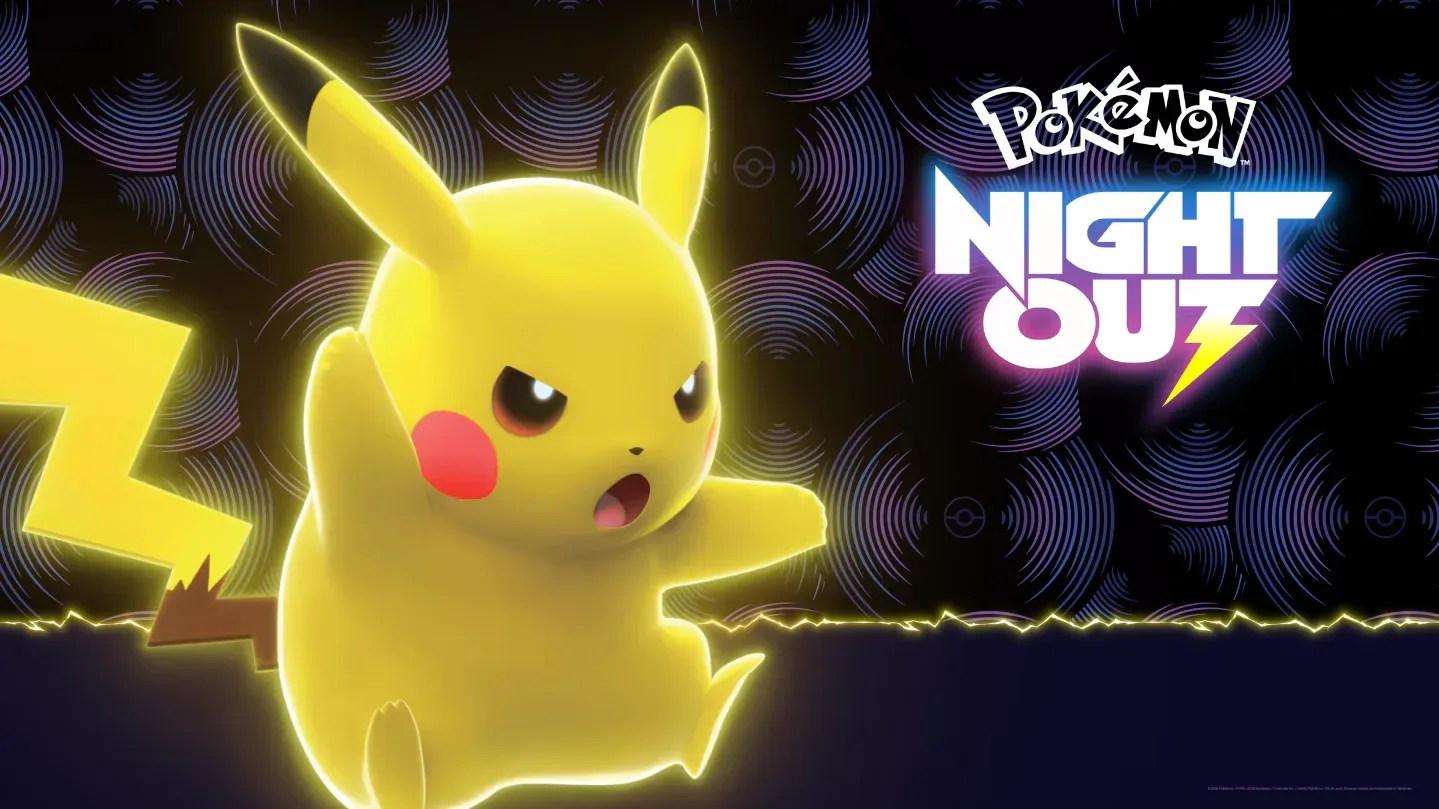
The music then turned toward one of the most instantly recognizable pieces of Pokémon nostalgia: a remix of the classic television theme. A neon-styled Pikachu joined her onstage, with illuminated glasses and ears that shifted colors along with the set. Pikachu is Pokémon’s best-known character, but the staging gave the mascot a concert-ready treatment rather than presenting it as a conventional character appearance.
One of the more pointed game references came through a remix of the Lavender Town theme. Lavender Town is the unsettling, ghost-associated location from the original Pokémon games, Pokémon Red and Pokémon Blue. Its music has long stood apart from the otherwise upbeat tone many people associate with early Pokémon, making it a natural fit for a darker electronic arrangement. Pixel-era footage from those games accompanied the remix, directly tying the performance to the Game Boy generation of the franchise.
That choice illustrates how the concert could speak to multiple kinds of Pokémon attachment. The television theme invokes the anime’s broad cultural reach. Lavender Town calls back to a specific and famously eerie game location. Pikachu connects the event to Pokémon’s universal iconography. A production like this does not have to choose a single “correct” version of Pokémon fandom; it can move among them in the course of a song or visual interlude.
Marshmello’s set made Pokémon battles the spectacle
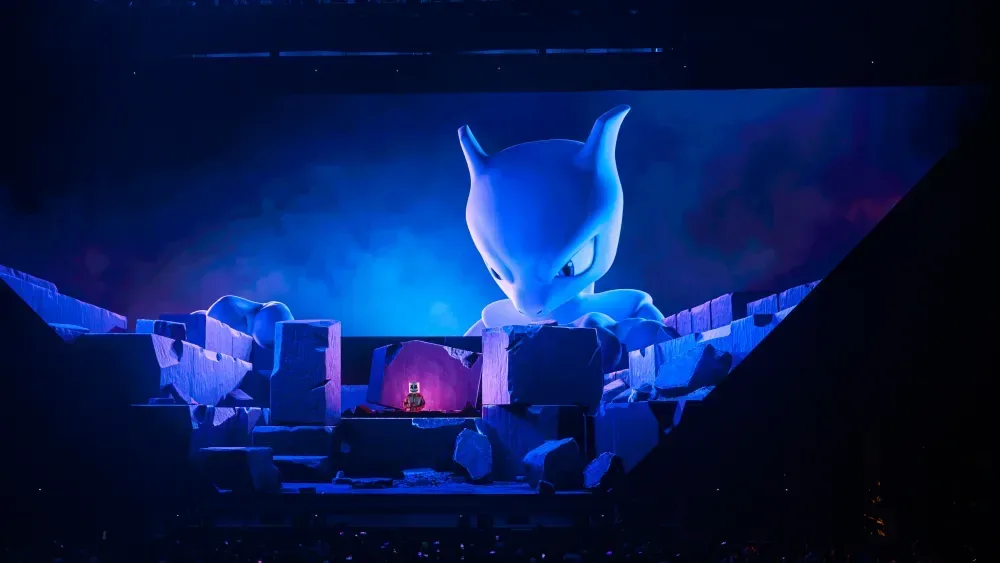
Marshmello followed with a set that placed him visually within a world of animated Pokémon. His DJ booth was staged to look as though it floated at the center of the video display, surrounded by creatures that flew, danced and battled. Lasers crossed the Intuit Dome as short character-driven vignettes unfolded around the performer.
Several of those segments used Pokémon whose visual themes already lend themselves to a concert environment. Corviknight, a large metallic bird Pokémon, flew through a cityscape as the music settled into a cooler rhythm. Toxtricity, a punk-influenced creature associated with electric sound and a guitar-like stance, performed beside Marshmello during “Come & Go,” his track with Juice Wrld. The pairing was a direct visual match: Toxtricity’s design makes it one of the franchise’s clearest links to amplified music.
Elsewhere, the display transformed into ice as mist drifted over it and snow fell from the ceiling. Lucario and Greninja broke through the frozen image and fought over fractured ice blocks. It was an effective use of a basic Pokémon idea—combat between powerful creatures—but expressed in the vocabulary of arena staging. Instead of a battle interface or a game turn order, the showdown became a projected action scene enhanced by physical effects in the room.
The set also moved between Pokémon tones rather than staying permanently intense. Gengar appeared above a crumbling haunted castle, while Eevee, Pikachu, Charmander, Squirtle and Bulbasaur later appeared in tall grass. Those shifts are central to what makes Pokémon flexible enough for a concert production. The property contains spooky locations, cute mascots, city settings, elemental powers and competitive battles, all of which offer distinct visual palettes for a DJ set.
Groudon and Kyogre brought a classic rivalry to the screen
The centerpiece of the Marshmello performance was a confrontation between Groudon and Kyogre, the legendary Pokémon associated with Pokémon Ruby and Pokémon Sapphire. The presentation split the video wall between volcanic eruptions and tsunami waves, matching the characters’ earth-and-sea identities. The visuals briefly shifted from color to black and white as the scene escalated before the two attacked with Hyper Beam and Hydro Pump.
For longtime players, Groudon and Kyogre are more than large creatures chosen for visual scale. They represent one of Pokémon’s best-known paired legendary conflicts, making them an especially appropriate choice for an arena-sized battle sequence. Their use also demonstrates an important production principle: when adapting game material for a live show, the strongest moments often come from images that viewers can understand immediately, even before they parse every reference.
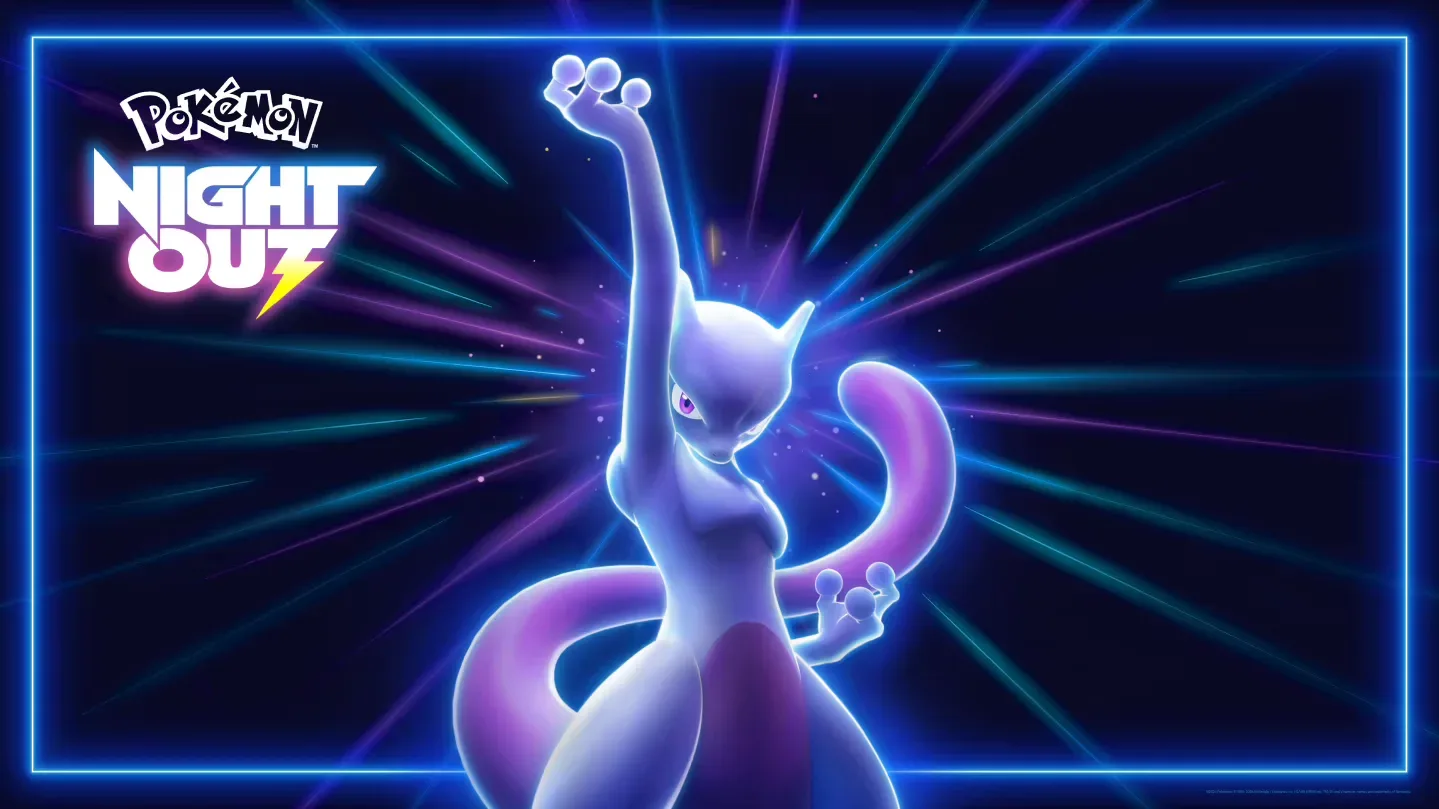
Mewtwo closed the Pokémon side of the performance. The psychic legendary from the original games appeared at enormous scale, telekinetically lifting rocks and a miniature animated Marshmello. Marshmello then ended with “Happier” as a montage of Pokémon danced across the display. Mewtwo’s placement near the finale gave the show another connection to the earliest era of Pokémon, bookending an evening that ranged from original-game imagery to creatures from much later generations.
What Pokémon Night Out suggests for future events
The Los Angeles crowd reportedly included fans in cosplay as Pokémon and trainers from the animated series, further underlining that Pokémon Night Out was conceived as a gathering rather than a passive branded concert. The livestream expanded that approach beyond the arena, although no further details about additional broadcasts or future stops were provided.
It would be premature to treat one concert and an upcoming London date as evidence of a permanent Pokémon touring format. Still, the event establishes a clear template if the franchise chooses to revisit the idea: recognizable game music references, beloved creatures across generations, dedicated animated sequences and performers capable of carrying a large electronic production.
For Pokémon fans, the significance is not that the series suddenly needs EDM to remain relevant. It is that a 30-year catalog has enough emotional and visual range to support an experiment this different without abandoning what people recognize. The characters, regional memories and legendary rivalries were not decoration around the concert; they were the concert’s organizing language. London’s Nov. 10 show will offer the next indication of how far that language can travel.