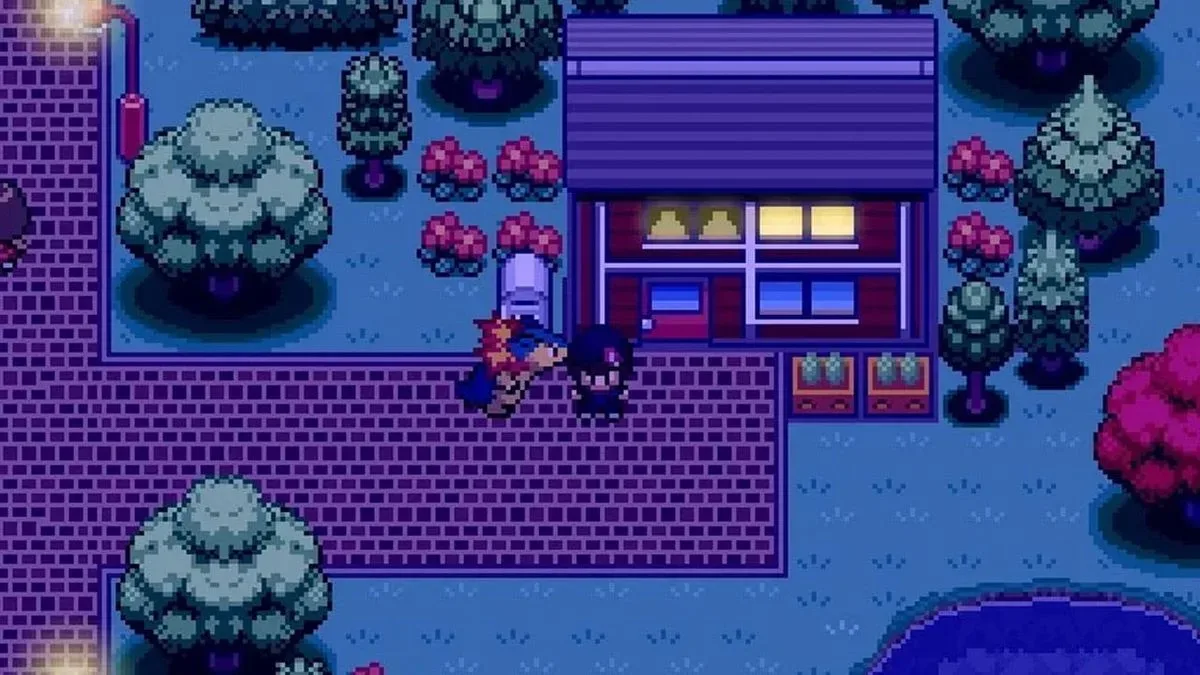
Pokémon Hearth and Thorn takes a familiar monster-battling premise and gives failure a much larger role than usual. In this RPGXP Pokémon Essentials V21.1 project, losing a major gym battle is not simply presented as a dead end before another attempt. The result can move the narrative onto a different branch.
That is an intriguing promise because the standard rhythm of a Pokémon-style campaign is built around eventual victory. A player loses, adjusts a team, trains, changes strategy, or tries again until the badge is earned. Hearth and Thorn instead frames at least some major outcomes as consequential story events. The question is no longer only whether a team can win a difficult battle, but what the world and its characters look like if it does not.
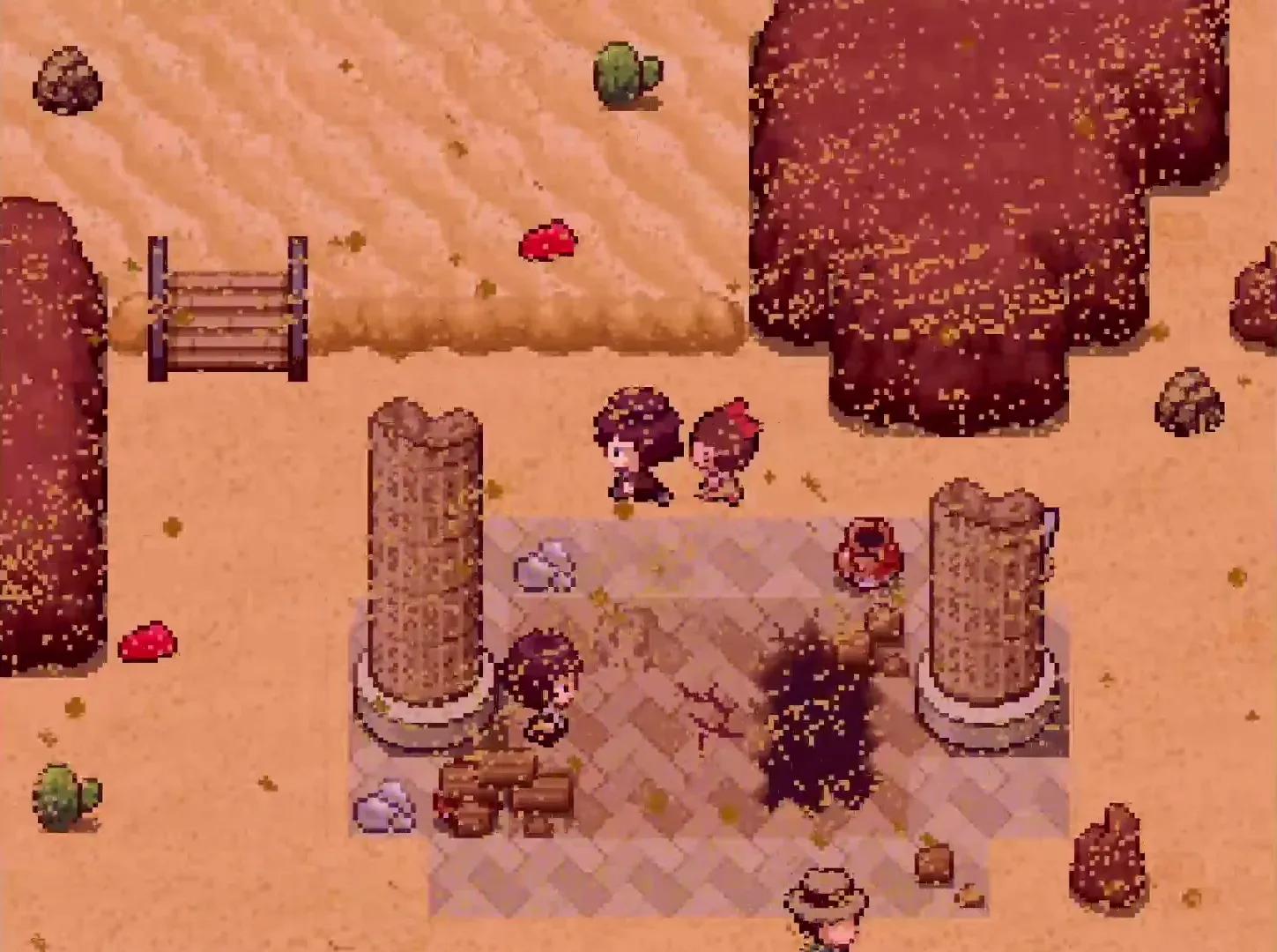
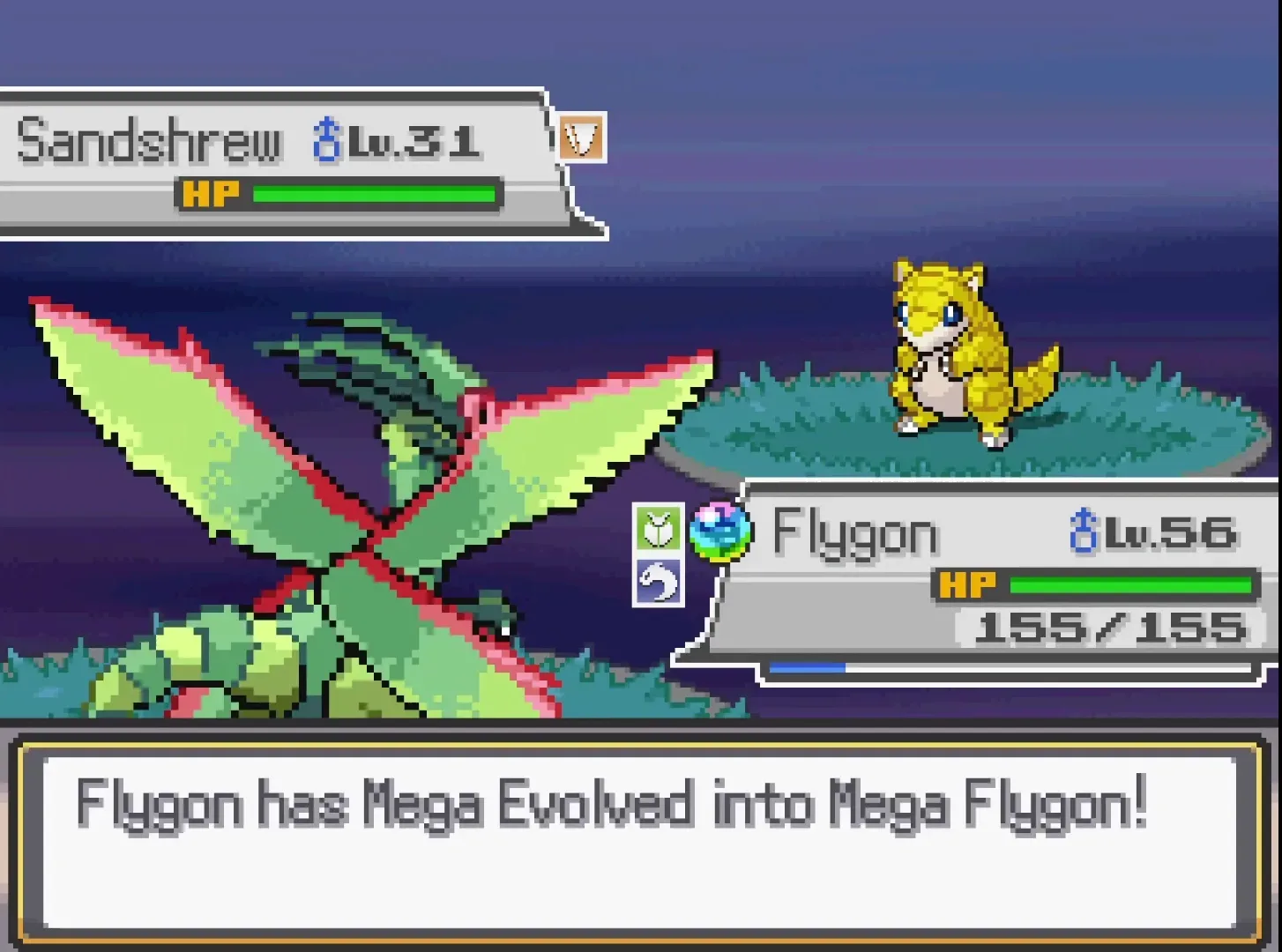
The game is set in the new region of Erstellen and supports both single and double battles. Its central premise presents a particularly stark choice of direction: players can pursue saving the region or destroying what surrounds them. Alongside the main storyline, it includes companions who can be recruited to assist in battle, side quests that can alter the world, Pokémon stat customisation, a major boss and opposing admins and grunts.
Hearth and Thorn is described as having roughly 30 hours of content, including its side-story material, and a roster of 600 Pokémon to catch. It is available to check out on PC and Android through EeveeExpo.
A battle result that does more than reset the challenge
“Branching narrative” means a story structure with routes that diverge after particular choices or outcomes. In Hearth and Thorn’s case, the defining example is the gym battle: success and defeat can lead to different developments rather than one result being discarded by an immediate rematch.
That distinction matters. A conventional retry structure treats defeat as a temporary gameplay state. It may cost in-game money or return the player to a previous location, but it generally does not become part of the plot. A branching-result structure can instead acknowledge the loss as something that happened. Characters, available objectives, locations, and the broader conflict may consequently change.
The provided details do not specify every branch, how many gym outcomes carry this treatment, or whether all routes ultimately reconnect. Those are important unknowns. Still, tying story direction to a major battle outcome creates the possibility of a campaign that is less about finding the one approved path and more about responding to an evolving situation.
It also gives a meaningful new purpose to player choice before a match begins. Team building, move selection, type coverage and double-battle coordination can affect not merely the next badge, but the narrative route that follows. That makes preparation feel less like an obstacle course requirement and more like a decision with consequences.
Related coverage includes Pokémon Hearth and Thorn Lets Gym Losses Change the Story.
Why the double-battle format fits the concept
Hearth and Thorn includes both single and double battles. Single battles are the classic one-Pokémon-versus-one-Pokémon format, while double battles place two active Pokémon on each side at once. That extra slot changes the tactical picture substantially.
In doubles, players have to think about partnership as well as individual strength. A move’s target matters. Turn order matters. One Pokémon may support another, protect it, disrupt an opponent, or create an opening for a stronger attack. A well-rounded collection can therefore be useful in a different way than it is in a purely single-battle campaign: the value of a Pokémon may be in what it enables beside a teammate.
That makes the recruitable-companion feature potentially notable. The supplied information says companions can be brought in to help battle, but does not detail how recruitment works, which companions are available, or whether they are required in specific encounters. Even so, companions and doubles share a natural design connection. Both put emphasis on coordination rather than treating every important fight as a solo ladder of opponents.
For players, the practical implication is straightforward: a team built only around a few favourite attackers may not cover every situation. A larger pool of Pokémon and a willingness to experiment with pairings could be especially valuable when a pivotal match has story-level stakes.
Custom stats and a wide catching pool
The game lets players customise their Pokémon’s stats, and it includes 600 Pokémon to catch. “Stats” are the numerical traits that shape performance in battle, such as the qualities that govern durability, speed, and offensive or defensive strength. The available description does not explain which stats can be changed, how the customisation is earned, or what limits apply, so it would be premature to assume a specific system.
What is clear is the intended sense of flexibility. A large catching pool gives players many possible team members; stat customisation can give them another tool for shaping how those choices perform. Together, those features suggest that players can approach the same major battle with different types of solutions.
That flexibility is particularly relevant to a game where losses can matter. Players who want to avoid a particular outcome may spend more time refining a squad and considering matchups. Others may be comfortable seeing where an unsuccessful result takes the narrative. Neither approach needs to be the “wrong” way to play if the alternate route is designed as a real part of the campaign.
The 600-Pokémon figure is also separate from the game’s approximate 30-hour content estimate. Catching, team experimentation, optional side stories and different narrative outcomes can all affect how someone spends that time, but there is no basis to treat 30 hours as a guarantee for every playthrough or as a completion-time promise.
Side quests with effects beyond the quest log
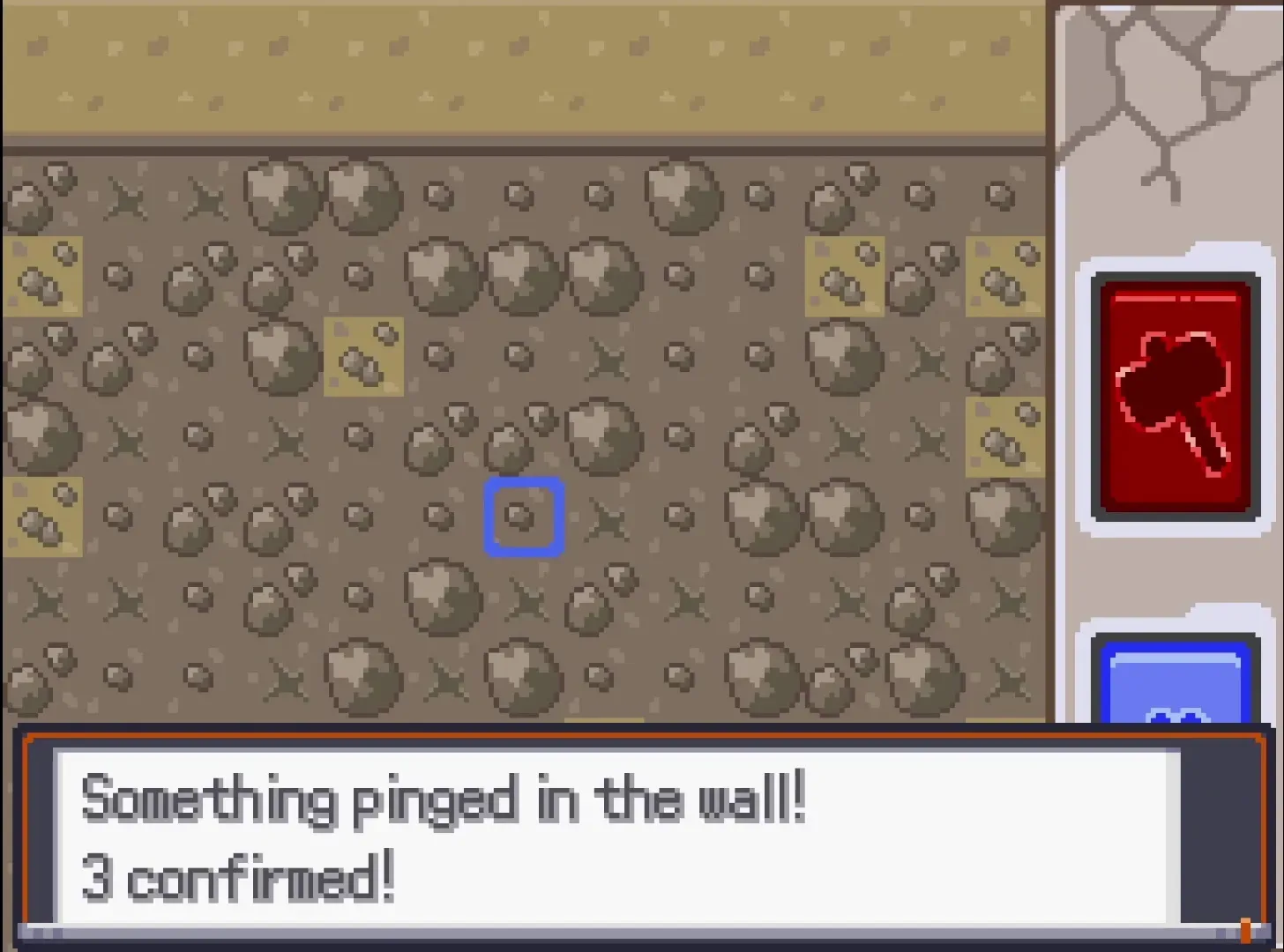
Side quests in Hearth and Thorn are described as changing the world rather than functioning solely as optional diversions. That wording positions them closer to another layer of the game’s consequence-driven design. A side activity can be mechanically optional while still altering the conditions around the player.
Again, the exact changes have not been detailed. They could concern characters, places, story context or another aspect of Erstellen; the available information does not pin that down. But the broad idea is clear: optional content is intended to have a visible impact rather than exist entirely outside the main journey.
This may make it worth approaching side quests with attention rather than treating them as a checklist. In a game built around branches, players who want to understand the state of the region may find those optional tasks as valuable for context as for battle rewards or party-building opportunities.
There is an appealing thematic consistency here. Gym results affect the plot, side quests affect the world, and companions add a social dimension to battles. Hearth and Thorn’s systems appear to be aimed at making decisions feel connected to the campaign instead of isolated in separate menus.
Erstellen’s historical-flavoured setting
Erstellen takes minor inspiration from Germany in the 1870s. Creator KF2 has pointed to a blend of older European visual ideas—homes, castles, villages, knights and kings—with railroads and early electrical and steam power.
“This new world takes some minor inspiration from 1870’s Germany, which just had a cool combination of older European aesthetics: homeliness, castles, villages, knights, kings, and some modern things such as railroads and early electrical and steam power.”
The key term is minor inspiration. The project is not described as a historical simulation. Rather, the period provides a set of aesthetic and technological reference points for a fictional Pokémon region. That mixture can support a setting where castles and villages coexist with rail travel, machinery and an emerging sense of modern infrastructure.
It also suits a story about regional instability. Railroads and early power systems evoke connection and change, while the older imagery of kings, knights and castles evokes established institutions and tradition. Hearth and Thorn has not provided details on how those ideas shape its plot, but they give Erstellen a more defined identity than a generic collection of routes and towns.
RPGXP and Pokémon Essentials, explained
Hearth and Thorn is built with RPGXP Pokémon Essentials V21.1, rather than as a ROM hack of Pokémon Emerald or Pokémon FireRed. This is a meaningful technical distinction.
A ROM hack modifies the data or code of an existing game ROM. By contrast, the description identifies Hearth and Thorn as an RPGXP Pokémon Essentials project. RPGXP refers to RPG Maker XP, while Pokémon Essentials is a toolkit used to build Pokémon-style games in that environment. The result can still intentionally echo the visual language and turn-based structure associated with older Pokémon adventures, but it is not being presented as an alteration of Emerald or FireRed.
For prospective players, this explains why the project is associated with PC and Android rather than being framed around original Game Boy Advance hardware. It also helps set expectations for the experience: Hearth and Thorn uses a deliberately old-school-inspired format while introducing its own region, story structure and systems.
Players looking at Pokémon beyond booster packs and physical collecting can find a different kind of Pokémon project here; for gift ideas on the collecting side, see these Pokémon gifts beyond another random booster pack.
What Hearth and Thorn’s promise means for players
The standout idea is not simply that Hearth and Thorn has many Pokémon, companions, side quests, or a long estimated runtime. It is the way those pieces may support a campaign that responds to performance. A difficult gym battle can be a tactical test, but it can also become a narrative fork. A side quest can be optional, but it can still have wider effects. A companion can be a recruit, but also a potential part of battle planning.
That is a strong fit for players who enjoy replay value driven by decisions and outcomes rather than only by choosing a different starter or assembling a new team. At the same time, anyone who prefers a traditional “keep retrying until the intended victory” progression should understand the core premise: losing may be something to live with, not merely erase.
With Erstellen’s historical-inspired setting, single and double battles, 600 catchable Pokémon, and an estimated 30 hours of content, Hearth and Thorn is positioning itself as a substantial RPGXP Pokémon Essentials adventure. Its most distinctive feature remains the simplest to explain: in this region, a loss can still move the story forward.