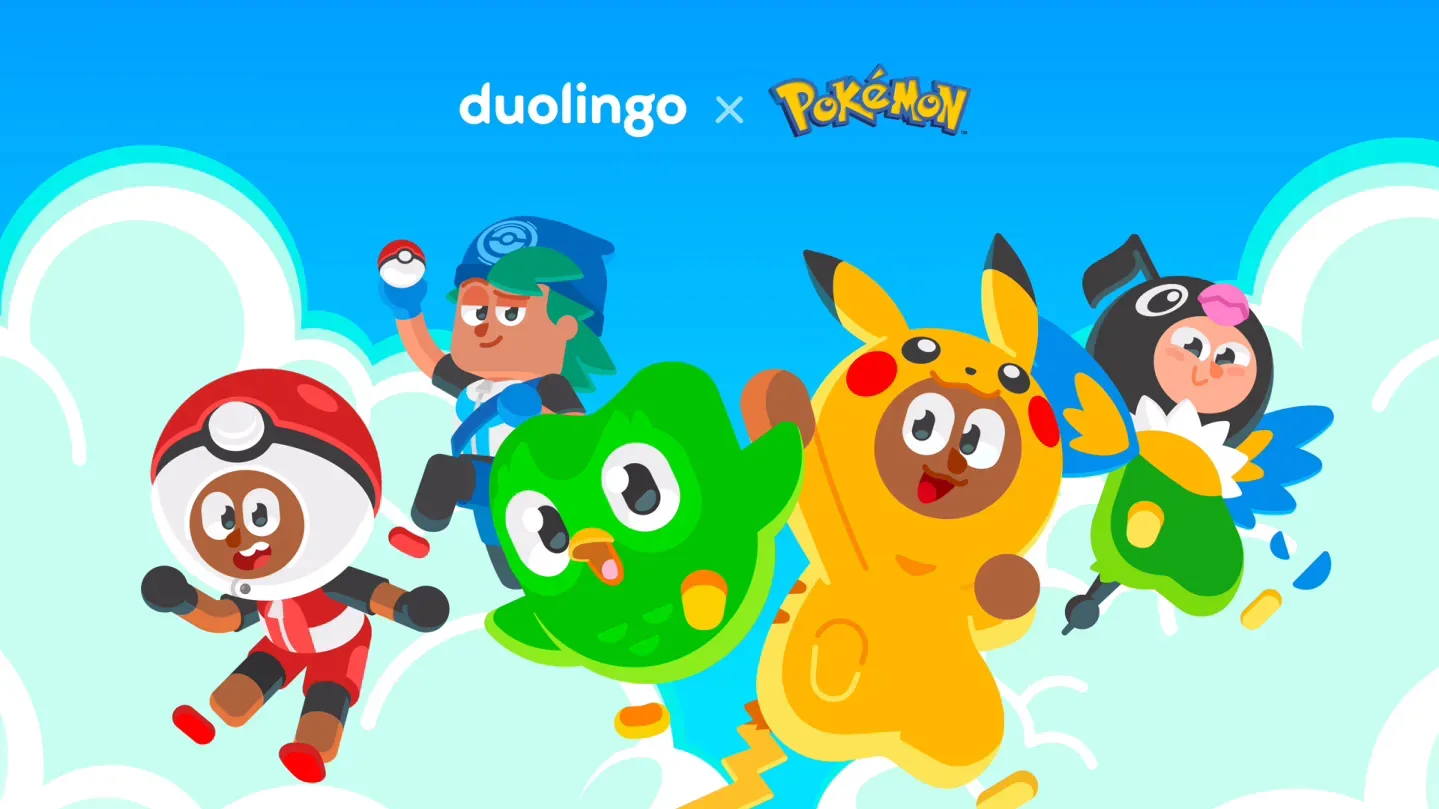
Pokémon GO is pairing its usual mobile-game progression with Duolingo’s daily lesson routine in a limited-time cross-app collaboration. The event, built around a Duolingo quest called Duo’s Pokémon Party, offers language-app avatar items and a route into Pokémon GO Timed Research with language-specific tasks.
The important point is that this is not simply an in-game Pokémon GO event that every player can open from a menu. Participation begins in Duolingo, and the stated requirements involve joining the quest by a specific date and completing lessons. Players who want the Pokémon GO rewards should treat the early deadline as the one that matters most: missing the sign-up cutoff could remove the route to the Timed Research entirely.
Pokémon GO, a real-world adventure game for iOS and Android first released on July 6, 2016, has frequently used Timed Research as a limited-duration task track. This collaboration gives that familiar structure a new angle: after acquiring the research, players select a language, then receive its tasks in that language alongside Professor Willow’s guidance and hints.
The deadlines to put on the calendar
Duo’s Pokémon Party is available in Duolingo now, but players must join by Monday, December 21, 2026, at 11:59 p.m. local time. That is the enrollment deadline. Once a player has joined, the quest can continue through Tuesday, December 29, 2026, at 11:59 p.m. local time, which is also the deadline to claim its rewards.
The collaboration describes a daily reward for completing at least one Duolingo lesson during the quest period. Those rewards include Pokémon-themed suits for a Duolingo Avatar—Pikachu and Chatot are named examples—and an offer code connected to Pokémon GO Timed Research.
The stated condition for the Pokémon GO code is to participate in Duo’s Pokémon Party by December 21 and complete seven lessons in Duolingo by December 29. The supplied event details do not specify that the seven lessons must be on consecutive days, nor do they spell out exactly when the offer code appears in the daily-reward sequence. The safe approach is therefore to enroll early, keep completing lessons across the event window, and claim each available reward before the Duolingo deadline.
There is then a separate final cutoff inside Pokémon GO. Once the Timed Research has been obtained, both its tasks and its rewards must be finished and claimed by Thursday, December 31, 2026, at 11:59 p.m. local time. In other words, there are three distinct time limits:
- December 21: Join the Duolingo quest.
- December 29: Continue the quest, complete the lesson requirement, and claim Duolingo-side rewards.
- December 31: Complete and claim the Pokémon GO Timed Research.
All three use local time, which matters for players in different regions. A last-day plan that relies on a single remaining lesson or unclaimed research task leaves little margin for an overlooked reset, a forgotten claim screen, or a code that has not yet been redeemed.
Related coverage includes Pokémon GO and Duolingo Launch Cross-App Event With Timed Research, Avatar Rewards, and Language-Themed Pokémon.
What the Pokémon GO research includes
The central Pokémon GO reward track is the event-themed Timed Research unlocked through the Duolingo participation and lesson conditions. A player chooses a language after obtaining the research, and the resulting tasks appear in that language. That makes the language selection more than decorative presentation: it is the mechanism through which the collaboration asks players to engage with vocabulary or instructions while progressing through Pokémon GO objectives.
Timed Research is a set of tasks available only for a fixed window. Unlike a permanent objective line, it expires after the listed deadline, including any unclaimed rewards. For this event, the December 31 cutoff applies to both completion and claiming, so reaching a final task alone is not enough if a reward still needs to be collected.
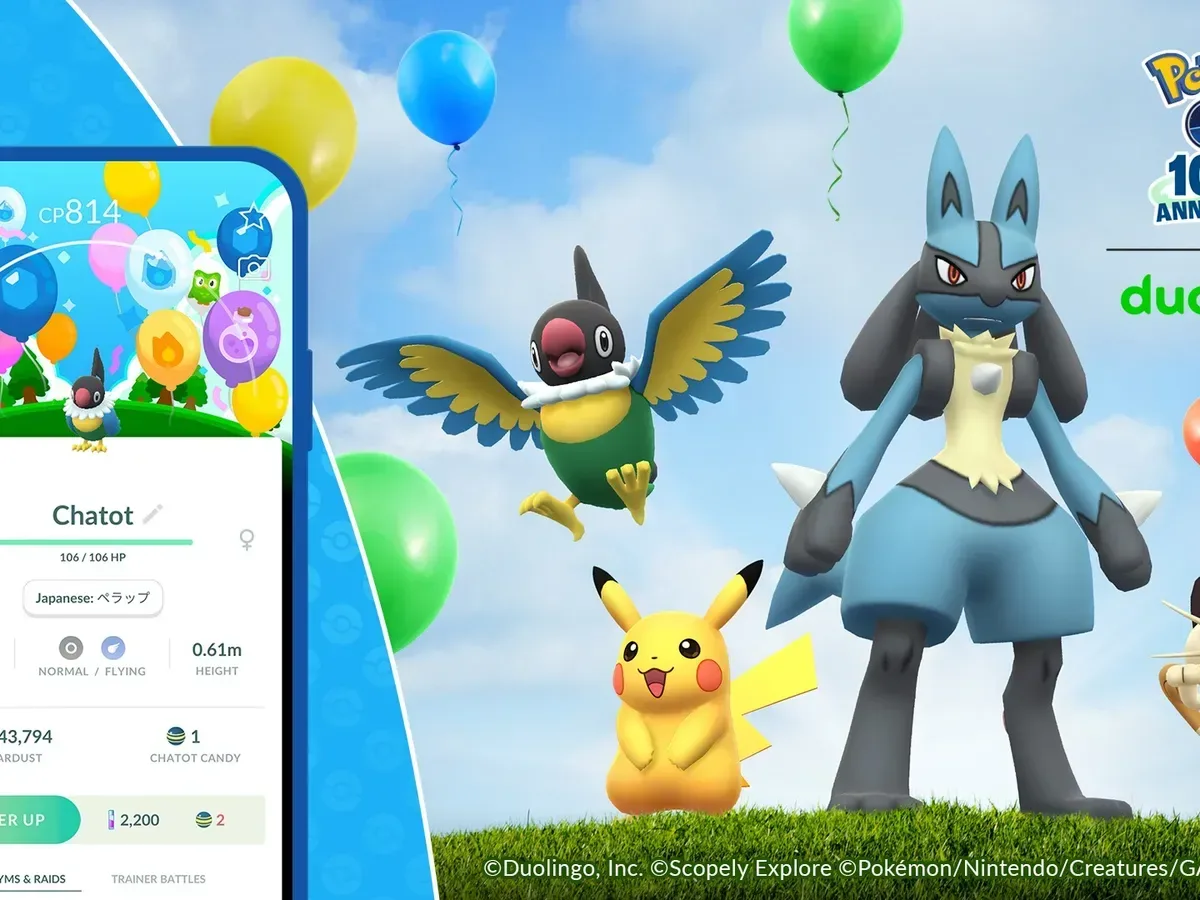
Completing the tasks awards XP, Stardust, and encounters with event-themed Pokémon. The specified guaranteed encounter lineup is:
- Pikachu with a Special Background
- Meowth with a Special Background
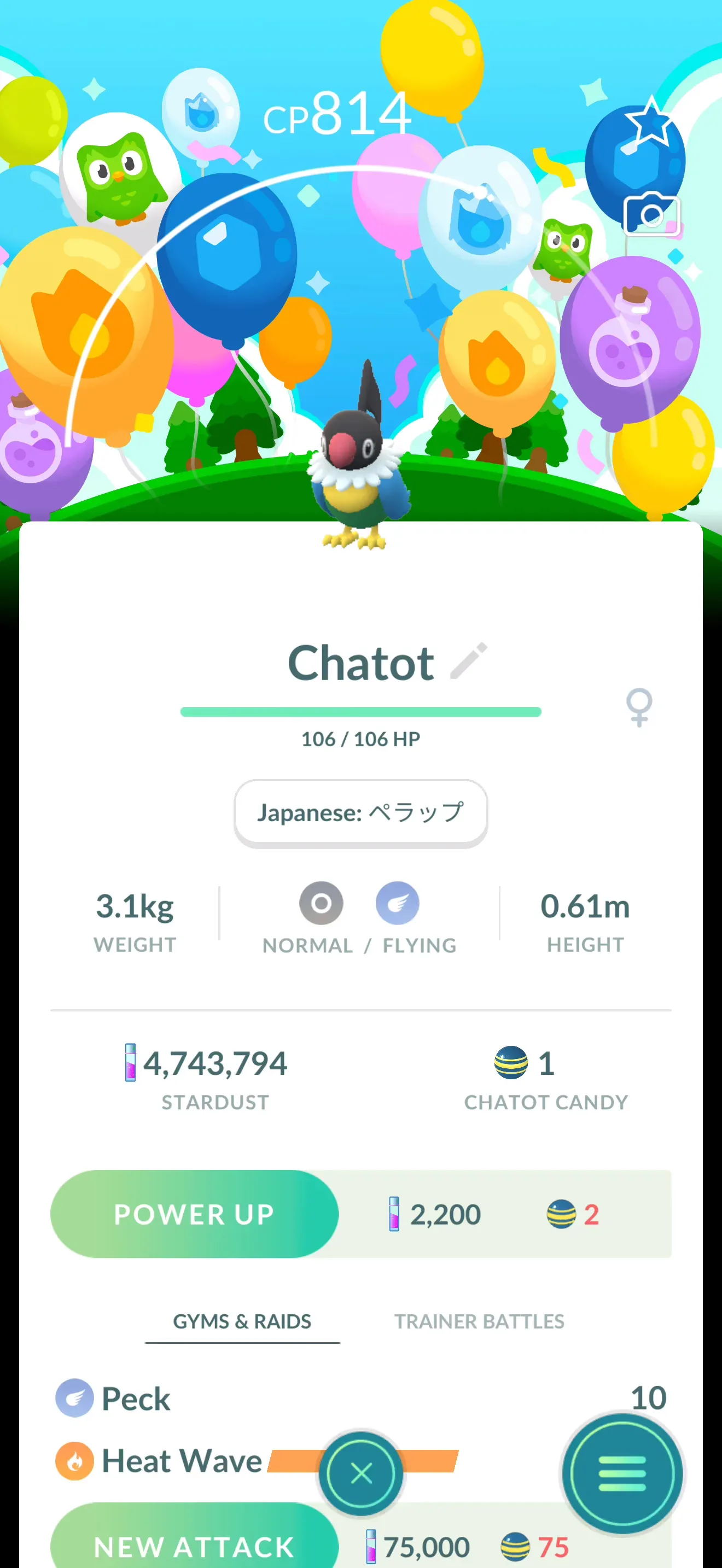
- Chatot with a Special Background
- Lucario with a Special Background
“Guaranteed” here is significant because it separates these encounters from chance-based outcomes. Players who complete the relevant tasks can expect each named Pokémon encounter. The event information also says that a Shiny encounter is possible for players who are lucky, but it does not promise a Shiny version. A Shiny is a rare alternate-color Pokémon; the possibility of one should be viewed as a bonus outcome rather than a completion requirement or a reward every participant will receive.
The Special Background wording identifies these as event-styled encounters rather than ordinary versions in the sense presented by the collaboration. The supplied details do not state whether every encounter has identical presentation, whether the background can return in another event, or any broader availability rules. Players interested in the event styling should therefore ensure they complete the research within the stated window rather than assume an extension or repeat opportunity.
A new language-tag feature for event Pokémon
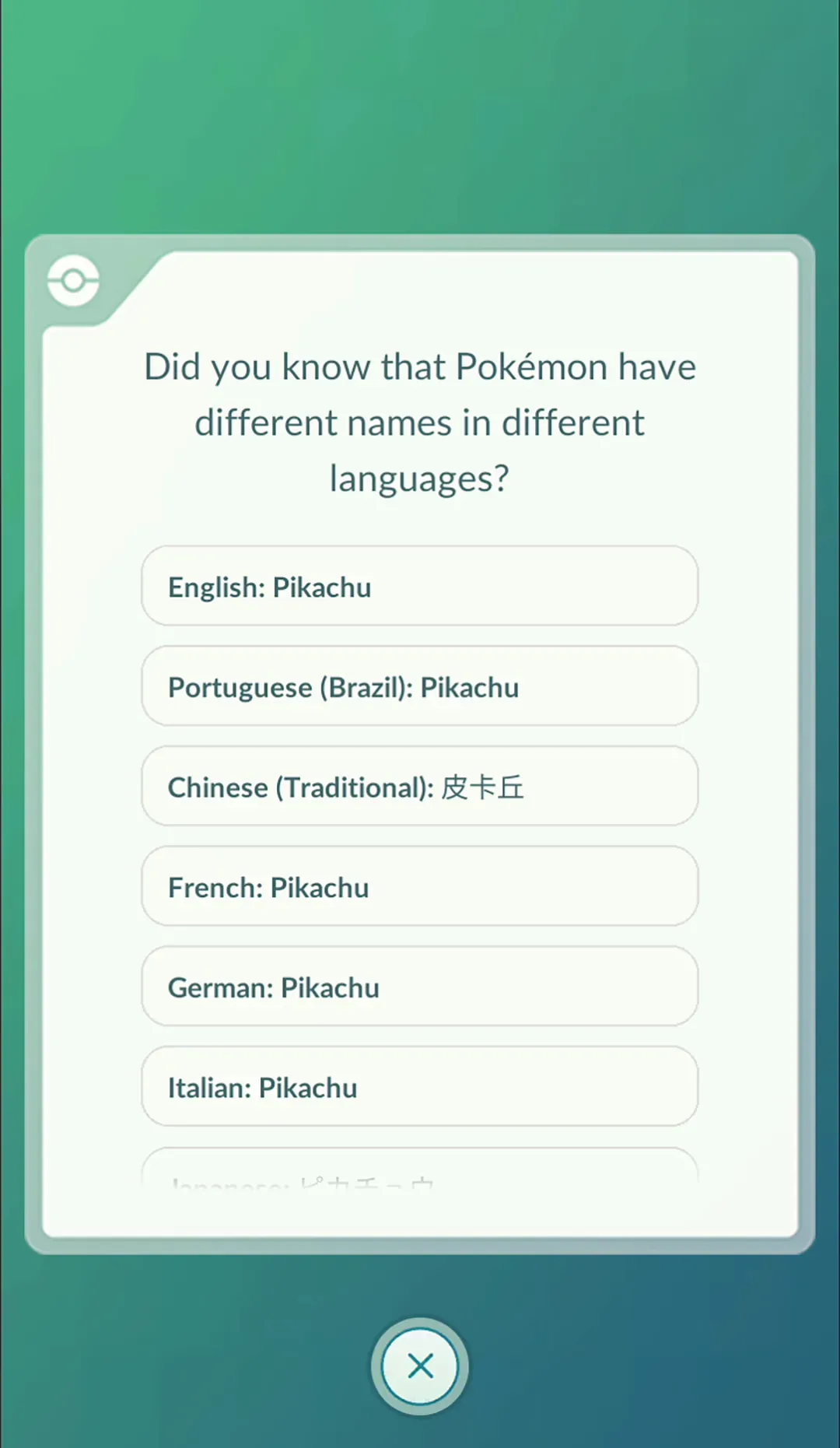
The collaboration also introduces a language tag feature for certain Pokémon obtained from its event-themed Timed Research. On the Pokémon summary page, eligible Pokémon will display a tag intended to help players discover names used for Pokémon in other languages.
This is a small feature with a clear thematic purpose. Pokémon has names that vary among languages, and the tag connects an individual caught Pokémon to that multilingual naming idea. It also gives the event’s education-focused premise a lasting in-game reminder on applicable Pokémon rather than limiting the crossover entirely to a short quest screen.
There are important boundaries in the available description. The feature is said to apply to certain Pokémon from the event-themed research, not necessarily every Pokémon in a player’s storage. It is also described as a tag on the summary page, not as a mechanical change to moves, battle performance, species identity, or trading. Players should expect a naming-discovery and collection-presentation feature, not a new gameplay stat system.
How to approach the event without wasting the window
For players who use both apps, the practical path is straightforward: join Duo’s Pokémon Party first, then make the lessons part of a routine before worrying about the Pokémon GO research. Completing at least one lesson on active quest days earns daily rewards, while seven lessons by December 29 are the stated requirement for the offer code. Starting sooner makes it easier to absorb a missed day without putting the entire collaboration at risk.
- Open Duolingo and opt into Duo’s Pokémon Party before 11:59 p.m. local time on December 21.
- Complete lessons during the quest period and claim the daily rewards as they become available.
- Reach the seven-lesson requirement by December 29 and look for the Pokémon GO Timed Research offer code.
- Obtain the Timed Research in Pokémon GO, choose a language, and work through the tasks.
- Claim every completed research reward before 11:59 p.m. local time on December 31.
The main friction point is that the rewards and steps are split across two apps. Players accustomed to Pokémon GO’s event tabs should not assume that merely opening Pokémon GO will enroll them. Conversely, finishing Duolingo lessons without joining the quest before its cutoff may not meet the event’s participation condition. Checking both the quest status and reward-claim status is more useful than relying on a streak alone.
Why the structure fits both apps
The collaboration uses each app’s existing loop rather than asking either audience to learn an entirely separate system. Duolingo’s side emphasizes repeat participation: a lesson completed on a day produces a reward, and seven lessons unlock the Pokémon GO offer-code outcome. Pokémon GO’s side transforms the crossover into a recognizable research path, with XP, Stardust, encounters, Professor Willow, and a time-limited completion schedule.
That makes the partnership accessible to two overlapping groups. Pokémon GO players have a reason to try or revisit language lessons, while Duolingo users have a Pokémon-themed reward path that does not depend on a card purchase or a console release. It is also an event centered on routine rather than a single dramatic play session. The most valuable practical resource is time before the early enrollment deadline.
For broader gaming context beyond this mobile collaboration, see Joking Joystick’s coverage of the Ocarina of Time Remake’s 2026 physical sales.
For the Pokémon GO portion, the final distinction is simple: joining the Duolingo quest, earning the code, obtaining the research, completing the tasks, and claiming the rewards are separate actions with separate opportunities to be missed. Players who handle those steps early can focus on the language-themed tasks and the guaranteed Pikachu, Meowth, Chatot, and Lucario encounters instead of racing the calendar at the end of December.