Pokémon Go and Duolingo are crossing paths in a promotion that turns a language-learning streak into in-game Pokémon rewards. Beginning November 17, players can take part in a limited-time Duolingo challenge: complete at least one language lesson on seven separate days.
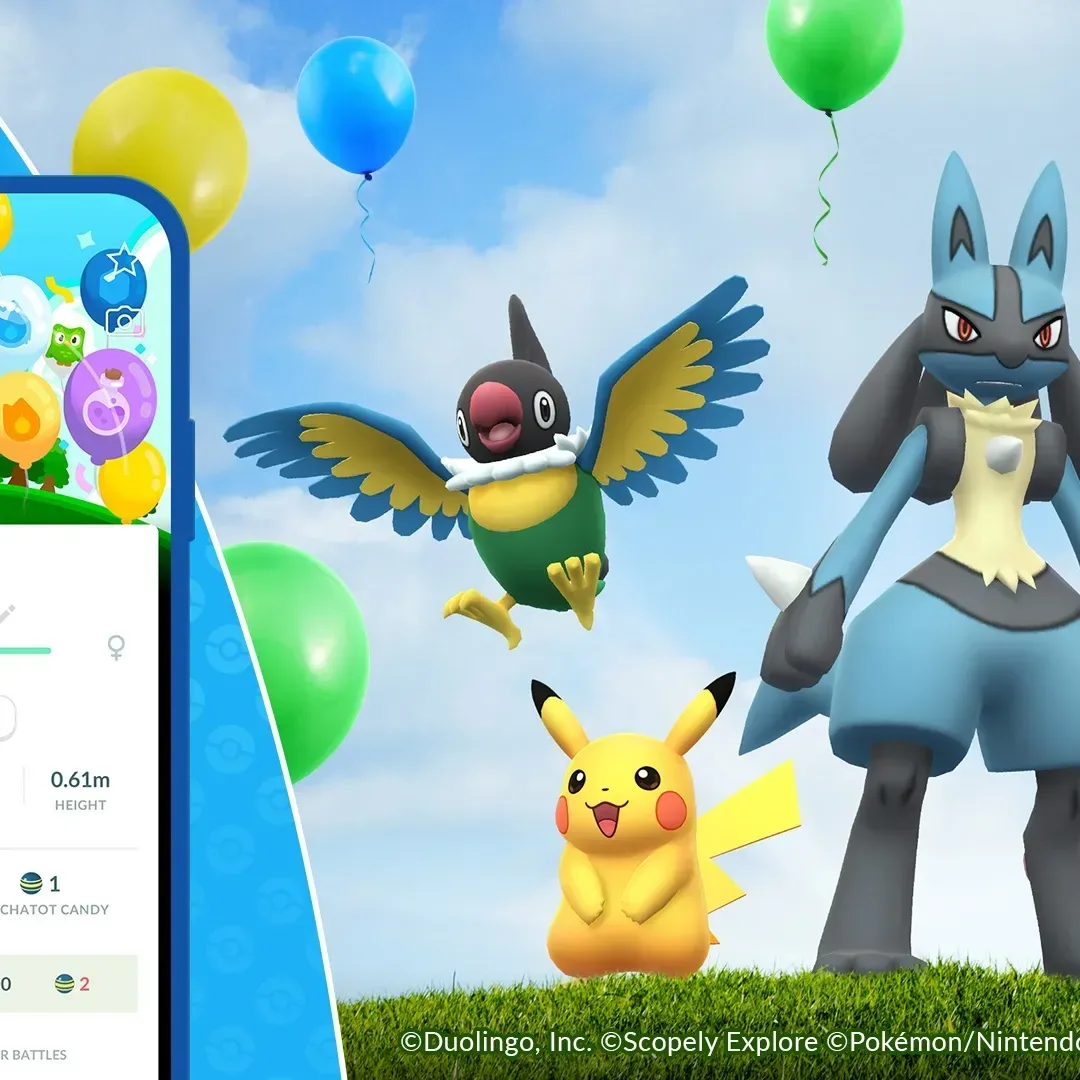
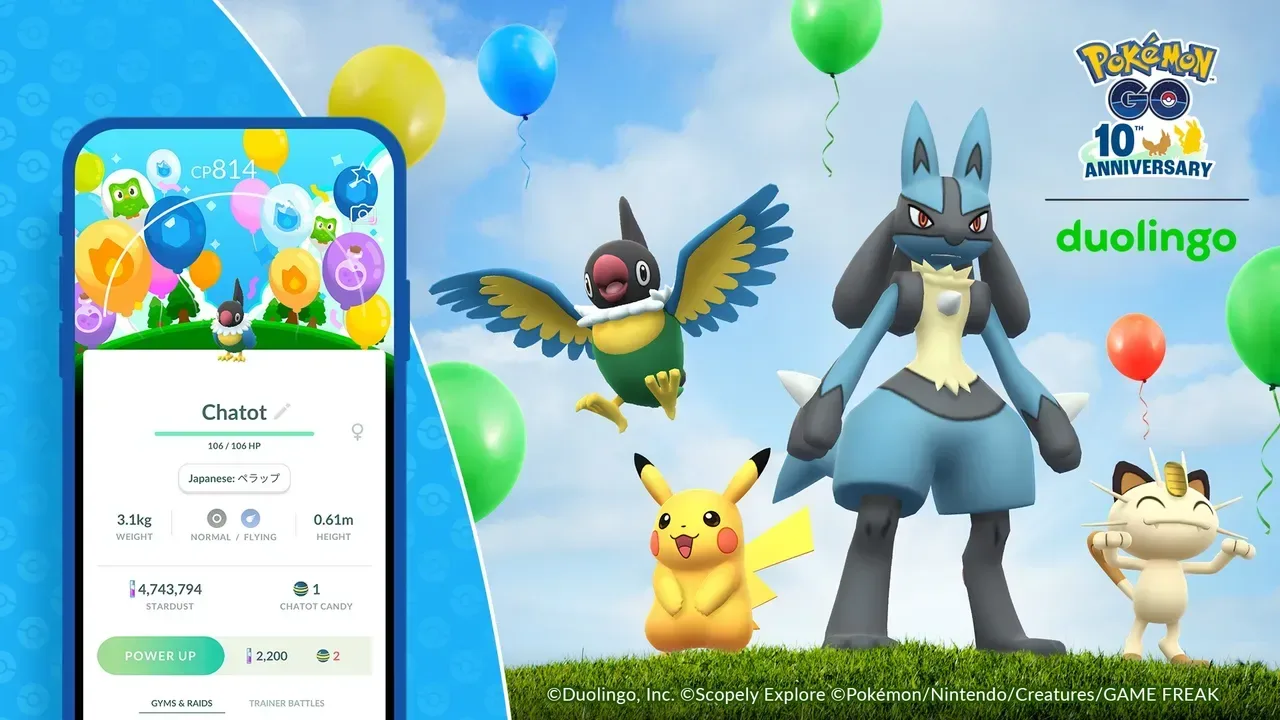
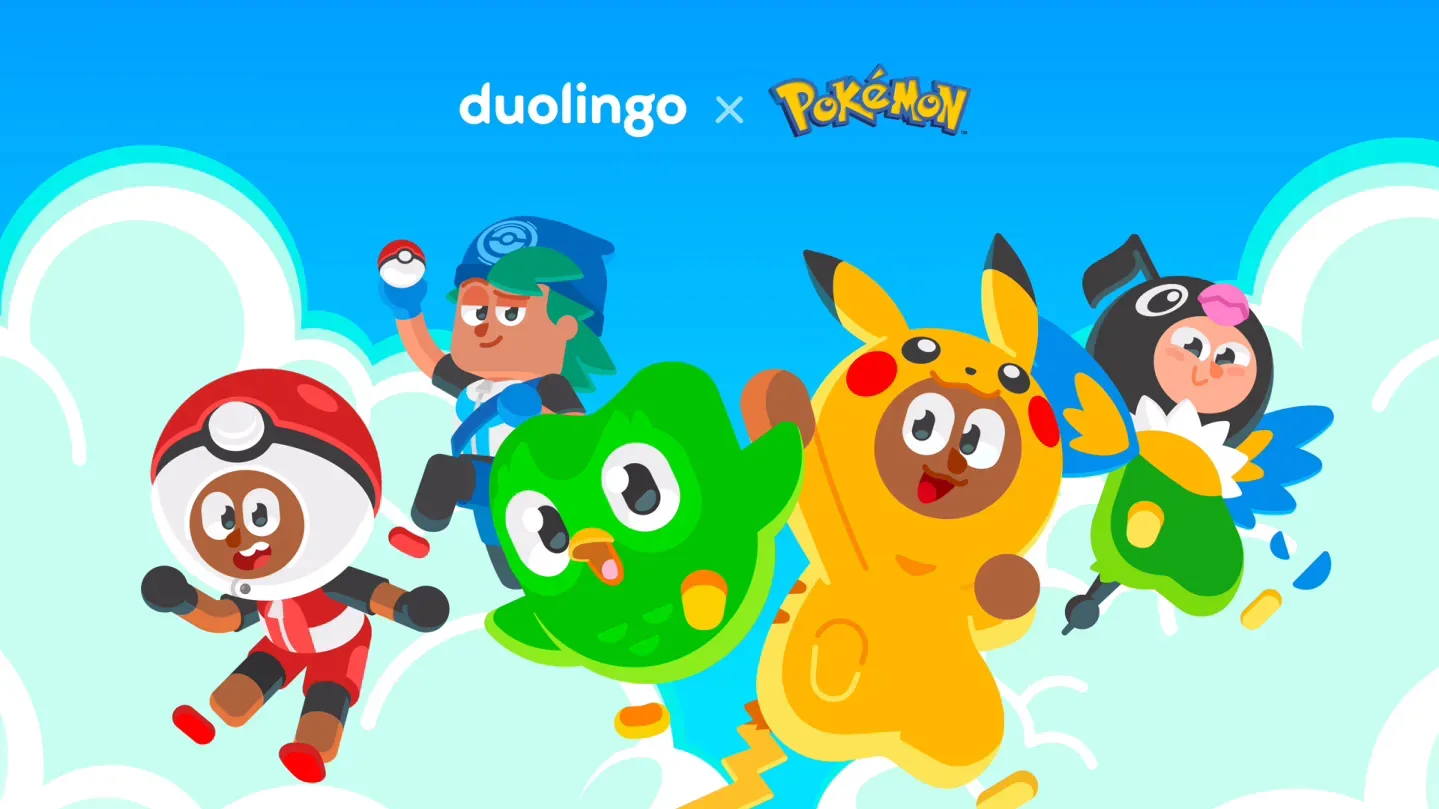
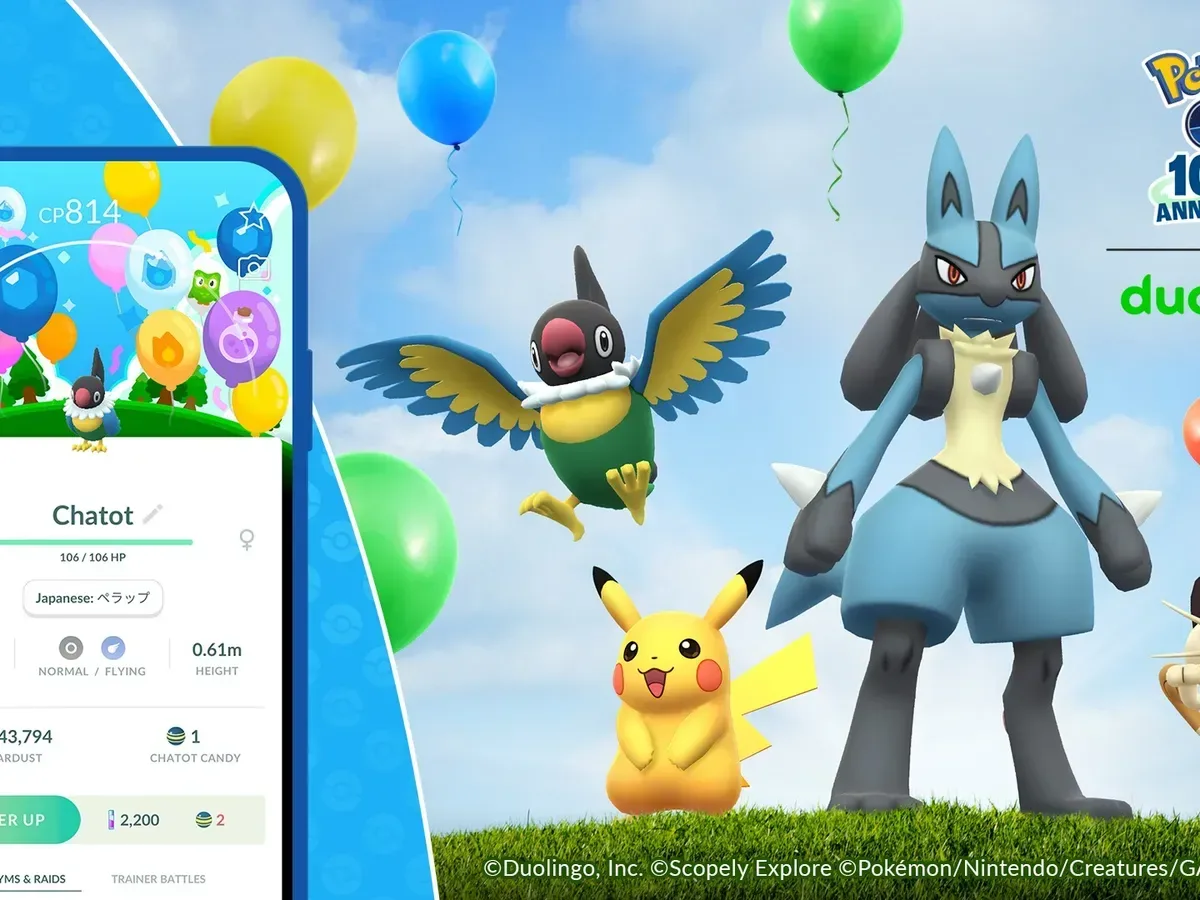
Finish that requirement and Duolingo will award Pokémon-themed outfits for a user’s profile. Completing the full activity also earns a promotional code for Pokémon Go. That code unlocks timed research, with rewards including Pikachu and the regional-exclusive Chatot carrying a special Duolingo background.
The tie-in is a notably direct connection between two mobile apps. It is not simply a sponsored avatar item inside Pokémon Go, nor does it make Duolingo’s green owl, Duo, a Pokémon players can catch. Instead, the event asks participants to engage with one app across multiple days before moving to the other to claim a gameplay reward.
What players need to do
The core requirement is straightforward, though its wording matters: players need to complete one or more language lessons on seven separate days during the time-limited Duolingo event. Completing seven lessons in one sitting would not satisfy a requirement based on separate days.
- Open Duolingo once the event begins on November 17.
- Complete at least one language lesson.
- Repeat that on seven different days while the event remains active.
- Claim the Pokémon-themed Duolingo profile outfits unlocked by the challenge.
- Complete the event to receive the Pokémon Go promotional code.
- Redeem the code in Pokémon Go to access the associated timed research.
The supplied details do not specify the event’s end date, the exact research tasks, or a deadline for entering the code. Players interested in the Pokémon Go portion should therefore avoid assuming that the seven-day goal can be postponed indefinitely. A time-limited event is one available only for a defined window, and timed research generally means its tasks must be completed before a stated in-game expiry.
For a focused overview of the cross-app setup, see our Pokémon Go and Duolingo event guide.
What “timed research” means here
Pokémon Go uses research as a task-and-reward structure. Players receive objectives, work through them, then collect the listed rewards. In this case, the research is unlocked via a promotional code earned through Duolingo rather than being described as a standard, automatically available in-game activity.
The crucial modifier is “timed.” Unlike research without a deadline, timed research has a limited completion window. The available information confirms the reward route but not the individual objectives or their expiry. As a practical matter, players who receive the code should redeem it and inspect the research in Pokémon Go promptly, rather than leaving an unknown deadline to chance.
Related coverage includes Pokémon Go Teams Up With Duolingo for Timed Research, Profile Outfits and More.
The named rewards make the collaboration more than a profile-cosmetic exchange. Pikachu is one of Pokémon’s most recognizable species, while Chatot is identified as regionally exclusive. Both are said to have a unique Duolingo background, giving the encounter a visual marker tied to the crossover.
A background is distinct from the Pokémon itself: it is a themed presentation element associated with the creature. The information provided does not establish whether the background changes a Pokémon’s battle performance, rarity, or other mechanics. What is confirmed is the collaboration branding attached to the reward Pokémon.
Language is the natural bridge between the apps
On the surface, Pokémon Go and Duolingo are an unusual pairing: one centers on collecting creatures through a mobile game, while the other structures language learning around short lessons. Yet language is an especially appropriate link for Pokémon, whose species names vary across markets.
Pokémon Go is rolling out a feature that will let players view their Pokémon’s names in multiple languages for the first time. Pikachu remains Pikachu internationally, but many species do not. Snorlax, for example, is called Relaxo in German.
That naming difference is useful context for the crossover. It does not mean the Duolingo event teaches Pokémon terminology or changes a player’s game language. Neither of those things has been stated. But the promotion arrives alongside a feature that puts Pokémon’s multilingual identity more visibly in front of players. A language-learning app’s mascot appearing in a Pokémon Go reward background is consequently a more coherent fit than it might first appear.
Why localized names matter
Localization is the process of adapting material for different languages and regions. In Pokémon, localized species names can be direct translations, wordplay built around a creature’s traits, or wholly different names that work naturally for the target audience. The example of Snorlax and Relaxo illustrates that even a globally familiar species may be identified differently depending on language.
For players who trade, discuss raids, or share catches with an international community, displaying names in several languages can help connect those labels. The supplied information only confirms that the viewing feature is coming; it does not describe its interface or scope. Still, its arrival gives this Duolingo collaboration an obvious thematic foundation.
A collaboration model built around routines
The promotion’s seven-day structure is significant. Duolingo is asking for repeated participation rather than a one-off lesson, and Pokémon Go’s timed research provides the completion incentive. In practical terms, the event rewards a routine: check in, complete a lesson, return on another day, and continue until the seven-day threshold is met.
That differs from an ordinary code giveaway, where a player might enter a string and immediately collect an item. Here, the code is the final handoff after activity in Duolingo. The design ties progress in one app to an opportunity in the other without claiming that either app’s central systems have been permanently merged.
Pokémon Go has previously featured sponsored cosmetic items, though this level of collaboration with another smartphone app is less common. Earlier in the year, Pokémon Go also worked with LEGO on bonus gameplay associated with LEGO stores. Together, these examples show the game using partnerships in more than one way: location-centered bonus activity in the LEGO case, and cross-app participation in the Duolingo case.
For players, the practical distinction is simple. The LEGO activity was centered on stores, while the Duolingo promotion begins with language lessons and a multi-day completion condition. Anyone interested specifically in the Duo-themed Pokémon rewards needs the latter challenge, not merely a Pokémon Go login.
Another active Pokémon Go promotion: Crocs
The Duolingo event is not the only collaboration currently connected to Pokémon Go. The game is also tied to Crocs, the footwear brand with Pokémon-themed clogs. All players can unlock a virtual pair of Pikachu shoes with the promo code POKEMONGOxCROCSxELECTRIFYING.
That code is presented as available to all players. In addition, owners of the real-world Gengar and Jigglypuff Crocs shoes will receive codes for virtual versions of those footwear designs. The distinction is important: the Pikachu shoe code is openly listed, while the Gengar and Jigglypuff digital shoes are tied to ownership of their corresponding physical products.
These two collaborations serve different purposes inside Pokémon Go. Crocs offers avatar footwear, meaning a cosmetic item for a player’s in-game character. Duolingo offers profile outfits in its own app, then a route to Pokémon Go timed research and specially backgrounded Pokémon. Neither description indicates that the Crocs items affect gameplay or that the Duolingo rewards grant Duo as a catchable creature.
Practical checklist before starting
- Plan for seven calendar days: The requirement is one language lesson on seven separate days, not seven lessons total.
- Watch the event window: No end date is provided here, so begin early enough to preserve room for missed days.
- Keep the reward path in order: Duolingo completion comes before the Pokémon Go code and timed research.
- Redeem promptly: Timed research, by definition, should not be treated like a permanent quest.
- Use the Crocs code exactly as shown: POKEMONGOxCROCSxELECTRIFYING unlocks the virtual Pikachu shoes.
- Separate confirmed details from assumptions: The collaboration confirms themed outfits, a promo code, timed research, Pikachu, Chatot, and Duolingo backgrounds; it does not provide the research task list, event end date, or mechanical effects for the backgrounds.
The result is an unusually on-theme mobile crossover: a seven-day language-learning commitment leads to Pokémon Go rewards at the same moment the game is preparing to make multilingual Pokémon names more visible. Duo may not be entering a Poké Ball, but the owl is still finding a way onto a player’s Pokémon Go screen.