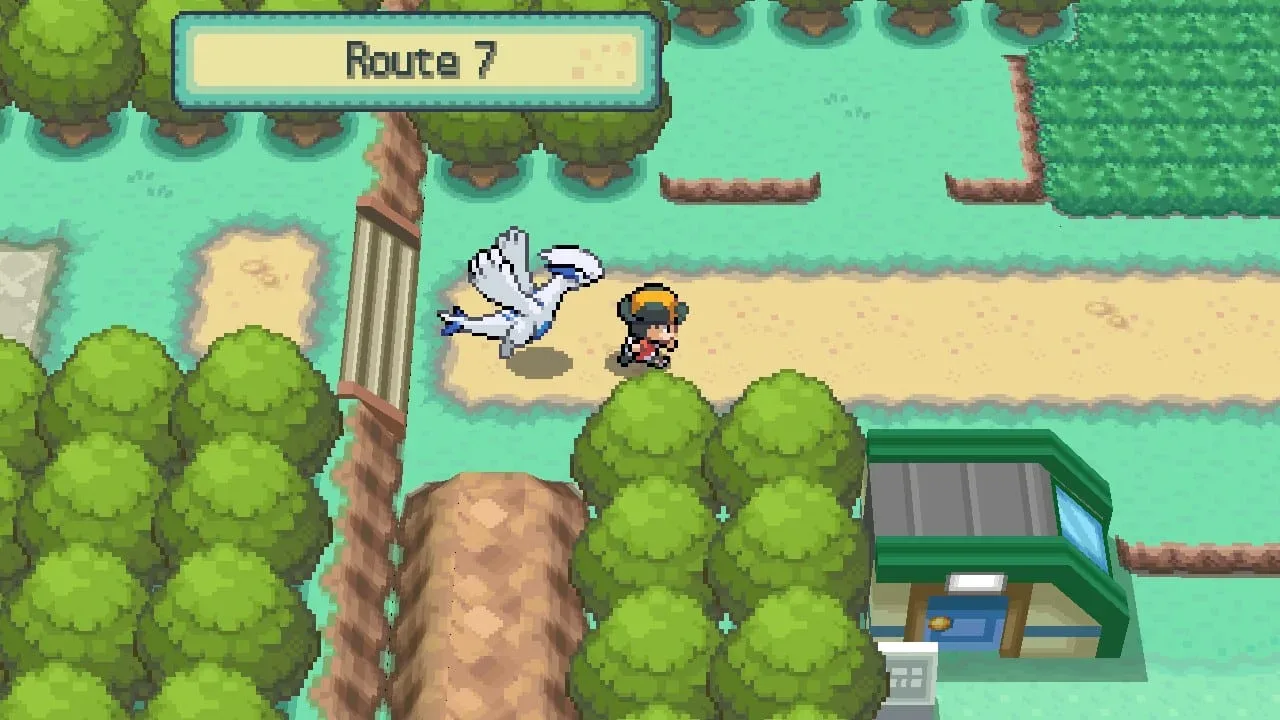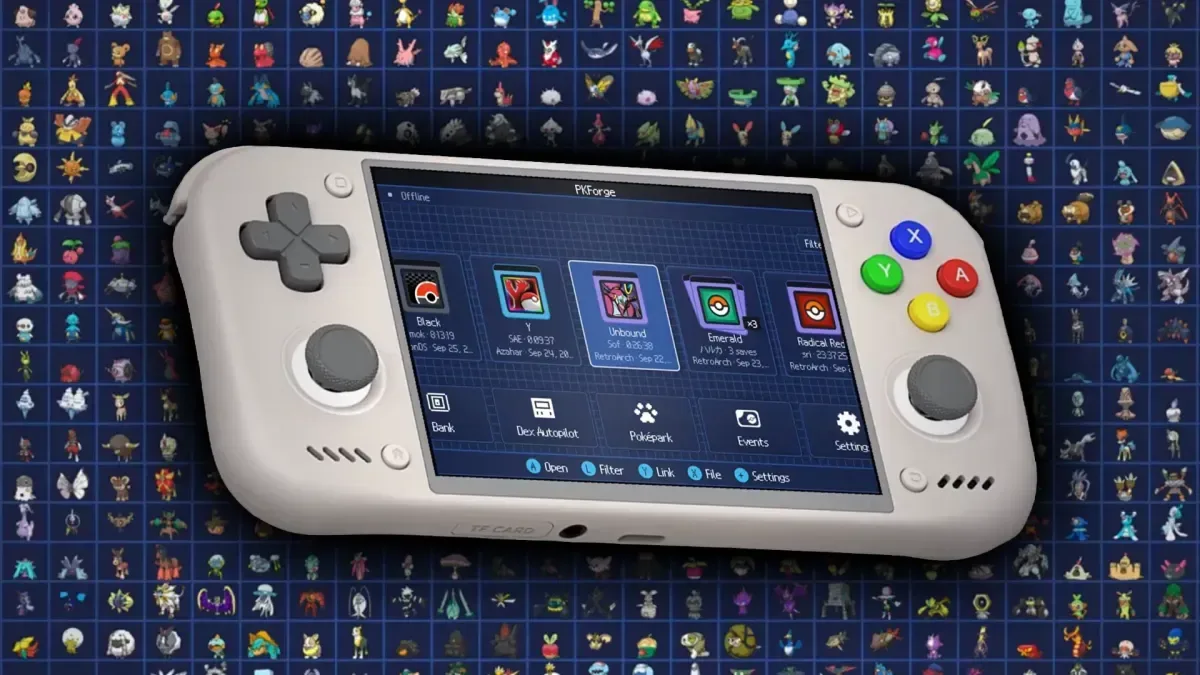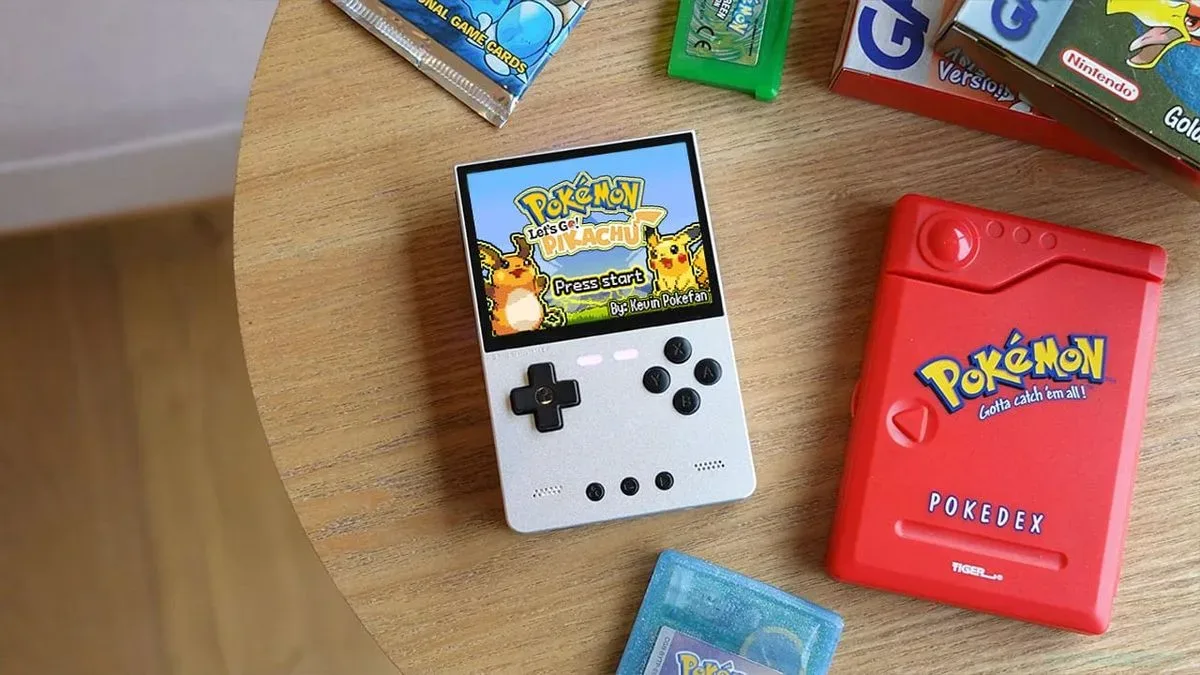
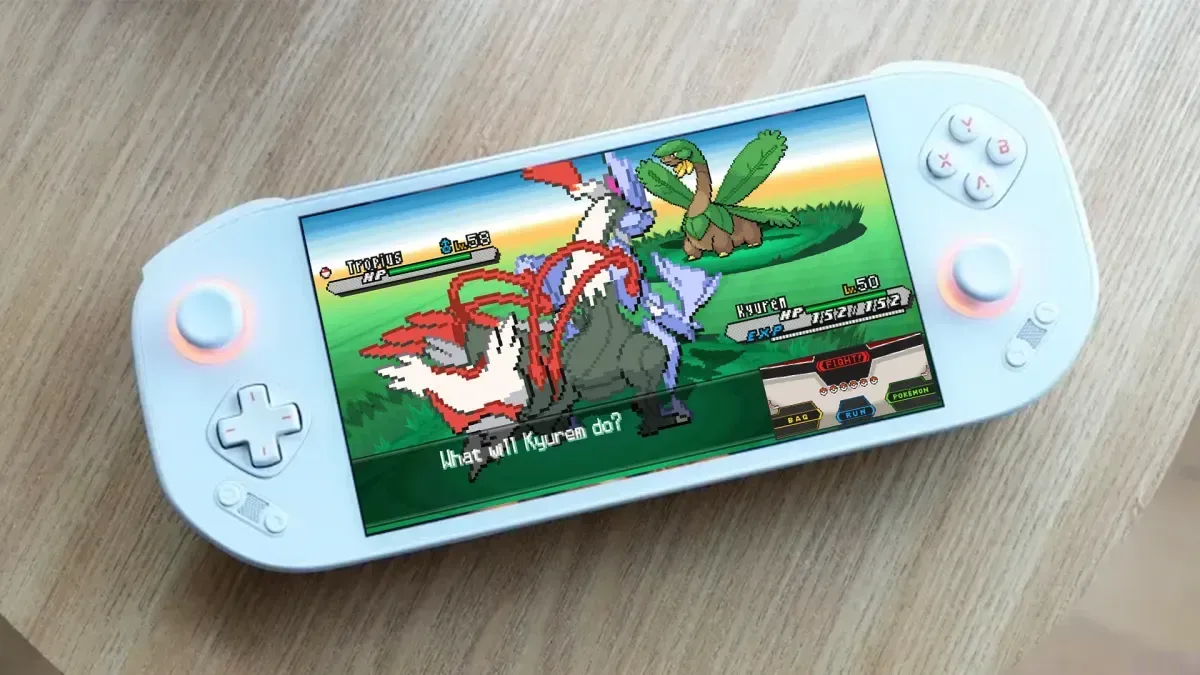
Dual-screen Pokémon games were made for hardware that had, well, two screens. That obvious statement becomes less obvious the moment a Nintendo DS-era adventure is moved to a monitor, a Steam Deck, a phone or a single-screen handheld. Traditional emulation layouts can stack both displays, place them side by side, or make one tiny enough to resemble a postage stamp with ambitions. Pokémon FullDex is a new software project intended to make that compromise less awkward.
Created by mamesj, Pokémon FullDex presents supported Pokémon games in a single widescreen view rather than asking players to continually divide their attention between separate DS displays. The project says it can run on PC, Linux, Mac, Steam Deck, handheld PCs, Android handhelds, iPhone and iPod devices, plus modded Nintendo Switch systems. It also advertises 60FPS output and resolutions up to 4K, subject to the platform and setup in use.
The important distinction is that FullDex is not described as a native remake or port of these games. It is an emulation-based presentation layer: the original game continues to run through an emulator core, while the software rearranges what the player sees into a more unified modern display. Players are expected to provide their own ROMs; the project does not supply game files.
How the one-screen approach works
Pokémon FullDex includes the melonDS emulator core for Nintendo DS software and mGBA for Game Boy Advance titles. That means there is no separately installed emulator required for the stated setup. Above the emulator sits a layer that identifies the game’s current context—such as exploration, a menu or a battle—and changes the screen arrangement to suit it.
That context awareness is the central idea. A DS game does not always use its lower display in the same way. One moment it may show a map or menu information; another, it may be central to interaction. A static two-screen arrangement treats every moment identically. FullDex instead aims to make decisions based on what the game is doing, combining the relevant information into a single widescreen composition.
In practical terms, that could be particularly appealing to people playing on devices where vertical space is limited. A conventional stacked layout can make both DS displays small on a 16:9 or similarly wide screen. Side-by-side layouts make better use of width, but may leave game elements physically separated. The FullDex approach is designed around the proposition that a Pokémon game can remain readable and usable without preserving the original hardware’s literal two-panel presentation.
What 60FPS output means here
Frames per second, or FPS, measures how many individual images a display produces each second. FullDex advertises 60FPS output, but that should not be mistaken for a claim that every underlying game was originally designed as a 60FPS native release, or that the project is rebuilding those games from scratch. The relevant claim is about the software’s displayed output and presentation. As with any emulation setup, the experience can depend on the host device, its configuration and the game being used.
Likewise, “up to 4K” describes a possible output resolution rather than a guarantee that every device will run every title at that setting. Higher resolution can make a game’s image appear sharper on a compatible display, but it does not alter the original game assets into newly created high-resolution art.
Related coverage includes Pokémon FullDex Puts DS Pokémon Games on One Widescreen Display.
Pokémon games listed as supported
The project lists a mix of Nintendo DS Pokémon releases, Game Boy Advance games and one FireRed-based hack:
- Pokémon Black
- Pokémon White
- Pokémon Black 2
- Pokémon White 2
- Pokémon HeartGold
- Pokémon SoulSilver
- Pokémon Platinum
- Pokémon Emerald
- Pokémon FireRed
- Pokémon LeafGreen
- Pokémon Ultra Violet, a Pokémon FireRed hack
The DS entries are the clearest fit for the project’s screen-layout premise because they were built around two displays. The inclusion of Game Boy Advance titles makes the package broader, while Ultra Violet suggests the project may also be useful to players whose Pokémon libraries include compatible ROM hacks. Support should not be assumed beyond the named games, however; the published list is the meaningful boundary for now.
Extra emulator features: cheats and RetroAchievements
Pokémon FullDex also includes cheats and RetroAchievements support through its melonDS and mGBA foundations. Cheats are optional modifications applied while a game is running, commonly used in emulation to adjust rules, items or other game behavior. Their presence is a feature of the tool, not a requirement for play.
RetroAchievements, meanwhile, is an achievement system associated with supported retro games and emulators. For players who enjoy optional challenges or a record of completed objectives, its inclusion means FullDex is intended to sit within familiar emulation workflows rather than only provide a new display layout.
That combination matters because FullDex is not merely a visual experiment. It is being positioned as a consolidated way to run a selected group of Pokémon games with common emulator conveniences available. The layout work is the differentiator; the embedded cores, cheat support and RetroAchievements functionality provide the surrounding toolkit.
Who this is likely to suit
The strongest case for FullDex is someone who already has legitimately obtained personal ROM backups and prefers playing on a single modern display. Steam Deck users, Android handheld owners and players using a PC monitor may find a one-screen arrangement more immediately comfortable than a permanent two-screen layout. It may also appeal to Pokémon ROM-hack players working with the listed Game Boy Advance compatibility, provided the individual hack is supported.
There is a philosophical benefit as well as a practical one. Original DS hardware made the relationship between its screens part of the interface. On a modern device, reproducing that hardware exactly is not always the same thing as reproducing its convenience. FullDex’s stated goal is to preserve the game while adapting the presentation to the screen players actually have in front of them.
That does not make it a replacement for original hardware, nor does it turn a DS title into a native widescreen game. It is an alternative way to view and operate supported software. Players who value the authentic physical DS form factor may still prefer the original handheld; players who value one-screen readability may see the trade-off differently.
Before downloading: ROM ownership and AI-assisted development
Emulation software and game files are separate things. FullDex supplies the emulator-based environment and presentation layer, but users need to bring their own ROMs. The project is explicitly not offering game downloads. Anyone considering the software should understand and follow the rules that apply where they live, particularly around making and using backups.
There is another consideration: the project has been described as heavily assisted by Claude, an AI system. That disclosure gives prospective users a clear reason to make their own assessment before installing it. AI assistance does not explain every aspect of a program’s security, maintenance or quality on its own, but it is relevant context for people who avoid AI-assisted software or who want to scrutinize a project more carefully before running it.
For anyone interested, the sensible baseline is the same as with any unofficial utility: verify where the download comes from, read the project information, and use care with software that will access personal files. FullDex’s appeal is straightforward—a modern, unified display for a defined set of Pokémon games—but prospective users should make an informed choice about the tool and the legal status of their game backups.
Pokémon FullDex arrives amid continued interest in playing classic Nintendo handheld games on newer devices, where interface design can matter as much as raw compatibility. For another corner of Nintendo’s current ecosystem, LEGO’s teased adult Yoshi display set shows how enduring Nintendo characters continue to find new formats outside their original releases. FullDex takes a more technical route: keeping supported Pokémon games in emulation while trying to make their dual-screen heritage feel less cumbersome on one screen.