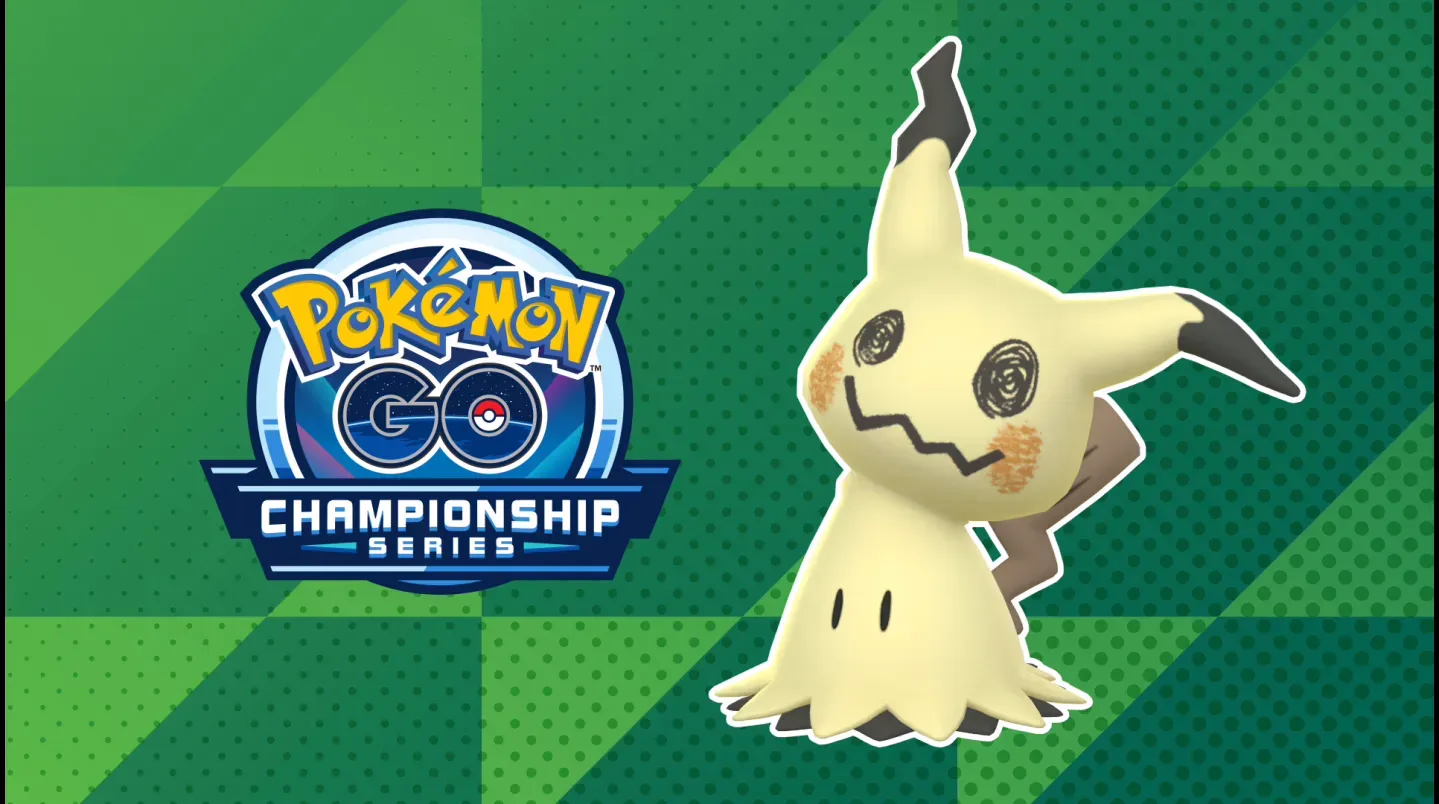
Mimikyu will become eligible for competitive Pokémon GO play on November 16, 2026, after being removed from the banned Pokémon list used for the Play! Pokémon Pokémon GO Championship Series. The change puts the Ghost- and Fairy-type Pokémon into the tournament-legal pool and gives competitors another option when building a team for sanctioned play.
The important detail is not simply that Mimikyu can now be selected. It is the Pokémon’s distinctive Disguise ability. In Pokémon GO battles, Disguise blocks the first unshielded Charged Attack Mimikyu faces. That makes the ability especially notable in a competitive format where Protect Shields are limited resources and every decision about whether to spend one can shape the rest of a match.
What changes on November 16
Effective November 16, Mimikyu is no longer banned from competitive Pokémon GO. That eligibility applies to Play! Pokémon competition, including the Pokémon GO Championship Series ruleset.
Players should separate this tournament-rule change from any broader assumptions about ordinary gameplay. The stated change is specifically about competitive eligibility: Mimikyu moves from the banned list into the pool of Pokémon that may be used under the applicable Championship Series rules. Competitors should still check the current banned list and event rules before entering an event, since legal team construction depends on the rules in force for that competition.
The timing matters because a ban-list update can alter preparation immediately. Players who had not needed to account for Mimikyu in tournament planning now have two jobs: assess whether it belongs on their own roster and consider how its presence changes the decisions they may face across the battlefield.
Disguise, explained
Pokémon GO battles revolve around fast actions, Charged Attacks and shield management. A Charged Attack is a stronger attack option that is used after a Pokémon has accumulated enough energy. When one is launched, the defending player may have the opportunity to use a Protect Shield rather than absorb the attack’s damage.
Mimikyu’s Disguise affects that familiar exchange. Its first unshielded Charged Attack is blocked by the ability. In practical terms, a player facing Mimikyu cannot necessarily treat the first unshielded Charged Attack as a normal opportunity to gain immediate damage value against it. The attack is stopped by Disguise instead.
That is why the ability is meaningful in a format where Protect Shields are described as precious. A player may ordinarily reserve a shield for a later, more threatening attack, or decide that allowing an attack through is acceptable. Disguise adds another consideration: the first unshielded Charged Attack against Mimikyu is not simply a question of how much damage the move would have dealt. It is also the attack that interacts with Mimikyu’s one-time defensive effect.
Related coverage includes Mimikyu Joins Play! Pokémon Pokémon GO Championship Series.
Mimikyu’s Disguise blocks the first unshielded Charged Attack it faces in battle.
The distinction between unshielded and shielded is central. The supplied rule describes Disguise in relation to the first Charged Attack Mimikyu takes without a Protect Shield. It does not make every attack ineffective, and it should not be read as a replacement for shields. Instead, it is a particular defensive layer with a particular trigger.
Why its typing is part of the discussion
Mimikyu enters the competitive field as a dual Ghost- and Fairy-type Pokémon. Typing is a foundational part of Pokémon battle strategy: it identifies a Pokémon’s type combination and helps define the matchups players must consider when choosing a lineup and deciding when to keep a Pokémon in battle or switch.
It would be premature to declare how large an effect Mimikyu will have on the Championship Series from eligibility alone. The ban-list update establishes that players can bring it; it does not, by itself, establish a dominant role, guaranteed placement on top teams or a specific matchup outcome. Competitive value will depend on how participants use the newly legal Pokémon within the rules of the events they enter.
Still, the combination of Ghost/Fairy typing and a first-unshielded-Charged-Attack block gives Mimikyu a clear identity to evaluate. One part of that identity is its type combination. The other is tempo and resource pressure: opponents must recognize that the first attempt to land an unshielded Charged Attack will activate Disguise rather than follow the ordinary damage expectation.
Practical preparation for competitors
For players preparing for Play! Pokémon events after November 16, the most useful response is careful rules awareness rather than overreaction. Mimikyu is legal, but tournament preparation still starts with the event’s current requirements. The Championship Series banned Pokémon list remains the appropriate reference point for bans and related competition rules.
- Confirm event rules: Verify the current Championship Series eligibility and banned-Pokémon information before finalizing a team.
- Account for Disguise: Treat Mimikyu’s first unshielded Charged Attack interaction as a dedicated decision point in battle planning.
- Review shield priorities: Because Protect Shields are a limited asset, think through when keeping or using one changes an exchange involving Mimikyu.
- Keep typing in view: Mimikyu’s Ghost/Fairy classification is a basic part of evaluating its potential place on a team and the teams built to face it.
- Avoid assumptions: Legal status is a rules change, not proof of a settled competitive hierarchy. Results and team choices will determine how often Mimikyu appears in practice.
A rules update with a real battle consequence
Not every eligibility change has an easily stated in-battle implication. Mimikyu’s does. Its move off the banned list introduces a Pokémon whose defining ability directly concerns one of Pokémon GO’s most important competitive decisions: whether a Charged Attack gets shielded or received.
That does not mean the entire competitive environment is suddenly reducible to Mimikyu. It means players have a new legal opponent—or a new legal team member—whose first unshielded Charged Attack interaction works differently from the standard expectation. In tournament play, identifying these exceptions is often as important as knowing the broad rules, because they influence choices made in a matter of seconds.
The update also underlines the value of reading rules language precisely. “Removed from the banned list” establishes eligibility. “Blocks the first unshielded Charged Attack” identifies a limited, defined battle effect. Neither phrase alone answers every strategic question a player might have, but together they explain why Mimikyu is worth attention when the change takes effect.
Pokémon fans tracking the wider franchise can also find more game-related coverage in this look at Pokémon Monomyth’s Athanto region, side quests and link-cable trading. For Championship Series competitors, however, the immediate date to note is November 16, 2026: Mimikyu becomes a legal option, and Disguise becomes a factor opponents must be ready to address.