A reflective post about Pokémon Sword and Shield’s Marnie has become an unexpectedly useful flashpoint for talking about character design, ownership, and the peculiar difference between a design people notice immediately and a character people grow to love over time.
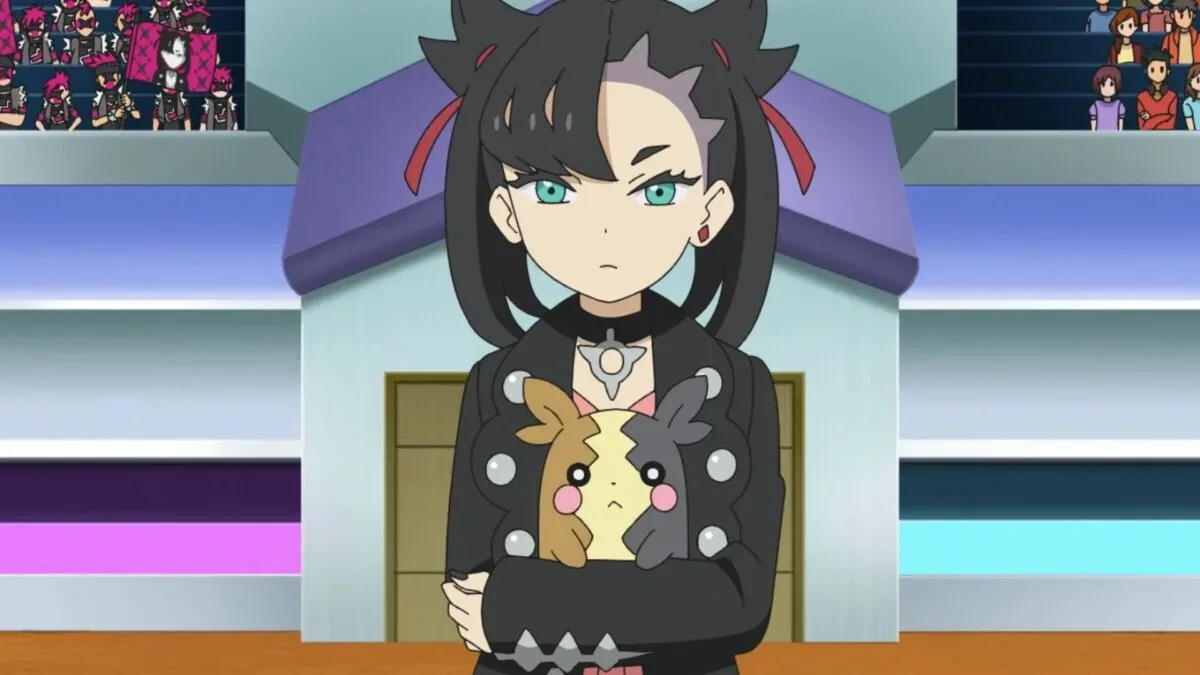
Yusuke Omura, the artist credited with designing Marnie, looked back on the character around Sword and Shield’s seventh anniversary and recalled that her initial character-art reveal did not receive the large reaction she would later attract. In his account, Marnie’s popularity built after players encountered her in the game and learned more about her. That outcome clearly did not diminish the eventual success, but Omura said it left him determined to create a future character capable of becoming popular through visual design alone.
That sentiment drew tens of thousands of reactions on X and split responses. Some readers took the post as an honest, familiar professional reflection: an artist identifying a creative goal after seeing their work find an audience by a route different from the one they hoped for. Others saw it as an unnecessary or inappropriate focus on an individual contributor’s personal validation when the character belongs to a larger, shared franchise.
The dispute is small in the grand scope of Pokémon, but it points to a real issue in how fans discuss the people behind major games. A character can be both a corporate-IP figure and a meaningful piece of artistic work for the designer who helped create them. Those truths are not mutually exclusive, even if social media often treats them as competing claims.
For more context, explore Apple TV 4K’s A19 Reportedly Has a Disabled Efficiency Core: What the Five-Core Design Means.
What Omura was actually reflecting on
Omura’s point was not that Marnie failed, nor that players were wrong to connect with her once they had spent time with Sword and Shield. Quite the opposite: he acknowledged that she eventually became popular and widely shared. His dissatisfaction was directed at the timing and mechanism of that recognition. He wanted the visual design itself to produce a strong early response, rather than waiting for a player’s connection to the character’s role and personality to develop.
That distinction matters. In game development, character design can mean the visual construction of a person: silhouette, clothing, hairstyle, color choices, facial expression, props, and the immediate impression created by those components. A character’s appeal in a finished game is much broader. Writing, animation, voice work where applicable, scenes, gameplay role, relationships, and the audience’s own experiences all shape the eventual response.
Marnie is introduced in Pokémon Sword and Shield as one of the player’s rivals. That means players do not merely see an illustration and move on; they meet her repeatedly in the course of an adventure. Her popularity therefore has room to be cumulative. Her visual identity may make a first impression, but the game supplies the encounters through which a first impression can become affection.
Omura’s reflection recognizes that divide. It is less a dismissal of story-driven popularity than an artist’s ambition to achieve a different kind of success next time: a design that communicates so efficiently and distinctively that it reaches people before context arrives.
Immediate recognizability versus earned attachment
There is a temptation to reduce the discussion to a false choice: either Marnie’s design was good, or her personality and story made her popular. Characters rarely work that cleanly. Visual design can invite attention while narrative gives that attention a reason to last. Conversely, strong writing can make players rethink a look that initially passed them by.
The difference is especially relevant to pre-release marketing. Before launch, audiences usually have limited material: a handful of screenshots, trailers, character art, or brief descriptions. Under those conditions, a design has to do a great deal of work quickly. It needs to be legible at a glance, distinguishable from other cast members, and suggestive enough to create curiosity without the benefit of a full arc.
After release, the criteria change. Players can judge the character as a whole rather than as promotional art. A reserved response to an initial reveal therefore does not predict a weak long-term connection. It may simply show that the character was built to unfold within the game rather than to dominate a thumbnail or a reveal-post timeline.
That is why the debate around Omura’s words has felt more heated than the comment itself. Many fans seem to have read his wish for instant design-led popularity as a criticism of Marnie or as a claim that the eventual response was somehow insufficient. The more charitable reading is narrower: he is describing a personal benchmark for the visual side of his craft. A creator can be grateful that a character succeeded while still studying the gap between the response they anticipated and the response that occurred.
Why working on established IP changes the conversation
The strongest criticism directed at Omura centers on intellectual property, usually shortened to IP. In this context, IP refers to the franchise and its characters as legally owned creative assets. Pokémon is not an individual artist’s original property, and a character in a large production is shaped by more than one person. That can make fans wary of language that appears to claim too much personal ownership over a beloved figure.
There is an understandable principle underneath that reaction. Major games are collaborative works. Character artists contribute important designs, but a character’s impact can also depend on directors, writers, planners, modelers, animators, localization teams, performers, marketing staff, and many others. Fans who cherish Marnie as a complete character may reasonably resist an account that seems to credit one element for everything.
But acknowledgment of collaboration should not require creative contributors to speak about their own work as though they had no relationship to it. Omura did not present Marnie as an original character outside Pokémon, nor did he deny the importance of the game experience that led people to embrace her. He specifically described popularity growing after people got to know her through play. The post’s emotional core was a designer measuring himself against a future artistic objective.
There is a practical distinction worth preserving: legal ownership is not the same thing as creative detachment. A designer can lack ownership of a franchise while still being responsible for meaningful visual decisions within it. Fans can value the ensemble nature of production without demanding that individual artists never express pride, disappointment, or ambition about their contribution.
A fellow designer explains the professional instinct
Yusuke Kozaki, a character designer associated with Fire Emblem as well as Pokémon work, responded sympathetically. Kozaki described the feeling as a common one for character designers: popularity often becomes clear after release, when a character’s motivations, narrative role, and story have had time to reach the audience. But there are also rare cases in which a design attracts people before they know the full story, and those moments can make a designer feel that their visual contribution landed immediately.
Kozaki pointed to Tracer from Overwatch and 2B from NieR: Automata as examples of characters whose designs gained substantial attention ahead of, or apart from, a player’s complete experience of their games. The examples were not a claim that every character should be built for the same kind of response. They illustrate the particular phenomenon Omura was discussing: design as a first-contact event.
For artists, that response is professionally meaningful because character art must communicate under constraints. It has to fit a game’s style, work beside other designs, support animation and production needs, and still leave an impression. Wanting that work to visibly connect is not necessarily ego. It can be a way of evaluating whether the visual language did its job before narrative context took over.
The wider discussion has continued around that central ambiguity. The conversation surrounding the post shows how quickly readers can move from a creator’s self-critique to a larger argument about credit and etiquette.
What fans can take from the Marnie debate
Marnie’s trajectory may be the best answer to the anxiety embedded in the original reflection. A muted pre-release response did not prevent her from becoming one of the most appreciated human characters associated with Sword and Shield, with merchandise now plentiful and her design praised alongside the personality players came to know. The character did not need to win every stage of attention at once to endure.
For fans, the episode is a reminder that popularity is not one metric. Early posts, reveal-day reactions, merchandise visibility, fan art, and long-term affection each describe different things. An immediate visual breakout is valuable, but it is not the only form of success and may not be the most lasting one.
For creators, it shows the risk of candid reflection in a franchise with a deeply invested audience. A short post about professional ambition can be interpreted as criticism of a finished work, a demand for credit, or an insult to collaborators. Yet the alternative—expecting artists to offer only uncomplicated celebration—would make discussion of creative work much less honest.
The fairest reading leaves space for both sides. Marnie is a collaborative Pokémon character whose appeal was strengthened by the game around her. Omura can also be proud of that outcome while aspiring to make an even more immediately magnetic design. Those ideas do not cancel each other out. They describe two different ways a character can matter: the image that makes someone stop scrolling, and the person players remember after the adventure is over.