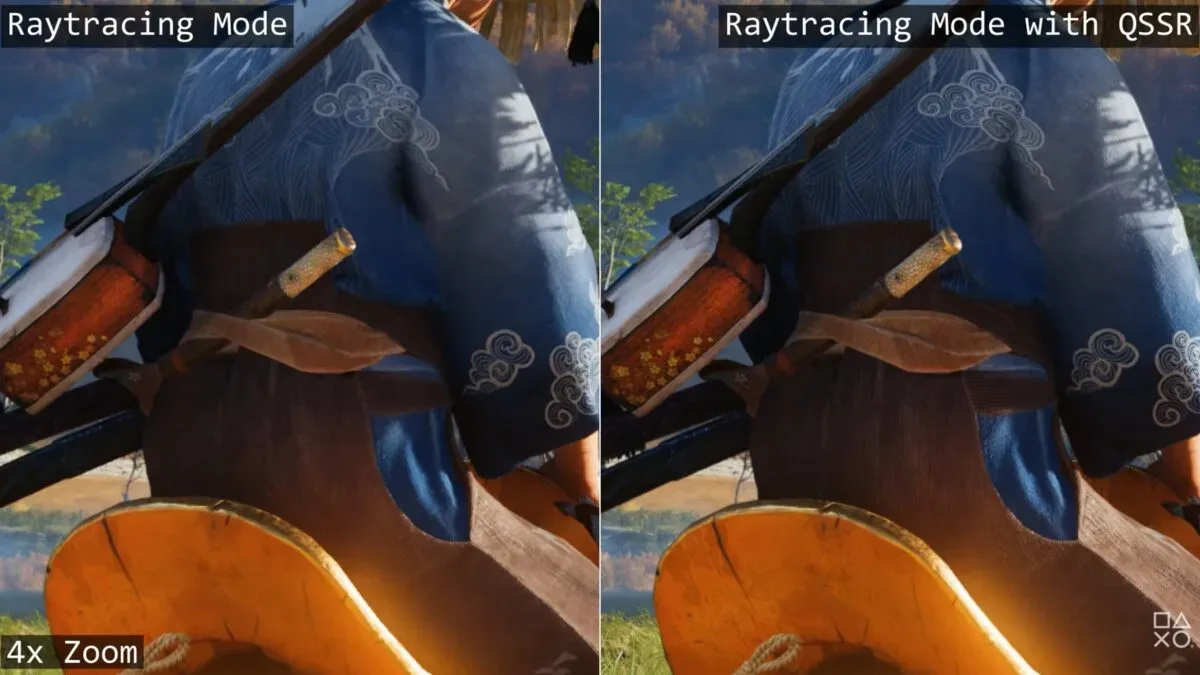
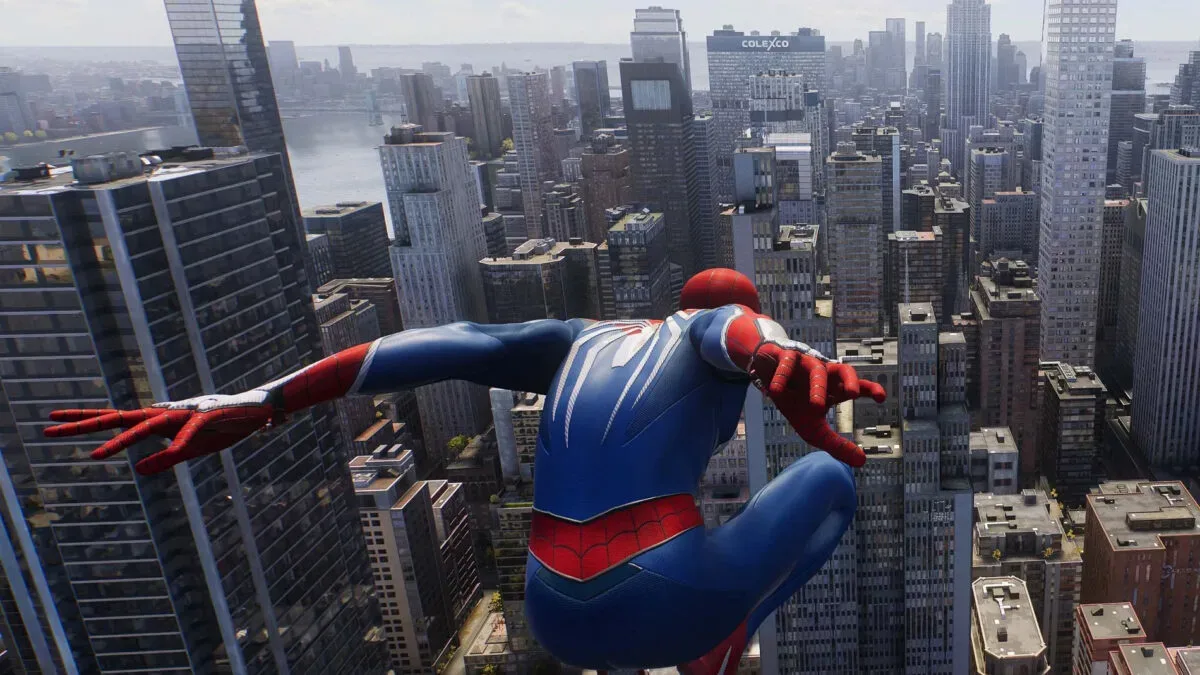
The standard PlayStation 5 is preparing for another visual tune-up without anyone having to open a console, swap hardware, or place their TV in a laboratory-grade squinting chamber. Sony’s Quick Spectral Super Resolution, or QSSR, is set to arrive in Spider-Man 2 alongside Control Resonant, The Finals, Arc Raiders, No Man’s Sky, and Hell Let Loose: Vietnam. Support is expected to roll out across the rest of 2026.
QSSR is an AI-assisted upscaling technique designed for the base PS5. In straightforward terms, it is meant to help games present an image that looks sharper, steadier, and more detailed than the console’s underlying rendering workload might otherwise allow. It is related to the PlayStation Spectral Super Resolution technology used on PS5 Pro, though QSSR is described as a less powerful version built for Sony’s original PS5 hardware.
That distinction is important. This is not a new PS5 model, a promised transformation of every game, or a universal setting players can flip on across their library. QSSR support needs to be added by individual games. For owners of the affected titles, however, it suggests that a console now six years into its life can still receive meaningful image-quality improvements through game updates and developer support rather than a hardware replacement.
Which PS5 games are getting QSSR support?
The newly named games slated to support QSSR are:
- Spider-Man 2
- Control Resonant
- The Finals
- Arc Raiders
- No Man’s Sky
- Hell Let Loose: Vietnam
Ghost of Yotei and Marvel’s Wolverine were the first games associated with QSSR when the technology was revealed in early October. The larger list gives the feature a more practical shape: this is not solely a showpiece for one type of PlayStation game. It is being adopted by games with very different visual demands, from huge outdoor views and dense city environments to competitive action and science-fiction settings.
Players should nevertheless set the right expectation for the phrase “support.” The information available establishes that these games are due to add QSSR during the remainder of 2026. It does not specify individual patch dates, mode-by-mode behavior, resolution targets, frame-rate targets, or whether every visual option in each game will use the technology. Those details matter because an upscaler is part of a game’s broader rendering setup, rather than a decorative sticker slapped onto the options menu.
What QSSR is intended to improve
“Upscaling” can sound like a miraculous command to make more pixels appear from thin air. In practice, it is a rendering strategy. A game can create an image at one resolution and then reconstruct or scale it for output at a higher resolution. AI-assisted approaches use information from the rendered image and other available data to produce a higher-quality final presentation.
The stated goal for QSSR is a more stable and detailed image. Stability is a useful word here. It does not merely mean a game is running correctly. In image-quality discussions, it can describe how consistently fine visual details hold together from one moment to the next. Details in motion—distant scenery, thin geometry, busy environmental elements, or the edges of objects—can be especially hard to present cleanly. A sharper-looking still image is one thing; retaining clarity as the camera moves is the trickier assignment.
Related coverage includes PS5 QSSR Expansion Brings AI Upscaling to Spider-Man 2, No Man's Sky and More.
Remedy Entertainment graphics programmer Erik Jansson characterized QSSR as producing a more stable and detailed result. Embark Studios technical director Mikael Linderholm said the technology can provide increased sharpness, clearer environments, and wider visual improvements for more PlayStation players.
“We can deliver increased sharpness, better environmental clarity and overall visual improvements to even more PlayStation players,” Mikael Linderholm said.
Those benefits are naturally the most relevant in games that ask hardware to display a great deal at once. Spider-Man 2’s city views are an obvious example: rapid traversal and sprawling urban scenery create precisely the kind of image where players may value clean environmental detail. But the exact visible impact will remain game-specific. A technique can be used differently from title to title, and the available information does not claim that all six games will show the same scale or type of improvement.
QSSR versus PSSR: the important distinction
QSSR should not be confused with PSSR, the PlayStation Spectral Super Resolution technology used by PS5 Pro. The relationship is close enough to invite confusion, especially because both names point to image reconstruction and both are tied to Sony’s PlayStation hardware strategy. Yet QSSR is positioned as the more limited counterpart for the base PS5.
For prospective users, the practical takeaway is uncomplicated: a base PS5 owner is not being told their console has become a PS5 Pro. QSSR instead represents an effort to bring some image-quality gains to the older machine within its existing capabilities. It is an optimization route, not a specification upgrade.
That is still notable. Console generations are often discussed as if their visual ceiling is permanently fixed the moment the box reaches a living room. Hardware limits are real, but rendering techniques, software tools, and developer implementation can evolve after launch. The listed QSSR games illustrate how those improvements can arrive later in a system’s life, assuming a studio elects to implement them.
What players should watch for after updates arrive
People comparing QSSR results should be careful not to reduce the question to a single screenshot. A static image can be useful, but a technology focused on stability may be better judged during ordinary play: camera movement, traversal, crowded scenes, distant scenery, and transitions between areas can all be more revealing than a paused frame.
Even then, not every improvement will be instantly dramatic. Some players may struggle to see a significant change, including in side-by-side comparisons. That does not necessarily undermine the point of an upscaler. The aim may be a series of modest, accumulated gains: cleaner detail, reduced visual distraction, improved environmental legibility, or a generally more polished presentation. The best result may simply be that players notice the game rather than the processing.
It is also worth separating image quality from performance claims. The material describing QSSR says it is meant to improve resolution and visual quality on base PS5, while PSSR on PS5 Pro is associated with boosting image quality at higher frame rates. No individual performance promise has been detailed for the newly listed QSSR games. Until each implementation is explained in more detail, players should not assume a specific resolution, frame rate, graphics mode, or quality trade-off.
The rollout is also a reminder to keep game updates in perspective. QSSR may make a supported game look better, but it does not alter the game’s core content or replace the work of developers tailoring the technology to their own engine and visual design. The feature’s value will be determined by how well it is integrated in each title, not merely by the presence of the four-letter badge.
Project Amethyst and the longer-term picture
QSSR emerged from Project Amethyst, Sony’s collaboration with AMD. That background places the feature within a broader effort around graphics and post-processing technology. Post-processing refers to image work performed after a scene is rendered, with the final presentation potentially shaped by reconstruction and other visual techniques. It is a broad category, and the supplied information does not establish which future features, games, or timelines might follow from the project.
Still, the expansion to six additional games offers a concrete sign that the effort is moving beyond an initial pair of supported titles. The meaningful question now is not whether QSSR exists, but how broadly developers choose to use it and how reliably it delivers on its stated aims across different games.
For base PS5 owners, the immediate news is pleasantly practical: Spider-Man 2 and the five other listed games are in line for an image-quality pass without a new console entering the equation. For a related look at PlayStation releases and updates, see our coverage of God of War Sons of Sparta’s PS4 release and challenge modes.
QSSR will not turn every pixel into a fireworks display, and some differences may require a patient eye to spot. But clearer environmental detail and a more stable image are sensible targets for games whose worlds are built to be looked at while moving quickly through them. That is a quieter sort of upgrade than new hardware, perhaps, but it may be the one a six-year-old console is best placed to deliver.