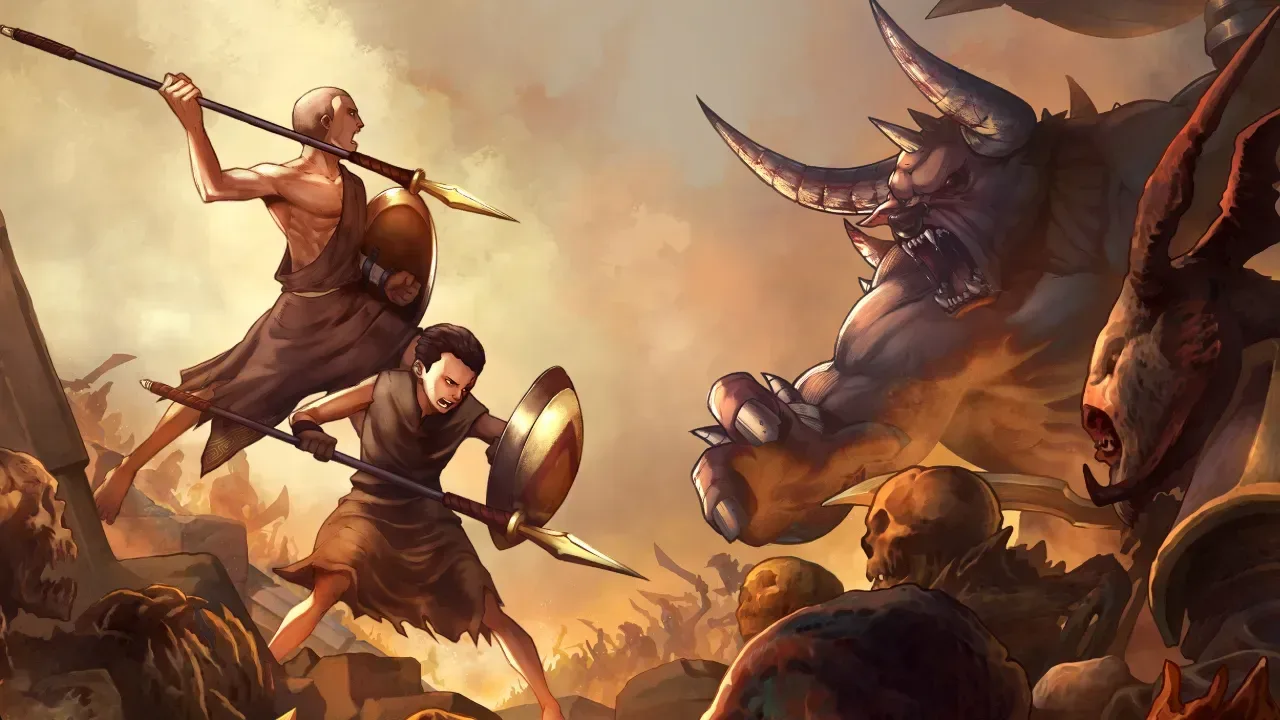
God of War Sons of Sparta is expanding from PS5 to PS4 on November 16, launching at midnight local time. The platform move is arriving alongside two new optional ways to play: Hermes Mode, built around racing the clock, and Erebus Mode, where a single hit can kill either Kratos or an enemy.
The important detail for returning players is that the modes are not limited to the PS4 edition. Mega Cat Studios is bringing them to both PS4 and PS5, so the update is more than a last-generation port. It gives the game a pair of sharply different challenge rule sets: one oriented around route efficiency and recorded times, the other around survival under extreme stakes.
What is changing on November 16
Sons of Sparta debuted earlier in 2026 as an experimental, side-scrolling prequel chapter for PS5. Its newly confirmed PS4 release begins at midnight local time on November 16, meaning the exact moment of access will depend on a player’s local time zone rather than one universal worldwide hour.
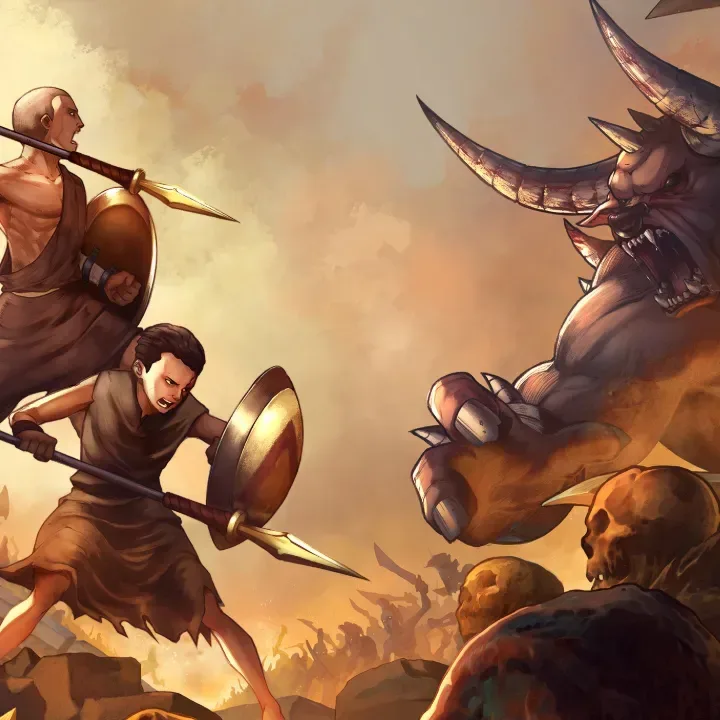
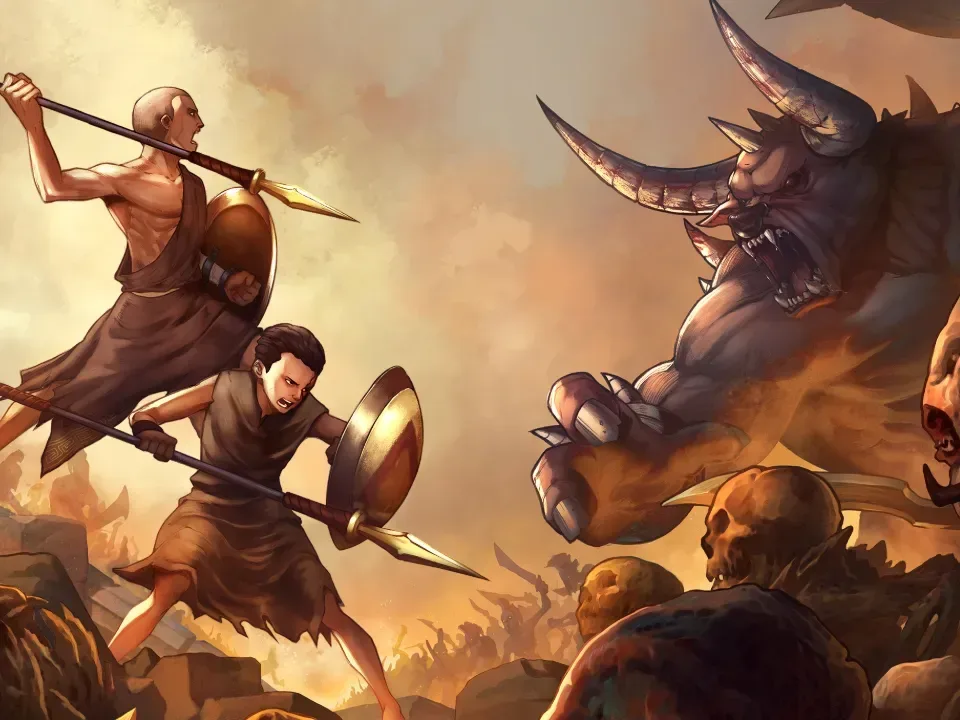
The game follows a much younger Kratos in ancient Greece, long before the phases of his life that define the larger series. Its story places him in Spartan training alongside his brother Deimos. When another cadet disappears, the brothers set out to find him, turning their training into a test of duty, endurance and their bond.
Terrence “T.C.” Carson returns to voice Kratos, reconnecting this smaller-scale story with the character’s earlier era. That setting and casting make Sons of Sparta a deliberately backward-looking entry, even as its structure shifts away from the franchise’s recent large-scale action adventures.
Hermes Mode is the speedrunning option
Hermes Mode is described as a race against the clock. It includes a split-based timer and a persistent scoreboard, tools designed for players who want to measure and revisit their runs rather than simply reach the ending.
A split is a checkpoint-like segment in a timed run. Instead of showing only an overall completion time, a split timer breaks that total into sections. That makes it easier to see where a run gained time, lost time or matched a previous attempt. In practical terms, it changes the focus from merely completing a level to refining movement, combat decisions and route choices section by section.
The persistent scoreboard provides a lasting record of timing results. The supplied details do not clarify whether that board is global, friend-based or local, so players should not assume a particular leaderboard format. What is clear is that Hermes Mode has been designed to support repeat attempts and measurable improvement.
Related coverage includes God of War Sons of Sparta Expands to PS4 With Hermes and Erebus Modes.
There is a catch: Hermes Mode is not immediately selectable. Players must first complete the game once, then enter the following code when starting a new game and choosing a save slot:
Up, Up, Down, Down, Left, Right, Left, Right, L1, R1, Touchpad
That requirement gives Hermes Mode the feel of a classic unlock rather than a standard difficulty menu item. It also means a player’s first clear remains a prerequisite, which makes sense for a mode asking players to optimize routes through a game they already know.
Erebus Mode makes every hit matter
Erebus Mode takes the opposite approach. Rather than asking how fast a player can finish, it turns every encounter into a one-hit-kill situation for both Kratos and his enemies.
“One-hit-kill” means that a successful hit ends the target’s current life immediately. For Kratos, that raises the cost of a missed dodge, a poorly timed attack or an unexpected threat. For enemies, it also means the player can eliminate danger instantly when they execute correctly. The premise is not simply that the game becomes harder; it is that the normal rhythm of trading hits and recovering from mistakes is removed.
That bilateral rule is significant. If only Kratos died in one hit, the mode would primarily demand defensive caution. Because enemies are vulnerable in the same way, Erebus Mode should reward precision and decisive openings as much as patience. It turns fights into short, volatile exchanges where initiative can matter as much as restraint.
Unlike Hermes Mode, the available information does not establish how Erebus Mode is unlocked. It is also not confirmed whether it has its own code requirement. Players looking to use it should avoid presuming that entering the Hermes sequence will unlock both modes.
Choose carefully: modes are tied to a new save
Both modes are selected when beginning a new game and picking a save slot. Once a mode has been chosen, it cannot be changed for that save.
That makes the save-selection screen an important decision point. A standard run, a timed Hermes attempt and an Erebus challenge should be treated as separate commitments rather than settings that can be toggled midway through a campaign. Players who want to preserve a conventional file while experimenting with a high-risk or time-focused format will need to plan their slots accordingly.
- First-time players: Hermes Mode requires one completed playthrough, so a regular run is necessary before pursuing it.
- Players chasing faster clears: Start Hermes Mode only when ready to commit a save to timed play and to enter the unlock sequence.
- Players seeking a combat-pressure challenge: Erebus Mode’s one-hit rules make it a distinctly different save-file experience, not a tweak for an existing campaign.
- Players who want flexibility: Since a selected mode cannot be swapped later, avoid overwriting a file whose ruleset you may want to retain.
A smaller God of War experiment gets a broader platform
Sons of Sparta has been positioned as a compact departure for a major PlayStation series: an action-platforming prequel that revisits young Kratos and Greek mythology rather than continuing the franchise’s later storyline. It has also been described as a 2.5D game and as a Metroidvania-style experience.
In simple terms, 2.5D generally refers to gameplay that moves primarily across a side-on plane while using depth, layered environments or three-dimensional presentation. Metroidvania is a genre label commonly associated with interconnected exploration and progress that can be gated by abilities, access or discoveries. Those terms describe structure and presentation, not a guarantee that every player will respond to the game in the same way.
Reception to the February release was mixed. Critics and fans did not greet it with the same broad excitement associated with larger recent installments, and one published review scored it 6/10, arguing that it did not reach the standard of leading games in the Metroidvania space. Series creator David Jaffe also voiced strong dissatisfaction after launch, despite saying the idea of a 2.5D God of War had long appealed to him.
Those reactions provide useful context for the update. The PS4 version and added modes do not erase the divided response, nor do they alter the game’s central format. They do, however, expand who can access this particular Kratos story and give existing players reasons to approach its systems through very different goals: speed and scorekeeping in Hermes Mode, or flawless survival in Erebus Mode.
Challenge-focused updates can matter especially for games built around replaying familiar spaces. A timer encourages players to understand sequence and momentum; a one-hit rule asks them to learn timing and threat patterns. Neither mode has been presented as new story content, but both change what a repeat playthrough asks of the player.
What it means for the series’ waiting period
The PS4 release also gives PlayStation players another God of War option as the next major entry, God of War Laufey, remains scheduled for May 20, 2027 as a PS5 exclusive following a delay. Sons of Sparta is not presented as a replacement for that future game. It is a prequel side story with a separate scale, format and place in Kratos’ history.
For players tracking how games extend their lifespan after launch, the update is another example of a post-release addition aimed at repeat play rather than a raised level cap or a New Game+ framework. For a different approach to replay-focused updates, see The Blood of Dawnwalker’s New Game+ and level-cap update.
For Sons of Sparta, the decision is more immediate: PS4 players can begin the prequel on November 16, while PS5 owners can revisit it under one of two new rule sets. Just make the mode choice deliberately—especially if that save file is about to become either a stopwatch project or a one-mistake Spartan nightmare.