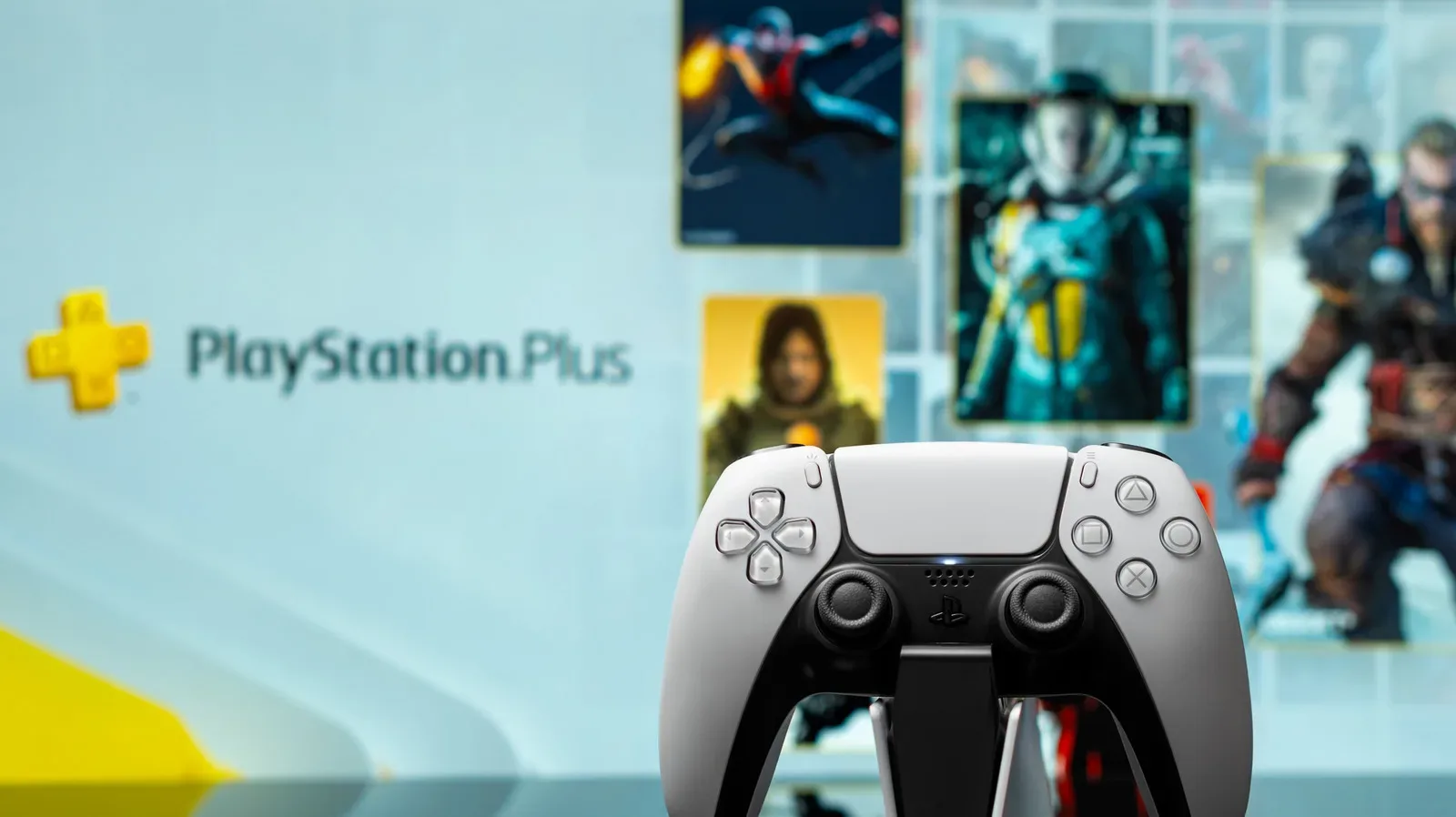

PlayStation Plus perks are meant to make a subscription feel bigger than its game catalog. The latest highlighted offers include a three-month YouTube Premium trial, a Calm trial, Audible reductions and discounts on selected Sony products. On their own terms, those are recognizable extras: a video subscription trial has an obvious monetary value, while the other offers widen the package beyond games.
But a prominent response from PlayStation players has been notably consistent: they do not want another trial. They want discs.
That reaction is tied to Sony’s reported plan to stop producing discs for new PlayStation games in January 2028, affecting new releases on both PS5 and PS4. Replies to PlayStation social posts have repeatedly focused on the coming shift, with players using variations of “the only perk I want is discs” and “no disc, no buy.” A joke about whether the trials themselves come on disc neatly captures the disconnect. The offers may be real benefits, but they are being received amid a far larger argument about how people will obtain games.
Why the perks are not answering the question players are asking
A perk is an additional benefit attached to a paid service. It can be useful without being central to why someone subscribes. A short YouTube Premium trial, for example, can appeal to people who already watch heavily on the platform. Calm and Audible promotions can also be welcome for subscribers who use them.
For more context, explore 2026-27 Topps Flagship Basketball Puts New NBA Eras, Rookies and Gold 1/1s in One 300-Card Set.
The criticism is not necessarily that those offers have no value. It is that they address a different decision from the one physical-media supporters are weighing.
Players responding to the posts are treating continued access to disc-based releases as a baseline issue, not as a bonus that can be offset by unrelated discounts. In that framing, a bundle of partner offers cannot compensate for the removal of a purchasing format. The message is especially clear because the replies have not been limited to one promotion; similar requests for physical games have appeared beneath other recent PlayStation posts.
That makes this less a debate about whether three months of YouTube Premium is a good deal and more a debate over what a PlayStation purchase should look like after January 2028. The first is a question of added subscription value. The second is a question of format choice.
Related coverage includes PlayStation Plus Perks Face Fresh Backlash as Fans Continue Demanding Physical Discs.
What “physical discs” means in this dispute
In the immediate sense, players are asking for new PlayStation games to continue being produced on discs. A physical disc is a tangible retail copy rather than a game obtained only through a digital library. The distinction matters to the people raising objections because a disc can be bought and kept as a physical item.
The concern voiced around an all-digital library is ownership. That term is doing a lot of work in this conversation. It is not merely shorthand for wanting a plastic case on a shelf. It expresses worry about what changes when games are no longer available in a physical format and players instead rely on digital access.
There is no need to pretend every player has the same priority. Some may primarily value convenience or immediate access, while others may care more about maintaining a physical game collection. Still others may simply want both options to remain available. The social response shows that a significant and vocal group sees the format itself as important enough to make it the first subject under otherwise unrelated PlayStation Plus promotions.
The timing makes every promotional post part of the larger debate
Promotional messaging often works by directing attention to the new thing: a fresh trial, a discount, or another member benefit. Here, players are redirecting attention to a decision they believe carries more lasting consequences. That is why the replies can look disproportionate if the post is considered only as an advertisement for PlayStation Plus. They are not responding only to the advertised perk. They are using the available public reply space to continue a broader protest.
For Sony, that means a value-focused message can become a reminder of the physical-media dispute. The three-month YouTube Premium offer may be the most immediately legible incentive in the group, particularly given the platform’s place in streaming. Yet it cannot be evaluated in isolation when replies frame the future of PlayStation releases as all-digital.
It also means that the company faces two conversations at once. One is straightforward: whether PlayStation Plus extras make the subscription more attractive. The other is much harder to resolve: whether players who prioritize discs will accept the planned direction for new games. The current replies suggest many do not.
What the backlash does and does not establish
The repeated calls for discs demonstrate frustration and an organized sentiment among the people responding publicly. They do not, by themselves, show how every PlayStation customer will act. A comment section is a clear measure of what its participants are saying, but it is not automatically a complete accounting of the entire player base.
That distinction matters when considering predictions of a boycott or subscription cancellations. Some supporters of physical media are urging players to withhold purchases, cancel PlayStation Plus, or buy games elsewhere. Whether that pressure changes company plans remains uncertain. Sony has reportedly posted increased playtime and record-high user figures for September, signals that complicate any simple claim that the visible backlash has already translated into a broad commercial reversal.
At the same time, strong overall usage does not make the complaint disappear. Player counts and playtime describe activity on the platform; they do not settle what formats customers believe should be available for future releases. The two facts can coexist: a platform can have high engagement while a portion of its community continues to object intensely to one policy direction.
A practical reading for PlayStation players
Anyone considering PlayStation Plus should separate the questions involved. The current extras may be worthwhile if the included trials, discounts and access to games suit that person’s needs. A three-month YouTube Premium offer may have clear appeal for someone who was already considering the service. The same is true of a Calm trial or Audible reductions for people likely to use them.
But those perks do not alter the reported January 2028 end point for production of discs for new PS5 and PS4 games. Players for whom a physical copy is essential are therefore talking about a long-term purchasing preference rather than a limited-time subscriber promotion. The key issue for them is not how many auxiliary services come with PlayStation Plus, but whether the games they want will still arrive on disc.
That is also why comparisons between the benefits can miss the point. It is possible to acknowledge that an offer has value and still decide it is irrelevant to a concern about physical releases. The replies are effectively making that distinction in public: a trial is a trial, a discount is a discount, and neither is a substitute for discs.
The real test is whether the message changes
The physical-disc response has become a recurring feature beneath PlayStation communications, not a one-post flare-up. That persistence matters because it keeps the issue visible even when the company is promoting entirely different parts of its subscription offering.
There is no supplied indication that Sony plans to reverse its stated direction, and it would be premature to assume that online pressure will force a change. Equally, there is little sign that a package of lifestyle and streaming promotions has persuaded the most vocal physical-media supporters to move on. For now, the mismatch remains stark: PlayStation is presenting added benefits, while many players are restating a single demand for the format they expect to lose.
As January 2028 approaches, that gap will likely remain relevant to how PlayStation Plus messaging is received. The immediate promotions are easy to describe. The harder question is whether the company can persuade players who see physical discs not as a nostalgic extra, but as a necessary option for new games.