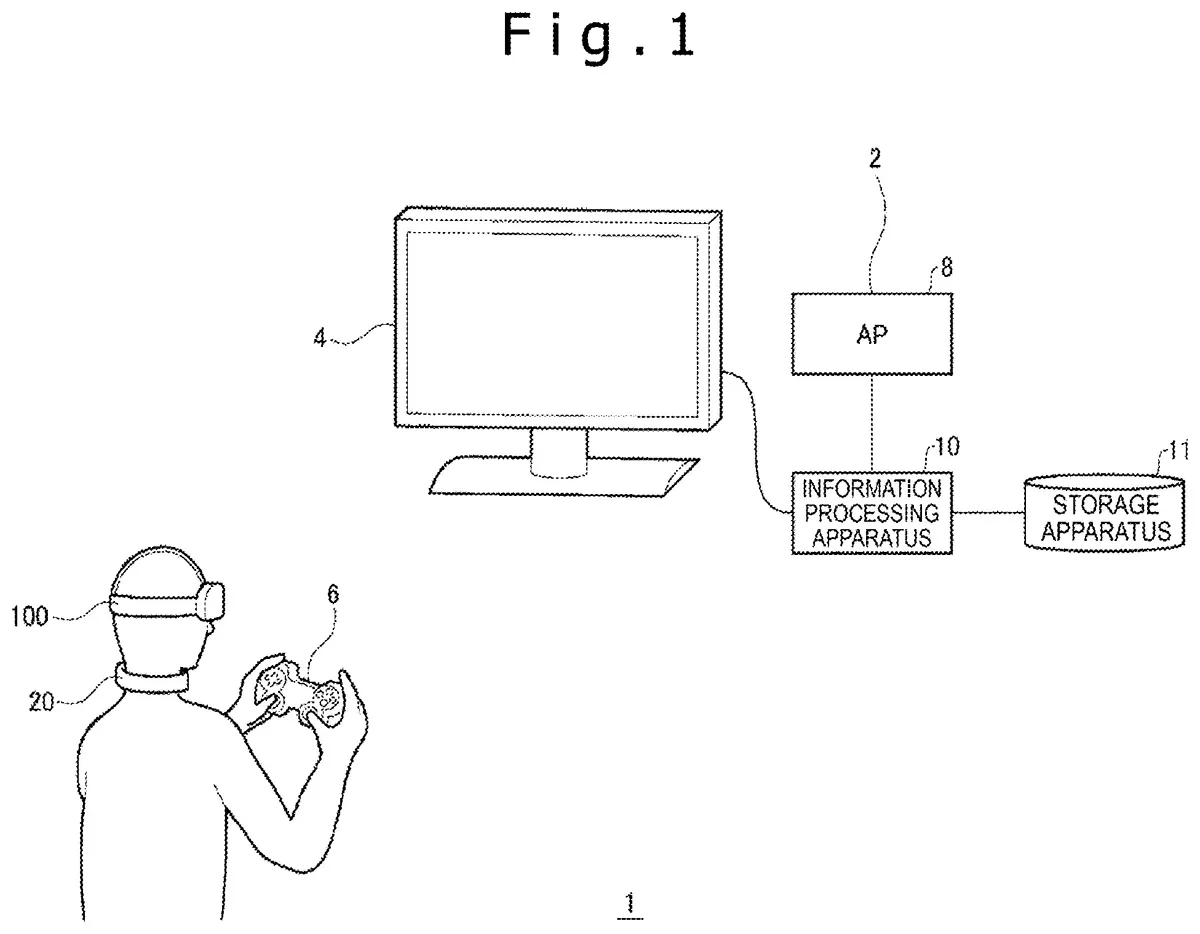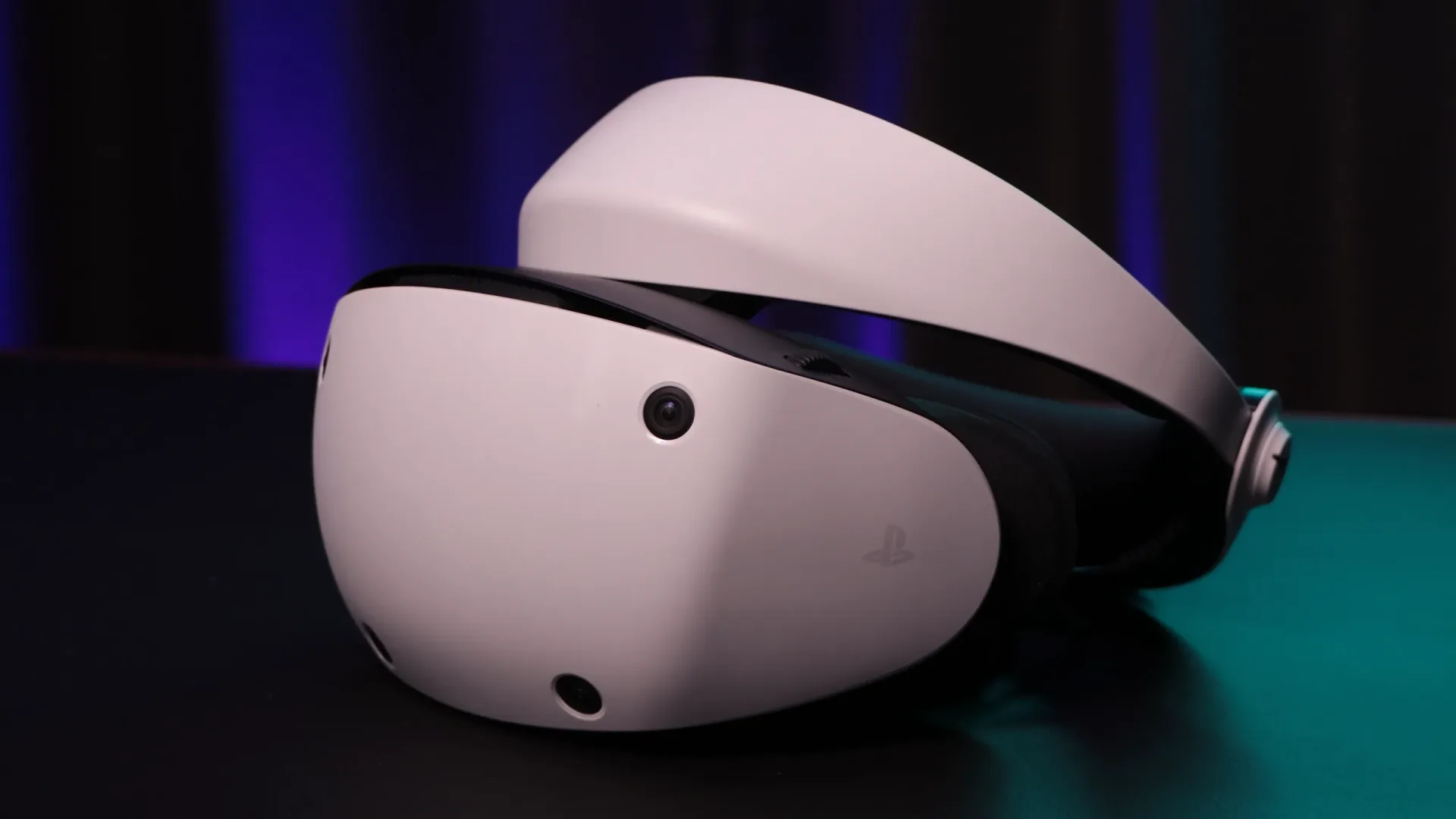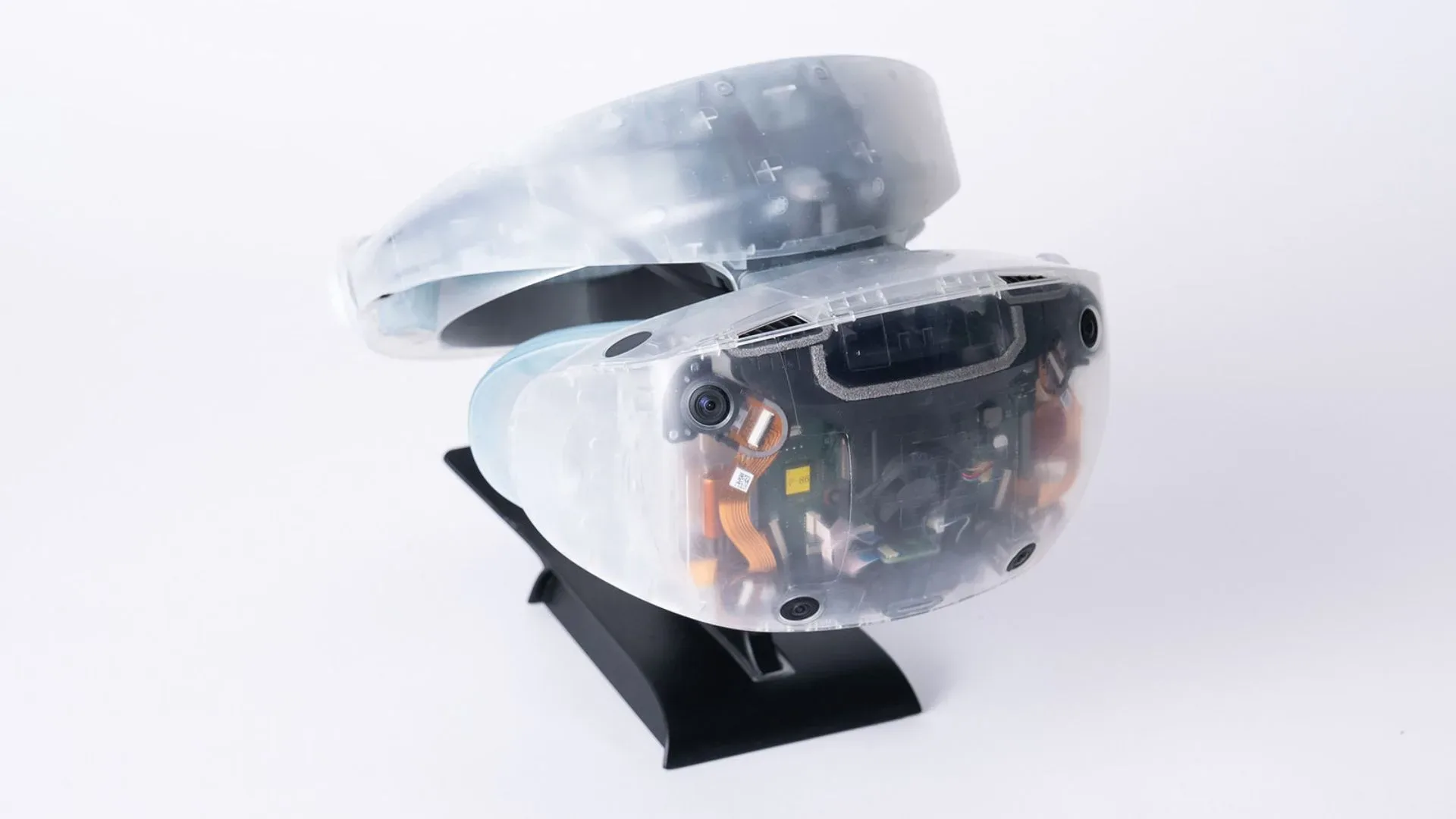

Sony Interactive Entertainment has described a notably tactile idea for virtual reality: a curved neckband fitted with multiple air-blowing devices that could direct bursts of air at a player’s neck and the area above it. The proposed wearable is shown alongside a VR headset in patent schematics, making it a natural fit for PlayStation VR hardware—whether PSVR 2 or a future system—but that connection remains an implication of the drawings rather than a confirmed product plan.
The basic concept is simple enough to explain without turning it into a wind-tunnel dissertation. A game or other external device sends a control signal to the neckband. The neckband receives that instruction through a communication unit, then activates one or more vents. Because the vents can deliver air from different directions, the system could attempt to match airflow to something occurring in the virtual scene.
It is an unusual accessory, certainly. It is also one of the clearer examples of a VR add-on trying to engage a sense that ordinary headsets and controllers largely leave alone: the sensation of air moving across the skin.
What the patent actually describes
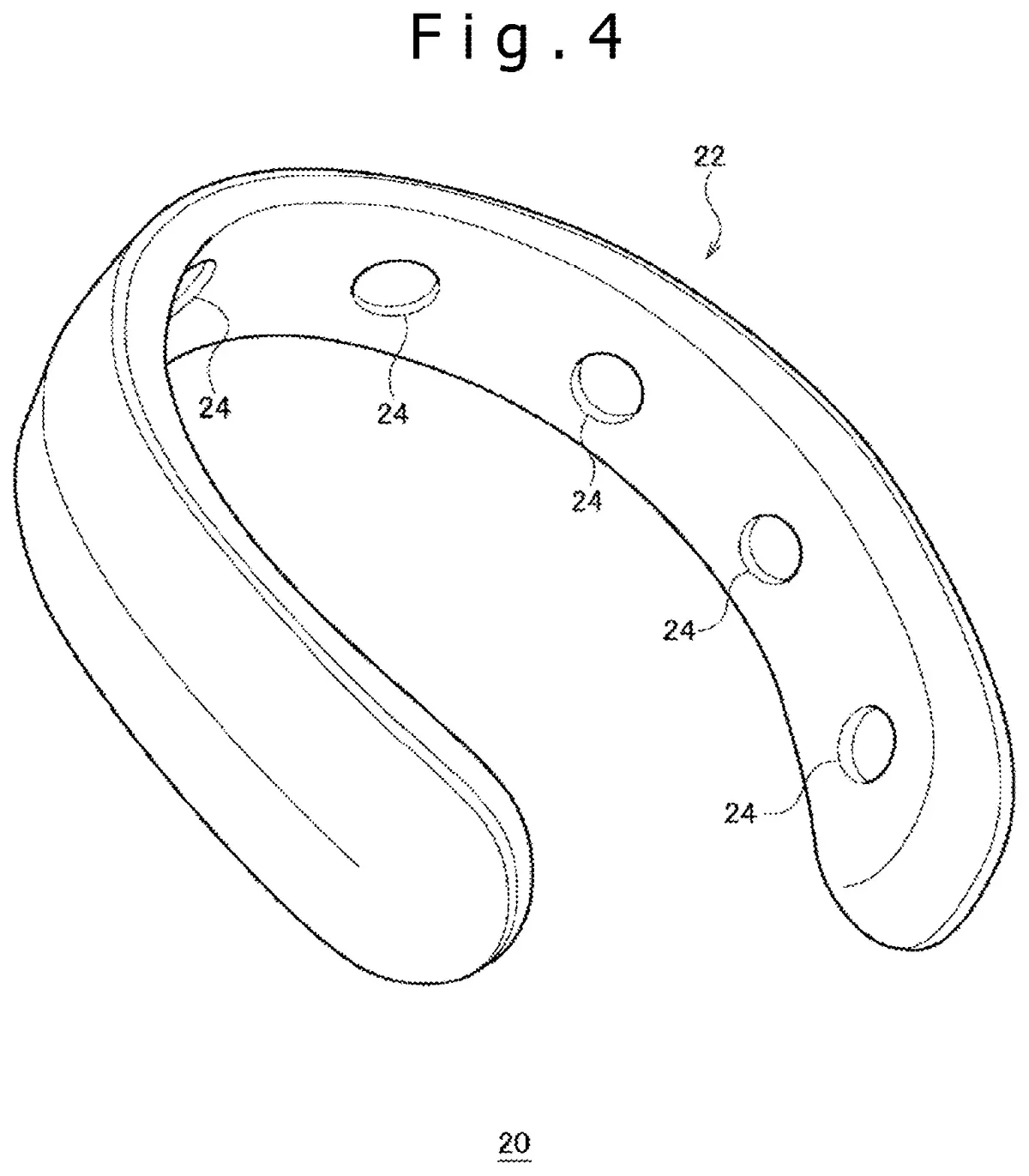
The filing centers on a neck-worn device designed to supply air to “one or more” areas of the neck and a part above the neck. In practical terms, that could include airflow toward the chin, lower face, or back and sides of the neck, though the material does not lock Sony into a specific target area or final shape.
Its most important component is a plurality of air-blowing devices—effectively, multiple vents or small airflow units built into the collar. The patent diagrams depict vents along the inside of the curved band, where they could point inward toward the wearer rather than simply blasting a helpful breeze into the living room.
The second key component is the control path. Sony describes a communication unit that receives a control signal from an external apparatus, then controls the air-blowing devices based on that signal. That wording matters because it suggests the collar is intended to react to software-driven events rather than operate only as a manually switched personal fan.
Directional airflow is the technical idea doing the heavy lifting here. Instead of sending air uniformly, separate vents could be activated in patterns. Air from behind could suggest an approaching threat; airflow from the front could accompany speed, an incoming object, or movement through a virtual environment. The patent supports the notion of differing directions, but it does not establish how many distinct zones a finished device would use, how forceful the airflow would be, or how precisely it could be synchronized.
Why this could make sense in VR
VR aims to make a player’s movements, vision, and hearing feel connected to a simulated place. Headsets handle the visual layer. Audio can indicate distance and direction. Controllers add haptic feedback—the physical vibration or motion used to communicate contact, recoil, impacts, or other events. A controlled airflow device would be another sensory cue, not a substitute for those existing parts.
Related coverage includes Sony Patent Describes a VR Neckband That Could Blow Directional Air at Players.
Airflow has an advantage over a vibration motor: it can imply something happening in the space around the player rather than something happening in their hands. A short puff along the back of the neck could be a particularly direct prompt to look behind. A breeze ahead of the face could reinforce forward travel. Neither cue needs to be a perfect recreation of wind to be useful; its value would come from being timed and positioned consistently enough that a player understands what it means.
Horror is the immediate, obvious use case. The patent’s directional concept lends itself to that genre because horror games often rely on uncertainty about what is outside a player’s field of view. A carefully timed sensation at the neck could signal that something is close, moving, or simply where the player least wants it to be. The same feature could be genuinely unnerving without adding anything visible to the game world.
But it would be narrow-minded to file the collar under “spooky neck weather” and move on. Driving games could associate airflow with motion. Flight or gliding sequences could use a front-facing breeze to reinforce descent or speed. An action game might use a passing burst of air as a stylized cue for a nearby swing or projectile. These are possibilities suggested by the control-and-direction model, not announced software uses.
The real challenge is game design, not merely moving air
A wearable can have all the tiny vents it wants; the difficult question is what developers would do with them. Air has no universal, self-explanatory language in games. A puff can mean wind, velocity, danger, temperature, a creature breathing nearby, an object rushing past, or absolutely nothing. If effects arrive constantly, they may become background noise—or background breeze—rather than meaningful feedback.
Good implementation would require restraint. A strong airflow cue would likely be most effective when reserved for events that benefit from a physical sense of direction. Repeated, low-value effects could weaken the impact of the moments that actually matter. In a horror game, for example, a subtle burst may be more memorable if it accompanies a rare signal than if the collar activates every time a doorway opens.
There is also a comfort question. The neck and face are more personal areas for a device to target than a controller handle. The filing establishes an intent to blow air toward those locations, but offers no consumer-facing detail about intensity settings, noise, fit, weight, heat, cleaning, battery life, or whether players would be able to disable individual effects. Those are not minor details. They would determine whether the accessory feels like a clever sensory layer or a gadget that spends more time in a drawer than in a game.
Accessibility and player preference would be central as well. A sensation that heightens tension for one player could be unpleasant or distracting for another. At a minimum, any real implementation would benefit from clear controls over whether airflow effects are enabled and how intense they feel. That is analysis of the design problem, not a feature list for a device that has been announced.
A patent is a design signal, not a launch promise
The most important caveat is also the least glamorous: this is a patent filing. The material describes a possible technology and method of control. It does not confirm that Sony will manufacture the neckband, sell it as a PSVR 2 accessory, bundle it with any headset, or support it in a particular game.
The headset shown in the schematics makes a VR role easy to infer, and the references to external control signals make an interactive use case plausible. Even so, the available information leaves substantial gaps. There is no confirmed name, release window, platform compatibility, price, list of supported experiences, or statement that the concept will progress beyond paperwork and diagrams.
That uncertainty should not erase what is interesting about the filing. It points toward an approach to immersion that is more physical than another menu option or a sharper display panel. The potential benefit is not necessarily realism in a literal sense; simulated wind will not transform a room into a mountain ridge. The benefit would be presence: a small, well-timed sensation that helps the brain accept the direction, speed, or threat a game is trying to convey.
There is a practical hardware angle, too. Extra wearables tend to mean more charging, more cables, and more attention to long-term battery health if they contain rechargeable power. Players already managing console-adjacent devices may find broadly applicable guidance in this look at Nintendo Switch battery care and charging habits, though Sony has not provided battery details for this proposed collar.
The best uses would be subtle rather than showy
The tempting pitch is a full-force gust every time a virtual car accelerates. The more convincing implementation may be quieter and stranger: a faint shift of air at the right side of the neck before a sound arrives, or a momentary breath of wind that gives a jump scare its extra half-second of doubt.
That is where the collar concept has an edge over being merely a novelty. VR can already show players a threatening hallway and play a noise behind them. Directional airflow may provide a physical nudge that makes “behind” feel less like a speaker channel and more like an occupied part of the room. Used sparingly, it could create an effect that players notice emotionally before they consciously identify the hardware trick.
Of course, the same premise is ripe for silliness. A neckband full of vents will need to be comfortable, quiet, attractive enough to wear, and supported by software that treats it as more than an intermittent face fan. Those are steep demands for any specialized accessory. The patent does not show whether Sony has solved them.
For now, the filing is best viewed as an intriguing piece of VR design exploration. It proposes multiple inward-facing airflow devices, external control signals, and directional effects around a player’s neck and face. If it ever becomes real hardware, its success will depend less on the novelty of blowing air and more on whether games make each carefully timed puff feel like it belongs in the virtual world.